

See more of our articles in your search results.
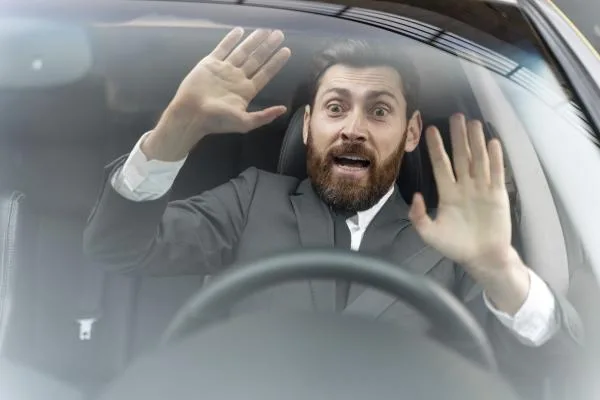
Amaxophobia is the persistent, intense, and clinically significant fear of driving or of being a passenger in a vehicle — a specific phobia that, in contemporary life, carries functional consequences far beyond the disorder itself. Unlike many specific phobias whose avoidance has a limited impact on daily functioning, amaxophobia strikes at one of the most practically indispensable activities of modern life: the capacity to travel by car. In a world organized around the assumption that people can drive — that they can get to work, take children to school, attend medical appointments, visit family, and navigate the ordinary logistics of everyday existence from behind the wheel or in a passenger seat — the person with amaxophobia faces a daily collision between their fear and the practical demands of the life they are trying to live.
The disorder is classified within DSM-5 as a specific phobia of the situational type, placing it in the same diagnostic category as fear of flying, fear of enclosed spaces, and fear of heights. Its prevalence, its functional reach, and the particular complexity of treating it through standard exposure approaches give it a clinical profile that deserves specific and detailed attention. Converging data from several countries suggest that between 15 and 30 percent of license holders experience driving anxiety at a clinically meaningful level — yet amaxophobia remains dramatically undertreated relative to its prevalence. Many people with this phobia never seek help at all, either because they have built functional avoidance structures around the disorder, or because admitting fear of an activity that most people perform without apparent difficulty carries its own layer of shame.
Understanding amaxophobia fully requires holding two things simultaneously in mind: the cognitive-behavioral architecture of the disorder — the belief systems, avoidance patterns, and maintenance cycles that keep it in place — and the human experience of living with it, which is typically characterized not only by fear but by a progressive narrowing of freedom, opportunity, and autonomy. The person with amaxophobia is not merely anxious about cars. They are managing, often invisibly and often alone, a daily negotiation between what they fear and what their life requires — a negotiation that has usually been going on for years by the time they sit in front of a clinician.
This article provides a comprehensive account of amaxophobia: what it is, where it comes from, how it presents, why it persists, and — most importantly — what the evidence says about how to overcome it.

How many of these have you been "meaning to read" for months?
- 1
 THE LOST SKILLS ACADEMYThe Lost Skills of IndependenceBe Ready for Anything Life Throws at You - Hardcover-SpiralListen Free On Audible
 - 2
 A Navy SEALs Bug-In GuideA Navy SEAL's Bug-In GuideHow to Turn Your House into the Safest Place on EarthListen Free On Audible
 - 3
 Clarkson PotterHomemaking with BabsTips and Tricks for Making a House a HomeListen Free On Audible
What Amaxophobia Is and How It Is Diagnosed
Amaxophobia — from the Greek amaxa (carriage or vehicle) and phobos (fear) — is a marked, persistent, and disproportionate fear cued by the presence or anticipation of driving a vehicle or being a passenger in one. It belongs to the category of specific phobias within the anxiety disorders classification established by the American Psychiatric Association’s DSM-5.
To meet diagnostic criteria for a specific phobia, the fear must satisfy several conditions simultaneously: it must be consistently triggered by the phobic stimulus; it must produce an immediate anxiety response that may take the form of a situational panic attack; the feared situation must be avoided or endured with intense distress; the fear must be out of proportion to the actual danger posed; it must be persistent — typically lasting six months or more — and it must cause clinically significant distress or impairment in social, occupational, or other important areas of functioning.
The clinical presentation of amaxophobia is more heterogeneous than many people assume. The feared situation may involve the role of driver, the role of passenger, or both. The fear may be broadly triggered by virtually any vehicular context, or narrowly focused on specific scenarios: highway driving, tunnel navigation, bridge crossing, night driving, driving in rain or fog, overtaking other vehicles, driving alone, driving with passengers, or managing complex road junctions. Two people who both meet criteria for amaxophobia may have fear hierarchies with almost no overlap, requiring individually tailored treatment rather than a one-size-fits-all protocol.
A further important clinical distinction is between primary amaxophobia — fear of driving not secondary to another disorder — and post-traumatic driving phobia, in which the fear developed following a road traffic accident and co-occurs with features of post-traumatic stress disorder. The presence of PTSD features requires integrated trauma-focused components alongside standard phobia treatment, making this distinction clinically significant from the outset of assessment.
Who Is Most Affected: Prevalence and Risk Profile
Amaxophobia is more common than most people — including many clinicians — assume, affecting a meaningful proportion of the adult population across multiple countries and demographic groups.
Population surveys in the United States, Spain, and other Western countries have consistently found that between 15 and 30 percent of license holders experience driving anxiety at a level that meaningfully affects their behavior, with full diagnostic criteria for specific phobia met in a substantial subset. The disorder affects people across a wide range of ages and backgrounds, but several patterns emerge from the literature. Women are disproportionately represented among people seeking treatment for driving phobia, consistent with the broader gender distribution in specific phobias generally — though this likely reflects differential patterns of help-seeking as much as genuine prevalence differences.
The onset of amaxophobia shows two common patterns. The first is a post-traumatic onset following a road accident or a witnessed accident, which can occur at any age. The second is a more gradual onset in which anxiety about driving develops and intensifies progressively — often beginning in the context of a specific challenging driving experience and generalizing from there. In some cases, amaxophobia develops in people who have never driven at all — anticipatory fear of an activity they have not attempted but perceive as beyond their capacity to manage safely.
The disorder is also frequently comorbid with other anxiety disorders. Panic disorder with agoraphobia and generalized anxiety disorder are the most commonly co-occurring conditions — an overlap that is clinically intuitive, since the core fears driving these conditions (loss of control, entrapment, inability to escape a frightening situation) map closely onto the specific fears activated by vehicular travel.
The Main Causes of Amaxophobia: How the Fear Develops
Amaxophobia is etiologically heterogeneous — it can develop through several distinct pathways, and in many cases multiple causal factors converge to produce and sustain the disorder. Understanding the specific pathway involved in a given case has practical implications for treatment design.
Traumatic Conditioning Following an Accident
The most intuitively comprehensible pathway is direct traumatic experience: a road traffic accident, a near-miss, a driving situation that felt life-threatening, or witnessing a serious accident involving others. A previously neutral or manageable stimulus — the experience of driving — becomes associated through a single powerful conditioning event with intense fear and perceived danger. The conditioned fear generalizes from the specific accident context to driving broadly, and subsequent avoidance prevents the extinction of the conditioned fear response that normal repeated experience would otherwise produce.
This pathway, described through the classical conditioning framework established by Ivan Pavlov and extended to phobia formation by later researchers in the behavioral tradition, frequently produces a mixed clinical presentation in which specific phobia features co-occur with post-traumatic stress symptoms including intrusive memories, nightmares, hyperarousal, and emotional numbing. The presence of PTSD features in post-traumatic driving phobia distinguishes it clinically from non-traumatic amaxophobia and has important implications for treatment planning.
Vicarious Learning and Observational Conditioning
Not all people who develop amaxophobia have experienced a direct accident themselves. Observational learning — witnessing an accident, being present when another person has a panic attack while driving, or growing up with a caregiver who modeled intense anxiety about driving — can produce conditioned fear of driving in individuals with no negative personal driving history. Albert Bandura’s social learning theory, which established observational learning as a primary mechanism of behavior acquisition, provides the framework for understanding this pathway.
The cognitive representation of danger derived from witnessed experience is functionally equivalent to that derived from direct experience. The person learns, vicariously, that driving is an occasion for extreme fear and organizes their behavior accordingly — with the same avoidance patterns and maintenance cycles as someone who was directly involved in a traumatic event.
Informational Transmission and Catastrophic Cognitions
A third pathway involves the acquisition of fear through information alone — repeated or vivid exposure to news coverage of road accidents, road safety campaigns emphasizing fatality statistics, or graphic representations of driving catastrophes. No direct or vicarious traumatic event occurs; instead, the person constructs a cognitive representation of driving as an extraordinarily dangerous activity through accumulated threatening information. This pathway is particularly relevant in the era of social media, where content is algorithmically selected for emotional impact and therefore profoundly unrepresentative of the statistical reality of driving risk.
Cognitive Vulnerability: Anxiety Sensitivity and Intolerance of Uncertainty
Beyond specific learning events, individual differences in cognitive vulnerability significantly determine who develops a clinical phobia from a given experience and who does not. Two factors are particularly well-documented. Anxiety sensitivity — the tendency to interpret the physical symptoms of anxiety (rapid heartbeat, dizziness, sweating) as indicators of physical danger — is highly relevant in the driving context, where anxiety symptoms can be catastrophically misread as evidence of impending loss of vehicle control. Intolerance of uncertainty is equally relevant: driving is an inherently uncertain activity requiring constant management of unpredictable inputs from other road users, weather, and vehicle dynamics. For people with low tolerance for uncertainty, the activity is experienced as chronically threatening rather than as manageable risk. These vulnerability factors amplify the probability that a given experience will produce a clinical phobia and substantially complicate its maintenance once established.

Recognizing the Symptoms of Amaxophobia Across Four Dimensions
The symptom profile of amaxophobia encompasses cognitive, emotional, physiological, and behavioral dimensions — the full spectrum of anxiety disorder presentation. Understanding each dimension is essential both for accurate assessment and for treatment planning.
Cognitive Symptoms
The cognitive symptoms of amaxophobia center on a specific cluster of threat appraisals related to driving. These typically include:
- Catastrophic risk appraisal: overestimation of the probability of having an accident, losing control of the vehicle, or being responsible for harming self or others
- Misinterpretation of anxiety symptoms: the belief that experiencing dizziness or palpitations while driving will inevitably result in loss of vehicle control or a fatal accident
- Thought-action fusion: the belief that thinking about an accident makes it more likely to happen, or that a momentary lapse of concentration is equivalent to causing harm
- Hypervigilance for threat: sustained, exhausting scanning of the road environment for potential dangers, calibrated far above what safe driving actually requires
- Anticipatory rumination: extensive mental rehearsal, before a journey, of all the things that might go wrong — a cognitive pattern that generates high anxiety before the driving situation is even encountered
Emotional Symptoms
The emotional experience of amaxophobia extends beyond fear and anxiety. Guilt — particularly for people who feel responsible for the impact of their inability to drive on family or work — is extremely common. Shame, arising from the perception that the fear is disproportionate or socially embarrassing, frequently functions as a barrier to help-seeking. In cases where avoidance has been sustained over years, secondary depression in response to the progressive loss of autonomy and life participation is a clinically important complication. Anticipatory anxiety — the fear of the fear itself, experienced before any actual driving situation — is often as disabling as anxiety experienced in real driving contexts.
Physiological Symptoms
The physiological symptoms of amaxophobia reflect activation of the sympathetic nervous system in preparation for threat response. They include:
- Rapid or irregular heartbeat (tachycardia, palpitations)
- Shortness of breath or hyperventilation
- Dizziness, lightheadedness, or derealization
- Sweating and trembling
- Nausea or gastrointestinal distress
- Chest tightness or pain
- Dry mouth and difficulty swallowing
- Muscle tension, particularly in the hands, arms, and neck
A critical feature of amaxophobia is that these physiological symptoms are themselves experienced as threatening in the driving context. The secondary catastrophic appraisal of anxiety symptoms — interpreting a racing heart as evidence of impending incapacitation — amplifies the original fear and contributes powerfully to the maintenance cycle of the disorder.
Behavioral Symptoms
The behavioral dimension of amaxophobia is organized around avoidance — the comprehensive set of strategies through which the person reduces contact with driving-related anxiety. Avoidance exists on a spectrum from complete (the person does not drive or travel by car under any circumstances) to partial and conditional (driving only in certain conditions: only on familiar roads, only in daylight, only when accompanied, only for short distances). Partial avoidance is clinically important because it appears functional on the surface while maintaining the disorder as effectively as complete avoidance.
Safety behaviors — actions performed during driving intended to manage anxiety rather than enhance actual safety — are a related and significant category. These include driving far below the speed limit, gripping the steering wheel with excessive force, avoiding overtaking, requiring a passenger to maintain conversation as distraction, and pulling over whenever anxiety escalates. Safety behaviors maintain amaxophobia through the same mechanism as avoidance: they prevent the person from discovering that anxiety is tolerable without them, and they prevent disconfirmation of the catastrophic beliefs about driving that generate the fear.

Why Amaxophobia Persists: The Self-Maintaining Cycle
Understanding why amaxophobia persists — despite the person’s awareness that their fear is disproportionate and their genuine motivation to change — requires understanding the self-reinforcing cognitive-behavioral cycle that keeps specific phobias in place without external intervention.
The cycle operates as follows. A driving-related cue — the anticipation of a journey, the sight of a motorway entrance, the experience of being a passenger — activates the catastrophic appraisal system, generating threat-related cognitions and the associated physiological anxiety response. The anxiety is experienced as both aversive and confirming: its very intensity is taken as evidence that the situation is genuinely dangerous, creating a circular logic in which fear justifies itself. Avoidance or safety behavior use then removes the person from the anxiety-generating context, producing immediate relief — but at the cost of reinforcing avoidance through negative reinforcement and preventing the habituation and disconfirmatory learning that sustained contact with the feared situation would produce.
The result is a vicious cycle with no internal self-correction mechanism: the more the person avoids, the more their anxiety is maintained; the more their anxiety is maintained, the more compelling avoidance becomes; and the more entrenched the avoidance becomes, the more the person’s belief that driving is beyond their capacity is confirmed by their own behavioral history. Breaking this cycle requires external intervention — structured, therapeutically managed engagement with driving that natural behavior will not spontaneously produce.
Evidence-Based Treatments for Amaxophobia That Actually Work
The treatment of amaxophobia is both well-supported by evidence and genuinely achievable for the majority of people who engage with it. Specific phobias as a class are among the most treatment-responsive conditions in anxiety disorders, and amaxophobia shows comparable response rates when appropriate evidence-based treatment is applied.
Cognitive-Behavioral Therapy: The First-Line Approach
Cognitive-behavioral therapy (CBT) is the primary evidence-based treatment for amaxophobia, integrating two core components — cognitive restructuring and graduated exposure — within a structured framework typically delivered over eight to fifteen sessions depending on severity and complexity.
The cognitive component targets the specific threat appraisals and catastrophic beliefs about driving that generate and maintain anxiety. Through collaborative examination of evidence, Socratic questioning, and behavioral experiments designed to test catastrophic predictions, the person develops a more accurate and proportionate cognitive representation of driving risk. Cognitive restructuring does not aim to convince the person that driving is risk-free — it aims to bring their subjective probability estimates into alignment with empirical reality, from which the current fear has become severely dissociated.
Graduated Exposure: The Primary Mechanism of Change
The exposure component of CBT is the primary engine of therapeutic change — the process through which habituation occurs, catastrophic predictions are disconfirmed through direct experience, and new non-threatening associations with driving are formed. Exposure is delivered in graduated form: a fear hierarchy is constructed ordering the person’s feared driving scenarios from least to most anxiety-provoking, and the person is systematically exposed to each scenario in ascending order, remaining in each situation until anxiety diminishes before progressing.
The core principle requires patient, clear explanation: the temporary increase in anxiety that exposure produces is not evidence that something is going wrong — it is the necessary condition for therapeutic change. Anxiety that is tolerated without avoidance naturally diminishes through habituation. The catastrophic outcome that the person predicted does not materialize. A new associative memory is formed: driving this scenario did not lead to catastrophe; anxiety was present but manageable. Repeated exposure consolidates this learning and progressively weakens the conditioned fear response.
In vivo exposure — real driving in real conditions — is the gold standard format. The logistical challenges this presents (requiring a vehicle, a qualified accompanying professional, a systematically varied range of driving environments) have driven the development of virtual reality exposure therapy as a highly effective complementary modality.
Virtual Reality Exposure Therapy (VRET)
VRET has emerged as one of the most significant practical advances in amaxophobia treatment. By providing a safe, immersive, fully controllable virtual driving environment, VRET allows the therapist to deliver precisely graduated exposure to driving scenarios of exactly the required difficulty — without requiring a real vehicle or road environment. Traffic density, weather, road type, time of day, and the occurrence of critical events can all be modulated in real time in response to the patient’s state.
Research has consistently demonstrated that VRET produces genuine reductions in driving fear, avoidance, and functional impairment, with gains transferring meaningfully to real driving behavior. One pilot study reported that 71 percent of patients showed adequate real driving behavior as assessed by an independent instructor following VRET treatment, with 93 percent maintaining these gains at twelve-week follow-up. VRET is particularly valuable as a preparatory scaffold that makes in vivo exposure accessible for patients whose phobia severity would otherwise preclude initial engagement with real driving.
Specific Therapeutic Techniques Within the CBT Framework
Beyond the core framework, several specific techniques have established clinical utility in amaxophobia treatment:
- Psychoeducation about anxiety: providing accurate information about the physiology of the anxiety response — explaining that dizziness and palpitations during driving anxiety are the normal accompaniment of fear, not evidence of physical incapacitation — directly challenges the secondary catastrophic appraisal of anxiety symptoms that amplifies the original fear
- Applied relaxation and controlled breathing: useful as coping tools during exposure — not as safety behaviors designed to eliminate anxiety, but as strategies that support tolerance of anxiety at levels that allow therapeutic engagement to continue
- Interoceptive exposure: for patients whose primary fear involves catastrophic misinterpretation of physiological symptoms while driving, deliberately inducing those sensations in a safe clinical context allows habituation to the sensations themselves, separate from the driving context
- Behavioral experiments targeting safety behaviors: systematically discontinuing safety behaviors — driving at the speed limit, not gripping the wheel abnormally tightly, driving without a required companion — allows direct discovery that the safety behaviors are not what was keeping the person safe
- Relapse prevention planning: developing a specific plan for managing predictable setbacks prevents temporary returns to avoidance from becoming full relapses
Pharmacological Approaches: What the Evidence Shows
Pharmacological treatment is not the primary approach for specific phobias, and medication alone has not been shown to produce the durable change in phobic behavior that psychological treatment achieves. Short-acting benzodiazepines are increasingly discouraged in specific phobia treatment because they function as safety behaviors — preventing the habituation that exposure requires — and carry dependency risks that outweigh their limited phobia-specific benefit.
Selective serotonin reuptake inhibitors (SSRIs) may be indicated as adjunctive treatment where significant comorbid depression or generalized anxiety disorder is present, creating more favorable conditions for phobia-specific psychological work. The most scientifically interesting pharmacological development is the use of d-cycloserine (DCS) — a partial NMDA receptor agonist — as an augmentation strategy to enhance the consolidation of extinction learning during exposure sessions. Several trials have found that DCS administered before an exposure session enhances retention of the extinction memory formed during that session, potentially reducing the number of sessions required for clinically significant improvement. This approach represents a promising intersection of pharmacology and exposure-based psychotherapy, though it remains a research-stage rather than standard-practice intervention.

Practical Keys to Overcoming the Fear of Driving
For the person with amaxophobia who is ready to begin working toward recovery, several evidence-based principles apply regardless of the specific treatment setting or modality.
- Seek professional support rather than attempting self-managed exposure alone. Structured, therapist-guided exposure is substantially more effective than unstructured self-exposure attempts, which frequently produce unmanaged anxiety levels that reinforce avoidance rather than producing habituation.
- Accept anxiety as the vehicle of change, not the enemy to eliminate first. The goal of treatment is not to make driving anxiety-free before attempting it — it is to develop the capacity to drive while anxious, and to discover through direct experience that anxiety during driving is both tolerable and temporary.
- Identify and progressively eliminate safety behaviors. The gradual, systematic discontinuation of safety behaviors — speed restrictions, route avoidances, required companions — is as important as the exposure itself; each safety behavior eliminated is a piece of avoidance confronted and a belief about driving capability disconfirmed.
- Proceed at a therapeutic pace, not an avoidance-driven pace. Graduated exposure means beginning with manageable scenarios, but “manageable” means anxiety-provoking enough to produce therapeutic learning — not comfortable enough to require no tolerance of distress.
- Treat setbacks as data, not as defeats. A difficult driving experience during recovery, or a temporary return to avoidance following a stressful life event, provides information about what needs further work — not evidence that recovery is impossible or that progress has been negated.
- Address co-occurring anxiety and depression. Amaxophobia frequently co-occurs with panic disorder, generalized anxiety, or secondary depression; treating these comorbid conditions alongside the phobia-specific work consistently produces better outcomes than focusing on the driving fear in isolation.
FAQs About Amaxophobia
What is amaxophobia exactly?
Amaxophobia is a specific phobia — the persistent, intense, and disproportionate fear of driving or being a passenger in a vehicle, classified in DSM-5 as a specific phobia of the situational type. The fear may focus on the driver role, the passenger role, or both, and may be broadly triggered by vehicular travel generally or narrowly focused on specific scenarios such as highway driving, tunnels, bridges, or adverse weather conditions. To meet diagnostic criteria, the fear must cause clinically significant distress or functional impairment and must have persisted for at least six months. The name derives from the Greek amaxa (carriage or vehicle) and phobos (fear).
How common is the fear of driving?
More common than most people assume. Surveys across several countries suggest that between 15 and 30 percent of license holders experience driving anxiety at a clinically meaningful level, with a substantial subset meeting full diagnostic criteria for specific phobia. Despite this prevalence, amaxophobia remains significantly undertreated — many affected individuals never seek professional help, managing the disorder instead through progressive avoidance strategies whose functional costs accumulate gradually over years. The stigma of admitting fear of an activity that most people perform without apparent difficulty adds a layer of shame to the anxiety itself, further reducing help-seeking behavior.
What are the main causes of amaxophobia?
Amaxophobia is etiologically heterogeneous. The most common pathways include direct traumatic conditioning following a road accident or near-miss; vicarious learning from witnessing an accident or from exposure to a caregiver who modeled intense driving anxiety; informational transmission through repeated exposure to threatening road accident content; and the gradual escalation of anxiety about specific driving scenarios that generalizes progressively to driving broadly. Individual cognitive vulnerability factors — particularly anxiety sensitivity (fear of the physical sensations of anxiety) and intolerance of uncertainty — significantly influence who develops a clinical phobia from a given precipitating experience and who does not.
What are the main symptoms of amaxophobia?
Amaxophobia presents across four dimensions. Cognitive symptoms include catastrophic appraisals of driving risk, overestimation of the danger of anxiety symptoms while driving, hypervigilance for road threat, and extensive anticipatory rumination before journeys. Emotional symptoms include intense fear, anticipatory anxiety, shame, guilt, and in longer-standing cases, secondary depression. Physiological symptoms include tachycardia, shortness of breath, dizziness, sweating, trembling, nausea, chest tightness, and muscle tension. Behavioral symptoms center on avoidance — ranging from complete refusal to drive to partial, conditional driving that systematically avoids all high-anxiety scenarios — and on safety behaviors such as driving significantly below the speed limit or requiring constant companionship.
Can amaxophobia be completely overcome?
Yes — for the majority of people who engage with evidence-based treatment, clinically significant and durable improvement is achievable. Specific phobias as a class are among the most treatment-responsive conditions in psychiatry, and amaxophobia shows comparable response rates when appropriate treatment is delivered. Research on cognitive-behavioral therapy and virtual reality exposure therapy for driving phobia consistently demonstrates significant reductions in fear, avoidance, and functional impairment, with gains maintained at follow-up assessments. “Overcome completely” for most patients means driving with manageable, normal-range anxiety rather than zero anxiety — but this represents a genuine life transformation for people whose disorder has severely restricted their daily functioning.
Is medication effective for treating the fear of driving?
Medication alone is not an effective treatment for specific phobias including amaxophobia. Short-acting benzodiazepines are actively discouraged because they function as safety behaviors — preventing the habituation that therapeutic exposure requires — and carry dependency risks outweighing their limited benefit. SSRIs may be appropriate as adjunctive treatment where significant comorbid depression or generalized anxiety disorder is present. The most promising pharmacological development is d-cycloserine (DCS) as an augmentation strategy to enhance extinction learning during exposure sessions, but this remains a research-stage rather than standard-practice approach. Psychological treatment, specifically exposure-based CBT, is the primary evidence-based intervention.
What is the difference between normal driving anxiety and amaxophobia?
Virtually all drivers experience some degree of anxiety in certain driving conditions — unfamiliar cities, complex road situations, severe weather. Normal-range driving nervousness is proportionate to actual demands and risks, diminishes with increasing familiarity and skill, and does not organize behavior around systematic avoidance. Amaxophobia is distinguished by its intensity (disproportionate to the actual danger), its consistency (reliably triggered regardless of objective risk), its persistence (lasting six months or more), and its functional impact — the degree to which it restricts life, generates significant distress, and is organized around avoidance rather than through management. When anxiety about driving starts making decisions for you, it has crossed from normal caution into clinical territory.
What role does virtual reality play in amaxophobia treatment?
Virtual reality exposure therapy (VRET) has emerged as one of the most significant practical advances in amaxophobia treatment, addressing the logistical challenges that make in vivo driving exposure difficult to implement in standard clinical settings. VRET provides a safe, immersive, fully controllable virtual driving environment where the therapist delivers precisely graduated exposure to driving scenarios of exactly the required difficulty — controlling traffic, weather, road type, and critical events in real time. Research has consistently demonstrated that VRET produces genuine reductions in driving fear and avoidance, with treatment gains transferring meaningfully to real driving. It is particularly valuable as a preparatory scaffold for patients whose phobia severity would otherwise make initial engagement with real driving inaccessible.
Bibliography
- American Psychiatric Association. (2013). Diagnostic and Statistical Manual of Mental Disorders (5th ed.). APA Publishing.
- Bandura, A. (1977). Social Learning Theory. Prentice Hall.
- Craske, M. G., Treanor, M., Conway, C. C., Zbozinek, T., & Vervliet, B. (2014). Maximizing exposure therapy: An inhibitory learning approach. Behaviour Research and Therapy, 58, 10–23.
- Ehlers, A., Mayou, R. A., & Bryant, B. (1998). Psychological predictors of chronic post-traumatic stress disorder after motor vehicle accidents. Journal of Abnormal Psychology, 107(3), 508–519.
- Mühlberger, A., Herrmann, M. J., Wiedemann, G., Ellgring, H., & Pauli, P. (2001). Repeated exposure of flight phobics to flights in virtual reality. Behaviour Research and Therapy, 39(9), 1033–1050.
- Ost, L. G. (1989). One-session treatment for specific phobias. Behaviour Research and Therapy, 27(1), 1–7.
- Pavlov, I. P. (1927). Conditioned Reflexes. Oxford University Press.
- Rothbaum, B. O., Hodges, L. F., Ready, D., Graap, K., & Alarcon, R. D. (2001). Virtual reality exposure therapy for Vietnam veterans with posttraumatic stress disorder. Journal of Clinical Psychiatry, 62(8), 617–622.
- Walshe, D. G., Lewis, E. J., Kim, S. I., O’Sullivan, K., & Wiederhold, B. K. (2003). Exploring the use of computer games and virtual reality in exposure therapy for fear of driving following a motor vehicle accident. CyberPsychology & Behavior, 6(3), 329–334.
Use this citation format to reference the article clearly and help readers find the original source.
PsychologyFor. (2026). Amaxophobia: What it Is, Causes, Symptoms and Treatment. PsychologyFor. https://psychologyfor.com/amaxophobia-what-it-is-causes-symptoms-and-treatment/