

See more of our articles in your search results.
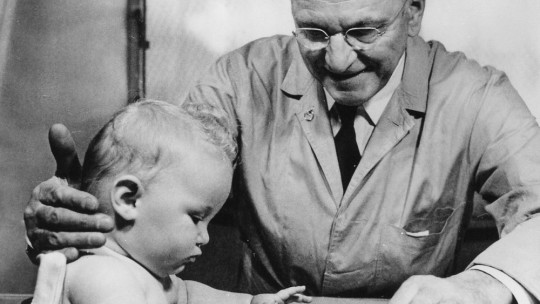
Long before ultrasound scans or milestone-tracking apps existed, parents had almost no reliable way to know whether their child’s development fell within a normal range. Arnold Gesell changed that entirely, spending decades filming, measuring, and cataloguing how infants and children actually grow rather than how theorists assumed they should. He wasn’t a household name in the way Freud or Piaget became. Still, walk into any pediatrician’s office today that references developmental milestones by age, and you’re standing on ground Gesell mapped nearly a century ago.
What makes his story compelling isn’t just the sheer scale of his research — he and his colleagues eventually observed thousands of children — but the philosophical stance underneath it. Gesell believed development unfolded according to a biologically programmed sequence, a stance now known as maturation theory, and he built an entire scientific apparatus around proving it through direct observation rather than speculation. That commitment to watching children rather than theorizing about them from an armchair was, at the time, genuinely radical. Few researchers before him had bothered filming a baby reaching for a rattle frame by frame.
Who was the man behind the Gesell Developmental Schedules that pediatricians still reference today?
This biography traces Gesell’s path from a small Wisconsin town to Yale University, unpacking his major theories, his most influential publications, and the lasting mark his child development research left on psychology and pediatrics alike.
Who Was Arnold Gesell and Why Does He Matter in Psychology?
Arnold Lucius Gesell was an American psychologist, physician, and researcher who founded one of the earliest scientific approaches to studying normal child development, later earning the nickname “the father of child development” for his lifetime of observational research. His work bridged psychology, pediatrics, and philosophy in a way few of his contemporaries attempted.
How many of these have you been "meaning to read" for months?
- 1
 TarcherThe Artist's Way30th Anniversary EditionListen Free On Audible
 - 2
 New Harbinger PublicationsThe Dialectical Behavior Therapy Skills WorkbookPractical DBT Exercises for Learning Mindfulness, Interpersonal Effectiveness, Emotion Regulation...Listen Free On Audible
 - 3
 New Harbinger PublicationsAdult Children of Emotionally Immature ParentsHow to Heal from Distant, Rejecting, or Self-Involved ParentsListen Free On Audible
Born on June 21, 1880, in the small village of Alma, Wisconsin, Gesell grew up along the Mississippi River in a household that valued education, curiosity, and disciplined observation of the natural world. That early orientation toward careful watching would define his entire professional life. He eventually became director of the Yale Clinic of Child Development, a position he held for thirty-seven years, during which he collected an enormous archive of behavioral data on infants and young children. Few researchers of his era combined a medical degree with formal psychological training the way he did. That dual foundation gave his conclusions unusual credibility across two fields that didn’t always speak the same language.
What Shaped Gesell’s Early Life and Education?
Gesell’s academic path moved through the University of Wisconsin and Clark University before landing him at Yale, where he eventually earned a medical degree to complement his psychology training. This unusual combination of credentials shaped everything that followed.
After completing his undergraduate studies at the University of Wisconsin, Gesell pursued graduate work at Clark University in Massachusetts, a hub for early American psychology. There he studied under G. Stanley Hall, the pioneering psychologist widely credited with founding the field of developmental and adolescent psychology in the United States. Hall’s influence on Gesell was profound — his mentor’s belief that childhood deserved rigorous scientific study, rather than dismissal as a mere prelude to adulthood, became the intellectual seed for everything Gesell later built. Gesell earned his doctorate in psychology from Clark in 1906. Nearly a decade later, in 1915, he added a medical degree from Yale, a decision that let him study children through both a psychological and physiological lens simultaneously.
- University of Wisconsin foundation: Gesell completed undergraduate coursework that introduced him to early scientific psychology.
- Clark University doctorate: He earned his Ph.D. under G. Stanley Hall, absorbing an emphasis on developmental stages.
- Yale medical training: His 1915 M.D. gave him physiological grounding that most contemporary psychologists lacked.

How Did Gesell Establish the Yale Clinic of Child Development?
Gesell founded what became the Yale Clinic of Child Development in 1911, initially called the Yale Psycho-Clinic, and directed it for thirty-seven years until his retirement in 1948. The clinic evolved into a landmark institution for observational child research.
What began as a modest clinical setup grew into one of the most influential child research centers in the country, eventually becoming what is known today as the Yale Child Study Center. Gesell used the clinic to conduct sustained, longitudinal observation of children, tracking the same individuals across months and years rather than relying on brief snapshots. This was slow, painstaking work. It also produced data nobody else had bothered to collect at that scale. During his tenure, Gesell and his collaborators observed more than ten thousand children, documenting patterns of verbal, motor, social, and emotional development that formed the empirical backbone of his later theoretical claims. After retiring from Yale, he went on to lead the Gesell Institute of Child Development, continuing his research until his death in 1961.
What Is Gesell’s Theory of Maturation?
Gesell’s maturation theory proposes that child development unfolds according to a genetically programmed sequence, with environment and individual temperament influencing the pace of development but not its fundamental order. This was his central, defining contribution to psychology.
According to Gesell, a child doesn’t learn to crawl before walking because caregivers train that sequence into them; the order is biologically encoded, driven by the maturation of the nervous system itself. Environmental factors, nutrition, stimulation, caregiving quality, could speed up or slow down when a milestone appeared, but they couldn’t skip a stage or reorder it entirely. This distinguished Gesell sharply from behaviorist thinkers of his era, particularly John B. Watson, whose theories emphasized environmental conditioning as the primary engine of development. Gesell pushed back against that framing directly. He argued instead for what he called reciprocal interweaving, a concept describing how paired behaviors, like using the left versus right hand, alternate dominance during development before eventually stabilizing into a consistent pattern.
| Maturation Theory Concept | What It Describes |
|---|---|
| Fixed developmental sequence | Milestones occur in a predictable, unchangeable order across all typically developing children. |
| Reciprocal interweaving | Alternating dominance between paired behaviors before eventual stabilization. |
| Self-regulation | A child’s innate capacity to pace their own growth according to internal readiness. |
How Do the Gesell Developmental Schedules Work?
The Gesell Developmental Schedules, first published in 1925 and expanded significantly with 1928’s Infancy and Human Growth, offered pediatricians and psychologists a standardized way to compare an individual child’s development against observed norms across motor, language, adaptive, and personal-social domains. It was one of the first tools of its kind.
The schedules assigned children a developmental quotient, a numerical marker indicating how a child’s observed abilities compared to age-based norms established through Gesell’s large-scale observational studies. In 1938, Gesell collaborated with researcher Helen Thompson to revise the schedules so they could evaluate infants as young as four weeks old, extending the tool’s usefulness dramatically. Later collaborators, including psychologists Frances Ilg and Louise Bates Ames, helped extend and refine this normative framework well beyond Gesell’s own lifetime. The schedules weren’t perfect, and Gesell knew it. Still, they gave clinicians something they’d never had before: an evidence-based reference point for distinguishing typical variation from genuine developmental concern.
- Observe motor behavior: Record gross and fine motor milestones such as reaching, sitting, and walking against age-based norms.
- Assess adaptive responses: Note how a child manipulates objects and solves simple problems presented during observation.
- Document language emergence: Track vocalization, comprehension, and early word use across successive visits.
- Evaluate personal-social skills: Compare a child’s self-care and interpersonal responses to established developmental benchmarks.

Why Did Gesell Pioneer the Use of Film in Child Research?
Gesell was among the first researchers to use motion-picture cameras systematically to study infant and child behavior, allowing frame-by-frame analysis of movements too quick or subtle for the naked eye to catch reliably. This methodological innovation set his lab apart from virtually every other developmental research program of the era.
He also designed a one-way observation dome, later nicknamed the “Gesell dome,” which let researchers watch and film children playing naturally without the child perceiving they were being observed. That detail mattered enormously for data quality. A child aware of being watched often behaves differently, and Gesell understood this decades before it became standard methodological caution in developmental psychology. His film archive eventually grew into an enormous visual record, some of which remains a historical resource for researchers studying early-twentieth-century normative child development. Watching those old reels today feels almost eerie. You’re seeing the raw material behind milestones every modern parent takes for granted.
How Did Gesell’s Ideas Compare to Jean Piaget’s Theory of Cognitive Development?
Gesell’s maturation theory and Jean Piaget‘s stage theory of cognitive development shared a belief in fixed developmental sequences, but they diverged sharply in focus — Gesell emphasized observable behavioral norms, while Piaget concentrated on internal cognitive structures and reasoning.
Piaget, working largely in Switzerland during an overlapping period, built his framework around how children construct logical understanding through stages like the sensorimotor and preoperational periods. Gesell, by contrast, cared less about abstract cognitive structure and more about what a child could physically and behaviorally demonstrate at a given age. Both researchers rejected the notion that children were simply miniature adults waiting to be filled with knowledge. Where they parted ways was methodology: Piaget relied heavily on clinical interviews and logical puzzles, whereas Gesell built his conclusions almost entirely from direct behavioral observation and film analysis. Comparing the two highlights just how many valid paths existed toward understanding the same basic mystery of childhood growth.

What Books Did Arnold Gesell Publish and Why Do They Still Matter?
Gesell authored numerous influential works, including Infancy and Human Growth, The Child from Five to Ten, and Youth: The Years from Ten to Sixteen, translating his clinical research into guidance accessible to parents, educators, and pediatricians alike. These weren’t dry academic texts.
His writing carried an unusually humane tone for a scientist of his era, treating children’s individual pacing with genuine respect rather than reducing them to data points on a chart. Infancy and Human Growth, published in 1928, remains a foundational text cited in developmental psychology courses for its detailed documentation of infant behavior sequences. Later collaborative works with Frances Ilg extended his normative framework into adolescence, broadening the scope of his research well past the toddler years most people associate with his name. Gesell’s writing style balanced scientific rigor with genuine warmth toward the subject matter — a combination that made his books popular well beyond academic circles.
What Criticisms Has Gesell’s Maturation Theory Faced?
Modern developmental researchers no longer fully accept Gesell’s notion of rigidly fixed developmental stages, arguing instead that environment, culture, and individual variability play a larger shaping role than his framework originally allowed. This doesn’t erase his contribution. It does complicate it.
Critics point out that Gesell’s normative samples leaned heavily on children from relatively homogeneous, predominantly white, middle-class New England backgrounds, which raises legitimate questions about how universally applicable his original norms really were across different cultural and socioeconomic contexts. Later researchers also challenged the strict sequencing his theory implied, noting far more overlap and individual variation in milestone timing than his early framework suggested. Even so, the core insight, that some developmental sequences follow predictable biological patterns largely independent of specific teaching, has held up reasonably well and continues to inform pediatric screening tools today. Science evolves. Gesell’s foundational observational method still holds real value even where his specific conclusions have been revised.
What Is Gesell’s Lasting Legacy in Child Development?
Gesell’s enduring legacy lies in establishing observational, normative research as a legitimate scientific method for studying child development, a methodological shift that still underlies modern pediatric milestone checklists and developmental screening tools. Few individual researchers have shaped everyday clinical practice so directly.
The Gesell Institute of Child Development, which he led after retiring from Yale, continued producing developmental research long after his death, and revised versions of his original schedules remain in clinical use in various forms today. His insistence on watching real children rather than theorizing from assumption also influenced how later generations of researchers, including those studying attachment and cognitive development, approached their own methodologies. That emphasis on rigorous, patient observation over sweeping theoretical speculation is arguably his most quietly influential contribution. It’s easy to overlook a legacy built on patience and film reels rather than dramatic breakthroughs. But nearly every pediatric milestone chart handed to new parents today traces its lineage back to Gesell’s meticulous, decades-long project of simply watching children grow.
FAQs about Arnold Gesell
When and where was Arnold Gesell born?
Arnold Gesell was born on June 21, 1880, in Alma, a small village in Wisconsin located along the Mississippi River. He was the eldest of five children in a family that valued education, and his upbringing in a close-knit rural community shaped his lifelong interest in careful, patient observation. He later attended the University of Wisconsin before pursuing graduate studies at Clark University in Massachusetts. Gesell eventually settled in New Haven, Connecticut, where he spent the bulk of his professional career at Yale University. He died on May 29, 1961, in New Haven, having spent nearly five decades studying children’s growth and behavior through direct clinical observation and film analysis.
What is Arnold Gesell most famous for?
Gesell is best known for developing maturation theory, the idea that children’s development follows a biologically programmed sequence largely independent of specific training, and for creating the Gesell Developmental Schedules used to measure a child’s progress against established age norms. He was also among the earliest researchers to use motion-picture film systematically to document infant and child behavior, a technique that allowed far more precise analysis than observation alone. His research at the Yale Clinic of Child Development, which he directed for thirty-seven years, produced one of the largest bodies of normative child development data compiled up to that point in psychological history. That combination of theory, tools, and methodology earned him lasting recognition in developmental psychology.
Did Arnold Gesell believe nature or nurture was more important?
Gesell didn’t fully dismiss environmental influence, but he clearly emphasized biological maturation as the primary driver of developmental sequence. He believed that while nutrition, caregiving quality, and stimulation could speed up or slow down when a specific milestone appeared, they couldn’t fundamentally alter the order in which those milestones occurred. This placed him closer to the nature side of the nature-versus-nurture debate compared to strict behaviorists of his era, who argued environment shaped nearly everything about a child’s development. Gesell’s position was more nuanced than a simple either-or stance, though critics later argued his framework still underweighted just how much culture and environment could shape developmental timing and expression.
How did Arnold Gesell’s clinic at Yale contribute to psychology?
The Yale Clinic of Child Development, which Gesell founded and directed from 1911 to 1948, became one of the most influential centers for observational child research in the twentieth century, eventually evolving into today’s Yale Child Study Center. Gesell used the clinic to conduct sustained, longitudinal observation of thousands of children over the course of decades, collecting an unprecedented volume of behavioral data. This long-term approach allowed him to identify patterns across large samples rather than relying on isolated case studies, giving his conclusions a statistical weight that most contemporary child research lacked. The clinic’s methods, particularly its emphasis on direct observation and filmed documentation, influenced how later child development research centers approached their own studies for generations afterward.
What are the Gesell Developmental Schedules used for today?
The Gesell Developmental Schedules, originally published in 1925 and revised multiple times since, are used to assess whether an infant or young child’s motor, language, adaptive, and social development falls within expected ranges for their age. Pediatricians and psychologists use variations of this tool as an early screening measure, helping identify children who might benefit from further developmental evaluation or early intervention services. While the specific norms have been updated over the decades to reflect more diverse populations and modern research, the underlying framework Gesell established, comparing individual development against observed age-based benchmarks, remains foundational to pediatric developmental screening. Later collaborators, including Frances Ilg and Louise Bates Ames, helped extend and modernize the schedules well beyond Gesell’s original research.
How is Arnold Gesell different from Jean Piaget?
Both researchers believed child development unfolds through predictable stages, but they focused on very different aspects of that process. Gesell concentrated on observable physical and behavioral milestones, using film and direct observation to document motor, language, and social development in measurable terms. Piaget, working around the same era in Switzerland, focused instead on internal cognitive structures, studying how children’s logical reasoning evolves through distinct stages like the sensorimotor and concrete operational periods. Their methodologies also diverged significantly, with Piaget relying more on clinical interviews and logical problem-solving tasks, while Gesell built his conclusions from large-scale behavioral observation. Together, their differing approaches contributed complementary pieces to the broader field of developmental psychology.
Is Arnold Gesell’s maturation theory still accepted today?
Parts of it remain influential, though modern developmental psychologists no longer accept the theory in its original, rigid form. Contemporary research acknowledges far more individual and cultural variability in developmental timing than Gesell’s framework originally allowed, and critics have noted that his normative samples weren’t demographically representative of the broader population. That said, his core insight, that certain developmental sequences follow a biologically influenced pattern that environment can pace but not entirely reorder, still holds practical value and informs pediatric screening tools used today. Most researchers now view maturation as one important factor among several, including environment, culture, and individual temperament, rather than the singular explanation Gesell originally proposed.
Bibliography
- Gesell, A. (1928). Infancy and Human Growth. Macmillan.
- Gesell, A. (1929). Maturation and Infant Behavior Pattern. Psychological Review, 36, 307-319.
- Gesell, A., & Ilg, F. L. (1943). Infant and Child in the Culture of Today. Harper & Brothers.
- Gesell, A., Ilg, F. L., & Ames, L. B. (1956). Youth: The Years from Ten to Sixteen. Harper & Brothers.
- Thelen, E., & Adolph, K. E. (1992). Arnold L. Gesell: The Paradox of Nature and Nurture. Developmental Psychology, 28(3).
- National Academy of Sciences. Biographical Memoir of Arnold Gesell.
- Britannica. Arnold Gesell: American Psychologist and Child Development Pioneer.
- National Association for the Education of Young Children. The Enduring Contributions of Arnold Gesell.
- Yale Child Study Center. History of the Gesell Program in Early Childhood.
Use this citation format to reference the article clearly and help readers find the original source.
PsychologyFor. (2026). Arnold Gesell: a Biography of This Psychologist, Philosopher and Pediatrician. PsychologyFor. https://psychologyfor.com/arnold-gesell-a-biography-of-this-psychologist-philosopher-and-pediatrician/