

See more of our articles in your search results.
Picture a rat named for no one in particular, scampering around the kitchen floor of a psychologist’s house in Montreal. The psychologist’s young daughters have been playing with it, carrying it from room to room, feeding it scraps and letting it explore the furniture. A few weeks later, the rat is taken to the laboratory and dropped into a maze. It threads the corridors with a sort of casual brilliance, beating the sleek, well-fed rats that had spent their lives in plain wire cages. The man watching, Donald Hebb, gets the sense that he’s looking at something important, though he can’t yet say what.
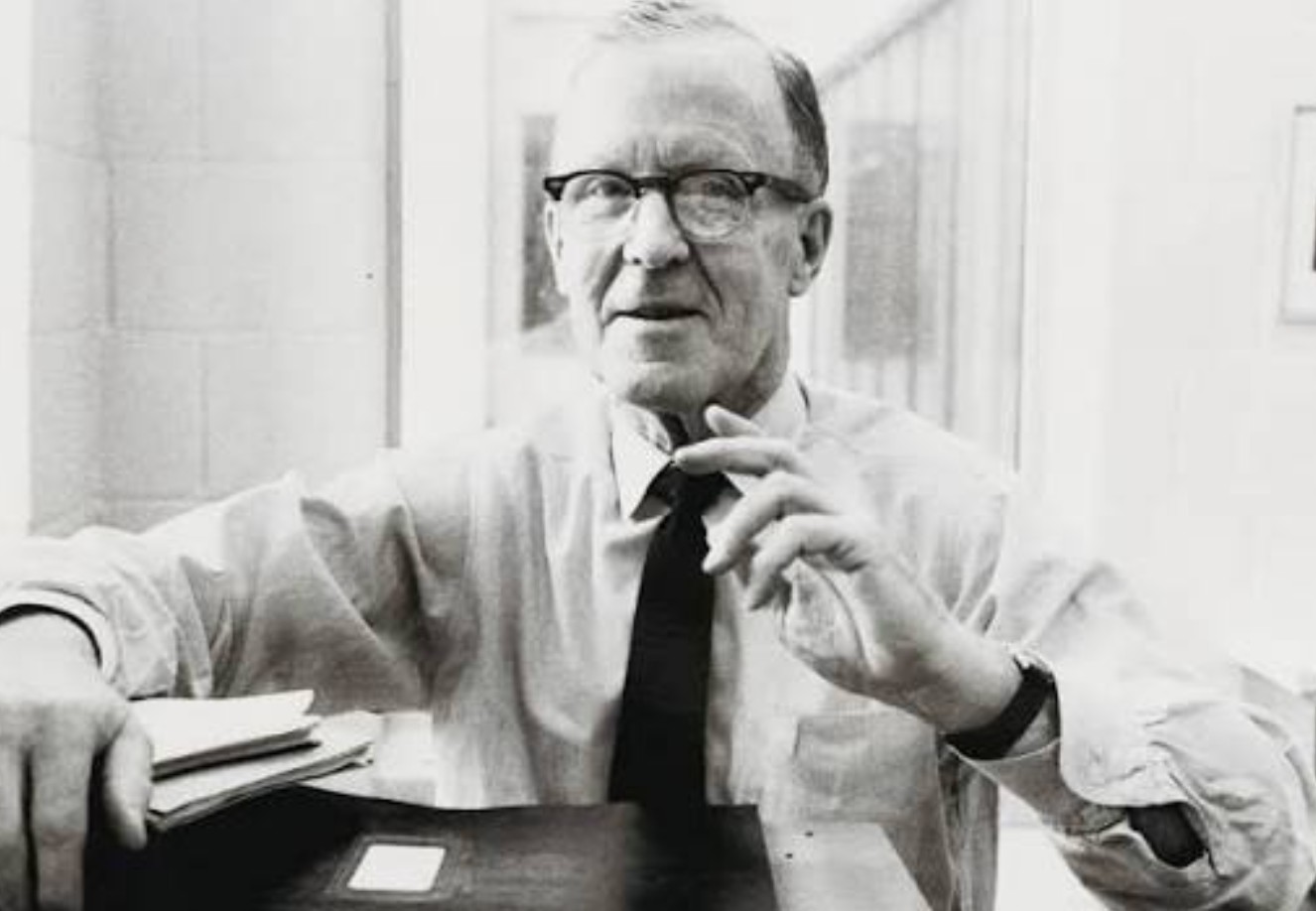
That small domestic experiment tells you a lot about Donald Olding Hebb (1904 to 1985). He was a former schoolteacher who wanted to be a novelist, a Canadian from a fishing village in Nova Scotia, a quiet, wry man who ended up persuading a generation of psychologists to look inside the skull. He’s often called the father of biopsychology (also described as the father of neuropsychology and neural network theory) because he argued, in 1949, that learning, memory and thought could be explained by how groups of neurons are wired together and rewired by experience.
Not bad for a failed novelist.
This biography of Donald Hebb traces his life and career, explains his big ideas, including Hebb’s rule, cell assemblies and the sensory deprivation studies, and asks what in his legacy has survived and what hasn’t.
Who was Donald Hebb, and why is he called the father of biopsychology?
Donald O. Hebb was a Canadian psychologist who, in his 1949 book The Organization of Behavior, proposed that learning happens when connections between neurons are strengthened by repeated joint activity. He’s called the father of biopsychology because he bridged psychology and neuroscience when the two fields mostly ignored each other.
How many of these have you been "meaning to read" for months?
- 1
 TarcherThe Artist's Way30th Anniversary EditionListen Free On Audible
 - 2
 New Harbinger PublicationsThe Dialectical Behavior Therapy Skills WorkbookPractical DBT Exercises for Learning Mindfulness, Interpersonal Effectiveness, Emotion Regulation...Listen Free On Audible
 - 3
 New Harbinger PublicationsAdult Children of Emotionally Immature ParentsHow to Heal from Distant, Rejecting, or Self-Involved ParentsListen Free On Audible
The title is a label, not an official honor, and it’s worth saying where it comes from. In the first half of the twentieth century, American psychology was dominated by behaviorism, which treated the mind as a black box and studied only stimuli and responses. Meanwhile neuroscientists studied neurons and brain regions with little interest in thought, memory or personality. Hebb argued that you couldn’t understand behavior without understanding the machinery that produces it, and he proposed concrete, testable ideas about how that machinery works. A McGill University tribute put it this way: his great achievement was persuading a generation of psychologists that in order to understand the behavior of living organisms, it made sense to study the neural machinery responsible for it.
Hebb is also credited, with equal justice, as a founder of neuropsychology and a forerunner of connectionism and modern artificial neural networks. His name lives on in the Hebb synapse, Hebbian learning, the Hebb-Williams maze and the Hebb lecture series at McGill. The Biographical Memoirs of the Royal Society, which elected him a Fellow, describe the book as one that had an enormous influence on a generation of psychologists and neuroscientists.
A quick timeline helps orient the story.
| Year | Milestone |
|---|---|
| 1904 | Born July 22 in Chester, Nova Scotia |
| 1925 | Graduates from Dalhousie University with a degree in English |
| 1932 | Completes a master’s degree in psychology at McGill University |
| 1934 to 1936 | Studies with Karl Lashley at Chicago, then Harvard; PhD in 1936 |
| 1937 to 1939 | Works at the Montreal Neurological Institute on the effects of brain surgery |
| 1942 to 1947 | Studies chimpanzees at the Yerkes Laboratories of Primate Biology; writes The Organization of Behavior |
| 1947 to 1948 | Returns to McGill as professor; becomes chair of psychology |
| 1949 | The Organization of Behavior is published |
| 1951 to 1954 | McGill sensory deprivation studies |
| 1960 | Serves as president of the American Psychological Association |
| 1974 | Retires from McGill |
| 1985 | Dies on August 20 |
A caution on hero-worship. Hebb’s ideas weren’t made from nothing; they built on predecessors such as Ramón y Cajal’s neuron doctrine, Pavlov’s conditioning and William James’s speculations about habit and brain pathways. What made Hebb distinctive was the combination: a clear, specific neural hypothesis, grounded in experiments and written so that psychologists could use it.
The rest of this article follows how a Nova Scotia schoolteacher got there.
Where did Hebb come from, and how did a would-be novelist become a psychologist?
Hebb was born in 1904 in Chester, a small coastal village in Nova Scotia, and he intended to be a writer. After graduating from Dalhousie University in 1925 with a degree in English, he spent years teaching school and reading widely, and psychology gradually captured him.
His childhood was bookish and rural. According to biographical accounts, his parents were both physicians, and his mother was an early enthusiast for the Montessori approach to education, which treated children as active learners. That detail matters because Hebb’s later work on early experience and learning has a Montessori flavor: the idea that environments shape development. The family moved to Dartmouth when he was a teenager. He studied English at Dalhousie, the sort of degree you take when you plan to write novels.
The novels didn’t happen. Instead, Hebb took a series of jobs, including teaching and, later, serving as headmaster of a school in Montreal. It was as an educator that he began to ask practical questions about how children learn and why some struggle. He read William James, whose Principles of Psychology speculated about how habits form in the brain, and he read Ivan Pavlov and John B. Watson, the founders of conditioning and behaviorism. Karl Lashley’s work on the brain and learning also attracted him. According to McGill, his interest in psychology stemmed from the writings of James, Pavlov, Watson and Lashley.
So in 1928 he enrolled as a part-time graduate student in psychology at McGill University in Montreal, while continuing to work as a headmaster at a Montreal school. That’s a hard way to do a degree. He earned his master’s in 1932. Hebb already had a taste for challenging received wisdom, and he eventually decided that he’d have to go elsewhere to get the training he wanted.
Consider what he brought with him to graduate study. Many future neuroscientists begin in biology or medicine. Hebb began in literature and teaching. That gave him an unusual strength: he wrote clearly. The Organization of Behavior is demanding, but it’s readable, and Hebb had a knack for explaining abstractions through concrete examples. Colleagues often described his lectures as unpretentious and funny.
It also gave him a certain humility toward behavior. A teacher sees, daily, that children differ, that learning isn’t automatic and that experience matters. Hebb never lost that classroom realism. When he later insisted that heredity and environment can’t be separated, he was drawing on something he’d seen with his own eyes.
The decision to leave teaching for full-time research, in his thirties, was a gamble. It would pay off in an unusual way: by connecting him with the most influential brain scientist in America.
How did Karl Lashley shape Hebb’s thinking?
Lashley was Hebb’s doctoral mentor at Chicago and Harvard, and his work shaped Hebb largely by provocation. Lashley’s experiments suggested that memories aren’t stored in any single place in the brain, and Hebb set out to explain how learning could be distributed yet still depend on specific neural changes.
In 1934, Hebb moved to the University of Chicago to study under Karl Lashley, a leading figure in physiological psychology. A year later, when Lashley moved to Harvard, Hebb went with him and completed his PhD in 1936. His thesis examined the effects of early deprivation on size and brightness perception in rats: he raised rats in darkness and tested how they perceived the world once they could see. The results suggested that some aspects of perception were innate, whereas others depended on experience, an early version of a theme that would run through his career.
Lashley himself was famous for a frustrating result. In maze-learning experiments with rats, he removed various portions of the cortex and found that the animals’ maze performance depended more on how much tissue was removed than on which part. He concluded, in a well-known 1950 paper titled “In search of the engram,” that he couldn’t find a localized memory trace, and he proposed principles of “mass action” and “equipotentiality,” meaning that the cortex functions as a whole and that different regions can take over for one another. Lashley sounded almost despairing about the search for memory, joking that when he reviewed the evidence, he sometimes felt that learning just wasn’t possible.
That challenge was productive for Hebb. If memory isn’t in one place, how could it be stored in a physical brain? His answer, developed in the following decade, was that memory is a pattern of connections among many neurons, a network, so that it’s distributed and yet depends on specific physical changes at synapses. In other words, Hebb found a way to reconcile Lashley’s data with the idea of a physical memory trace. Modern neuroscience still sees memory as distributed networks of strengthened connections.
Hebb never stopped admiring Lashley, though he diverged from him. Lashley was skeptical of neat theories; Hebb was willing to propose one and let experiments test it. Lashley was a restless, sometimes prickly figure; Hebb was a quieter, more collegial one. But they shared the conviction that behavior must ultimately be explained by the nervous system.
After the PhD, Hebb needed a job in the middle of the Great Depression. He found one in his home country, in an unusual position that would give him access to something few psychologists had: living human brains after surgery.
What did Hebb learn from brain surgery patients and chimpanzees?
He learned that the brain’s role in intelligence is more complicated than the localization theories of his day suggested, and that early injury is more damaging than later injury. These lessons, gathered at the Montreal Neurological Institute and at a primate laboratory in Florida, fed directly into The Organization of Behavior.
From 1937 to 1939, Hebb worked at the Montreal Neurological Institute with the neurosurgeon Wilder Penfield, who treated epilepsy by removing diseased brain tissue. Hebb tested patients before and after surgery. One surprise was that large removals of frontal lobe tissue in adults often left measured intelligence largely intact, which contradicted the popular idea that the frontal lobes were the seat of intellect. He reported such cases in a 1939 paper on patients who had lost large portions of left frontal tissue. But when brain damage occurred early in life, the effects on intelligence could be much more severe. A damaged adult brain could rely on knowledge and skills built up earlier, whereas an injured young brain couldn’t develop them in the first place.
Hebb drew a conclusion that became central to his thinking: intelligence isn’t a single faculty stored in a particular spot. It’s built up through experience, using networks of cells, and early experience matters enormously. He later distinguished two senses of intelligence, now often called “Intelligence A” (the innate potential of the brain) and “Intelligence B” (the functioning level achieved through development and experience), a distinction that still turns up in textbooks.
After brief stints at Queen’s University in Kingston, Ontario, Hebb accepted an invitation from Lashley, who had been appointed director of the Yerkes Laboratories of Primate Biology in Florida. From 1942 to 1947 Hebb studied chimpanzees, in particular their emotions and temperament. Among other things, he observed that chimpanzees showed intense fear of certain unfamiliar objects, such as a detached model of a head, even if they had never been hurt by them. He took this as a sign that fear can arise from a mismatch between what the animal expects and what it perceives, not just from conditioning. The idea, that the brain builds expectations from experience and responds with alarm when the world violates them, anticipated later work on prediction and novelty.
It was in Florida that he wrote The Organization of Behavior. He’d later joke about how much he’d learned from chimpanzees about human personality, including how much animals differ individually. He also developed a lifelong conviction that psychologists should study the whole animal in a natural-ish context, not just rats in boxes.
Picture the scene: a Canadian in the humid heat of Florida, observing apes by day and writing about neurons by night. The book that emerged from this period would turn out to be one of the most influential works in the history of the brain sciences.
What did The Organization of Behavior propose: cell assemblies and Hebb’s rule?
Hebb proposed that thoughts and perceptions are carried by cell assemblies, groups of neurons that become linked through repeated joint activity, and that connections strengthen when one cell repeatedly helps fire the next. That second idea is Hebb’s rule, now the most famous principle in learning theory.
Here is the statement in his own words, from the 1949 book: when an axon of cell A is near enough to excite cell B and repeatedly or persistently takes part in firing it, some growth process or metabolic change takes place in one or both cells such that A’s efficiency, as one of the cells firing B, is increased. In plain English, if one neuron keeps helping another to fire, the connection between them gets stronger. Hebb didn’t know the mechanism; he offered it as a hypothesis about how experience could leave a lasting physical trace.
The popular slogan, “neurons that fire together wire together,” is a paraphrase. It’s often credited to the neuroscientist Carla Shatz, who used it in a 1992 Scientific American article, and Hebb himself never said it. The paraphrase is memorable but slightly misleading, since Hebb’s original idea requires that cell A helps cause cell B’s firing, so timing and causation matter.
From that rule, Hebb built a larger theory. When a set of neurons is repeatedly active together, for example as you see the same face or hear the same word, their connections strengthen, and they form a cell assembly. Once formed, the assembly can be activated as a unit, even by part of the original input. That could explain pattern completion: you recognize a friend from a glimpse of her profile because part of the pattern triggers the whole assembly. Assemblies could also persist briefly as reverberating activity, offering a model of short-term memory. And a sequence of assemblies firing in order, which he called a phase sequence, could correspond to a train of thought.
Imagine Priya learning guitar, an illustrative composite. At first each chord change demands full attention. After weeks of practice, the finger movements, the sound and the visual pattern of the fretboard become tightly bound together. She no longer thinks about it; the assembly fires as a unit. Hebb’s theory suggests that repeated co-activation has literally strengthened the relevant connections.
The book also did something unusual. It laid out testable predictions and invited physiologists to look for the synaptic change he’d postulated. Peter Milner, one of Hebb’s students at McGill and later co-discoverer, with James Olds, of the brain’s “pleasure centers” in rats, was among those who carried the approach forward. Many readers came away convinced that psychology and neuroscience were two halves of the same problem.
Not everything in the book held up, and Hebb was cheerful about that. He thought of theories as scaffolding to be replaced, and he liked to say that a wrong but testable theory was better than a vague one.
What were Hebb’s sensory deprivation experiments at McGill?
In the early 1950s, Hebb’s laboratory at McGill paid student volunteers to lie in a monotonous, sound-dampened cubicle with their eyes and hands covered. The studies showed that the brain needs constant stimulation to function normally, and they launched the modern study of sensory deprivation.
The funding came from Canada’s Defence Research Board, which was interested in “brainwashing” and in the psychology of isolation. In the 1954 experiment reported by Woodburn Heron, Thomas Scott and their graduate student colleague W. H. Bexton, all working in Hebb’s department, male volunteers were paid to do nothing. They lay on a bed in a lit but featureless cubicle, wearing translucent goggles that let in only diffuse light, with cardboard tubes over their forearms and hands to limit touch, and a constant hum of white noise. They were fed and allowed bathroom breaks, but otherwise asked to stay put, for as long as they could stand it, up to several days.
The results were striking. Few people could tolerate more than two or three days, even though the pay was generous by student standards. Subjects reported that they were initially bored, then restless, and then increasingly unable to think clearly. Their performance on cognitive tests got worse. Many experienced vivid, hallucination-like visual imagery, such as lines, geometric patterns and even detailed scenes, as if the brain, starved of input, generated its own. They also reported difficulty concentrating, emotional upset, and altered perceptions after leaving the chamber. The original paper reported a general cognitive deterioration under the deprivation conditions.
Hebb interpreted the findings in terms of his theory of arousal. In a 1955 paper titled “Drives and the C.N.S. (conceptual nervous system),” he argued that a certain level of sensory stimulation is necessary to maintain normal brain function, and that the brain actively seeks it. Too little stimulation, and the system degrades; too much, and performance suffers too. This pattern, an inverted U between arousal and performance, resonated with other research on arousal and performance and remains a staple of introductory psychology.
Imagine a modern equivalent, an illustrative composite: a volunteer floating in a darkened flotation tank for ninety minutes. Many people find it relaxing, and some report vivid imagery or a sense of time distortion. Hebb’s original conditions were far harsher, with fewer comforts and longer durations.
The studies also had a darker afterlife. The finding that isolation could disturb thinking and increase suggestibility attracted interest from intelligence agencies, and some later research and practice used sensory deprivation in coercive interrogation. Sensory deprivation is now widely regarded as a form of mistreatment when imposed on unwilling people. The ethics of research have changed a great deal since the 1950s, with informed consent, ethics review and limits on distress becoming standard.
The sensory deprivation work earned Hebb public fame and academic influence. Its deeper lesson, that the brain depends on a steady diet of input to stay organized, fitted perfectly with his theory.
How did Hebb’s rats show that early experience builds the brain?
Hebb showed that rats raised as household pets, with a rich and varied environment, solved maze problems better than rats raised in standard laboratory cages. That finding helped launch decades of research on environmental enrichment and the effects of early experience on the brain.
The story goes that Hebb took a pair of rats home for his daughters to keep as pets. The rats roamed the house, got handled, explored and played. When he later tested them on problem-solving tasks, they outperformed rats that had grown up in cages. He and his collaborator Kathleen Williams developed a standardized series of maze problems, now known as the Hebb-Williams maze, to measure animals’ problem-solving ability. They described the method in a 1946 paper on rating animal intelligence. The maze, with an adjustable set of barriers and a series of problems of increasing difficulty, remains in use in laboratories around the world to assess learning in rodents.
The implications were striking, especially given his earlier surgical work. Intelligence isn’t just a fixed property of the brain; it’s shaped by experience. A stimulating early environment seems to give animals better tools for solving problems later. This fit Hebb’s theory beautifully: rich experience would build more and better cell assemblies, giving the animal a larger repertoire of mental building blocks.
The idea sparked an important line of research. In the 1960s, researchers such as Mark Rosenzweig and Marian Diamond at Berkeley reported that rats housed in enriched environments, with toys, tunnels and companions, developed thicker cortices and more dendritic branching than rats in impoverished conditions. Subsequent work has shown that enrichment can affect brain structure, synaptic density and recovery after injury in animals. Translating this to humans is complicated. The evidence supports the general principle that stimulating environments benefit development, but it doesn’t support claims that special toys or flashcards can make babies into geniuses.
It’s also worth being honest about the “pet rat” anecdote. It’s a charming story that Hebb himself told, and it’s likely approximately true, but the controlled studies that followed were more rigorous than the kitchen-floor observation. As with many origin stories in science, the anecdote is the doorway and the data are the building.
Think of a child in a home full of books, conversation, music, outdoor play and attentive adults, an illustrative composite, compared with one with little stimulation. Hebb would not have been surprised by differences in later learning. But he’d also have warned against reducing the picture to a single factor.
In fact, he made a point of rejecting simple nature-versus-nurture contests. He liked to say that asking whether heredity or environment contributes more to behavior is like asking whether length or width contributes more to the area of a field. Both are necessary, and they multiply.
What was Hebb like as a teacher and leader at McGill?
By most accounts, he was a modest, funny, generous colleague who built McGill’s psychology department into a world-class center. He returned to McGill in 1947, became chairman in 1948, and remained a mainstay of the university until retiring in 1974.
At McGill, Hebb attracted exceptional graduate students and visitors, among them Peter Milner, Woodburn Heron, Ronald Melzack, Brenda Milner and Mortimer Mishkin. Under his leadership, the department emphasized physiological and experimental psychology, and McGill became a hub for the emerging field. Alumni often remembered his open-door style and his willingness to let students run with ideas. Former students often described his encouragement of independent thinking, even when it ran against his own theories.
His writing continued to shape the field. In 1958, he published A Textbook of Psychology, which presented psychology as a biological science and was widely used for decades. It’s remembered for its clear prose and its willingness to confront difficult questions, such as the nature of emotion and thought. In 1960, he served as president of the American Psychological Association, a notable honor for a Canadian working outside the American mainstream, and he used his platform to argue for more attention to cognition and the brain at a time when behaviorism still held sway. He was also president of the Canadian Psychological Association.
Hebb also took on administrative roles beyond his department. He served as Vice-Dean for biological sciences at McGill from 1964 to 1966 and as the university’s Chancellor from 1970 to 1974, according to the McGill biography. After retirement, he returned to Nova Scotia, where he’d grown up, and continued to write and lecture until late in life. He died on August 20, 1985.
His intellectual style was distinctive. He valued clear thinking over technical display, he distrusted jargon, and he believed that psychology should aim at explanation, not just description. He was fond of provoking colleagues with aphorisms. He argued that psychologists should be willing to state a theory even if it was probably wrong, because wrong theories can be corrected, while vague ones can’t.
He was not without critics. Behaviorists saw his emphasis on hypothetical brain mechanisms as speculative, while some neuroscientists thought he asked too much of simple synaptic rules. A few commentators have pointed out that his attention to sensory deprivation and its military context raises uncomfortable questions about the relationship between science and the state. Hebb himself acknowledged the ethical dilemmas of Cold War research.
Still, the portrait that emerges is of a scientist whose greatest asset was a combination of imagination and plain speech. He made hard ideas feel like common sense, which is rarer than it sounds.
What is Hebb’s legacy: from long-term potentiation to artificial intelligence?
Hebb’s lasting legacy is the idea that learning is a change in the strength of connections between neurons. Experiments on long-term potentiation gave it empirical support, and “Hebbian learning” became a cornerstone of computational neuroscience and neural network research, though modern findings have refined and complicated his original rule.
The first big confirmation came in 1973, when Timothy Bliss and Terje Lømo reported that brief high-frequency stimulation of a pathway in the rabbit hippocampus caused a long-lasting increase in synaptic transmission. They called it long-term potentiation (LTP). Bliss had been a graduate student at McGill in the early 1960s, working in the circle of Hebb’s colleagues, in an effort to find the type of synaptic change Hebb had postulated. LTP isn’t identical to Hebb’s rule; it’s a phenomenon that obeys a Hebbian logic, in which activity in the presynaptic and postsynaptic cells together strengthens the connection. Researchers later identified molecular mechanisms, notably the NMDA receptor, which acts as a coincidence detector, opening only when a presynaptic signal and postsynaptic depolarization occur together. That’s about as Hebbian as biology gets.
In 2003, Richard Brown and Peter Milner reviewed Hebb’s legacy in Nature Reviews Neuroscience under the title “The legacy of Donald O. Hebb: more than the Hebb synapse.” Their point was that Hebb contributed far more than a single rule: he gave psychology a program for linking brain and behavior, he anticipated ideas about arousal, perception and development, and he shaped how we think about cognitive neuroscience. They also noted that Hebb’s more detailed predictions had often been right in spirit but needed revision in detail.
Hebbian learning spread beyond neuroscience. In artificial intelligence, simple “Hebbian” weight-update rules were among the first learning algorithms for artificial neural networks, and variants appear in models of associative memory and unsupervised learning. Modern deep learning relies mostly on other learning rules, such as backpropagation, which are not Hebbian, but Hebb’s influence on the connectionist idea that intelligence emerges from changing connection strengths is clear.
Refinements matter. Research has shown that timing is critical, in spike-timing-dependent plasticity, where a presynaptic spike just before a postsynaptic one strengthens a connection and the reverse order weakens it. Synapses can also weaken (long-term depression), and homeostatic mechanisms keep overall activity stable, which a pure Hebbian rule can’t do, since it would run away into runaway strengthening. Memory is also not stored by synaptic changes alone; glia, gene expression and neuromodulators matter too. And the claim that cell assemblies are the units of thought remains hard to test directly, though recent technologies that record from many neurons at once have revived interest in assembly-like patterns.
In other words, Hebb’s rule is a foundation, not a complete theory. Most scientists treat it as an important truth about plasticity with plenty of additions.
That’s perhaps the best compliment to a scientist: his idea was clear enough to be proved partly right, and partly wrong, and to keep generating new questions.
What can Hebb’s ideas teach us about learning today, and where should we be cautious?
Hebb’s work supports a few broadly sensible lessons: repetition strengthens learning, rich experience matters, and the brain needs stimulation. But it’s easy to over-apply a slogan, and popular claims about “rewiring your brain” often go beyond the evidence.
Here are some sensible takeaways, with the usual caution that a theory about synapses doesn’t automatically tell you how to study for an exam:
- Repeat with intention: repeated, focused practice strengthens connections. Spacing practice over days tends to work better than cramming, as research on learning has shown.
- Link new to old: new facts that connect to existing knowledge are easier to retain, consistent with the idea of overlapping assemblies.
- Seek rich input: varied, engaging environments support development and learning, from childhood onward. Novelty and challenge matter.
- Avoid prolonged monotony: the McGill studies suggest that long stretches of unvarying input degrade thinking. Breaks, movement and variety help.
- Keep the arousal sweet spot in mind: moderate challenge tends to produce the best performance, whereas too little or too much stress hurts.
Now the cautions. “Neurons that fire together wire together” is a catchy summary, not a prescription. It doesn’t mean that thinking positive thoughts will rewire you, that every repeated behavior creates a permanent groove, or that a particular app can reshape your brain. Plasticity is real but constrained: some changes are easy and others slow, and what transfers from one skill to another is often limited.
Likewise, enrichment research in animals doesn’t justify pressure on parents to buy expensive stimulation products. The evidence suggests that responsive caregiving, language, play and a safe environment do most of the work. Many everyday activities qualify.
It’s also worth remembering Hebb’s own caution about simple answers. He opposed both pure nativism and pure environmentalism, and he warned against treating the brain as a blank slate or as a fixed machine. His work offers a framework in which genes, experience and the structure of the nervous system interact.
If you want to read Hebb himself, The Organization of Behavior is demanding, but the opening chapters are surprisingly clear. His 1955 paper on drives and arousal is shorter and a good place to start, and it’s available in public archives. And if you wonder what he’d make of today’s neuroscience, it’s a safe bet he’d be delighted by the new tools, skeptical of the hype and curious about the surprises.
Not a bad legacy for a man who set out to write novels. In a sense, he did: he wrote a story about how a brain becomes a mind, and we’re still reading the sequel.
FAQs about Donald Hebb
Who was Donald Hebb?
Donald Olding Hebb (1904 to 1985) was a Canadian psychologist, born in Nova Scotia, who became a pioneer of the biological study of behavior. After a degree in English and years as a teacher, he studied psychology at McGill, Chicago and Harvard, worked with brain surgery patients and chimpanzees, and in 1949 published The Organization of Behavior, which proposed how learning and memory arise from changes in connections between neurons. He later chaired the psychology department at McGill and served as president of the American Psychological Association.
Why is Donald Hebb called the father of biopsychology?
The label reflects his role in bridging psychology and neuroscience. At a time when behaviorism ignored the brain and neuroscience ignored the mind, Hebb proposed specific neural mechanisms, such as cell assemblies and strengthening of synapses, to explain learning and thought. He is also often called the father of neuropsychology and a forerunner of neural network research. These are informal titles, and other scientists made major contributions too.
What is Hebb’s rule?
Hebb’s rule is the idea that when one neuron repeatedly helps to fire another, the connection between them is strengthened. In his 1949 wording, a growth process or metabolic change makes the first cell’s efficiency in firing the second increase. It’s often summarized as “neurons that fire together wire together,” a phrase popularized by Carla Shatz. The summary is catchy but loose, since Hebb’s rule implies a causal role of one cell in the firing of the other.
What is a cell assembly?
A cell assembly is a group of neurons that, through repeated joint activity, become strongly interconnected so that they tend to fire together as a unit. Hebb proposed that assemblies form the neural basis of perceptions, concepts and memories, and that sequences of assemblies, which he called phase sequences, underlie thought. The idea is still influential, and new recording technologies have renewed interest in assembly-like patterns, though direct tests remain challenging.
What did the Hebb sensory deprivation experiments show?
In the early 1950s at McGill, student volunteers lay in a monotonous cubicle with goggles, padded hands and constant noise. The study by Bexton, Heron and Scott found that most people couldn’t tolerate more than a few days, showed impaired performance on cognitive tests, and experienced vivid visual imagery. Hebb interpreted the results as showing that the brain needs a constant flow of stimulation to function normally. The work later attracted controversy because of its military funding and its link to coercive interrogation methods.
What is the Hebb-Williams maze?
It’s a standardized set of maze problems developed by Donald Hebb and Kathleen Williams in the 1940s to measure problem-solving ability in animals, especially rats. The apparatus uses a flexible arrangement of barriers to create a series of increasingly difficult problems. It grew out of Hebb’s observation that rats raised as household pets solved problems better than caged rats, and it is still used in research on learning and the effects of environment.
How is Hebb related to long-term potentiation?
Long-term potentiation, discovered by Timothy Bliss and Terje Lømo in 1973, is a lasting increase in synaptic strength after intense activity, and it provides experimental support for Hebb’s idea that experience strengthens connections. Researchers later found molecular mechanisms, such as the NMDA receptor acting as a coincidence detector, that fit a Hebbian logic. LTP is not identical to Hebb’s original proposal, and modern work shows that timing, synaptic weakening and homeostasis also matter.
Where can I read Hebb’s work?
His major book is The Organization of Behavior (1949), which is challenging but rewarding, and his A Textbook of Psychology (1958) presents his views for general readers. Shorter, accessible pieces include his 1955 paper on drives and arousal, available in public archives. For a modern overview of his legacy, the 2003 review by Richard Brown and Peter Milner, and the Royal Society biographical memoir, are good places to start.
Bibliography
- Bexton, W. H., Heron, W., & Scott, T. H. (1954). Effects of decreased variation in the sensory environment. Canadian Journal of Psychology, 8(2), 70-76.
- Bliss, T. V. P., & Lømo, T. (1973). Long-lasting potentiation of synaptic transmission in the dentate area of the anaesthetized rabbit following stimulation of the perforant path. The Journal of Physiology, 232(2), 331-356.
- Brown, R. E., & Milner, P. M. (2003). The legacy of Donald O. Hebb: More than the Hebb synapse. Nature Reviews Neuroscience, 4(12), 1013-1019.
- Hebb, D. O. (1939). Intelligence in man after large removals of cerebral tissue: Report of four left frontal lobe cases. The Journal of General Psychology, 21(1), 73-87.
- Hebb, D. O. (1949). The organization of behavior: A neuropsychological theory. Wiley.
- Hebb, D. O. (1955). Drives and the C.N.S. (conceptual nervous system). Psychological Review, 62(4), 243-254.
- Hebb, D. O. (1958). A textbook of psychology. W. B. Saunders.
- Hebb, D. O., & Williams, K. (1946). A method of rating animal intelligence. The Journal of General Psychology, 34(1), 59-65.
- Lashley, K. S. (1950). In search of the engram. Symposia of the Society for Experimental Biology, 4, 454-482.
- Shatz, C. J. (1992). The developing brain. Scientific American, 267(3), 60-67.
Use this citation format to reference the article clearly and help readers find the original source.
PsychologyFor. (2026). Donald Hebb: Biography of the Father of Biopsychology. PsychologyFor. https://psychologyfor.com/donald-hebb-biography-of-the-father-of-biopsychology/