

See more of our articles in your search results.
The functioning of the nervous system depends on a large number of specialized cells that, inside or outside the brain, are responsible for working together with the rest of the body to keep its functioning active. Ependymal cells are one of the elements that play a key role in this
Next we will see what ependymal cells are and how they are related to the activity of the brain and the nervous system in general.
Ependymal cells: definition
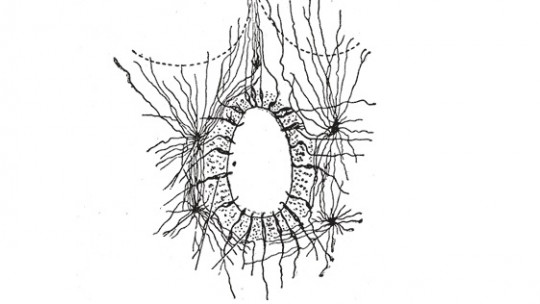
Ependymal cells are known as a type of epithelial-type cells that are associated with the body cavities through which cerebrospinal fluid circulates. It is also part of the glial cells, which share space with neurons in the nervous system, although its function is not to transmit signals at full speed.
Thus, ependymal cells are part of a larger family of microscopic elements whose components include, for example, microglia or astrocytes, all of them representatives of the neuroglia
What is your function?
It is currently believed that the main functions of ependymal cells are twofold.
How many of these have you been "meaning to read" for months?
- 1
 TarcherThe Artist's Way30th Anniversary EditionListen Free On Audible
 - 2
 Atria BooksThe Courage to Be DislikedThe Japanese Phenomenon That Shows You How to Change Your Life and Achieve Real HappinessListen Free On Audible
 - 3
 Hay HouseBecoming SupernaturalHow Common People Are Doing the UncommonListen Free On Audible
On the one hand, when they come together they create membranes that keep cerebrospinal fluid circulating through the ependymal canal of the spinal cord (a type of duct that runs through the spinal column) and the cerebral ventricles, preventing it from spilling through other tissues and passing to areas of the body where it should not be. In other words, they cover the circulation spaces with this substance.
On the other hand, it is believed that the ependymal cells make it possible to create the cerebrospinal fluid itself, as we will see. This is very important, because although the latter is a relatively poor substance in a variety of valuable contents for cells (if we compare it with blood), it allows the entire nervous system to function well and have extra protection against possible incidents.
What is cerebrospinal fluid?
To fully understand the role that ependymal cells play in our body, it is necessary to understand why there is cerebrospinal fluid circulating through our nervous system. The cerebrospinal fluid has the following functions:
1. Cushions
This substance forms a kind of liquid mattress that directly protects many areas of the nervous system (which, remember, is full of fragile and delicate parts) from blows. By leaving a space between tissues in which there is a water-like substance, The deformation produced by the impacts does not worsen the condition of other areas as much – Acts as a firewall.
2. It serves to regulate substance levels
This fluid creates a medium in which various components that are rejected or needed by the body’s cells are expelled and taken up. So, They help maintain the balance of the correct functioning of the body
3. It allows the capture of useful materials for cells
In the cerebrospinal fluid it is possible to find elements that cells can use as raw materials to maintain their functioning, repair themselves, grow, etc.
4. Shapes the nervous system
The presence of ventricles with fluid in them forms a kind of “soft” skeleton that gives shape to this structure of the nervous system and allows it to always be maintained more or less with the same disposition.
Types of ependymal cells
There are three types of ependymal cells, each with its characteristics, location in the nervous system and way of functioning. These are tanycytes, ependymocytes and choroidal epithelial cells
6. Tanicitos
Tanycytes are ependymal cells that cover the walls of the third ventricle, deep in the brain, very close to a structure of the nervous system known as the diencephalon It is believed that among its main functions is to propel the cerebrospinal fluid thanks to its fine extensions.
7. Ependymocytes
Ependymocytes are the most common and numerous type of ependymal cell, since They are present in both the ependymal canal and the cerebral ventricles Its function is very basic: to create a relatively insulating barrier so that certain components do not pass from one side to the other, like a microscopic membrane.
8. Choroidal epithelial cells
Choroid epithelial cells, finally, form the type of ependymal cell that is responsible for forming the choroid plexuses, the places where cerebrospinal fluid is produced, as well as creating a protective and insulating barrier.
9. Disorders
Some alterations in these cells and in the tissues they form can cause them to appear disorders that, in certain cases, threaten the lives of patients For example, hydrocephalus, a medical condition in which too much cerebrospinal fluid is generated and the nervous system expands, putting pressure on the bony walls that cover it and damaging itself in the process.
Cranial hypertension or hypotension It would be another example of what can go wrong with this system of ventricles of the nervous system, because failures in pressure can seriously interfere with nervous activity or even lead to death.
An important component of the nervous system
In conclusion, ependymal cells are an example of the extent to which the functioning of the nervous system does not only depend on neurons. Around these nerve cells there are many others that, working in a coordinated manner, make it possible for the whole to do its job as it should. In this periphery of biological processes there are still many things to discover.
Use this citation format to reference the article clearly and help readers find the original source.
PsychologyFor. (2024). Ependymal Cells: Types and Functions in the Body. PsychologyFor. https://psychologyfor.com/ependymal-cells-types-and-functions-in-the-body/