

See more of our articles in your search results.
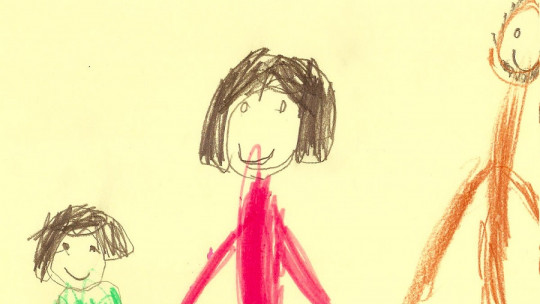
I’ll never forget the first time I watched a seven-year-old boy complete a family drawing test. His name was Marcus, and he’d been referred by his school because of aggressive behavior and difficulty connecting with peers. I gave him a blank piece of paper and some colored pencils and simply said, “Draw your family.” What he created told me more in fifteen minutes than weeks of verbal therapy might have revealed. He drew himself tiny in the corner, his older brother massive in the center with arms like tree trunks, and his parents on opposite sides of the page facing away from each other. Without saying a word about feeling small, intimidated, or caught between conflict, his drawing screamed all of it.
The Family Test—more formally called the Draw-A-Family Test or Kinetic Family Drawing—is one of the most widely used projective assessment tools in child psychology. Unlike standardized tests with right and wrong answers, projective tests ask people to create or interpret something ambiguous, and in doing so, they “project” their inner thoughts, feelings, and perceptions onto the task. The family drawing does exactly this: it bypasses the conscious filters and defense mechanisms that children (and adults) use when talking about sensitive topics and accesses something more honest and unguarded.
What makes this test so valuable is its simplicity and accessibility. A child doesn’t need language skills, reading ability, or cognitive sophistication to complete it. They just need to be able to hold a pencil and draw stick figures. Yet those simple drawings can reveal attachment patterns, family dynamics, emotional conflicts, self-perception, and areas of stress or trauma that might take months to uncover through traditional talk therapy. The test works because children express through drawing what they can’t or won’t express in words.
So let’s dive deep into what the Family Test actually is, how psychologists use it, what we look for when interpreting these drawings, and why this deceptively simple assessment remains a cornerstone of child psychological evaluation despite being developed decades ago.
What Exactly Is the Family Test?
The Family Test encompasses several related drawing techniques, with the two most common being the Draw-A-Family Test (DAF) and the Kinetic Family Drawing (KFD). Both ask children to draw their families, but with slightly different instructions that yield different types of information.
How many of these have you been "meaning to read" for months?
- 1
 TarcherThe Artist's Way30th Anniversary EditionListen Free On Audible
 - 2
 New Harbinger PublicationsThe Dialectical Behavior Therapy Skills WorkbookPractical DBT Exercises for Learning Mindfulness, Interpersonal Effectiveness, Emotion Regulation...Listen Free On Audible
 - 3
 New Harbinger PublicationsAdult Children of Emotionally Immature ParentsHow to Heal from Distant, Rejecting, or Self-Involved ParentsListen Free On Audible
The original Draw-A-Family Test, developed by psychoanalyst Louis Corman in the 1960s, simply instructs the child: “Draw a picture of your family.” That’s it. No other guidance. The child decides who to include, how to arrange them, what size to make each person, whether to draw them realistically or abstractly, and what details to add. This open-ended nature is precisely what makes it projective—every choice the child makes potentially reveals something about their inner world.
The Kinetic Family Drawing, developed by Burns and Kaufman in 1970, adds an action component: “Draw a picture of everyone in your family, including you, doing something.” The addition of activity provides different information. Instead of just showing who exists in the child’s family world, it reveals how the child perceives relationships, interactions, and the emotional quality of family life. Are family members doing things together or separately? Are they engaged in pleasant activities or conflicts? Who is central to the action and who is peripheral?
Both versions are administered individually in a quiet, private setting. The child is given plain white paper—usually 8.5 x 11 inches—and drawing implements. Some psychologists provide just a pencil, others offer colored pencils or crayons. The choice matters less than consistency. The examiner observes the process, noting the order in which family members are drawn, hesitations, erasures, comments the child makes, and how long they spend on different parts of the drawing.
After completing the drawing, the examiner asks questions: “Tell me about your drawing. Who is everyone? What are they doing? How does each person feel?” These questions help clarify ambiguous elements and provide additional interpretive context—the child’s verbal explanations combined with the visual content create a richer picture than either alone.
The Theory Behind Projective Drawing Tests
To understand why family drawings work as assessment tools, you need to understand projection. Freud introduced the concept of projection as a defense mechanism where people attribute their own unacceptable feelings to others. But in psychological testing, projection has a broader meaning: when faced with ambiguous stimuli, people reveal aspects of their personality, conflicts, and inner world through how they interpret or complete the task.
Children are particularly good projectors because they haven’t yet developed the sophisticated defense mechanisms and social filters that adults use. When a child draws, they’re less likely to consciously manipulate their representation to look good or hide problems. They draw what feels true to them emotionally, even if it doesn’t match objective reality.
The family drawing taps into what’s called the child’s “internal working model” of relationships—their mental representation of how families function, what role they play, and how safe or threatening their relational world feels. A child being physically abused might draw themselves tiny and draw the abusive parent enormous with emphasized hands. A child feeling emotionally neglected might draw everyone else in the family interacting while drawing themselves off to the side, alone. A child in a loving, secure family typically draws members close together, similar in size, engaged in pleasant activities.
The drawings also reflect developmental factors. Younger children (ages 4-6) produce simpler drawings with less detail and organization. School-age children (7-12) create more elaborate drawings with clearer relationships between figures. Adolescents might resist the task entirely or produce highly stylized drawings that are harder to interpret. Developmental norms help psychologists distinguish normal variation from clinically significant indicators.
How Psychologists Administer the Family Test
Administration seems simple—hand a child paper and ask them to draw—but there’s more nuance involved in doing it properly. The testing environment should be quiet, comfortable, and free from distractions. The child should feel safe and not pressured. The psychologist needs to establish rapport first, so the child feels relaxed enough to draw authentically rather than trying to please the examiner.
The instructions are intentionally non-directive. For the Draw-A-Family Test, the psychologist simply says something like: “I’d like you to draw a picture of your family. Draw your whole family.” For the Kinetic Family Drawing: “Draw a picture of everyone in your family, including yourself, doing something. Try to draw whole people, not stick figures, and make them doing something—some kind of action.” The instruction to avoid stick figures (though not rigidly enforced) encourages more detailed drawings that provide richer interpretive material.
The psychologist observes the entire process, noting several things:
The sequence in which people are drawn often reveals psychological significance. The first person drawn is often the most important or most problematic figure in the child’s life. Children typically draw themselves first, but when they don’t, the person they draw first deserves attention. Similarly, who gets drawn last, or who gets “forgotten” and added as an afterthought, can be meaningful.
Hesitations, erasures, and corrections indicate areas of conflict or anxiety. If a child draws and erases their father multiple times, that father-child relationship likely carries tension. If they struggle with where to place themselves in the drawing, they might feel uncertain about their role in the family.
Comments and questions during drawing provide context. A child who says “I don’t know how to draw my mom” while easily drawing other family members might have a complicated relationship with their mother. A child who asks “Do I have to include my stepdad?” is communicating something important about that relationship.
Time spent on different figures can indicate emotional investment or conflict. Spending excessive time carefully detailing one family member while quickly sketching others suggests that person holds special significance—positive or negative.
After the drawing is complete, the inquiry phase is crucial. The psychologist asks the child to identify each person, explain what they’re doing (in kinetic drawings), and describe how each person feels. They might ask: “Who is closest to whom in your family?” “Who is the happiest/saddest?” “What happens before/after this scene?” These questions help clarify the child’s perceptions and add verbal content to visual information.

What Psychologists Look For: Interpreting Family Drawings
Interpreting family drawings is more art than science, requiring training, experience, and integration with other assessment data. No single element of a drawing should be over-interpreted—context matters enormously. That said, there are patterns and indicators that trained psychologists look for:
Composition and Structure
How the family is arranged on the page reveals perceived relationships and dynamics. Family members drawn close together suggest emotional closeness; those drawn far apart suggest distance or conflict. Children typically draw themselves near the family member they feel closest to. Physical barriers in drawings—furniture, walls, different rooms—often represent psychological barriers or boundaries between family members.
The placement of figures also matters. Central placement suggests importance or dominance. Being drawn at the edge or in a corner can indicate feeling peripheral or excluded. Being drawn above or below other family members can reflect power dynamics or developmental stage (younger children often draw themselves lower because they’re actually shorter, but extreme differences are noteworthy).
Size and Proportion
The relative size of family members is one of the most straightforward indicators—people drawn larger are perceived as more powerful, important, or dominant. People drawn tiny are perceived as less significant or less powerful. A child drawing themselves much smaller than siblings might feel inferior or less valued. Drawing a parent enormous might reflect that parent’s power—which could be nurturing and protective or overwhelming and threatening depending on other factors.
Exaggeration of body parts can be significant. Large hands might suggest aggression or manual labor. Large mouths might indicate verbal dominance or yelling. Emphasized eyes might suggest surveillance or scrutiny. Missing body parts—particularly hands, which allow action and connection—can indicate powerlessness or difficulty relating.
Facial Expressions and Details
How family members’ faces are drawn provides direct information about emotional tone. Happy, smiling faces indicate positive feelings; sad, angry, or blank faces indicate distress or emotional emptiness. The absence of facial features entirely can suggest emotional unavailability or the child’s difficulty perceiving that person’s emotions.
The level of detail given to different family members reflects emotional investment. A carefully detailed drawing of one parent with just an outline of the other might suggest the detailed parent is more emotionally present or significant. Completely omitting someone who should be in the family is a red flag—it might indicate extreme conflict, abuse, or a wish for that person to not exist in the family.
Activities and Interactions (Kinetic Drawings)
In Kinetic Family Drawings, what people are doing reveals how the child perceives family functioning. Family members engaged in shared activities suggest cohesion and positive interaction. Each person doing completely separate activities suggests disconnection or parallel existence without real relationship.
The nature of activities matters too. Families engaged in pleasant activities like playing, eating meals together, or going places suggest a positive family environment. Activities involving conflict, danger, or isolation suggest problems. Sometimes children draw themselves doing one activity while everyone else does something together—a clear visual representation of feeling excluded.
The energy level and movement depicted also provide information. Static, rigid figures suggest emotional constraint or depression. Energetic, active figures suggest vitality and engagement. Figures in motion toward each other suggest connection; figures moving away suggest avoidance or escape.
Use of Space and Grounding
How the child uses the available space reveals feelings about their environment. A tiny drawing in one corner of a large sheet suggests anxiety, insecurity, or feeling small in the world. A drawing that fills the entire page or goes off the edges suggests expansiveness, possible boundary issues, or feeling overwhelmed.
Whether figures have a ground line (floor or ground beneath them) relates to emotional grounding. Floating figures without ground lines can indicate insecurity, instability, or feeling ungrounded in their family environment. Multiple ground lines at different levels can suggest split family dynamics or multiple “realities” in the home.
Omissions and Inclusions
Who is included or excluded from the family drawing is hugely significant. The child is told to draw their family, but they decide what “family” means. Including extended family members (grandparents, cousins) who don’t live in the home might indicate these people are psychologically central. Including pets often reflects their emotional importance—sometimes pets provide comfort and connection that people don’t.
Omitting a family member who clearly should be included is one of the strongest indicators of problems in that relationship. If a child draws everyone except their stepfather, or everyone except themselves, that’s clinically significant. Sometimes children draw an idealized family—including a deceased parent or adding a wished-for sibling—which reveals their desires or unresolved grief.
Barriers and Encapsulation
Physical barriers between family members—furniture, walls, windows—often represent psychological barriers or boundaries. A child drawing themselves in a separate room from other family members visually represents feeling isolated or cut off. Drawing only themselves inside a protective enclosure (like a playpen or circle) might indicate a need for safety or feeling different from the family.
Conversely, excessive merging of figures—where you can’t tell where one person ends and another begins—can suggest enmeshed or boundary-less relationships that are also problematic, just in a different way.
Color Use
When colored pencils or crayons are provided, color choices can add another interpretive layer, though this is less standardized than other indicators. Bright, varied colors generally suggest emotional vitality. Dark colors or heavy shading can suggest depression or distress. Using different colors for different family members might reflect how the child perceives them differently.
Some children use color symbolically—drawing an angry parent in red, for instance. Others use color randomly or simply aesthetically. Context from the inquiry phase helps distinguish meaningful color use from preference or availability.

What the Family Test Reveals
When interpreted thoughtfully and integrated with other assessment information, family drawings can reveal a remarkable amount about a child’s psychological world:
Attachment Patterns
The drawings often reflect attachment security or insecurity. Securely attached children typically draw themselves near caregivers, with physical connection (holding hands, touching), and positive emotional tone. Anxiously attached children might draw exaggerated proximity or clinginess. Avoidantly attached children might show emotional distance even when physically proximate. Disorganized attachment can appear as chaotic drawings without clear organization or relationships.
Family Dynamics and Relationships
The drawings map the child’s perception of family structure and relationships. Who is allied with whom? Who conflicts with whom? What are the power dynamics? Is the family cohesive or fragmented? Is there a clear hierarchy or chaos? These dynamics might not match how parents describe the family, but they reflect the child’s lived emotional experience, which is what matters psychologically.
Self-Perception and Self-Esteem
How children draw themselves relative to others reveals how they see themselves within the family system. Size, placement, detail, and activity all reflect self-perception. Children with healthy self-esteem typically draw themselves appropriately sized, included in activities, and with positive affect. Those with poor self-esteem might draw themselves tiny, peripheral, with sad affect, or even omit themselves entirely.
Emotional Climate
The overall feel of the drawing—bright versus dark, connected versus isolated, active versus static—reflects the emotional climate of the home as the child experiences it. Even without specific problematic indicators, an overall sense of warmth and connection versus coldness and distance comes through in these drawings.
Specific Conflicts or Trauma
Sometimes drawings reveal specific issues or traumatic experiences. A child experiencing abuse might draw the abuser with emphasized threatening features. A child dealing with parental conflict might draw parents on opposite sides of the page or with angry faces toward each other. A child grieving a loss might include the deceased person or draw family members crying.
Developmental Concerns
The sophistication of the drawing relative to the child’s age provides developmental information. Significantly immature drawings might suggest developmental delays or regression in response to stress. Unusually sophisticated drawings might indicate giftedness or precocious development.
Limitations and Criticisms of the Family Test
Despite its widespread use, the Family Test has limitations that responsible psychologists acknowledge. The test is not a standalone diagnostic tool—it’s one piece of data that must be integrated with other assessment information.
The reliability and validity of projective tests generally are lower than standardized objective tests. Different psychologists might interpret the same drawing somewhat differently. Cultural factors affect both how children draw and how drawings should be interpreted—family structures, acceptable emotional expression, and artistic conventions vary across cultures.
Some children are simply better at drawing than others, which can affect interpretability. An artistic child might produce elaborate drawings that look psychologically rich when they’re just demonstrating artistic skill. A child with poor fine motor skills might produce a sparse drawing that looks problematic when it just reflects drawing ability.
Children can sometimes consciously manipulate their drawings if they’ve been exposed to assessment before or have been coached. Older children and adolescents particularly might resist the task, produce minimal effort drawings, or intentionally create misleading representations.
The subjective nature of interpretation means psychologist bias can affect conclusions. A psychologist looking for pathology might over-interpret normal variations. Cultural stereotypes or theoretical biases can influence interpretation.
These limitations don’t mean the test is useless—they mean it should be used appropriately. The Family Test is best used as a hypothesis generator that guides further assessment and questioning rather than as a definitive diagnostic tool. When a drawing suggests possible problems, psychologists follow up with other assessment methods to confirm or disconfirm those hypotheses.

Using the Family Test in Clinical Practice
In clinical practice, the Family Test serves multiple purposes beyond initial assessment. It’s useful for building rapport with children who struggle with verbal communication. The act of drawing together is less threatening than direct questioning about sensitive topics. As children draw, they often spontaneously share information they wouldn’t disclose in direct conversation.
The test can track changes over time. Comparing family drawings before and after therapy, or over the course of family interventions, shows whether the child’s perception of family relationships is improving. A child who initially draws themselves tiny and isolated who later draws themselves included and appropriate size is showing progress.
Family drawings can facilitate conversations with parents and families. Showing parents how their child depicts the family often provides powerful motivation for change. Parents might intellectually know there’s conflict, but seeing themselves drawn angry or themselves and their spouse on opposite sides of the page makes it viscerally real.
The test can help children process their own experiences. Sometimes the act of externalizing family dynamics through drawing helps children understand and articulate their feelings. Psychologists might ask children to draw their family as they currently experience it and then draw their family as they wish it could be, facilitating discussion of hopes and needs.
Family Tests with Adults
While primarily used with children, family drawing tests can also be valuable with adolescents and adults, particularly those who struggle with verbal expression or have limited insight into their relational patterns. Adults might be asked to draw their current family or their family of origin, depending on the clinical question.
With adults, interpretation considers that they have more conscious control and developed defense mechanisms, so the projective element might be less pure. However, adults are often surprised by what emerges in their drawings—someone might intend to draw their family positively but find themselves unconsciously creating distance, emphasizing conflict, or revealing feelings they haven’t acknowledged verbally.
Training Required to Use the Family Test
The Family Test seems deceptively simple—anyone can ask someone to draw a family. But interpreting these drawings properly requires extensive training. Psychologists need to understand child development, family systems theory, attachment theory, and projective assessment methods. They need to distinguish normal developmental variations from clinically significant indicators. They need to consider cultural context. They need to integrate drawing interpretations with other assessment data rather than making sweeping conclusions from drawings alone.
Graduate programs in clinical or counseling psychology typically include coursework on projective assessment. Supervised practice interpreting drawings under experienced supervisors is essential. Continuing education helps psychologists refine their skills and stay current with research on these techniques.
The ethical use of the Family Test requires acknowledging its limitations, not over-interpreting findings, and using it as part of comprehensive assessment rather than as a standalone diagnostic tool. Psychologists must be careful not to make definitive statements about family dynamics based solely on drawings but rather use drawings to generate hypotheses tested through other methods.
The Future of Family Drawing Tests
Despite being developed decades ago, family drawing tests remain relevant in contemporary practice. Their low cost, accessibility, and child-friendly nature ensure continued use. Recent research has attempted to develop more standardized scoring systems to improve reliability and validity, though the inherently subjective nature of projective tests makes complete standardization difficult.
Technology is creating new possibilities. Digital drawing platforms allow for precise tracking of the drawing process—the exact sequence, timing, and pressure of each mark. This data might provide additional interpretive information not available with paper and pencil. Virtual reality could enable three-dimensional family representations that reveal spatial relationships even more clearly.
Research continues examining what family drawings can and can’t reveal, which interpretive indicators are most valid, and how cultural factors should inform interpretation. As family structures become more diverse, interpretation guidelines evolve to accommodate single-parent families, same-sex parents, blended families, families with multiple residences, and other non-traditional structures.
FAQs About the Family Test
Can a family drawing test diagnose specific mental health conditions?
No, the Family Test cannot diagnose specific mental health conditions on its own. It’s not designed for that purpose. Instead, it’s a projective technique that provides information about how a child perceives their family relationships, their emotional state, and potential areas of concern. This information contributes to diagnostic understanding when combined with other assessment tools—clinical interviews, standardized tests, behavioral observations, and collateral information from parents and teachers. For example, a family drawing might suggest possible anxiety, trauma, or attachment problems, but those hypotheses need to be confirmed through other assessment methods. Think of the Family Test as one piece of a larger diagnostic puzzle rather than a standalone diagnostic tool.
What does it mean if a child leaves themselves out of the family drawing?
When a child omits themselves from a family drawing, it’s generally considered a significant finding that warrants further exploration. It could indicate the child feels they don’t truly belong in the family, feel excluded or rejected, or are experiencing severe self-esteem issues where they don’t feel worthy of inclusion. In cases of abuse or severe neglect, children sometimes psychologically disconnect from the family system as a protective mechanism. Alternatively, especially with younger children, they might have simply forgotten to include themselves initially and would add themselves if reminded. The interpretation depends on context—the child’s age, other assessment findings, known family circumstances, and how the child responds when asked about the omission during the inquiry phase. This is why follow-up questions are crucial.
How young can a child be to complete a Family Test?
Children as young as 4 or 5 can complete family drawings, though interpretation needs to account for developmental factors. Preschool-age children (4-6) typically produce simple drawings with basic shapes representing people—circles for heads, stick-like bodies—and limited detail. This is developmentally normal and doesn’t indicate problems. At this age, psychologists focus on who is included, relative sizes, and whether the child can identify family members rather than expecting sophisticated drawings. School-age children (7-12) produce more detailed and organized drawings that provide richer interpretive material. Younger than 4, children typically lack the fine motor skills and representational thinking to create meaningful family drawings. For very young children, play-based assessment methods are more appropriate than drawing tests.
What if a child refuses to draw their family or says they can’t draw?
Refusal or resistance to completing a family drawing is itself clinically meaningful information, though it requires thoughtful interpretation. The child might be experiencing anxiety about their family situation and the drawing feels threatening. They might be protective of family privacy or secrets, particularly if there’s abuse or conflict at home. Older children and adolescents sometimes resist because they find the task childish or because they’re generally resistant to psychological assessment. Some children genuinely lack confidence in their drawing ability and fear being judged. A skilled psychologist responds to resistance by exploring it gently rather than forcing the task. Sometimes offering alternatives helps: “You don’t have to draw if you don’t want to—could you describe your family to me instead?” or “Draw your family however you want, even as stick figures or symbols.” The meaning of the resistance often becomes clearer as the assessment continues.
Should parents see their child’s family drawing?
Whether parents see the family drawing depends on clinical judgment and the specific situation. In many cases, sharing the drawing with parents can be therapeutic and facilitate important conversations. It helps parents understand their child’s perspective and can motivate positive changes. However, there are situations where sharing the drawing would be inappropriate or harmful: if the drawing reveals abuse that hasn’t yet been reported, if showing it would endanger the child, if it would be used punitively against the child, or if parents would respond with intense distress that would frighten the child. Psychologists typically frame sharing carefully: “This is how your child perceives the family right now. It may not match objective reality, but it shows us their emotional experience and what they need.” Parents need to understand that children’s drawings reflect perceptions and feelings, not factual documentation of family life.
Can you fake a family drawing to look “normal” if you know how it’s interpreted?
While older children and adults who understand how family drawings are interpreted might try to produce idealized, “normal-looking” drawings, several factors make effective faking difficult. First, the process observations are as important as the final product—hesitations, erasures, drawing sequence, comments, and body language provide information that’s hard to consciously control. Second, the inquiry phase where you’re asked to explain the drawing, identify feelings, and answer follow-up questions is harder to fake convincingly. Third, most people aren’t as good at conscious deception as they think—unconscious elements usually leak through. Fourth, family drawings are never interpreted in isolation but rather integrated with other assessment data, so a suspiciously “perfect” drawing that contradicts everything else known about the family raises its own red flags.
How does the Family Test differ from other drawing tests like House-Tree-Person?
The Family Test and House-Tree-Person (HTP) are both projective drawing tests but assess different aspects of psychological functioning. The HTP asks people to draw a house, a tree, and a person (and sometimes themselves) as separate drawings. It’s designed to assess personality characteristics, self-concept, and psychological adjustment broadly rather than focusing specifically on family relationships. The house represents the person’s home life and family, the tree represents inner life and growth, and the person drawing reveals self-perception and body image. The Family Test focuses specifically on perceived family relationships, dynamics, and the person’s role within the family system. HTP is used across a wider age range and clinical contexts, while Family Tests are particularly valuable for assessing children’s family experiences. In comprehensive psychological assessments, both might be used—the HTP for broader personality assessment and the Family Test for specific understanding of family dynamics.
Can family drawings be used in custody evaluations or legal proceedings?
Family drawings can be part of custody evaluations but must be used very carefully in legal contexts. Courts increasingly scrutinize projective tests because of concerns about reliability, validity, and potential for bias. Family drawings should never be the sole or primary basis for custody recommendations. They provide one perspective—the child’s subjective experience—which is valuable but not definitive proof of anything. A child might draw themselves closer to one parent simply because that parent is home more often, not because they have stronger attachment. They might draw conflict that reflects normal family stress rather than abuse. Conversely, they might draw an idealized family that masks serious problems. In custody evaluations, family drawings are most appropriately used to identify areas requiring further investigation, understand the child’s perspective to inform interviews, and track changes over time if multiple evaluations occur.
Use this citation format to reference the article clearly and help readers find the original source.
PsychologyFor. (2025). Family Test: What it is and How This Projective Test is Used. PsychologyFor. https://psychologyfor.com/family-test-what-it-is-and-how-this-projective-test-is-used/