


See more of our articles in your search results.
Maybe it’s the six-year-old who bursts into tears at the mention of starting first grade, clinging to a favorite stuffed animal as though it were a life raft in unfamiliar waters. Or maybe it’s the twenty-eight-year-old who still can’t quite commit to a lease, a career path, or a serious relationship, feeling a quiet panic every time responsibility knocks a little louder. Both of these experiences, though decades apart, point to the same underlying current: a genuine, often misunderstood fear of growing up that can shape behavior, relationships, and self-perception in ways that rarely get named clearly.
This fear deserves real compassion rather than dismissal, because it isn’t simply stubbornness, immaturity, or a character flaw. For children, growing up can genuinely feel like losing something precious and irreplaceable: the safety of dependency, the permission to make mistakes without serious consequences, the closeness of a parent who still solves every problem. For adults, this fear often takes on a different shape, appearing as chronic avoidance of commitment, financial responsibility, or long-term planning, frequently rooted in earlier experiences that made adulthood feel threatening rather than exciting. Left unexamined, this pattern can quietly limit someone’s life for years, creating a persistent gap between chronological age and the emotional readiness to fully inhabit it.
So why does this fear take root so deeply, and how does it actually show up day to day?
This article explores the fear of growing up in both children and adults, examining its psychological roots and the specific symptoms that reveal it.
What exactly is the fear of growing up?
The fear of growing up is a persistent psychological pattern in which a person, whether a child anticipating future stages of development or an adult avoiding the responsibilities already expected of them, experiences genuine anxiety, dread, or resistance toward the transition into greater independence and responsibility.
How many of these have you been "meaning to read" for months?
- 1
 New Harbinger PublicationsThe Untethered SoulThe Journey Beyond YourselfListen Free On Audible
- 2
 Sourcebooks, Inc.My Calm Down BookA Sensory Book to Help Kids Calm Their BodiesListen Free On Audible
- 3
 FINGERPRINT with FP logoMeditations (Deluxe Hardbound Edition)FINGERPRINT with FP logoListen Free On Audible
In children, this fear often centers on losing the safety net of complete parental care, the specific worry that growing older means facing the world with less protection and more expectation. In adults, the pattern frequently manifests as what popular psychology has termed Peter Pan syndrome, a colloquial, non-clinical term describing an adult’s persistent avoidance of adult responsibilities like financial independence, long-term commitment, or emotional accountability. It’s worth noting that Peter Pan syndrome isn’t a formal diagnosis found in clinical manuals; rather, it functions as a useful descriptive concept for a recognizable pattern of behavior.
This fear can also intersect with a more specific, clinically recognized phobia called gerascophobia, an intense, irrational fear specifically of aging and its associated losses, including physical decline, diminished independence, and mortality itself. While gerascophobia tends to appear later in life and focuses specifically on the aging process, the fear of growing up more broadly can appear across the entire developmental spectrum, from early childhood resistance to milestones through adult avoidance of the responsibilities that typically define maturity.
| Term | Core Focus |
|---|---|
| Fear of growing up | Broad resistance to developmental milestones and increasing responsibility across any life stage. |
| Peter Pan syndrome | Informal term describing adult avoidance of commitment, responsibility, and emotional maturity. |
| Gerascophobia | A specific phobia involving intense fear of aging and its physical or existential losses. |
Why does the fear of growing up develop in children?
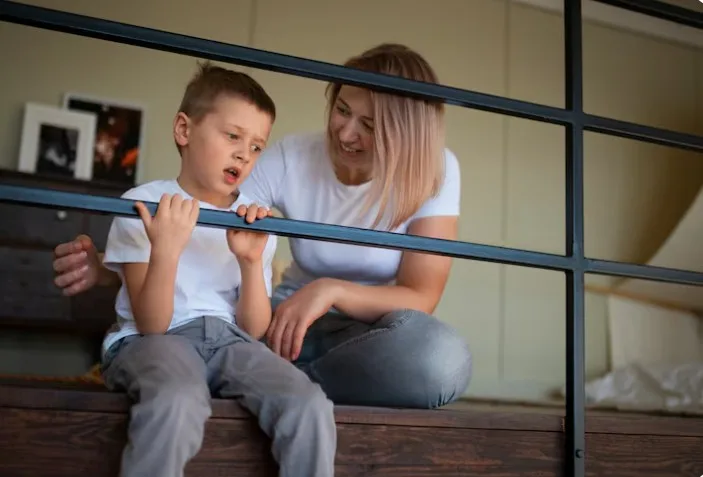
In children, the fear of growing up typically develops from an association between adulthood and loss, whether the loss of parental closeness, playful freedom, or a sense of safety, often intensified by anxious attachment patterns or overly protective caregiving environments.
Psychiatrist John Bowlby’s foundational work on attachment theory helps explain why this fear can take such deep root in early childhood. When a child’s primary relationships feel like the only reliable source of safety in an otherwise unpredictable world, the idea of growing beyond that protective bond, starting school, sleeping without a parent nearby, eventually leaving home, can trigger genuine separation anxiety. This isn’t simply reluctance; for some children, it produces intense physiological distress, including crying, clinginess, or even physical symptoms like stomachaches before significant developmental transitions.
Overprotective parenting styles can inadvertently reinforce this fear, even when driven by genuine love and good intentions. When children are consistently shielded from age-appropriate challenges, mistakes, or minor struggles, they can internalize the message that the world beyond their current, protected stage is inherently dangerous or overwhelming. Conversely, some children develop this fear through what researchers describe as parentification, being asked to take on adult responsibilities too early, which paradoxically creates a deep, unconscious longing to remain in childhood precisely because they never got to fully experience it. Both overprotection and premature responsibility, despite pulling in seemingly opposite directions, can produce a similar underlying resistance to embracing further growth.
Cultural and media messaging can compound this pattern too. Children absorb subtle cues from their environment about what adulthood represents, and if the adults around them frequently express exhaustion, financial stress, or unhappiness about their responsibilities, children may internalize adulthood itself as something inherently burdensome rather than a natural, even exciting, progression.
What causes adults to fear growing up or taking on responsibility?
In adults, the fear of growing up often stems from unresolved developmental experiences, a mismatch between internal emotional maturity and external expectations, or a genuine, sometimes unconscious belief that the freedoms of youth must be sacrificed entirely once adult responsibility begins.
One significant contributing factor involves early childhood dynamics that never fully resolved. Adults who experienced either the overprotected or parentified childhood patterns described earlier often carry those unresolved dynamics forward, manifesting as commitment avoidance, financial irresponsibility, or difficulty sustaining long-term relationships and career paths. Someone who was never allowed meaningful independence as a child may struggle intensely with decision-making autonomy as an adult, while someone who had to grow up too quickly may unconsciously seek to reclaim the childhood freedom they feel was stolen from them, sometimes at the expense of stable adult functioning.
Psychologist Erik Erikson’s stages of psychosocial development offer additional insight here, particularly his description of the identity versus role confusion stage during adolescence and young adulthood. When this developmental stage isn’t navigated successfully, whether due to family instability, trauma, or simply insufficient support during that critical window, a person can remain psychologically “stuck,” experiencing chronic uncertainty about who they are and what they want, which makes committing to adult responsibilities feel genuinely disorienting rather than simply undesirable. This isn’t laziness; it often reflects a legitimate, unresolved developmental gap that requires intentional work to close.
Societal and economic pressures also play a meaningful role in contemporary adult fear of growing up. Rising costs of living, unstable job markets, and delayed traditional milestones like homeownership or marriage have created genuine practical barriers to conventional adulthood, which can blend with psychological avoidance in complicated ways, making it sometimes difficult to distinguish legitimate external obstacles from internal emotional resistance.
What are the common symptoms of fear of growing up in children?
Children experiencing fear of growing up typically display a recognizable cluster of behavioral and emotional symptoms, including separation anxiety, developmental regression, and disproportionate distress around age-appropriate milestones that other children navigate with relative ease.
Separation anxiety often represents the clearest early sign, showing up as intense distress when a child is expected to be apart from a primary caregiver, whether at school drop-off, a sleepover, or even a brief errand. This differs from typical, mild reluctance in that it tends to be disproportionate and persistent, sometimes involving physical symptoms like stomachaches, headaches, or genuine panic rather than simple grumbling. Developmental regression represents another significant symptom category, where a child who has already mastered certain skills, sleeping independently, using the toilet consistently, speaking in age-appropriate language, suddenly reverts to earlier behaviors, often coinciding with a specific stressor related to growing responsibility or an upcoming transition.
Behavioral problems can also signal this underlying fear, particularly defiance, aggression, or disruption that seems to intensify specifically around discussions of growing older, upcoming responsibilities, or developmental transitions like starting a new school year. Some children express this fear more internally, developing irrational, intense fears of specific situations or objects that seem symbolically connected to independence or the unknown future. Parents and caregivers should watch for patterns rather than isolated incidents; occasional resistance to a new challenge is developmentally normal, but a consistent, intensifying pattern across multiple developmental milestones suggests a deeper fear worth addressing directly.
- Separation anxiety that intensifies disproportionately around school, sleepovers, or time away from caregivers.
- Developmental regression, including reverting to earlier behaviors like thumb-sucking or bedwetting.
- Defiant or disruptive behavior that specifically intensifies around transitions or discussions of growing older.
- Irrational fears connected symbolically to independence or the unknown future.
- Physical complaints like stomachaches or headaches preceding developmental milestones or new responsibilities.

What are the common symptoms of fear of growing up in adults?
Adults experiencing fear of growing up typically display chronic patterns of avoidance around commitment, financial responsibility, and long-term planning, often accompanied by a persistent sense of feeling fundamentally unprepared for the life stage they’re chronologically supposed to occupy.
Commitment avoidance frequently represents one of the clearest symptoms, appearing as difficulty sustaining serious romantic relationships, career paths, or even long-term living arrangements, not due to a lack of options but due to genuine anxiety triggered by the permanence such commitments imply. This often pairs with financial irresponsibility, including impulsive spending, reluctance to budget, or discomfort with basic financial planning tasks like retirement savings, which can feel like tangible confirmations of an adulthood the person is trying to avoid fully acknowledging. Some adults also display a persistent prioritization of play, novelty, or immediate gratification over the delayed rewards typically associated with mature planning, not as a healthy expression of joy but as an unconscious strategy for avoiding the weight of responsibility altogether.
Emotionally, adults with this fear often report a chronic, low-grade sense of impostor syndrome specifically related to adulthood itself, a feeling that everyone else somehow received guidance on how to “adult” properly while they were left improvising. This can coexist with genuine anxiety or panic when directly confronted with adult responsibilities, such as signing a lease, negotiating a salary, or making independent medical decisions. Dependency on parents or other caregivers well into adulthood, whether financial, emotional, or logistical, often represents another significant symptom, particularly when that dependency persists despite the practical capacity for greater independence.
- Notice patterns of commitment avoidance across relationships, career, and living situations rather than isolated instances.
- Track financial avoidance behaviors, including discomfort with budgeting, saving, or basic financial planning.
- Identify persistent impostor feelings specifically related to adult responsibilities and life stages.
- Examine ongoing dependency patterns on parents or caregivers that exceed practical necessity.
- Assess anxiety triggered by routine adult tasks that others navigate with relative ease.
How does the fear of growing up connect to broader mental health concerns?
Fear of growing up frequently overlaps with broader anxiety patterns, attachment difficulties, and, in more severe cases, can develop into a diagnosable specific phobia, particularly when the fear becomes disabling enough to significantly interfere with daily functioning and life progression.
When this fear intensifies specifically around the aging process rather than general responsibility, it can meet criteria for gerascophobia, a clinically recognized specific phobia involving intense, irrational fear of aging and its associated losses. Individuals with gerascophobia often report significant physical symptoms when confronted with reminders of aging, including heart palpitations, shortness of breath, and panic-like responses, alongside behavioral patterns like avoiding mirrors, birthday celebrations, or interactions with older individuals. This differs from a milder, more generalized resistance to growing up in that the distress becomes genuinely disabling, often accompanied by depression or persistent low mood specifically connected to age-related anxiety.
Attachment researcher Mary Ainsworth’s work on attachment patterns also offers relevant insight here, since anxious attachment styles, whether originating in childhood or persisting into adulthood, frequently correlate with heightened difficulty tolerating the independence and separation that growing up inherently requires. Someone with an anxious attachment pattern may experience growing responsibility not simply as inconvenient but as a genuine threat to felt safety, since independence can unconsciously register as abandonment or isolation rather than healthy autonomy. Additionally, low self-esteem frequently compounds this fear, since a persistent belief in one’s own inadequacy can make the prospect of handling adult responsibilities feel genuinely insurmountable, rather than simply challenging in a normal, manageable way.

What helps address the fear of growing up in children and adults?
Addressing fear of growing up effectively requires different approaches depending on age, though both children and adults generally benefit from gradual exposure to independence, validation of underlying fears, and building concrete confidence through small, manageable successes rather than sudden, overwhelming demands for maturity.
For children, gradual exposure works particularly well, introducing small increments of independence, choosing their own outfit, managing a simple chore, making a minor decision, rather than expecting sudden, complete autonomy. Parents can also help by normalizing mistakes as a natural, expected part of growing up rather than something to be feared or avoided entirely, which reduces the perceived stakes of independence. Consistent reassurance about the caregiver relationship remaining stable, even as the child gains independence, addresses the underlying attachment concerns driving much of this fear, helping the child understand that growing up doesn’t require losing connection.
For adults, cognitive behavioral approaches, closely associated with psychiatrist Aaron Beck’s work on identifying and challenging distorted thinking, can help address the catastrophic beliefs often underlying adult avoidance, such as assuming that responsibility inevitably means losing all joy or spontaneity. Building what might be called a commitment muscle through small, manageable commitments, a short-term goal, a modest budget, a brief but consistent routine, can gradually build genuine confidence in one’s capacity to handle larger responsibilities over time. For more severe cases, particularly those meeting criteria for gerascophobia or significant attachment-related anxiety, working with a therapist trained in exposure techniques or attachment-focused therapy can provide more structured, professional support for addressing deeply rooted patterns that self-directed strategies alone may not fully resolve.
FAQs about Fear of Growing Up
Is Peter Pan syndrome a real clinical diagnosis?
No, Peter Pan syndrome is not a formal diagnosis recognized in major clinical or diagnostic manuals; rather, it functions as a popular, descriptive term for a recognizable pattern of adult avoidance regarding commitment, responsibility, and emotional maturity. This means a person displaying these traits wouldn’t receive this specific label from a mental health professional, though underlying contributing factors, such as anxiety disorders, attachment difficulties, or unresolved developmental experiences, might receive formal clinical attention. The term remains useful conversationally for describing a genuine pattern many people recognize in themselves or others, even without official diagnostic status, and addressing the underlying anxiety often benefits from the same therapeutic approaches used for related, formally recognized conditions.
At what age is it normal for children to show some resistance to growing up?
Mild resistance to developmental transitions is genuinely normal at nearly every childhood stage, particularly around ages four to six when separation anxiety commonly peaks, and again during early adolescence when identity formation introduces new uncertainty. The key distinction between normal, healthy resistance and a more concerning fear of growing up lies in intensity, duration, and functional impact. Occasional reluctance about starting school or sleeping away from home reflects typical development; persistent, intensifying distress that significantly disrupts daily functioning across multiple developmental milestones suggests a deeper pattern that may benefit from professional guidance from a child psychologist or pediatrician familiar with developmental anxiety.
Can fear of growing up be linked to a specific traumatic experience?
Yes, in both children and adults, a specific traumatic experience, such as a frightening loss, a sudden family disruption, or an overwhelming early exposure to adult responsibilities, can meaningfully contribute to the development of this fear. Trauma can create a strong, sometimes unconscious association between growing older or gaining independence and danger or loss, particularly if the traumatic event occurred during a significant developmental transition. That said, fear of growing up doesn’t always trace back to a single identifiable trauma; it can also develop gradually through consistent environmental patterns, like chronic overprotection or persistent negative messaging about adulthood, without one specific triggering incident.
How is gerascophobia different from ordinary worry about aging?
Gerascophobia involves a level of fear and functional impairment that significantly exceeds typical, mild concern about aging that most people experience at some point. While ordinary worry might involve occasional thoughts about wrinkles or retirement planning, gerascophobia produces genuine panic symptoms, including heart palpitations, shortness of breath, and avoidance behaviors like refusing to look in mirrors or skipping birthday celebrations entirely. This level of distress typically interferes meaningfully with daily functioning and relationships, distinguishing it from the common, manageable unease many people feel about growing older without it controlling their behavior or emotional state to a debilitating degree.
Should parents worry if their child regresses to earlier behaviors during a stressful period?
Occasional, temporary regression during genuinely stressful periods, a new sibling’s arrival, a family move, a parental separation, is a fairly common and often self-limiting response in children, reflecting a natural attempt to seek additional comfort during uncertainty. This becomes more concerning when regression persists well beyond the stressful event’s resolution, intensifies over time, or appears alongside other significant symptoms like severe anxiety or behavioral problems. In most cases, patient, consistent reassurance from caregivers helps children move through temporary regression naturally; persistent or severe patterns, however, may benefit from consultation with a child psychologist to address underlying developmental anxiety more directly.
Can therapy actually help adults overcome a long-standing fear of adult responsibility?
Yes, therapy can be genuinely effective for adults struggling with long-standing avoidance of responsibility, particularly approaches that combine cognitive restructuring with gradual behavioral exposure to manageable adult tasks. A therapist can help identify the specific underlying beliefs driving avoidance, whether catastrophic thinking about losing freedom, unresolved attachment patterns, or unprocessed developmental gaps from adolescence, and then work collaboratively to build concrete skills and confidence incrementally. Change is rarely instant, since these patterns often developed over years, but consistent therapeutic work, paired with genuine willingness to tolerate the discomfort of small, deliberate steps toward responsibility, can produce meaningful, lasting shifts in how adulthood feels and functions.
Bibliography
- Bowlby, J. (1969). Attachment and Loss, Vol. 1: Attachment. Basic Books.
- Ainsworth, M. D. S., Blehar, M. C., Waters, E., & Wall, S. (1978). Patterns of Attachment: A Psychological Study of the Strange Situation. Lawrence Erlbaum Associates.
- Erikson, E. H. (1968). Identity: Youth and Crisis. W. W. Norton & Company.
- Beck, A. T. (1979). Cognitive Therapy of Depression. Guilford Press.
- American Psychiatric Association (APA). (2022). Diagnostic and Statistical Manual of Mental Disorders (DSM-5-TR). American Psychiatric Association Publishing.
- National Institute of Mental Health (NIMH). (2023). Anxiety Disorders and Specific Phobias. National Institute of Mental Health.
Use this citation format to reference the article clearly and help readers find the original source.
PsychologyFor. (2026). Fear of Growing up (in Children and Adults): Why Does it Occur and What Are Its Symptoms?. PsychologyFor. https://psychologyfor.com/fear-of-growing-up-in-children-and-adults-why-does-it-occur-and-what-are-its-symptoms/