

See more of our articles in your search results.
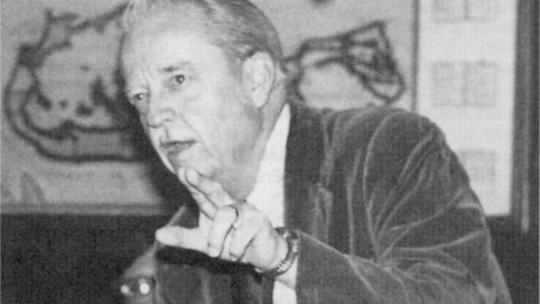
Frank Ambrose Beach Jr. (April 13, 1911 – June 15, 1988) was one of the most influential American psychobiologists of the twentieth century, widely regarded as the founding figure of behavioral endocrinology — the scientific study of how hormones shape behavior. His decades of rigorous research into sexual behavior, reproductive biology, and the hormonal regulation of instinct fundamentally reshaped how psychologists and biologists understand the relationship between brain, body, and behavior. He was, in the words of the American Psychological Association’s Division 6, “arguably the premier psychobiologist of his generation.”
Beach’s intellectual legacy spans comparative psychology, neuroendocrinology, animal behavior, and the broader philosophy of what psychology should study and how. He is remembered not only for his empirical contributions but for two landmark theoretical papers — The Snark Was a Boojum (1950) and The Descent of Instinct (1955) — that challenged the field to examine its assumptions, broaden its comparative scope, and resist the temptation to reduce the complexity of animal behavior to simple laboratory models.
This biography traces Beach’s life, his intellectual development, his major contributions to psychology and behavioral science, and the enduring influence he continues to exert on comparative psychology and behavioral endocrinology today.
Early Life and Academic Formation
Frank Ambrose Beach Jr. was born on April 13, 1911, in Emporia, Kansas — a detail that carries its own biographical significance. His father, Frank Ambrose Beach Sr., was a professor and head of the music department at the Kansas State Normal School (now Emporia State University), an institution that shaped the cultural and intellectual climate of his early life. Growing up in an academic household, Beach developed early exposure to rigorous thinking and the life of the mind.
He completed his undergraduate education at Emporia State University, the same institution where his father taught. From there, his intellectual ambitions drew him eastward to the University of Chicago, one of the preeminent centers of scientific psychology and behavioral biology in the United States during the early twentieth century. It was at Chicago that Beach completed his doctoral degree, immersing himself in the emerging intersections between experimental psychology, zoology, and neurophysiology that would define his career.
How many of these have you been "meaning to read" for months?
- 1
 TarcherThe Artist's Way30th Anniversary EditionListen Free On Audible
 - 2
 New Harbinger PublicationsThe Dialectical Behavior Therapy Skills WorkbookPractical DBT Exercises for Learning Mindfulness, Interpersonal Effectiveness, Emotion Regulation...Listen Free On Audible
 - 3
 New Harbinger PublicationsAdult Children of Emotionally Immature ParentsHow to Heal from Distant, Rejecting, or Self-Involved ParentsListen Free On Audible
His early formation was also shaped by contact with Karl Lashley, one of the giants of twentieth-century neuroscience, whose work on brain lesions and behavior had transformed the understanding of neural substrates of learning and memory. Beach worked in Lashley’s laboratory, an experience that deepened his commitment to rigorously empirical, neurobiologically grounded approaches to psychological questions. The influence of Lashley’s comparative, brain-behavior methodology is visible throughout Beach’s subsequent work.
He also undertook work at Harvard, rounding out a graduate and postgraduate formation that placed him at the intersection of the most intellectually fertile environments in American psychology and biology of his era.
Career at the American Museum of Natural History
Beach’s early career took a distinctive institutional turn when he joined the American Museum of Natural History in New York, where he eventually founded and led the Department of Animal Behavior. This was an unusual setting for a psychologist — and that unusualness was itself formative. Working in a natural history context pushed Beach to maintain a genuinely comparative perspective, studying behavior across multiple species rather than limiting his empirical base to the white laboratory rat that dominated American experimental psychology of the period.
It was during his years at the Museum that Beach began the systematic research program on hormones and sexual behavior that would become his most celebrated scientific contribution. Working with a range of animal species, he investigated how gonadal hormones — testosterone, estrogens, progesterones — regulate sexual motivation, sexual receptivity, and reproductive behavior. His experimental methodology was meticulous and his comparative scope was broad, enabling him to draw conclusions about hormonal regulation of behavior that had genuine cross-species validity.
The Museum years also allowed Beach to collaborate with and influence a generation of students and colleagues who would go on to shape behavioral biology and comparative psychology. His institutional position outside the traditional university department structure gave him unusual intellectual freedom — and he used it to pursue questions that were, for the time, considered at the edge of respectable scientific inquiry.
Yale University and the Maturation of His Research Program
From the American Museum of Natural History, Beach moved to Yale University, one of the most prestigious academic institutions in the country, where his research program expanded and matured. His appointment at Yale formalized his standing in the academic hierarchy and gave him the resources and graduate students to pursue a broader scientific agenda.
At Yale, Beach deepened his collaboration with William C. Young, the endocrinologist with whom he is jointly credited with establishing behavioral endocrinology as a formal scientific discipline. Together, Beach and Young developed the theoretical and empirical framework that understood hormones not merely as physiological regulators but as behavioral organizers — molecules that shape the development, expression, and coordination of complex behavioral systems including sexual behavior, aggression, and parental care.
The distinction Beach and Young drew between the organizational effects of hormones (their role in shaping neural and behavioral systems during early development) and the activational effects of hormones (their role in triggering behavioral responses in adult organisms) became one of the most influential conceptual frameworks in all of behavioral biology — a distinction that remains foundational to behavioral endocrinology today.
Beach’s 1948 book Hormones and Behavior synthesized this research program into a comprehensive scientific statement that effectively created behavioral endocrinology as a recognized field. The book brought together experimental evidence from multiple species and multiple hormonal systems, demonstrating with unprecedented rigor the pervasive role of endocrine mechanisms in organizing and activating behavioral patterns.
University of California, Berkeley: The Final Chapter of an Academic Career
The last major chapter of Beach’s academic career unfolded at the University of California, Berkeley, where he held a faculty position until his retirement. Berkeley in the postwar decades was one of the world’s leading centers of biological science, and Beach’s presence there both reflected and contributed to its eminence in behavioral biology.
At Berkeley, Beach continued his research on hormones and behavior, expanded his interest in the comparative and evolutionary dimensions of sexual behavior, and trained a new generation of students who would carry his scientific legacy forward. He remained intellectually active and engaged with the broader questions of the field — including his growing concern that psychology was becoming too narrowly focused on laboratory models that inadequately represented the complexity and diversity of animal behavior.
His Berkeley years also saw him engage more directly with ethological approaches to behavior — the European tradition of studying behavior in naturalistic contexts, associated with figures like Konrad Lorenz and Niko Tinbergen. Beach was critical of simplistic instinct theories, as his influential paper The Descent of Instinct made clear, but he recognized the value of studying behavior in contexts broader than the laboratory.
Major Scientific Contributions to Psychology and Behavioral Biology
Frank Beach’s contributions to science were both empirical and theoretical, and the two dimensions reinforced each other throughout his career. His most significant contributions can be organized around several interconnected areas:
- Founding behavioral endocrinology. Together with William C. Young, Beach established the scientific discipline that studies how hormones regulate behavior. The organizational/activational distinction they developed remains the conceptual cornerstone of the field.
- Hormones and Behavior (1948). This landmark book synthesized the existing research and created behavioral endocrinology as a coherent scientific field. It remains a foundational text in the discipline.
- Patterns of Sexual Behavior (1951). Co-authored with Clellan Ford, this major comparative study surveyed sexual behavior across human cultures and animal species, providing one of the broadest empirical bases for understanding sexuality that existed at the time. It was a scientifically rigorous and culturally significant contribution at a moment when sexuality remained largely outside mainstream scientific inquiry.
- “The Snark Was a Boojum” (1950). This provocative presidential address to the American Psychological Association argued that American experimental psychology had become dangerously narrow — focusing almost exclusively on the laboratory rat and generalizing from that limited sample to animal behavior and human psychology more broadly. The paper was a clarion call for genuine comparative psychology and remains widely read and cited.
- “The Descent of Instinct” (1955). This paper critically examined the concept of instinct, arguing that the term was being used carelessly across biology and psychology in ways that obscured more than they revealed. Beach’s analysis helped sharpen the conceptual vocabulary of behavioral science and pushed the field toward more precise and empirically grounded explanations of complex behavior.
Theoretical Legacy: Challenging Psychology to Be Genuinely Comparative
One of Beach’s most enduring contributions was not empirical but philosophical — his sustained challenge to American psychology to take its comparative commitments seriously. His 1950 APA presidential address, “The Snark Was a Boojum,” took its title from Lewis Carroll’s poem about a hunting party that pursues a creature of uncertain existence — a metaphor Beach applied to psychology’s pursuit of general laws of behavior based almost entirely on studies of a single species (the Norway rat) in artificial laboratory conditions.
Beach documented that the proportion of comparative psychology papers using species other than the rat had declined dramatically over the preceding decades, and argued that this methodological narrowing was scientifically indefensible. A genuine comparative psychology, he insisted, required studying the full diversity of animal life — not just the species most convenient for laboratory manipulation. This argument was uncomfortable for many of his colleagues but was ultimately influential in shaping the trajectory of comparative psychology and behavioral biology.
His critique of instinct theory in “The Descent of Instinct” was similarly rigorous and similarly challenging. Beach demonstrated that the concept of instinct had been used in so many different and incompatible ways across the biological and psychological literature that it had lost explanatory value. He was not arguing that evolved, biologically grounded behavioral tendencies don’t exist — he was arguing that explaining them requires more precision than the instinct concept typically provided. This critique contributed to the more careful behavioral analysis that characterized subsequent decades of ethological and behavioral biological research.
Honors, Recognition, and Institutional Influence
Frank Beach’s contributions to science were recognized by the most prestigious honors in American science. He was elected to the National Academy of Sciences — one of the highest honors available to an American scientist — as well as to the American Philosophical Society and the American Academy of Arts and Sciences. He received the Distinguished Scientific Contribution Award from the American Psychological Association and the Howard Crosby Warren Medal from the Society of Experimental Psychologists.
He was a charter member of the psychobiology panel of the National Science Foundation, contributing to the institutional infrastructure that would support behavioral biological research in the United States for generations. His influence on the funding and direction of science extended well beyond his own laboratory.
The American Psychological Association’s Division 6 (Behavioral Neuroscience and Comparative Psychology) named its most prestigious award — the Frank A. Beach Comparative Psychology Award, given annually to the best paper published in the Journal of Comparative Psychology — in his honor. This award reflects the enduring recognition of Beach’s centrality to the field he helped create and shape.
Personal Character and Teaching Legacy
Those who worked with Beach consistently describe a scientist of unusual intellectual integrity and genuine breadth. He was known for asking the uncomfortable question — the one that challenged the consensus in a room of distinguished researchers — not out of contrarianism but out of a deep commitment to scientific rigor. His willingness to challenge the methodological and conceptual assumptions of his own field, even when those assumptions were comfortable and widely shared, was a consistent feature of his intellectual character.
As a mentor, Beach influenced generations of students who went on to distinguished careers in behavioral biology, comparative psychology, and behavioral endocrinology. His laboratory at Berkeley was a center of excellence that trained researchers who carried his empirical and conceptual commitments into new domains and new generations. The “Beach school” of rigorous, comparative, biologically grounded behavioral research is a genuine intellectual lineage.
His personal combination of empirical rigor, theoretical ambition, comparative breadth, and institutional courage — the willingness to challenge psychology’s self-satisfaction when he believed it was warranted — makes him a figure whose significance extends beyond any single discovery or publication.
Death and Enduring Influence
Frank Ambrose Beach Jr. died on June 15, 1988, in Berkeley, California, at the age of seventy-seven. He had spent more than five decades transforming the scientific understanding of hormones, behavior, and the biological foundations of sexuality — and had challenged his field, repeatedly and productively, to think more carefully, compare more broadly, and theorize more rigorously.
His influence continues through multiple channels. Behavioral endocrinology — the field he co-founded — is today a thriving discipline with its own journals, societies, and graduate training programs. The organizational/activational distinction he and Young developed remains the conceptual foundation on which the field is built. His comparative framework continues to shape how researchers design studies and interpret findings across species. And his theoretical papers — particularly “The Snark Was a Boojum” — are still assigned in graduate courses as exemplars of productive self-criticism within a scientific field.
The Frank A. Beach Comparative Psychology Award, administered annually by APA Division 6, ensures that his name remains attached to the highest standards of comparative psychological research — a fitting tribute to a scientist who spent his career arguing that those standards mattered.
FAQs about Frank A. Beach
What is Frank A. Beach best known for?
Frank A. Beach is best known for two major contributions. First, together with William C. Young, he co-founded the field of behavioral endocrinology — the scientific study of how hormones regulate behavior — and developed the influential organizational/activational distinction that remains foundational to the field. Second, he is known for his landmark 1950 paper “The Snark Was a Boojum,” a challenge to American psychology to pursue genuine comparative research rather than overgeneralizing from rat studies. His 1948 book Hormones and Behavior and the 1951 co-authored Patterns of Sexual Behavior are also considered major works in the history of behavioral science.
What is the organizational/activational distinction in behavioral endocrinology?
The organizational/activational distinction, developed by Beach and William C. Young, is one of the most important conceptual frameworks in behavioral endocrinology. Organizational effects refer to the role hormones play during early development — particularly prenatal and early postnatal periods — in shaping the structure of the nervous system and establishing the behavioral capacities that will be expressed later in life. Activational effects refer to the role hormones play in adult organisms in triggering or enabling behavioral responses — for example, how testosterone activates sexual behavior in adult male animals. This distinction clarified decades of confusing findings and provided the field with a coherent framework for designing and interpreting experiments.
What was “The Snark Was a Boojum” about?
“The Snark Was a Boojum” was Beach’s 1950 presidential address to the American Psychological Association, and it remains one of the most influential critical papers in the history of comparative psychology. Taking its title from a Lewis Carroll poem, the paper argued that American psychology had abandoned genuine comparative research in favor of studying almost exclusively the laboratory rat — and then extrapolating those findings to animal behavior in general and human psychology in particular. Beach documented this narrowing empirically and argued it was scientifically indefensible. The paper was a call for a genuinely comparative psychology that studied the full diversity of animal life. It is still assigned in graduate programs today as a model of productive scientific self-criticism.
Where did Frank Beach work during his career?
Beach held major positions at three institutions across his career. He began at the American Museum of Natural History in New York, where he founded and led the Department of Animal Behavior. He then moved to Yale University, where he collaborated with William C. Young and produced some of his most important scientific work, including the 1948 book Hormones and Behavior. The final and longest chapter of his career was at the University of California, Berkeley, from which he eventually retired. He also worked in Karl Lashley’s laboratory early in his career and trained at the University of Chicago and Harvard.
What honors did Frank Beach receive?
Beach received some of the most prestigious recognitions available to an American scientist. He was elected to the National Academy of Sciences, the American Philosophical Society, and the American Academy of Arts and Sciences. He received the Distinguished Scientific Contribution Award from the American Psychological Association and the Howard Crosby Warren Medal from the Society of Experimental Psychologists. He was also a charter member of the psychobiology panel of the National Science Foundation. After his death, APA Division 6 named its premier annual award — the Frank A. Beach Comparative Psychology Award — in his honor.
What was Frank Beach’s relationship to comparative psychology?
Comparative psychology — the study of behavior across multiple animal species with the aim of understanding both species-specific adaptations and general principles of behavior — was central to Beach’s scientific identity and intellectual mission throughout his career. He believed that a psychology that studied only one or two species, in artificial laboratory conditions, could not claim to have discovered general principles of behavior. His entire research program — studying hormones and behavior across a range of species — embodied this comparative commitment. And his theoretical writings, particularly “The Snark Was a Boojum,” were direct challenges to a field he believed was failing to live up to its comparative aspirations. The APA’s Frank A. Beach Comparative Psychology Award reflects the enduring association between his name and the highest standards of comparative research.
Use this citation format to reference the article clearly and help readers find the original source.
PsychologyFor. (2026). Frank A. Beach: Biography of This American Psychologist. PsychologyFor. https://psychologyfor.com/frank-a-beach-biography-of-this-american-psychologist/