


See more of our articles in your search results.
Goodbyes are small moments that carry a lot of weight. Most people focus on the big gestures — the long conversations, the obvious compliments, the direct declarations of interest. But the way someone leaves a room, ends a phone call, or wraps up a conversation can tell you just as much, sometimes more, than anything said in the middle of it. How a man says goodbye when he likes you is often where his real feelings slip through, precisely because he is less focused on managing the impression he makes.
When someone is genuinely interested in you, endings become uncomfortable. The goodbye stretches. He finds reasons to stay a little longer. He makes sure you feel seen before he goes. He lingers at the door, adds one more thing to the conversation, checks that you got home safely. These behaviors are not always conscious. In many cases, they are simply what happens when a person does not actually want to leave.
That said, reading these signals is not always straightforward. Some men are naturally warm and attentive with everyone. Others are reserved even when they are deeply interested. Cultural background, personal style, attachment patterns, and past experiences all shape how someone behaves during the small social rituals of departing. A goodbye that means nothing from one person might mean everything from another.
This article explores twelve specific behavioral patterns that tend to show up when a man has feelings for you and finds it hard to say goodbye. Each one is explained with depth and nuance, because human behavior is rarely black and white. The goal is not to give you a checklist for certainty, but to help you read the emotional texture of these small moments more clearly — so that what you feel intuitively starts to make more sense.
He Delays the Goodbye and Keeps Finding Reasons to Stay
One of the clearest signs a man likes you is that he does not want the interaction to end. The goodbye stretches naturally — not because he is socially awkward, but because leaving means the connection pauses, and that feels like a small loss. He finds one more thing to say. One more question to ask. One more topic that just came to mind.
How many of these have you been "meaning to read" for months?
- 1
 TarcherThe Artist's Way30th Anniversary EditionListen Free On Audible
 - 2
 New Harbinger PublicationsThe Dialectical Behavior Therapy Skills WorkbookPractical DBT Exercises for Learning Mindfulness, Interpersonal Effectiveness, Emotion Regulation...Listen Free On Audible
 - 3
 New Harbinger PublicationsAdult Children of Emotionally Immature ParentsHow to Heal from Distant, Rejecting, or Self-Involved ParentsListen Free On Audible
This pattern shows up across all kinds of settings. In person, he might linger at the door, walk you to your car even though it takes him in the opposite direction, or find a reason to extend the evening. On the phone, he keeps adding “one more thing” when the conversation has already wound down twice. In a text exchange, he does not let the thread go quiet — he picks it back up just when it seemed like it had reached a natural close.
From an attachment theory perspective, this makes a lot of sense. When we feel a secure, pleasant connection with someone, the nervous system resists interruption. Proximity feels good. Distance, even temporary distance, creates mild discomfort that the body wants to resolve. For someone with developing feelings, that pull becomes more pronounced. The goodbye is not just a social transaction. It is the moment when something genuinely nice has to pause, and the body does not want to let it go yet.
Pay attention to whether this pattern is consistent or occasional. Anyone can run long in a conversation once. But if he reliably finds a way to extend his time near you, especially when there is no obvious practical reason, that consistency is meaningful. The practical takeaway: notice whether you feel like the conversation is “done” but he keeps it alive. That impulse usually comes from somewhere real.
His Goodbye Feels More Personal Than the Situation Calls For
When a man likes you, the way he says goodbye tends to feel slightly warmer, more deliberate, and more personal than the context strictly requires. He does not give you the same casual wave he gives everyone else. Something about the ending is a little more intentional — a longer eye-contact hold, a more genuine smile, a phrase that feels like it was chosen rather than defaulted to.
This calibration happens naturally. Most people adjust their departure energy to match what the relationship means to them. You probably do the same thing — you hug a close friend longer than a distant acquaintance, you choose words more carefully when saying goodbye to someone you care about. When a man is interested in you, that careful calibration starts appearing in how he leaves, not just in how he arrives.
You might notice he uses your name at the end of a goodbye, which is a small but psychologically meaningful act of personalization. He might say something like “I really enjoyed this” in a tone that sounds more sincere than polite. He might pause for a second before actually walking away, as though the departure requires a beat of acknowledgment. These are not dramatic gestures. They are quiet signals of emotional investment expressed through social ritual.
The distinction to watch for is the gap between what the situation calls for and what he actually does. A professional goodbye in a casual context. A warm, specific phrase when a generic one would have been easier. A moment of real presence when most people are already mentally elsewhere. That gap, when it appears consistently, usually reflects something genuine underneath it.

He Makes Sure the Next Meeting Is Already Planned Before Leaving
A man who likes you does not like uncertainty about when he will see you again. Before he says goodbye, he tries to close that gap. He mentions getting together, asks about your schedule, or directly suggests a next time. This is not always smooth or romantic. Sometimes it is slightly awkward — he brings it up just before leaving because he has been thinking about it the whole time and finally found the courage at the last moment.
This behavior reflects something important about how romantic interest and anxiety interact. When someone genuinely cares about seeing you again, the goodbye creates a small urgency: if I do not plant the seed for a next meeting now, when will I? The end of an interaction becomes a deadline he does not want to miss. So he brings up plans, floats an idea, or at least leaves the door open in a specific way rather than a vague “we should hang out sometime.”
From a behavioral perspective, this also reflects effort and intentionality. Saying “let me know if you want to do this again” is passive. Saying “I have been wanting to try that place you mentioned — are you free next weekend?” is active. The active version costs more emotionally: it risks rejection, it requires him to admit he wants more time with you, and it shows his hand. That willingness to risk something is itself a signal.
Notice whether the suggestion is specific or vague, whether he follows up on it later, and whether he seems genuinely invested in your answer versus just being polite. Genuine interest tends to produce specific proposals and attentive follow-through. Social politeness tends to produce pleasant vagueness that quietly disappears after the goodbye is over.
His Body Language at the Goodbye Tells a Different Story Than His Words
When a man likes you, his body often communicates what his words are carefully managing. Nonverbal signals during a goodbye tend to be less controlled than speech, which makes them particularly worth noticing. He may not say “I like you” as he leaves, but his body might be saying something closely related.
Common nonverbal patterns at a goodbye include:
- Prolonged eye contact — holding your gaze a second or two longer than necessary, which signals connection and reluctance to fully disengage.
- Physical proximity — standing slightly closer than the situation calls for, or leaning in rather than stepping back.
- A hug that lasts slightly longer than a casual embrace, or a hug that was not strictly obligatory but happened anyway.
- Turning back after walking away — the classic “one more look” that most people recognize intuitively as a signal of interest.
- Mirroring at the moment of departure — unconsciously matching your posture, smile, or movement as you both prepare to leave.
Psychologically, these behaviors reflect what is sometimes called approach motivation. The person wants to stay close and is responding to the pull of connection even as social norms require separation. The body follows the feeling, not the script. This is why the goodbye, when both people have some feelings at play, can feel so charged even when the words themselves are simple.
It is worth observing these signals in context. If he is physically affectionate with everyone, a long hug carries different weight than it does from someone who is typically reserved. The meaningful signal is always the departure from his baseline behavior, not any single gesture in isolation.
He Checks In After the Goodbye More Quickly Than Expected
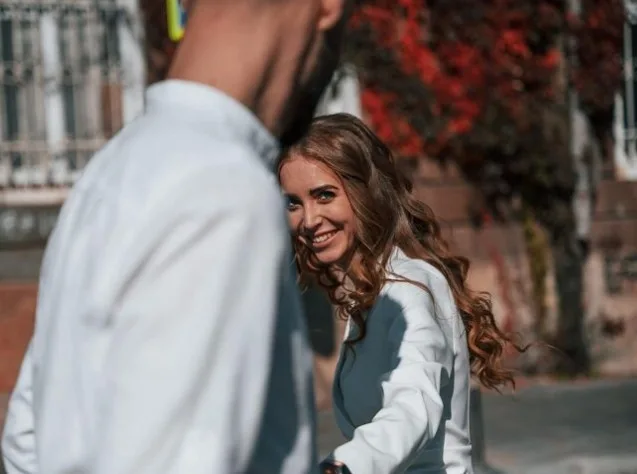
How quickly a man reaches out after a goodbye is often one of the clearest behavioral indicators of genuine interest. When someone is strongly drawn to you, the time between separation and first contact tends to compress naturally. He texts to say he got home. He references something you said earlier. He sends a follow-up that shows he has been thinking about the conversation since it ended.
This early check-in behavior is not always strategic. More often, it is an overflow of whatever was building during the time together. The goodbye released something that needed an outlet — warmth, humor, a thought he wished he had said, a simple acknowledgment that the time together mattered. Sending a message is the easiest way to act on that without requiring a whole new plan.
Pay attention to the content of that first message as much as its timing. A message that references something specific you talked about — a joke you shared, something you mentioned about your week, a plan you floated — signals that he was present and attentive during your time together, not just going through social motions. That specificity is a form of emotional attentiveness that tends to emerge from genuine care, not casual politeness.
Timing matters too, but context matters more than the clock. Someone who texts an hour after saying goodbye may be more interested than someone who waits three days strategically. The impulse behind the message is what carries meaning, and the impulse to reach out quickly after a good interaction is usually pretty honest about where it comes from.
He Becomes Slightly More Attentive or Nervous Right Before Saying Goodbye
Many men experience a small spike in social self-consciousness right before a goodbye, especially when they have feelings involved and the interaction is ending without the situation being resolved in any clear way. He becomes slightly more focused on you — more attentive, more careful with his words, subtly more alert — because the end of the conversation carries weight for him.
This can show up as a brief awkwardness that was not there earlier in the interaction. He might stumble slightly over his words. He might pause in a way that suggests he is considering saying something he ultimately does not say. He might seem more deliberate, more careful, or slightly more concentrated right at the moment of departure. These small shifts are not red flags. They often reflect the opposite: the goodbye matters to him because you matter to him.
From a psychological standpoint, this behavior connects to what psychologists sometimes describe as evaluation apprehension — the heightened awareness of how one is being perceived during moments of social significance. Endings carry symbolic weight. They are the last impression left. For someone with genuine feelings, that last impression feels important. The awkward pause, the slightly too-careful word choice, the almost-said-something-else moment — these are often signs of emotional investment expressed imperfectly.
The key is to notice whether this quality of attention is reserved specifically for moments with you, or whether he tends to be generally anxious in social situations. When it shows up selectively — calmer throughout the conversation but suddenly more focused and slightly careful at the end — that selective quality is usually meaningful.
His Goodbye Includes Genuine Compliments or Specific Acknowledgments
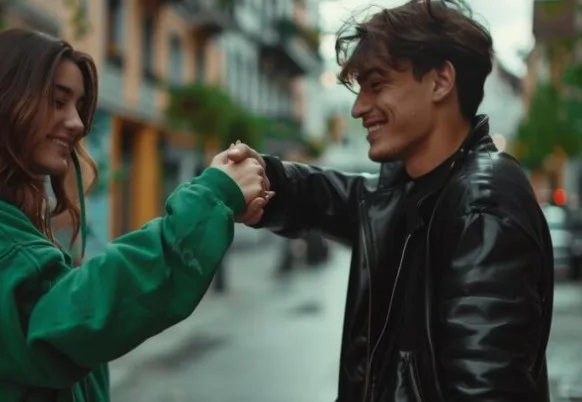
When a man ends an interaction with something specific and genuinely complimentary, it usually reflects that he has been paying close attention. Generic goodbyes — “great seeing you,” “take care,” “talk soon” — are polite. But when he says something that could only apply to you, based on what happened in that specific interaction, the farewell carries more intention.
This might sound like: “That thing you said about your work — I keep thinking about it.” Or: “You always make these conversations feel easy.” Or simply, “I had a really good time.” That last phrase sounds simple, but its sincerity is usually audible. There is a difference between “had a good time” as a social reflex and “had a really good time” as something that got through and mattered.
Compliments at the end of an interaction serve a different psychological function than compliments mid-conversation. Mid-conversation compliments can be strategic, performative, or social-lubricant. End-of-interaction acknowledgments tend to be more reflective. They come from a moment of taking stock — “what was this? what do I want her to know before she leaves?” — and that reflective quality often produces something more honest.
Watch for compliments that feel earned and specific rather than generic and reflexive. Specificity is the most reliable signal of genuine attention. Anyone can say “you look nice.” It takes real noticing to say “you said something in there that I am still thinking about.”
He Offers Help or Follow-Up Before You Even Think to Ask
Anticipatory care at the end of an interaction is a quiet but meaningful signal of interest. He offers to help with something you mentioned in passing. He volunteers information you might need later. He brings up a resource, a contact, a recommendation — something that serves you after the goodbye rather than serving him in the moment. This kind of forward-looking care is not obligation. It is emotional investment expressed through action.
This behavior is closely connected to what attachment researchers describe as care-giving as a component of romantic love. When someone develops feelings for another person, they begin attending to that person’s needs and wellbeing in a way that extends beyond the immediate interaction. The impulse is: I want things to go well for you, even when I am not there.
Pay attention to whether this care is proportional and consistent. If he regularly offers to help, follows through on what he mentioned, and seems genuinely invested in your outcomes, that pattern reflects something more than courtesy. If the help appears once as a social pleasantry and then evaporates, it may simply be politeness.
The version that signals genuine interest is the one where the offer is specific, the follow-through is reliable, and the care does not seem to require acknowledgment to keep showing up. He offers because he is thinking about you, not because he wants credit for the gesture. That distinction, over time, is usually pretty clear.

He Remembers Details From the Conversation When He Sees You Next
Memory is a form of care. When a man pays close attention during a conversation, the details stay with him — not because he is trying to, but because he was genuinely present. When he sees you next and references something specific from the last time you spoke, it signals that the goodbye was not actually the end. The conversation continued in his head after it closed.
This might be as simple as asking “how did that thing at work turn out?” or “did you end up trying that restaurant?” or “you seemed worried about that — is everything okay now?” These follow-ups feel warm and attentive because they are. They require that he listened carefully, retained what he heard, and cared enough to return to it. That combination does not happen accidentally with someone who is merely being polite.
From a cognitive standpoint, we tend to remember information that carries emotional weight or attentional significance. Mundane data gets filtered out quickly. Details associated with people who matter tend to stick. So when a man recalls the small specifics of what you told him — things most people would have forgotten — that retention is often a reflection of how much space you take up in his thinking.
This is one of the most understated signals of genuine interest because it shows itself not in the goodbye itself but in what comes after it. The goodbye was not a termination. It was a pause, and the next hello picks up where it left off. That continuity, across multiple interactions, is one of the most honest indicators of emotional investment there is.
His Goodbye Is Different When Other People Are Watching
Social context often shapes behavior in revealing ways. Some men are warmer and more personally attentive in one-on-one goodbyes than in group settings, which can reflect awareness of perception and a wish to manage how others read the interaction. Others are more openly warm in groups because there is less pressure and lower stakes. Either direction can be meaningful depending on his personality and your dynamic.
What tends to be more revealing is the difference itself. If his goodbye to you is notably different from his goodbye to everyone else in the same setting — more careful, more personal, slightly longer, or conversely, slightly more restrained in a way that suggests self-consciousness — that asymmetry carries information. He is treating the farewell with you differently because it means something different.
This is where knowing someone’s general social style becomes useful. A naturally warm, physically affectionate person hugging everyone warmly at the end of a party is less revealing than a typically reserved man who becomes specifically warmer with you. The baseline is always the key comparison point. Behavior that departs from baseline is behavior worth noticing.
If you observe that he consistently finds a way to make your goodbye feel distinct — even subtly, even in a crowd — that consistency is rarely accidental. People tend to treat partings with those who matter to them differently. The social setting may change the expression, but it rarely changes the underlying impulse entirely.
He Tells You Directly That He Does Not Want to Leave
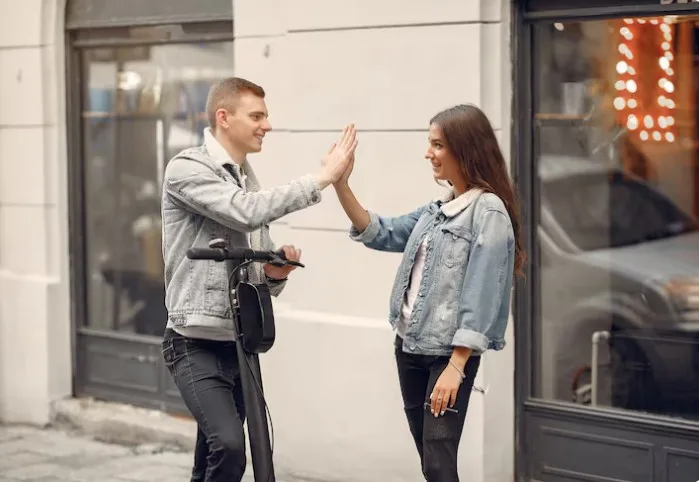
Some men say it plainly, and that plainness is its own form of courage. “I don’t want to go.” “This went by so fast.” “I wish we had more time.” These phrases, said sincerely rather than as social filler, are direct expressions of the very thing this article has been exploring indirectly. When a man says he does not want the goodbye to happen, he is telling you that the time with you feels valuable and that its ending is genuinely unwelcome.
Not all men are comfortable with this level of directness, and it should not be expected as the standard. Many people communicate feelings indirectly, through behavior rather than language, for reasons that have nothing to do with the strength of their feelings. A reserved or self-protective person may feel just as strongly as someone who says it outright, while expressing it entirely through the signals described in the previous sections.
But when directness does appear — when he simply says it — it deserves to be received as what it is. Not analyzed for hidden meaning, not deflected out of discomfort, and not dismissed as something people just say. When someone tells you they do not want to leave, the most honest response is to believe them and pay attention to whether the behavior that follows bears that out.
Consistency between what he says at the goodbye and what he does afterward is the real confirmation. Words at a farewell can be sincere or performative. Actions in the days and weeks that follow are much harder to fake.
The Overall Pattern Matters More Than Any Single Goodbye
No single goodbye, however warm or charged, should be read as definitive proof of someone’s feelings. People have good days and bad days. Context shifts behavior. Someone might linger one evening and rush off the next, for reasons entirely unrelated to how they feel about you. One attentive farewell can be a mood, a moment, or social grace. A consistent pattern across many interactions is something different.
The signals in this article become meaningful when they cluster and when they repeat. When a man consistently delays departures, consistently follows up quickly, consistently makes you feel like the goodbye was the worst part of the interaction, and consistently remembers what you said the last time — that pattern across multiple occasions is what builds a reliable picture.
It also helps to look at the full arc of the interaction, not just the ending. How does he show up at the beginning? How does he pay attention in the middle? How does the energy build toward the close? When genuine interest is present, there is usually a coherent thread running through all of it. The goodbye is not a standalone event. It is the last sentence of a paragraph that began when he arrived.
And if you are unsure — if you have read the signals and still cannot tell — the most psychologically grounded thing to do is not to keep searching for hidden meaning in departures. Direct, honest communication remains the clearest pathway through ambiguity, even when reading behavioral signals can get you most of the way there.
FAQs About How a Man Says Goodbye When He Likes You
What does it mean when a man hugs you for a long time when saying goodbye?
A hug that lasts noticeably longer than a casual embrace often reflects reluctance to end the physical connection. Physical proximity is one of the ways humans signal closeness and care, and extending a goodbye hug can be a way of staying close for just a little longer before the separation happens. That said, context matters: some people are naturally physically affectionate with everyone, in which case a long hug is less specific to you. The more meaningful signal is when a man who is generally not physically demonstrative makes a specific exception with you, or when the hug feels more personal and deliberate than his other farewells. What you feel in those moments — attentiveness, genuine warmth, a sense that he did not want to let go — tends to be accurate perceptual information worth trusting.
Why does a man text right after saying goodbye if he likes you?
Quick follow-up contact after a goodbye typically reflects that the interaction is still active in his mind. The goodbye did not close things down for him — it interrupted something he was still engaged with. Reaching out shortly after is a natural expression of that continued engagement. The content of the message matters as much as the speed: a message referencing something specific from your conversation signals genuine attentiveness, while a generic “great seeing you” may be more social than emotional. Consistent patterns of quick follow-up, especially when combined with specific references to what was said, tend to reflect genuine interest rather than social courtesy. The impulse to reach out soon is usually honest about where it comes from.
Is it a good sign when a man looks back after walking away?
Yes, in most cases. Turning back after walking away is one of the more instinctive goodbye behaviors, and it is difficult to fake because it tends to happen before the person consciously decides to do it. The body is still oriented toward the connection even as the situation calls for separation. It is the physical equivalent of not quite being ready to let the interaction end. One instance is not necessarily conclusive, but when this happens repeatedly — when he almost always seems to take one more look as he leaves — it is usually a reliable indicator of strong interest. Most people do not look back at someone they are casually indifferent to. The impulse is almost always connected to something real.
How can you tell if he is just being polite at the goodbye or if he actually likes you?
The clearest distinction between politeness and genuine interest usually shows up in specificity, consistency, and follow-through. Polite goodbyes are warm but generic: “great seeing you,” “take care,” “we should do this again sometime.” Goodbyes from someone with real feelings tend to be more specific — referencing something from the actual interaction, using your name, making a concrete plan rather than a vague gesture. Politeness also tends to distribute evenly across everyone in the room. Genuine interest tends to produce asymmetric behavior: his farewell to you is noticeably different from his farewell to others. And follow-through is perhaps the most reliable test: does he actually reach out, remember what you said, and make the next meeting happen? Politeness rarely has that follow-through. Interest usually does.
What does it mean when a man always finds a reason to keep talking before saying goodbye?
It means, in most cases, that he does not want the interaction to end. The brain generates “one more thing” when it is still engaged and the prospect of separation is unwelcome. This behavior can show up as a new topic introduced just as the conversation seemed to close, a question asked right at the door, or a message sent on text just when the exchange had wound down. It is important to distinguish this from genuine conversational depth — some people simply have a lot to say. But when the extra topic or question feels slightly manufactured, when it seems like its purpose is to extend the time rather than to actually communicate something important, that impulse is usually driven by not wanting to lose the connection quite yet. Over time, this pattern becomes one of the cleaner signals of genuine interest.
Can shyness make it hard to read how a man says goodbye when he likes you?
Absolutely, and this is one of the most important nuances to keep in mind. A shy or emotionally reserved man may say goodbye in a way that looks brief or even dismissive, even when his feelings are strong. The effort it takes to manage eye contact, find the right words, or initiate physical contact during a farewell may feel too exposed for him. In these cases, the goodbye itself might be shorter or more abrupt than you would expect — but other signals may be present: he lingers physically even without speaking much, he follows up by message quickly afterward, he remembers details from your conversation the next time you speak. With reserved or shy individuals, the behavioral pattern over time tends to be more informative than any single goodbye. Look at the whole picture rather than any one departure in isolation.
Is it a sign he likes you if he always makes plans before saying goodbye?
Generally, yes. Making a specific plan before leaving is an active behavior that requires emotional investment: it admits that he wants to see you again, it risks being turned down, and it requires him to show his hand before the goodbye is complete. That combination of vulnerability and initiative is usually driven by genuine motivation. The specificity of the plan matters: suggesting a real activity, time, and place is more meaningful than “we should hang out sometime,” which is socially comfortable but emotionally low-cost. When a man consistently brings up a next time before a goodbye — and then follows through on it — that behavior over multiple interactions becomes one of the more reliable indicators that the interest is real, sustained, and not purely situational.
Bibliography
- Bowlby, J. (1969). Attachment and Loss, Vol. 1: Attachment. Basic Books.
- Bowlby, J. (1980). Attachment and Loss, Vol. 3: Loss, Sadness and Depression. Basic Books.
- Ainsworth, M. D. S., Blehar, M. C., Waters, E., & Wall, S. (1978). Patterns of Attachment: A Psychological Study of the Strange Situation. Lawrence Erlbaum Associates.
- Ekman, P. (2003). Emotions Revealed: Recognizing Faces and Feelings to Improve Communication and Emotional Life. Times Books.
- Mehrabian, A. (1972). Nonverbal Communication. Aldine-Atherton.
- Givens, D. B. (2005). Love Signals: A Practical Field Guide to the Body Language of Courtship. St. Martin’s Press.
- Knapp, M. L., & Hall, J. A. (2009). Nonverbal Communication in Human Interaction (7th ed.). Wadsworth Cengage Learning.
- Porges, S. W. (2011). The Polyvagal Theory: Neurophysiological Foundations of Emotions, Attachment, Communication, and Self-Regulation. W. W. Norton & Company.
- Hatfield, E., Cacioppo, J. T., & Rapson, R. L. (1993). Emotional contagion. Current Directions in Psychological Science, 2(3), 96–99.
- Gottman, J. M., & Silver, N. (1999). The Seven Principles for Making Marriage Work. Crown Publishers.
- Fisher, H. (2004). Why We Love: The Nature and Chemistry of Romantic Love. Henry Holt and Company.
- Baumeister, R. F., & Leary, M. R. (1995). The need to belong: Desire for interpersonal attachments as a fundamental human motivation. Psychological Bulletin, 117(3), 497–529.
Use this citation format to reference the article clearly and help readers find the original source.
PsychologyFor. (2026). How a Man Says Goodbye When He Likes You. PsychologyFor. https://psychologyfor.com/how-a-man-says-goodbye-when-he-likes-you/