

See more of our articles in your search results.
If there is a characteristic that distinguishes the East from the West, it is the lack of hurry. At least, in the most genuine East, not the one that has already been contaminated by the consumerist and productive fever of the Western world. Thus, in Japanese culture we find an important philosophy based on acceptance and resilience, which, for five centuries, the Japanese have translated into one of their most recognized arts: Kintsugi.
In Japanese culture, there is a beautiful concept that transcends art and philosophy—Kintsugi. This ancient practice, which literally translates to “golden joinery,” involves repairing broken pottery with a special lacquer dusted with gold, silver, or platinum. While Kintsugi is most famously a technique for fixing ceramics, it carries profound psychological meaning that resonates deeply within Japanese culture and beyond. It speaks to the essence of resilience, healing, and embracing imperfections, offering a metaphor for life’s brokenness and the way we can rebuild ourselves stronger.
What does this centuries-old art consist of? What relationship does it have with the Eastern perception of existence? In this article we tell you what it consists of Kintsugi, the art of repairing objects that is an example of the psychology of resilience in Japanese culture.
Kintsugi: the art of repairing objects that dazzled a feudal lord
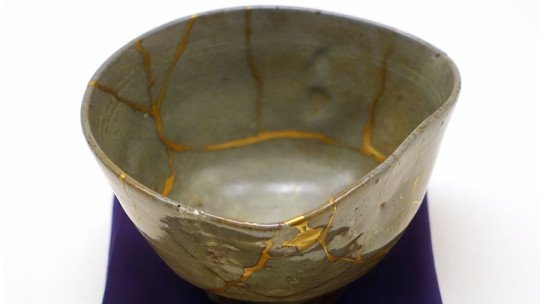
Kintsugi is an art form that focuses on the idea of repair and renewal. When pottery or porcelain breaks, instead of discarding the damaged item, it is meticulously repaired by using lacquer and powdered gold or other precious metals. The cracks, which would normally be hidden, are instead highlighted, emphasizing the beauty in imperfection and the uniqueness of the repaired object.
The essence of Kintsugi is not merely about fixing something broken, but about acknowledging the brokenness and celebrating it as a part of the item’s history. This aligns with a deeper, psychological approach to life’s challenges.
How many of these have you been "meaning to read" for months?
- 1
 TarcherThe Artist's Way30th Anniversary EditionListen Free On Audible
 - 2
 New Harbinger PublicationsThe Dialectical Behavior Therapy Skills WorkbookPractical DBT Exercises for Learning Mindfulness, Interpersonal Effectiveness, Emotion Regulation...Listen Free On Audible
 - 3
 New Harbinger PublicationsAdult Children of Emotionally Immature ParentsHow to Heal from Distant, Rejecting, or Self-Involved ParentsListen Free On Audible
Kintsugi is a tradition that dates back to none other than Japan in the 15th century. They say that a shogun (a feudal lord) sent his two favorite teacups to China because they had been broken and the dignitary trusted that his neighbors could put the objects back together so that the breakage would not be noticeable. That is, as if the coup had never existed.
However, when the emissaries returned with the two cups, the shogun noted with horror that the pieces had been crudely joined together with hideous staples. Not only were the precious cups clearly broken, but the result was a decidedly unsightly artifact.
The feudal lord had no choice but to ask some Japanese craftsmen to take care of the repair. His surprise was great when the artisans brought him, after a few weeks, the two small cups gracefully set in a fine golden lacquer. The final result did not hide the breaks, but gave them a unique beauty which the shogun would never have imagined finding in two broken cups.
The beauty of scars
Tradition has it that, since then, Japanese artisans have worked hard to perfect the Kintsugi technique. The word means repair or golden carpentry in Japanese, and refers to the beautiful golden veins that remain in broken objects after their restoration.
This concept is very far from the Western idea of reparation. When we, in the West, want to repair something that has been broken, what we want is for no trace of the breakage to remain. In other words, nothing to indicate that that object suffered an accident and broke.
Japanese Kintsugi bases its philosophy on a very different idea: the idea that the damage caused by the onslaught of life is not something shameful that the person should hide. For this reason, objects restored with Kintsugi proudly display their scars, which have also been reborn with a unique beauty.
The result is so spectacular that many objects increase in value after passing through a Kintsugi artisan, and become worth more than before they were broken. A true metaphor for life: wounds are also beautiful, because they speak of your resistance and your tenacity. What’s more, Through the scars, you become a new person much wiser, much more authentic and, therefore, much more beautiful.
Kintsugi and the Psychology of Resilience
Resilience as a Process, Not an End State
The process of Kintsugi mirrors the journey of resilience—the ability to recover from setbacks and emerge stronger. When we face hardships in life, it’s easy to feel shattered, much like the broken pottery. However, Kintsugi teaches us that our fractures do not have to define us. Rather, they can be transformed into sources of strength, just as the golden lacquer transforms the cracks in pottery into points of beauty.
Kintsugi reflects a key psychological principle: resilience is not about avoiding failure or imperfection but about learning to grow through it. The cracks in the pottery are not concealed; they are celebrated. Similarly, our struggles and vulnerabilities do not make us weaker but shape our growth and depth.
Embracing Vulnerability and Imperfection
In many cultures, there is a tendency to avoid or hide imperfection—whether it’s in relationships, our careers, or our personal lives. Kintsugi, on the other hand, encourages us to accept our vulnerabilities and scars. The practice teaches that embracing imperfections, rather than rejecting them, leads to healing and personal growth.
In psychology, this is akin to the concept of post-traumatic growth—the idea that difficult experiences, including trauma, can lead to greater strength and wisdom. Just as the gold in Kintsugi highlights the cracks, our experiences of struggle and hardship can become valuable parts of our life story when we choose to integrate them into our narrative.
Cultural Significance of Kintsugi in Japanese Society
A Reflection of Wabi-Sabi: Finding Beauty in the Impermanent
Kintsugi is deeply connected to the Japanese aesthetic of Wabi-Sabi, which is the appreciation of the beauty in the transient, the imperfect, and the incomplete. In this worldview, nothing is permanent, and everything is in a state of flux. Wabi-Sabi encourages us to find beauty in the natural cycle of growth, decay, and eventual renewal. Kintsugi aligns with this philosophy, as it transforms brokenness into something new and beautiful, honoring the process of change rather than resisting it.
The concept of Wabi-Sabi reflects the broader understanding in Japan that life’s challenges and imperfections are intrinsic to the human experience. Kintsugi, with its focus on repairing and accentuating flaws, demonstrates that it is not only acceptable to embrace imperfections but that they make us unique.
The Symbolism of Gold: Transcending Pain
Gold, the material used in Kintsugi, is often seen as a symbol of transcendence. In the context of Kintsugi, it represents the potential to transform pain and brokenness into something sacred. The gold joinery doesn’t just fix the object—it elevates it, turning something damaged into something that carries its history with pride.
For individuals, this reflects the idea that personal suffering and challenges can lead to greater wisdom and compassion. Rather than seeing difficulty as something to be ashamed of, Kintsugi encourages us to see it as part of our growth, our personal transformation.
Applying Kintsugi to Everyday Life: Building Personal Resilience
Embrace Your Challenges
Just as a broken piece of pottery can be mended with gold, the hardships and challenges we face in life can help us build resilience and grow. By accepting that life includes pain and disappointment, we can approach adversity not as something to avoid, but as an opportunity to build strength. This doesn’t mean we should seek out hardship, but rather that we can face life’s difficulties with the knowledge that they have the potential to teach us something valuable.
Finding Strength in Vulnerability
One of the key lessons of Kintsugi is the power of vulnerability. When something is broken, it is often a moment of weakness or vulnerability. Yet, through the process of repair, that brokenness becomes part of the item’s beauty and history. In life, allowing ourselves to be vulnerable, to acknowledge our struggles, is an essential part of the healing process. It makes us more human, more compassionate, and more resilient.
Rebuilding with Intention
Just as Kintsugi requires intentionality in the act of repair, rebuilding our lives after a setback or loss requires conscious effort. It requires taking the time to reflect, learn from the experience, and carefully reconstruct our sense of self. This can involve therapy, creative expression, or simply time for self-reflection. Through this process, we not only heal but also become stronger, wiser, and more prepared for future challenges.
Cultural Significance of Kintsugi in Japanese Society
A Reflection of Wabi-Sabi: Finding Beauty in the Impermanent
Kintsugi is deeply connected to the Japanese aesthetic of Wabi-Sabi, which is the appreciation of the beauty in the transient, the imperfect, and the incomplete. In this worldview, nothing is permanent, and everything is in a state of flux. Wabi-Sabi encourages us to find beauty in the natural cycle of growth, decay, and eventual renewal. Kintsugi aligns with this philosophy, as it transforms brokenness into something new and beautiful, honoring the process of change rather than resisting it.
The concept of Wabi-Sabi reflects the broader understanding in Japan that life’s challenges and imperfections are intrinsic to the human experience. Kintsugi, with its focus on repairing and accentuating flaws, demonstrates that it is not only acceptable to embrace imperfections but that they make us unique.
The Symbolism of Gold: Transcending Pain
Gold, the material used in Kintsugi, is often seen as a symbol of transcendence. In the context of Kintsugi, it represents the potential to transform pain and brokenness into something sacred. The gold joinery doesn’t just fix the object—it elevates it, turning something damaged into something that carries its history with pride.
For individuals, this reflects the idea that personal suffering and challenges can lead to greater wisdom and compassion. Rather than seeing difficulty as something to be ashamed of, Kintsugi encourages us to see it as part of our growth, our personal transformation.
Applying Kintsugi to Everyday Life: Building Personal Resilience
Embrace Your Challenges
Just as a broken piece of pottery can be mended with gold, the hardships and challenges we face in life can help us build resilience and grow. By accepting that life includes pain and disappointment, we can approach adversity not as something to avoid, but as an opportunity to build strength. This doesn’t mean we should seek out hardship, but rather that we can face life’s difficulties with the knowledge that they have the potential to teach us something valuable.
Finding Strength in Vulnerability
One of the key lessons of Kintsugi is the power of vulnerability. When something is broken, it is often a moment of weakness or vulnerability. Yet, through the process of repair, that brokenness becomes part of the item’s beauty and history. In life, allowing ourselves to be vulnerable, to acknowledge our struggles, is an essential part of the healing process. It makes us more human, more compassionate, and more resilient.
Rebuilding with Intention
Just as Kintsugi requires intentionality in the act of repair, rebuilding our lives after a setback or loss requires conscious effort. It requires taking the time to reflect, learn from the experience, and carefully reconstruct our sense of self. This can involve therapy, creative expression, or simply time for self-reflection. Through this process, we not only heal but also become stronger, wiser, and more prepared for future challenges.
How are broken objects repaired with Kintsugi?
This centuries-old technique requires time and patience. In reality, it is another symbol of life: if you want to run, if you are in a hurry, nothing will work out for you. You must stay calm and walk slowly, step by step, in search of your goal, regardless of the obstacles you encounter along the way.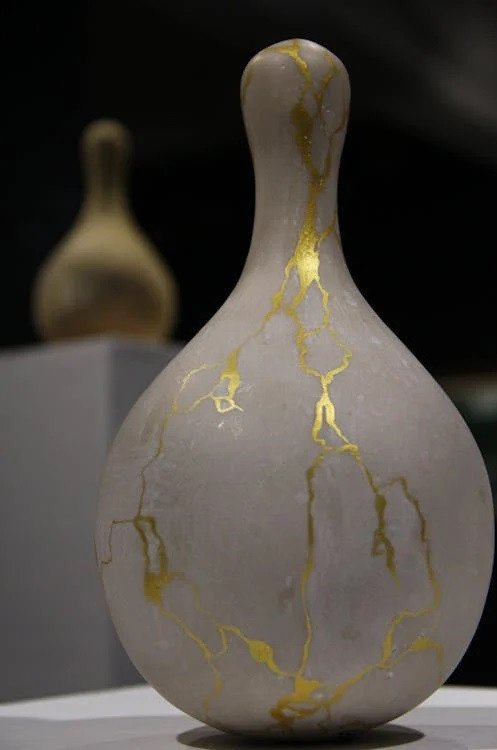
An object repaired with the Kintsugi technique can take weeks or even months to be ready. This is because The lacquer used to fill the cracks that form once the pieces are reassembled takes a long time to dry properly.
Specifically, it is the resin of the lacquer tree, which the artisan mixes with gold, silver or platinum powders and then carefully applies to the object with a brush called kebo. The result is an absolutely renewed object, brought back to life with an extraordinary and unprecedented beauty.
The imperfect is beautiful
We thus see that behind the Kintsugi technique lies a philosophy of life that advocates unconditional self-love. Your flaws don’t matter, your scars don’t matter: Your value does not decrease with the blows that life deals you. No, on the contrary: it is still intact, like when you were born.
Not only that; Every blow, every scar, is an opportunity to reinvent yourself and bring out the best in you. In the same way that the object beautifies with the repair to which the craftsman subjects it, the person can become more beautiful (morally speaking) if he accepts his wounds and does not resign himself to destruction. It is about seeing the imperfect as something genuinely beautiful, something that, of course, in the West we are not used to.
The Western philosophy of productivity and the constant search for perfection entails a emptiness and loneliness that sickens the individual and society. We quickly get rid of what is broken, what is no longer useful; It seems that “utility” is the only thing on which we base the value of something (even people). How many of us have dedicated ourselves to fixing our broken mug if it has accidentally fallen to the floor? We’re much more likely to head to the store and pick up a new mug…
Kintsugi is one of the most admired and valued techniques in Japan. Not only because it results in objects of great beauty (often more coveted than before they were broken) but also because it is a reflection of the psychology of Japanese resilience, according to which, the obstacles and wounds that these leave us are not They are more than possibilities to find a new beauty in ourselves. And perhaps, as with Kintsugi objects, we like our scars better.
The Wisdom of Kintsugi in Cultivating Resilience
Kintsugi is more than just an art form—it’s a powerful metaphor for resilience and the process of healing. It teaches us that brokenness does not define us; it is simply part of our journey. Through the practice of Kintsugi, we learn to embrace our imperfections, find beauty in the cracks, and transform our hardships into sources of strength.
Incorporating the lessons of Kintsugi into our lives can help us build resilience, find healing, and foster a mindset that celebrates growth through adversity. Rather than viewing life’s challenges as obstacles, we can see them as opportunities to shine even brighter, much like gold filling the cracks in a once-broken piece of pottery.
FAQs about Kintsugi and Resilience
What does Kintsugi teach about resilience?
Kintsugi teaches that resilience is not about avoiding brokenness or imperfections but about embracing them, learning from them, and growing stronger through them. It shows us that challenges are an integral part of life and can lead to greater beauty and strength.
How can Kintsugi be applied to personal growth?
Kintsugi can be applied to personal growth by embracing our imperfections and vulnerabilities. Just as broken pottery can be repaired with gold, our challenges and difficulties can help shape us into more resilient, compassionate individuals.
What is the cultural significance of Kintsugi in Japan?
In Japan, Kintsugi is linked to the philosophy of Wabi-Sabi, which values the beauty in imperfection and the natural cycle of life. It teaches the importance of accepting change and finding beauty in life’s transience.
How can I use the principles of Kintsugi in my life?
To use the principles of Kintsugi in your life, begin by accepting your imperfections and challenges. See them as opportunities for growth and healing rather than setbacks. Embrace vulnerability and rebuild with intention, allowing the process of transformation to strengthen you.
What does the gold symbolize in Kintsugi?
The gold used in Kintsugi symbolizes transcendence, transformation, and the ability to turn pain and brokenness into something beautiful. It represents how adversity can shape us into more valuable, unique, and strong individuals.
Use this citation format to reference the article clearly and help readers find the original source.
PsychologyFor. (2025). Kintsugi: the Psychology of Resilience in Japanese Culture. PsychologyFor. https://psychologyfor.com/kintsugi-the-psychology-of-resilience-in-japanese-culture/