


See more of our articles in your search results.
You’re lying next to someone you genuinely love, and out of nowhere your mind asks: “But do I really love them enough?” Then it asks again. And again, in a slightly different form, until the question has looped through your head so many times it starts to feel less like a thought and more like an alarm going off. That relentless, circular doubt — aimed directly at the relationship that should feel safest — is the hallmark of what’s often called Love OCD.
This isn’t garden-variety relationship anxiety, the kind almost everyone feels occasionally when a partnership hits a rough patch. It’s something stickier and far more exhausting: a mind that keeps demanding certainty about love itself, a feeling that was never designed to be measured or proven in the first place. People with this pattern often describe checking their own emotional reactions constantly, replaying conversations for hidden signs of doubt, or comparing their relationship obsessively to some imagined ideal. It doesn’t feel like a preference. It feels like a compulsion they can’t quite put down, even when they desperately want to.
So is this actually a form of OCD, or just intense insecurity dressed up in clinical language?
This guide explains what Love OCD, more formally known as Relationship OCD, actually involves, its causes and symptoms, and the treatment approaches that genuinely help.
What Is Love OCD (Relationship OCD)?
Love OCD, clinically referred to as Relationship Obsessive-Compulsive Disorder or ROCD, is a subtype of obsessive-compulsive disorder in which intrusive doubts and compulsive checking behaviors center specifically on a romantic relationship or partner. It isn’t a separate diagnosis in the DSM-5, but rather a recognized presentation of OCD focused on relational themes.
How many of these have you been "meaning to read" for months?
- 1
 MajostaLearning To Love MyselfListen Free On Audible
 - 2
 THOUGHT CATALOGThe Mountain Is YouTransforming Self-Sabotage Into Self-MasteryListen Free On Audible
 - 3
 Spiegel & GrauCodependent No MoreHow to Stop Controlling Others and Start Caring for Yourself (Revised and Updated)Listen Free On Audible
Psychologist Guy Doron, whose research has been foundational in identifying and naming this specific pattern, has described ROCD as involving persistent, intrusive doubts about the “rightness” of the relationship or the partner, paired with compulsive behaviors aimed at resolving that doubt once and for all. The catch, and it’s a significant one, is that the doubt never actually resolves. Certainty about love, by its nature, isn’t something the mind can fully verify.
A few features distinguish this from ordinary relationship uncertainty:
- The doubts are intrusive and repetitive, arriving unbidden rather than reflecting genuine, reasoned concerns.
- They’re followed by compulsive behaviors aimed at reducing anxiety, like checking feelings or seeking reassurance.
- The pattern causes significant distress and interferes with daily functioning, not just occasional worry.
Understanding it as OCD, rather than as evidence of a genuinely flawed relationship, changes the entire treatment picture. It’s a mental health pattern, not a verdict on the partnership itself.
What Are the Symptoms of Love OCD?
The core symptoms of Love OCD fall into two connected categories: obsessive doubts and the compulsive behaviors that follow them. Recognizing both halves of the cycle matters, since compulsions often feel like harmless habits rather than part of the disorder itself.
Common obsessive thoughts include persistent questioning of whether the relationship is “right,” intrusive comparisons to past partners or idealized alternatives, and doubts about whether one’s feelings are genuine or “enough.” These thoughts tend to arrive suddenly, often during otherwise calm or even happy moments, which many people find especially disorienting.
- Repeatedly asking “do I love them enough?” in a way that never feels satisfyingly answered.
- Intense anxiety around physical attraction, questioning whether it’s strong enough to be legitimate.
- Constant mental replay of past conversations, searching for evidence of hidden incompatibility.
- Difficulty enjoying present moments with a partner due to background analytical scrutiny.
Physically, this often produces the same symptoms seen in other anxiety-driven conditions: a racing heart during moments of doubt, difficulty sleeping while ruminating, and a persistent sense of dread that something is fundamentally wrong, even when nothing concrete has actually happened.

What Causes Relationship OCD? Underlying Risk Factors
Relationship OCD develops through a mix of biological vulnerability, learned thought patterns, and situational triggers, much like other forms of OCD. There’s rarely a single identifiable cause.
A pre-existing tendency toward obsessive-compulsive patterns in other areas of life often predates the relationship-specific version, though ROCD can also emerge as someone’s first real encounter with OCD symptoms. Major life transitions, moving in together, engagement, or a partner’s health scare, frequently act as triggers, since heightened commitment tends to raise the emotional stakes of “getting it wrong.”
Several contributing risk factors show up consistently:
- Perfectionism and a strong need for certainty in emotionally ambiguous situations.
- Prior relationship trauma, including past betrayal or a painful breakup that heightened vigilance.
- Family or cultural messaging equating “true love” with total, uninterrupted certainty.
- General anxiety sensitivity, making uncertainty itself feel intolerable rather than manageable.
Clinician Sheva Rajaee, who has written extensively on treating relationship OCD, has noted that many clients arrive believing their doubts are unique evidence of a bad match, when in fact the specific content of the doubt matters far less than the compulsive pattern driving it. Swap the partner, and the same doubting cycle often resurfaces regardless.
Partner-Focused vs Relationship-Focused Love OCD: Two Subtypes
Relationship OCD generally splits into two overlapping but distinct presentations, and knowing which one dominates helps clarify what’s actually being obsessed over. Many people experience elements of both simultaneously.
| Partner-Focused ROCD | Relationship-Focused ROCD |
|---|---|
| Obsessive focus on a partner’s perceived flaws or imperfections | Obsessive doubt about the relationship’s overall rightness or fit |
| Excessive scrutiny of appearance, intelligence, or specific traits | Persistent questioning of feelings, compatibility, or long-term viability |
| Comparing the partner unfavorably to past partners or ideals | Doubt centers on the self, “am I capable of real love at all?” |
Partner-focused ROCD often looks, from the outside, like ordinary pickiness or high standards. It isn’t. The scrutiny is compulsive and distressing to the person experiencing it, not a deliberate evaluation process they’re choosing to run. Relationship-focused ROCD, by contrast, tends to feel more existential, less about specific flaws and more about a global, gnawing sense that something essential might be missing.

How Love OCD Differs From Normal Relationship Doubts
Everyone experiences occasional relationship doubt; it’s a normal part of intimacy, particularly during stressful periods or significant transitions. What separates ordinary doubt from Love OCD is frequency, distress level, and the compulsive response that follows.
Normal doubt tends to arise from specific, identifiable situations, a fight, a difficult conversation, a genuine incompatibility, and it generally resolves once the situation improves or gets addressed directly. Love OCD doubt, on the other hand, often arrives without any clear trigger, repeats obsessively regardless of reassurance received, and rarely responds to logical resolution no matter how much evidence contradicts it.
A useful way to tell the difference:
- Normal doubt decreases with reflection; ROCD doubt often intensifies the more it’s analyzed.
- Normal doubt is occasional and situational; ROCD doubt is persistent and largely independent of circumstances.
- Reassurance genuinely helps with normal doubt; with ROCD, relief from reassurance-seeking is typically brief and temporary.
That last distinction is probably the clearest signal. If reassurance never seems to “stick,” no matter how convincing or heartfelt, that’s a meaningful clue something bigger than ordinary uncertainty is at work.
Common Compulsions and Reassurance-Seeking Behaviors in Love OCD
Compulsions in Love OCD function exactly as they do in other forms of OCD: temporary anxiety relief followed by strengthened obsessive doubt over time. They’re the engine that keeps the whole cycle running.
- Mental checking — repeatedly monitoring internal feelings during shared moments to verify they feel “right.”
- Reassurance-seeking — asking a partner, friends, or even strangers online to confirm the relationship is healthy.
- Comparison rituals — mentally reviewing past relationships or hypothetical alternatives for reassurance about the current one.
- Avoidance — steering clear of triggering situations, like weddings or romantic films, that provoke the doubting cycle.
- Confessing — repeatedly admitting doubts to a partner, seeking temporary relief through disclosure.
Each of these feels productive in the moment. It rarely is. The relief compulsions provide is almost always short-lived, and the underlying doubt tends to return within hours, sometimes minutes, often demanding an even more thorough round of checking than before.
How Love OCD Affects Relationships and Partners
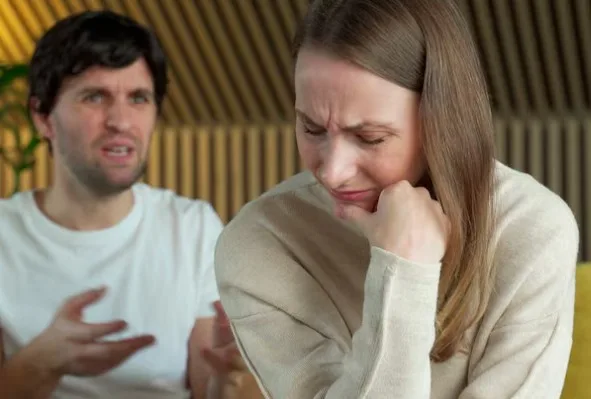
Love OCD doesn’t just affect the person experiencing it; it places real strain on the partner as well, who’s often on the receiving end of constant reassurance requests without understanding the underlying cause. This dynamic can quietly erode intimacy on both sides.
Partners frequently report feeling confused, hurt, or inadequate, especially before an ROCD diagnosis clarifies what’s actually happening. Constant confessions of doubt can be misread as genuine dissatisfaction with the relationship, when they’re actually symptoms of an anxiety disorder that has little to do with the partner’s actual worth or the relationship’s actual health.
Common relational impacts include:
- Partners experiencing chronic reassurance fatigue, feeling drained by repeated requests for validation.
- Reduced spontaneous intimacy, as moments get filtered through anxious self-monitoring instead of presence.
- Growing resentment or confusion on the partner’s side, absent a clear explanation for the pattern.
Naming the condition clearly, ideally with a therapist’s involvement, often relieves pressure on both people considerably. It reframes the pattern as a treatable condition rather than a referendum on the relationship’s fundamental value.
Evidence-Based Treatment for Love OCD: ERP and CBT
The most effective treatment for Love OCD closely mirrors standard OCD treatment: Exposure and Response Prevention (ERP), a specific form of cognitive behavioral therapy designed to interrupt the obsession-compulsion cycle directly rather than trying to eliminate the doubt itself.
Psychologist Edna Foa, whose pioneering research established ERP as the gold-standard OCD treatment, demonstrated that gradually facing feared thoughts while deliberately resisting the urge to perform compulsions leads to significant, lasting symptom reduction over time. Applied to Love OCD, this might mean sitting with the thought “maybe I don’t love them enough” without immediately checking feelings or seeking reassurance, letting the anxiety rise and naturally fall on its own.
Clinical psychiatrist Jeffrey Schwartz, known for developing a widely used four-step self-management approach to OCD, emphasizes relabeling intrusive thoughts as symptoms of the disorder rather than meaningful signals requiring action. That reframe alone, calling the thought “just OCD” rather than treating it as valid information, often reduces its grip considerably.
A typical ERP-based treatment approach includes:
- Identifying specific triggers and the compulsions that typically follow them.
- Building a graded hierarchy of exposure exercises, starting with milder triggers first.
- Practicing response prevention, deliberately resisting reassurance-seeking or checking urges.
- Tolerating uncertainty as an ongoing skill, rather than a problem to be permanently solved.

Practical Coping Strategies to Manage Love OCD Day to Day
Beyond formal therapy, several practical strategies help manage Love OCD symptoms between sessions or for milder presentations. None of these replace professional treatment for moderate to severe cases, but they support the broader recovery process meaningfully.
Therapist Jonathan Grayson, whose work on OCD treatment emphasizes building tolerance for uncertainty as the central skill, argues that the goal isn’t eliminating doubt entirely but learning to function well alongside it. That’s a genuinely different goal than most people expect walking into treatment, and it takes some adjustment to accept.
- Delay reassurance requests deliberately, even briefly, to practice tolerating the discomfort of not knowing.
- Practice mindful observation of intrusive thoughts without immediately engaging or arguing with them.
- Limit online reassurance-seeking, like searching relationship forums for validation, which reliably worsens the cycle over time.
- Communicate openly with your partner about the pattern, so they understand it as a treatable condition rather than a hidden complaint.
Progress here tends to happen unevenly, with good days and harder ones. That’s normal, and it doesn’t mean the underlying approach isn’t working. If this pattern sounds familiar, reaching out to a therapist who specifically treats OCD is a genuinely strong, proactive step, not a last resort.
FAQs about Love OCD
Is Love OCD a real, officially recognized diagnosis?
Love OCD, or Relationship OCD, isn’t listed as a separate diagnosis in the DSM-5, but it’s widely recognized within clinical and research communities as a specific presentation, or subtype, of obsessive-compulsive disorder. Mental health professionals who specialize in OCD treatment generally understand and treat this pattern using the same evidence-based approaches used for other OCD themes, like contamination or harm obsessions, just adapted to relational content. The lack of a distinct diagnostic code doesn’t make the experience any less real or treatable.
Does Love OCD mean I’m actually in the wrong relationship?
Not necessarily, and this is one of the most important distinctions to understand. Love OCD’s doubts typically persist regardless of the actual quality or health of the relationship, since the pattern is driven by an underlying anxiety disorder rather than accurate information about compatibility. Many people with ROCD are in genuinely healthy, loving relationships and would likely experience similar doubts with a different partner, since the obsessive-compulsive pattern tends to follow the person rather than being caused by any specific relationship’s actual flaws.
Can Love OCD happen even in a relationship that’s going well?
Yes, and this often confuses people experiencing it, since intrusive doubts frequently intensify during genuinely happy, secure moments rather than during actual conflict. This happens partly because increased closeness raises the emotional stakes, making the mind more anxious about potentially “losing” something valuable. It’s a counterintuitive but well-documented pattern in OCD generally, where obsessions often target whatever the person cares about most deeply, precisely because caring deeply makes uncertainty feel more threatening.
How is Love OCD different from simply being an anxious or insecure partner?
General relationship anxiety or insecurity tends to respond reasonably well to reassurance and typically improves as trust builds over time within the relationship. Love OCD, by contrast, involves a specific obsessive-compulsive cycle where reassurance provides only brief relief before the doubt returns, often in a slightly different form, regardless of how much trust already exists. The compulsive, repetitive nature of the checking and reassurance-seeking, along with its resistance to logical resolution, is what distinguishes it clinically from more general relationship insecurity.
Should I tell my partner if I think I have Love OCD?
Generally, yes, though timing and framing matter considerably. Explaining the condition as a recognized anxiety pattern, rather than a hidden complaint about the relationship, often helps partners respond with more understanding and less hurt or confusion. Many couples find that naming the pattern together actually strengthens the relationship, since it replaces guesswork and misinterpretation with a shared, accurate understanding of what’s actually happening beneath the surface.
How long does treatment for Love OCD typically take?
Treatment timelines vary based on symptom severity and consistency of practice, but many people notice meaningful improvement within twelve to twenty weeks of consistent ERP-based therapy. Some individuals see faster progress with milder symptoms, while more entrenched or long-standing patterns may take several months of steady work. Recovery generally isn’t about eliminating doubt completely, but about building the capacity to tolerate uncertainty without falling into compulsive checking, which tends to improve gradually rather than resolving all at once.
Bibliography
- Doron, G., Derby, D. S., & Szepsenwol, O. (2014). Relationship Obsessive-Compulsive Disorder: A Conceptual Framework. Journal of Obsessive-Compulsive and Related Disorders.
- Rajaee, S. (2021). The Couple’s Guide to Thriving with ROCD. New Harbinger Publications.
- Foa, E. B., & Kozak, M. J. (1986). Emotional Processing of Fear: Exposure to Corrective Information. Psychological Bulletin.
- Schwartz, J. M. (1996). Brain Lock: Free Yourself from Obsessive-Compulsive Behavior. HarperCollins.
- Grayson, J. (2014). Freedom from Obsessive-Compulsive Disorder: A Personalized Recovery Program for Living with Uncertainty. TarcherPerigee.
- International OCD Foundation. Relationship OCD (ROCD) resources and clinical overview.
- American Psychiatric Association. (2013). Diagnostic and Statistical Manual of Mental Disorders (5th ed.).
Use this citation format to reference the article clearly and help readers find the original source.
PsychologyFor. (2026). Love OCD: What it Is, Causes, Symptoms and How to Overcome it. PsychologyFor. https://psychologyfor.com/love-ocd-what-it-is-causes-symptoms-and-how-to-overcome-it/