The human brain is a complex network of structures that govern everything from physical movement to emotional experience. Among the many neural circuits involved in motivation, emotion, and reward processing, the mesolimbic pathway holds a central role. Known as the “reward pathway”, this system influences how we experience pleasure, make decisions, and develop habits.
Understanding the mesolimbic pathway is not just a matter of neuroscience—it provides deep insight into addiction, depression, motivation, and human behavior.
What Is the Mesolimbic Pathway?
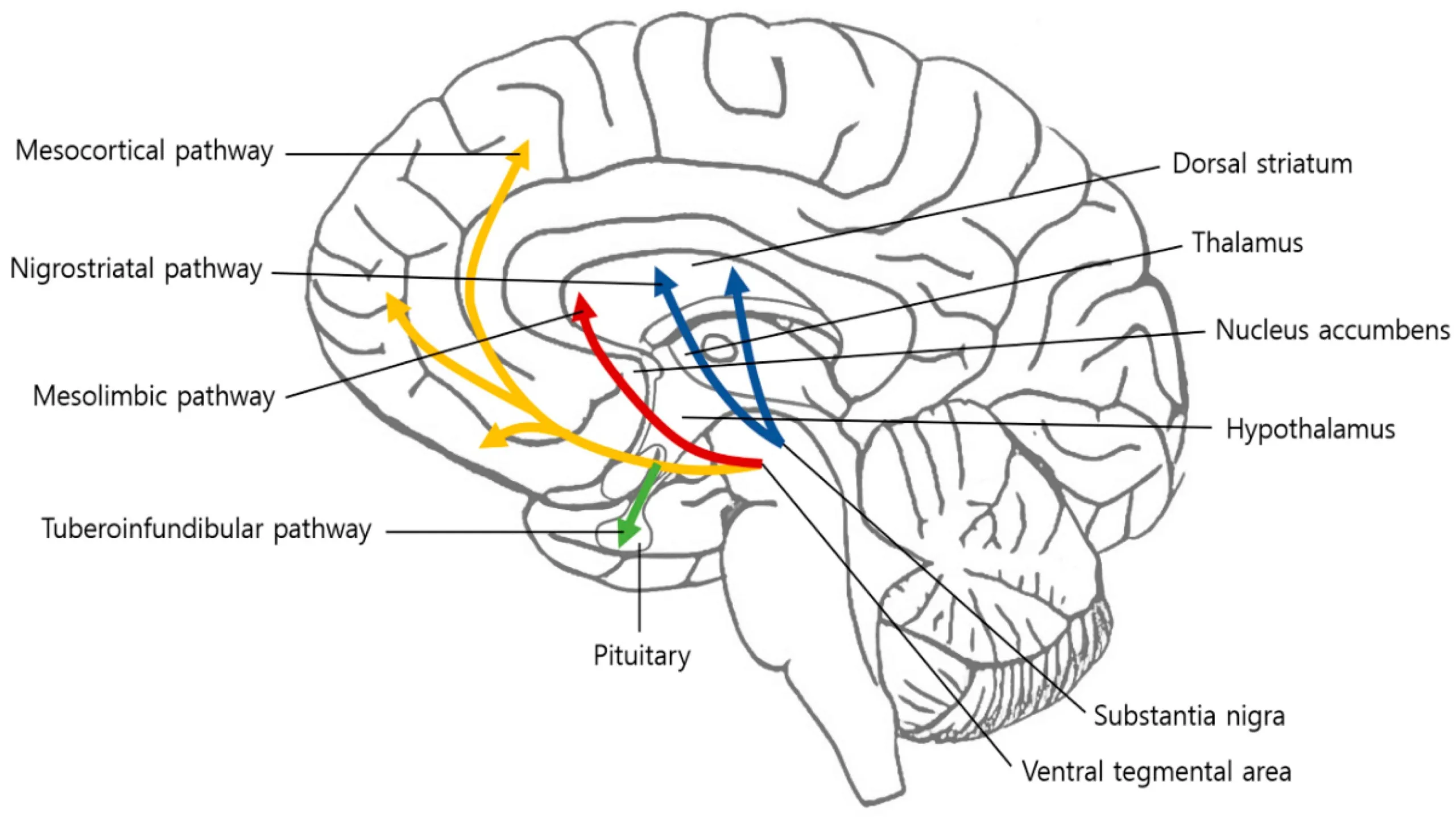
The mesolimbic pathway is one of the major dopaminergic pathways in the brain, meaning it primarily involves the neurotransmitter dopamine. It is part of the brain’s reward system and is critically involved in reinforcing behaviors that are perceived as pleasurable or rewarding.
This pathway transmits signals from the ventral tegmental area (VTA) to several key brain regions, particularly the nucleus accumbens, but also the amygdala, hippocampus, and prefrontal cortex.
Key Structures of the Mesolimbic Pathway
Ventral Tegmental Area (VTA)
Located in the midbrain, the VTA is the origin of the dopaminergic neurons that form the mesolimbic pathway. It is activated when we encounter something rewarding or potentially pleasurable.
Real Readers Started These Today
How many of these have you been "meaning to read" for months?
As an Amazon Associate we earn from qualifying purchases.
Nucleus Accumbens
Often considered the central hub of the reward system, this structure plays a crucial role in processing rewards, reinforcing behaviors, and motivating action. It receives dopamine from the VTA and is responsible for the euphoric feelings associated with certain stimuli.
Amygdala
Involved in emotional processing, particularly fear and pleasure. It connects the emotional significance of a stimulus with reward or aversion.
Hippocampus
This region is key for memory formation, particularly contextual memory. It allows us to remember where and when a rewarding experience occurred, helping guide future behavior.
Prefrontal Cortex
This area governs executive functions like decision-making, impulse control, and planning. It plays a role in modulating the intensity of reward-seeking behavior and integrating emotional and rational inputs.
Functions of the Mesolimbic Pathway
1. Reward Processing
When we do something enjoyable—like eating, socializing, or achieving a goal—dopamine is released along this pathway, reinforcing the behavior and increasing the likelihood that we’ll do it again.
2. Motivation and Goal-Directed Behavior
The mesolimbic pathway doesn’t just make us feel good—it motivates us to seek out rewarding experiences. It helps prioritize actions that may lead to positive outcomes.
3. Reinforcement Learning
By connecting actions with outcomes, this system supports habit formation. When a behavior is consistently followed by reward, the pathway strengthens the neural circuits that guide that behavior.
4. Emotion Regulation
Through its connections with the amygdala and prefrontal cortex, the pathway influences how we emotionally interpret events and how strongly we respond to them.
5. Role in Addiction
Substances like cocaine, nicotine, and alcohol hijack the mesolimbic system by triggering massive dopamine releases, creating a false sense of reward. Over time, this leads to tolerance, dependence, and compulsive behavior—hallmarks of addiction.
Role in different disorders
A malfunction of the mesolimbic pathway, whether due to its hyperfunction or hypofunction, has frequently been linked to the experience of different mental disorders and behavioral alterations. Specifically, some of the disorders to which this pathway has been most linked are the following.
1. Schizophrenia and other psychotic disorders
ong>The main disorder with which it is associated, in schizophrenia, it has been observed that the presence of hyperactivation of the mesolimbic pathway due to excess dopamine is linked to the appearance of hallucinations and other positive symptoms, such as restlessness, impulsivity, and chaotic and disorganized behavior.
But not only in schizophrenia, a link of this pathway has also been found with the symptoms of other psychotic disorders such as chronic delusional disorder, schizophreniform disorder or acute psychotic disorder, among others. The mesolimbic pathway is in fact the main objective targeted by most neuroleptics, making it essential to work with it in order to solve psychotic problems.
2. Substance addictions and withdrawal
As we have indicated previously, the mesolimbic pathway is also part of the brain reward circuit, which is associated with the experience of sensations of pleasure. In this sense, its importance stands out when it comes to explaining the addictive process of drug addicts, which is due to the facilitation and dopamine agonism that a large number of substances tend to generate.
In abstinence the level of dopamine produced by the brain naturally, unlike what occurs in schizophrenia, is insufficient to maintain normative functioning, which causes symptoms such as discomfort and generates craving or desire to consume.
3. Eating disorders
As a fundamental part of the brain reward circuit, the mesolimbic pathway also participates in the feeding process and it is linked to the sensations of pleasure we feel when we eat. The activation of this pathway is closely linked to the presence of eating disorders that involve a loss of impulse control, as occurs with binge-eating in cases of bulimia and binge-eating disorder.
Although obesity is not a mental disorder in itself, excessive food intake despite being satiated or in response to the perception of anxiety and stress is also largely due to the pleasure obtained thanks to the activation of this pathway.
4. Other disorders
Dysfunction of the mesolimbic pathway has also been linked to the presence of problems related to aggression and impulse control. In general, it is also linked to compulsive behavior, and this pathway can be affected by other disorders such as OCD or paraphilias.
FAQs About the Mesolimbic Pathway
What role does dopamine play in the mesolimbic pathway?
Dopamine acts as a chemical messenger that signals reward and reinforcement. It creates the feeling of pleasure and helps the brain encode behaviors worth repeating. However, dopamine isn’t just about pleasure—it’s more about anticipation and motivation.
Is the mesolimbic pathway only active during pleasurable activities?
No. While it’s most famous for its role in processing positive rewards, it also responds to anticipation, risk, and sometimes even stressful or threatening stimuli—especially when these are linked to potential rewards or learning.
How does the mesolimbic pathway relate to addiction?
Addictive substances overstimulate this pathway, releasing unnaturally high levels of dopamine. This disrupts natural reward processing, leading people to crave the substance even when it’s no longer enjoyable, and ignore other life activities.
Can dysfunction in this pathway cause mental health issues?
Yes. Dysfunction in the mesolimbic pathway has been linked to conditions such as:
Depression (especially anhedonia: inability to feel pleasure)
Schizophrenia (especially in relation to hallucinations and delusions)
Obsessive-compulsive disorder
Attention-deficit disorders
Each of these may involve dopaminergic imbalances or disrupted signaling.
Is it possible to “reset” the mesolimbic system?
While you can’t reset it like a machine, certain practices can help regulate dopamine activity and restore balance:
Regular exercise
Mindfulness and meditation
Reducing substance use
Healthy sleep and nutrition
Psychotherapy or medication in clinical cases
How does the mesolimbic pathway influence relationships?
When we bond with someone, whether romantically or socially, the brain releases dopamine through this pathway. This helps reinforce emotional closeness and social connection, making us more likely to maintain those bonds over time.
Use this citation format to reference the article clearly and help readers find the original source.
Sharing useful mental health content can help the right person at the right time.
This article has been reviewed by our editorial team at PsychologyFor to ensure accuracy, clarity, and adherence to evidence-based research. The content is for educational purposes only and is not a substitute for professional mental health advice. In case of a mental health crisis or emergency, call your local emergency services or contact a licensed professional immediately.


 MajostaLearning To Love MyselfListen Free On Audible
 THOUGHT CATALOGThe Mountain Is YouTransforming Self-Sabotage Into Self-MasteryListen Free On Audible
 Spiegel & GrauCodependent No MoreHow to Stop Controlling Others and Start Caring for Yourself (Revised and Updated)Listen Free On Audible