

See more of our articles in your search results.
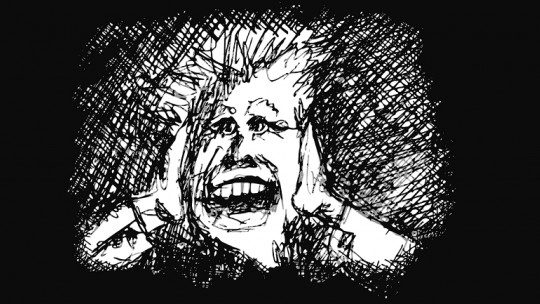
The psychotic disorders They are serious psychopathologies in which the person loses contact with reality. The most characteristic symptoms are hallucinations and the delusionsalthough other alterations are also present that cause discomfort in the person who experiences them personally and/or in the people in their immediate environment.
Delusions are defined as false beliefs. That is, erroneous beliefs about reality about an existing fact or object. They are a distortion of an external stimulus. For example, a patient with delusions may think that someone is following him because there is a conspiracy against him.
On the other hand, hallucinations are false perceptions, such as hearing, seeing, or feeling something that does not really exist. These perceptions are invented by the mind and are not the product of the distortion of any present object, since something is perceived without taking into account external stimuli. For example, a patient with schizophrenia may believe that they are being spoken to through the shower drain.
Delusions are characteristic of delusional disorder, while hallucinations predominate in schizophrenic disorder. Both psychopathologies are the best-known psychotic disorders, but there are also other less popular ones.
If you want to know more about pathologies considered types of psychotic disorders keep reading; Here you will find a brief summary of its main characteristics and symptoms.
How many of these have you been "meaning to read" for months?
- 1
 TarcherThe Artist's Way30th Anniversary EditionListen Free On Audible
 - 2
 New Harbinger PublicationsThe Dialectical Behavior Therapy Skills WorkbookPractical DBT Exercises for Learning Mindfulness, Interpersonal Effectiveness, Emotion Regulation...Listen Free On Audible
 - 3
 New Harbinger PublicationsAdult Children of Emotionally Immature ParentsHow to Heal from Distant, Rejecting, or Self-Involved ParentsListen Free On Audible
What are the types of Psychotic Disorders?
According to the fourth edition of Diagnostic and Statistical Manual of Mental Disorders (DSM IV) the following psychotic disorders exist.
1. Schizophrenia
Schizophrenia is a disorder in which The person who suffers from it has hallucinations and disturbing thoughts that isolate them from social activity. Schizophrenia is a very serious pathology and its treatment requires the use of drugs so that the patient does not suffer flare-ups. Although there is no cure, there are effective treatments so that patients with this disorder can enjoy their lives.
The symptoms of schizophrenia are divided into positive and negative. The first are manifestations that the patient makes or experiences, and that healthy people do not usually present. Negative symptoms are those things that the patient stops doing and that healthy people can do on a daily basis, such as thinking fluidly and logically.
Positive Symptoms
This set of symptoms leads the person to actively engage in abnormal behavior patterns, the result of their difficulties in perceiving and interpreting reality in a fairly realistic way. They are the following:
Negative Symptoms
The negative symptoms of schizophrenia are characterized by leading the person to enter a state of lack or absence of reaction to situations and contexts that are stimulating for other people. They are the following:

Types of Schizophrenia
There are different types of schizophrenia:
2. Delusional Disorder
Delusional disorder, also known as paranoiais characterized because the patient has one or more delusional ideas and is convinced that they are true. For example, when walking through a shopping center he believes that some people (he doesn’t even know) are watching him to send information to someone who intends to kill him. There are several types of delusional disorders depending on the nature of the delusion (for example, persecutory delusional disorder).

As a general rule, the way in which people with delusional disorder perceive their environment predisposes them to adopt a hostile and defensive attitude, since believe in the existence of evil intentions hidden behind the actions of others or they directly believe in conspiracies. This may be due to the way in which other individuals react to the symptoms of the disorder and deny the existence of events or elements that seem obvious to those who have delusional disorder, which gives rise to a vicious circle in which signs are seen. gaslighting everywhere.
Regarding treatment, patients usually resist and, on many occasions, tend to hide their delirium, which is known as “encapsulated delirium.” Treatment includes psychotherapy and the use of antipsychotics.
3. Brief Psychotic Disorder
As its name indicates, it is a psychopathology in which A psychotic break may appear with the same symptoms as a schizophrenic disorder, but it lasts a few days and never affects the patient again. Therefore, it disappears without leaving any sequelae. It is usually a response to a traumatic event such as the death of a family member or a time of extreme stress.
4. Schizophreniform Disorder
Schizophreniform disorder is similar to brief psychotic disorder, but lasts between 1 month and 6 months. The patients show different symptoms of schizophrenia: delusions, hallucinations, disorganized speech, catatonia, and/or negative symptoms.
5. Schizoaffective Disorder
In this type of psychotic disorder called schizoaffective disorder, the patient experiences symptoms of schizophrenia along with symptoms of a mood disorder either at the same time or alternately. This makes this one of the most harmful and mentally draining psychiatric diseases, since it combines severe cognitive alterations, on the one hand, and affective alterations, on the other.
6. Shared Psychotic Disorder or “folie à deux”
Shared psychotic disorder is a strange and unusual pathology, since There are two people who share the same delusions and hallucinations. The exact cause of this psychotic disorder is unknown; However, it is possible that stress and social isolation play an important role in its development.
7. Substance-induced psychotic disorder
This type of psychotic disorder It is characterized by being caused by intoxication due to the use of drugs or medications. Symptoms usually appear quickly and last a short time, from a few hours to several days, but then the effects of the drugs wear off. However, despite its brevity, it is one of the most dangerous types of psychotic disorders, since it can lead to situations of violence.
Contrary to what is often believed, the majority of people who are experiencing a problem derived from a psychotic disorder do not attack others or engage in aggressive behavior intentionally, since they mainly seek to protect themselves in situations where those who feel vulnerable, do not harm others. However, drug abuse does predispose to the emergence of situations with deliberate violence.
The most common symptoms are visual hallucinations, disorientation, and memory problems. Some substances that cause this disorder may be: marijuana, alcohol, cocaine, amphetamines, hallucinogenic inhalants, MDMA, opiates, sedatives, hypnotics and anxiolytics.
8. Psychotic Disorder due to a medical illness
Psychotic disorder due to medical illness occurs when the symptoms of the disorder are the result of illnesses that affect brain function (for example, a brain tumor).
Use this citation format to reference the article clearly and help readers find the original source.
PsychologyFor. (2024). The 8 Types of Psychotic Disorders. PsychologyFor. https://psychologyfor.com/the-8-types-of-psychotic-disorders/