


See more of our articles in your search results.
The term “stimulus” is usually used within the field of psychology to designate any event in the physical world that has the potential ability to excite any of the organism’s receptor apparatus, such that said stimulus would be the origin of a specific response.
When we talk about psychology, one of the fascinating concepts that pop up is the neutral stimulus. But what does that really mean? Simply put, a neutral stimulus is something that doesn’t initially trigger any specific response. It’s like that friend who you see around but don’t really know yet—no strong feelings either way! Understanding neutral stimuli is crucial in psychology, especially within the framework of behaviorism, where learning is all about associations.
In this article we will see what the neutral stimulus consists of and what its role is within behavioral psychology also seeing how a neutral stimulus can be converted into a conditioned one.
What is a neutral stimulus?
A neutral stimulus (NS) is an element in the environment that, prior to conditioning, does not elicit any specific, automatic response. It is called “neutral” because it has no impact on behavior or emotional response until it is associated with a meaningful stimulus.
Psychology’s use of the word stimulus is closely related to that of physiology, and more specifically with the experiment carried out by the Russian physiologist Ivan Pavlov to demonstrate the existence of conditioned reflexes, so that a stimulus classically serves to designate all those events that are capable of triggering a reflex, and that is that with a neutral or natural stimulus can provoke a certain involuntary response or reaction. The theory developed by Pavlov is known as classical or Pavlovian conditioning.
How many of these have you been "meaning to read" for months?
- 1
 S&S/Simon ElementProtocolsAn Operating Manual for the Human BodyListen Free On Audible
 - 2
 Undercover Publishing HouseStop Letting Everything Affect YouHow to break free from overthinking, emotional chaos, and self-sabotage.Listen Free On Audible
 - 3
 Grand Central PublishingIn the Shadow of EightSurviving the Reality of My ChildhoodListen Free On Audible
On the other hand, the neutral stimulus is one that does not have the capacity or property of itself to provoke a defined unconditional reaction, nor proper to become a conditioned stimulus through conditioned association. In other words, a neutral stimulus is a type of stimulus that initially does not produce a specific response in the organism, beyond focusing attention.
The Basics of Classical Conditioning
Overview of Classical Conditioning
So, let’s take a step back and look at classical conditioning. This is a learning process that was famously studied by Ivan Pavlov through his experiments with dogs. In classical conditioning, an unconditioned stimulus (something that naturally elicits a response) is paired with a neutral stimulus. Over time, the neutral stimulus transforms into a conditioned stimulus (CS), capable of eliciting a response on its own.
Key Terms: Unconditioned Stimulus, Conditioned Stimulus, and Response
To make sense of this, let’s clarify some key terms:
- Unconditioned Stimulus (US): A stimulus that naturally triggers a response (like food for a hungry dog).
- Conditioned Stimulus (CS): A previously neutral stimulus that, after becoming associated with the unconditioned stimulus, starts to trigger a conditioned response.
- Conditioned Response (CR): The learned response to the conditioned stimulus (like salivating at the sound of a bell).
Understanding Neutral Stimulus
Definition and Characteristics
Now, let’s focus on the neutral stimulus. Before conditioning, it doesn’t have any effect on the subject. Imagine a bell that doesn’t ring any associations. It’s just… there. But when paired with the unconditioned stimulus, it takes on a new role.
Role in Classical Conditioning
The magic happens when this neutral stimulus gets associated with an unconditioned stimulus. Suddenly, that bell rings, and the dog salivates. The neutral stimulus is now doing the heavy lifting, transitioning into a conditioned stimulus. It’s all about the power of associations!
The Process of Conditioning
How a Neutral Stimulus Becomes a Conditioned Stimulus
To put it plainly, through repetition. The neutral stimulus is presented alongside the unconditioned stimulus several times. Over time, the subject learns to connect the two, leading to the transformation of the neutral stimulus into a conditioned stimulus.
Example of Conditioning with a Neutral Stimulus
Let’s consider a classic example: Imagine you always play a specific song before giving your dog a treat. At first, the song is just a song—a neutral stimulus. But after multiple treat sessions, your dog begins to associate the song with the impending treat. Eventually, just hearing the song makes your dog wag its tail in anticipation!
Real-World Examples of Neutral Stimuli
Everyday Situations
Neutral stimuli aren’t just confined to laboratories; they’re all around us! For instance, consider the sound of a school bell. At first, it means nothing, but after hearing it every day, students come to associate it with the start of class—transforming it into a conditioned stimulus.
Examples from Animal Training
In animal training, neutral stimuli can play a pivotal role. Trainers often use specific sounds or cues as neutral stimuli. Over time, these sounds, when consistently paired with commands or rewards, lead animals to respond accordingly.
The Significance of Neutral Stimuli in Behavior Modification
Applications in Therapy
In therapeutic settings, neutral stimuli can be instrumental in modifying behaviors. For instance, a therapist may introduce a neutral stimulus that becomes associated with positive experiences, helping patients to create new, beneficial associations.
Impact on Learning and Development
The understanding of neutral stimuli also impacts how we approach learning and development in educational contexts. Recognizing that certain cues can transform into learning signals can enhance teaching strategies and student engagement.
The Science Behind Neutral Stimuli
Psychological Theories
Various psychological theories explore how neutral stimuli function within our brains. The behaviorist perspective emphasizes learning through associations, while cognitive theories may delve into the mental processes that accompany these transformations.
Neurobiological Perspective
From a neurobiological standpoint, the brain’s wiring changes in response to conditioning. When a neutral stimulus is consistently paired with an unconditioned stimulus, neural pathways strengthen, establishing a new associative memory.
Common Misconceptions about Neutral Stimuli
Distinguishing Neutral from Conditioned Stimuli
A common misconception is that neutral stimuli are the same as conditioned stimuli. While they start similarly, their roles change once the association is made. A neutral stimulus has no intrinsic meaning until it’s linked to something meaningful.
Myths in Behavioral Psychology
Another myth is that conditioning only works with animals. In truth, humans are just as susceptible to conditioning through neutral stimuli, often without even realizing it!
Practical Applications in Various Fields
Education
In education, teachers can use neutral stimuli effectively to signal transitions or focus attention. For example, a specific tune can signal it’s time to shift from one activity to another, aiding in classroom management.
Marketing
In marketing, brands often pair their logos (neutral stimuli) with positive experiences, like a pleasant advertisement, turning them into strong brand identifiers. Over time, consumers develop emotional responses to these logos, influencing purchasing behavior.
Animal Training
Animal trainers utilize neutral stimuli to condition behaviors in pets. A clicker, initially a neutral sound, can become a powerful tool in positive reinforcement training when paired with treats.
How does a neutral stimulus become a conditioned stimulus?
As we said, a neutral stimulus does not initially produce a specific response other than focusing attention; However, in classical or Pavlovian conditioning, When a neutral stimulus is used together with an unconditioned stimulus, that neutral stimulus becomes a conditioned stimulus
When repeated presentations of both the neutral stimulus and the unconditioned stimulus occur, that neutral stimulus will also be capable of generating a response, this being commonly known as a conditioned response.
This theory of classical conditioning was developed as a result of the multiple experiments that Pavlov carried out when he was researching digestion in dogs with which he used neutral, conditioned and unconditioned stimuli as well. In these experiments, the neutral stimulus was the sound of a bell when shaken this sound being presented to the dogs at the same time as their food, which was as an unconditioned stimulus.
What Pavlov discovered with these experiments, which became one of the bases of behavioral sciences, is that after giving food to the dog, it began to secrete saliva through certain glands, this phenomenon coming to be called by the researcher as a “salivation reflex”.
After repeated trials, Pavlov was able to observe that when he was present next to the dog, he caused the dog to begin salivating without food being present, and this was because he had learned that he would receive food when Pavlov appeared in front of him.
In a third stage of research, Pavlov began to use a neutral stimulus on various occasions and varying the source of the stimulus (visual or auditory), although in all cases it was neutral, just at the moment before serving the food to the dog. As a result, he was able to detect that, after several trials, the dog associates the neutral stimulus with food, which then converted the neutral stimulus into a conditioned stimulus. Then Pavlov called the salivation that occurred in response to the previously neutral stimulus (which had become conditioned), as a “conditioned reflex.”
Examples that explain the operation of the neutral stimulus
In order to be able to explain in greater detail what the neutral stimulus consists of, we consider it convenient to present some examples that we can find in everyday life, and also some laboratory experiments carried out in this regard, where this type of stimulus plays an important role.
1. Case of little Albert
An experiment that caused quite a bit of controversy was the one carried out by John Watson and Rosalie Rayner with an 11-month-old baby (Albert) when they wanted to investigate whether the presence of an animal could be conditioned when it was associated with a loud noise that could provoke a fear response.
In this experiment they were able to observe that when associating the noise of a hammer hitting a metal board (unconditioned stimulus) together with the presence of a white rat (which was previously a neutral stimulus and after the association the aversive sound became a conditioned stimulus), it provoked a fear response in the baby (conditioned response) on subsequent occasions due to the sole presence of the mouse, so they were able to observe that fear could be learned through classical conditioning. This type of mechanism is one of the most common in the acquisition of different phobias in humans.
It should be noted that this experiment was carried out more than 100 years ago, since in our days, of course, it would be illegal and would also exceed the limits of scientific ethics.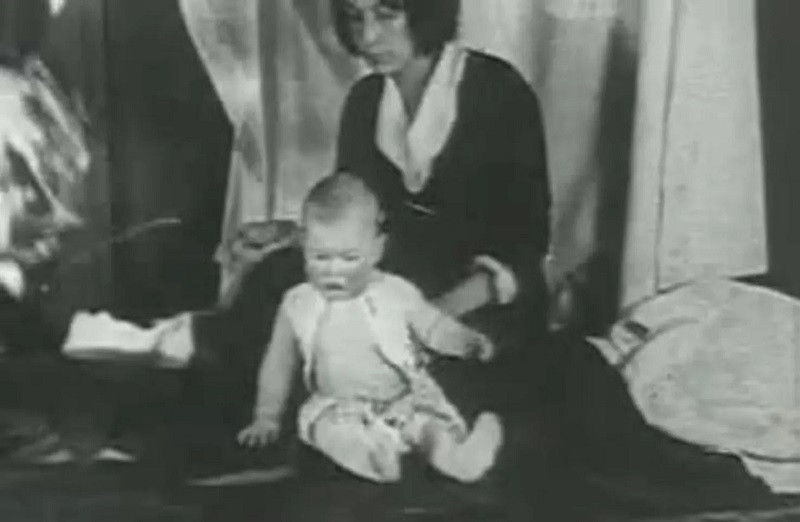
2. Anxiety attacks
According to some theories of behavioral psychology, the anxiety symptoms present in phobias, obsessions or panic attacks, among others, are a clear example of abnormal behavioral reactions since they are considered from this perspective as responses learned in the early phases of childhood and adolescence of people through Pavlovian or classical conditioning processes.
In these cases we can see some of the examples of a neutral stimulus within the field of psychology, and that is that the reaction that appears in combination with a neutral stimulus (for example, suffering an anxiety attack on public transport ), may have given rise to a conditioning phenomenon in which That kind of reaction will tend to be repeated in the face of a series of stimuli similar to that neutral stimulus. Therefore, on future occasions, the subject will try to avoid said neutral stimulus through a conditioning mechanism that is useful.
3. Advertising
In the field of marketing or neuromarketing and advertising, experts know that classical conditioning can be a strong tool when trying to influence the emotions of potential consumers with your advertising. This can be carried out, for example, by creating an association between a product they want to sell (neutral stimulus) and an event that can evoke a series of pleasant emotions in potential consumers.
In this sense, the theory of Pavlovian or classical conditioning has come to have notable effects in the field of advertising (e.g., famous athletes advertising a product, which would be a neutral stimulus prior to being announced, and representing a scene where they demonstrate their athletic virtues represent a conditioned stimulus; while positive emotions or the positive attitude towards the message that is intended to be transmitted in said advertisement would be the unconditioned response).
In these cases, the fundamental thing would be to make a fusion of the brand that is intended to be advertised with the use of said brand (which would be a neutral stimulus previously and then conditioned), with the content of the advertisement (unconditioned stimulus) in order that the unconditioned response becomes a positive conditioned response toward that brand.
If the ad does its job, the brand’s advertisers will make the brand and its use merge in a way that evokes the same positive emotions that were intended when the ad was devised and will also suggest the same attitude.
4. Fear of injections
The fear of injections is a type of specific phobia that is quite common among the population, having been seen an increase in the number of cases at an epidemiological level of this phobia as a result of mass vaccination against COVID-19.
In this type of cases, confirmation of the theory of classical conditioning has been found in many cases, since a neutral stimulus (e.g., the white coat of the health personnel) was associated with another that had provoked a specific reaction.
So, if the healthcare personnel, who usually wears a white coat, is the one in charge of giving an injection that has generated “pain” or a series of momentary side effects in some cases (e.g., a mild fever the next day), then the sight of a white coat could evoke adverse stimuli in the patient even if he is not going to receive another injection.
Neutral stimuli are fascinating elements in the realm of psychology, particularly in understanding how we learn and form associations. They serve as the building blocks for conditioned responses, shaping our behaviors in ways we might not even realize. By recognizing the power of neutral stimuli, we can harness them in various fields, from education to therapy and beyond.
FAQs about Neutral Stimulus
What is the difference between a neutral stimulus and a conditioned stimulus?
A neutral stimulus does not initially elicit any response, while a conditioned stimulus has been paired with an unconditioned stimulus to elicit a response.
Can a neutral stimulus have an effect without conditioning?
No, a neutral stimulus must be associated with an unconditioned stimulus to elicit a response.
How can neutral stimuli be used in everyday life?
Neutral stimuli can be utilized in settings like education or therapy to create beneficial associations, enhancing learning or promoting positive behaviors.
What are some famous experiments involving neutral stimuli?
The most notable example is Pavlov’s experiments with dogs, where the sound of a bell became a conditioned stimulus after being paired with food.
Is the concept of neutral stimulus applicable to humans only?
No, the concept applies to both animals and humans, as both can form associations through conditioning.
Use this citation format to reference the article clearly and help readers find the original source.
PsychologyFor. (2024). Neutral Stimulus: What it Is, How it Works, and Examples. PsychologyFor. https://psychologyfor.com/neutral-stimulus-what-it-is-how-it-works-and-examples/