

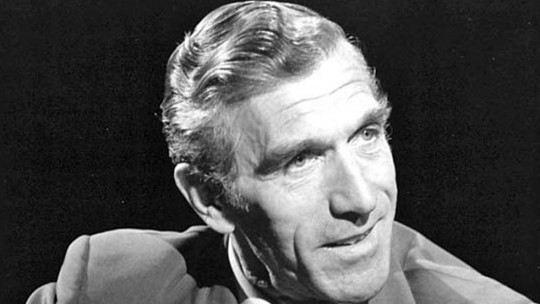
Paul Watzlawick, a key figure in the field of communication theory and systemic psychotherapy, transformed the way we understand human interaction. His theory emphasizes that all behavior is communication, and that communication is far more complex than simply transmitting messages.
Through his work at the Mental Research Institute (MRI) in Palo Alto, California, Watzlawick introduced a series of principles that have become foundational in psychology, communication studies, therapy, and even conflict resolution. His contributions help us analyze not just what people say, but how, when, and why they communicate the way they do.
Who Was Paul Watzlawick?
Paul Watzlawick (1921–2007) was an Austrian-American psychologist, philosopher, and communication theorist. He was a prominent member of the Palo Alto Group, a collective of researchers who developed the Interactional View of Communication, also known as pragmatics of human communication.
Watzlawick is best known for co-authoring the influential book Pragmatics of Human Communication (1967), which outlined five axioms that describe how communication operates in human relationships.
Life and work of Paul Watzlawick
Watzlawick earned a doctorate in philosophy and a degree in analytical psychology from the Carl Jung Institute in Zurich. He worked as a researcher at the University of El Salvador before joining the Mental Research Institute. He also worked as a professor of psychiatry at Stanford University.
From his research with families, Watzlawick described a systems theory focused on communication that would later be known as the “interactional approach.” This model conceives communication as an open system in which messages are exchanged through interaction.
Watzlawick’s work was based on the double bind theory, developed by his colleagues Bateson, Jackson, Haley and Weakland to explain schizophrenia. However, Watzlawick’s influence in the field of communication was probably greater than that of the rest of the members of the Palo Alto School.
The Mental Research Institute of Palo Alto
The Mental Research Institute, commonly abbreviated as “MRI”, was founded by Don Jackson in 1958 in the city of Palo Alto, California. In many cases, the MRI therapeutic tradition is referred to as the “Palo Alto Interactional School.”
During the following decades, the MRI became a very prestigious institution. Numerous influential authors in systemic, family and existential therapies collaborated there, such as Richard Fisch, John Weakland, Salvador Minuchin, Irvin Yalom, Cloé Madanes, RD Laing and Watzlawick himself.
The Palo Alto Interactional School promoted the development of brief therapies based on scientific research that focus on the interaction between people, especially at the family level. Over the years, the orientation of the MRI has evolved to approaches close to constructivism.
Paul Watzlawick, a key figure in the field of communication theory and systemic psychotherapy, transformed the way we understand human interaction. His theory emphasizes that all behavior is communication, and that communication is far more complex than simply transmitting messages.
Through his work at the Mental Research Institute (MRI) in Palo Alto, California, Watzlawick introduced a series of principles that have become foundational in psychology, communication studies, therapy, and even conflict resolution. His contributions help us analyze not just what people say, but how, when, and why they communicate the way they do.
The Five Axioms of Human Communication
Watzlawick’s theory centers on five basic principles—or axioms—that explain the nature of all interpersonal communication. Each axiom reveals how complex, multidimensional, and often unconscious our communication behaviors can be.
1. One Cannot Not Communicate
This is perhaps the most famous axiom. It means that every behavior is a form of communication, whether intentional or not.
Even silence, posture, facial expressions, or avoidance communicate something to others. You are always sending a message, whether you speak or remain quiet.
Example: If you ignore someone, that silence still conveys a message—possibly disapproval or disinterest.
2. Every Communication Has a Content and Relationship Aspect
According to this axiom, every message carries two layers:
- Content (what is said): The literal information.
- Relationship (how it is said): The emotional tone, attitude, or power dynamic.
The relationship aspect often determines how the content is interpreted.
Example: The phrase “Can you help me?” can sound like a polite request or a sarcastic command, depending on the tone.
3. The Nature of a Relationship is Dependent on Punctuation
People structure their communication through punctuation, meaning how they interpret the sequence of events in a conversation. Misunderstandings arise when people punctuate interactions differently.
Example: One person may think they criticize because their partner withdraws, while the partner thinks they withdraw because of criticism. Each sees their behavior as a reaction rather than a cause.
4. Human Communication Involves Both Digital and Analog Modalities
This axiom describes two types of communication:
- Digital (verbal language): Words with precise meanings.
- Analog (nonverbal cues): Tone, gestures, facial expressions, and body language.
Both are crucial in interpreting messages. Nonverbal cues often carry emotional weight and can contradict verbal messages.
Example: Saying “I’m fine” while looking distressed communicates a mismatch between digital and analog channels.
5. Communication is Either Symmetrical or Complementary
This principle refers to power dynamics in communication.
- Symmetrical communication: Interactions based on equality, where each party mirrors the other.
- Complementary communication: Interactions based on difference, where one takes a dominant role and the other a submissive one.
Healthy relationships often include a balance of both styles, depending on the context.
Example: A conversation between two colleagues is symmetrical; a parent-child interaction is typically complementary.
Applications of Watzlawick’s Theory
Watzlawick’s axioms have been applied in multiple fields:
1. Psychotherapy and Family Therapy: His insights into relational patterns help therapists understand family dynamics and communication breakdowns.
2. Conflict Resolution: Understanding how misinterpretations arise can help mediate and resolve interpersonal or organizational conflict.
3. Education and Leadership: Teachers and leaders benefit from learning how their tone, posture, and phrasing influence their message.
4. Digital Communication: Even online, Watzlawick’s principles apply—emojis, response timing, and message length serve as analog signals.
Criticisms and Limitations
Although highly influential, Watzlawick’s theory has received criticism:
- Too broad: The first axiom, “one cannot not communicate,” is sometimes criticized for being philosophically vague.
- Lack of cultural nuance: The axioms don’t always account for how cultural differences affect communication styles.
- Static view of relationships: Some argue the model doesn’t fully capture evolving or nonlinear dynamics in relationships.
Despite these critiques, Watzlawick’s framework remains a powerful lens for understanding human interaction.
FAQs About Paul Watzlawick’s Theory of Human Communication
What is the most important takeaway from Watzlawick’s communication theory?
The key idea is that every behavior communicates something. Even when we don’t speak, we are still sending signals that others interpret—intentionally or not.
How can Watzlawick’s theory improve relationships?
By understanding the relationship aspect of messages and being aware of nonverbal cues, people can improve empathy, reduce misunderstandings, and strengthen interpersonal connections.
Why is punctuation significant in communication?
Because people interpret the sequence and cause of events differently, they may end up in conflict loops where each person blames the other. Awareness of punctuation can break these patterns.
Is the theory still relevant in digital communication?
Yes. Even in texts, emails, and social media, we use analog-like cues—like emojis, typing speed, and punctuation—to convey emotion and relational context.
Can the theory be used in therapy?
Absolutely. Many systemic therapists use Watzlawick’s axioms to analyze family or couple communication and intervene when patterns become dysfunctional.
By citing this article, you acknowledge the original source and allow readers to access the full content.
PsychologyFor. (2025). Paul Watzlawick’s Theory of Human Communication. https://psychologyfor.com/paul-watzlawicks-theory-of-human-communication/