

See more of our articles in your search results.
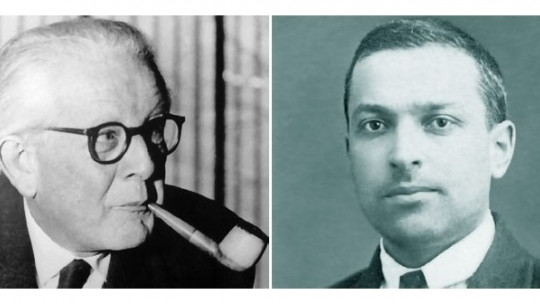
Teaching methods and orientations have been strongly influenced by the theories of Jean Piaget and Lev Vygotsky. Both authors have contributed to the field of education and psychology, offering explanations about how learning and cognitive development occur at early ages.
Piaget and Vygotsky may differ in some aspects of their theoretical proposals, but both offer teachers and educators good recommendations on how to maximize the learning process in childhood and adolescence. Although Piaget and Vygotsky are often presented as rivals, both theories have been of great use to the fields of psychology and education. This demonstrates the complexity of the cognitive development of human beings.
When it comes to understanding how children learn and develop, two names that frequently arise are Jean Piaget and Lev Vygotsky. Both of these influential psychologists made major contributions to the field of developmental psychology, specifically focusing on cognitive development in children. Despite having common interests, Piaget and Vygotsky held distinct views about how children acquire knowledge, the role of culture and social interactions, and the processes that drive cognitive development.
In this article, we will explore the similarities and differences between their theories, highlighting their unique perspectives on child development, learning, and the processes involved.
Jean Piaget’s Learning Theory
The Learning Theory by Swiss psychologist Jean Piaget, considered the father of constructivism, focuses on the cognitive development of children and adolescents. His theory describes and explains the changes that occur in logical thinking at these ages. Piaget suggested that cognitive development occurs following a series of stages of maturation and experience: sensorimotor, preoperational, concrete operations, and formal operations.
How many of these have you been "meaning to read" for months?
- 1
 TarcherThe Artist's Way30th Anniversary EditionListen Free On Audible
 - 2
 New Harbinger PublicationsThe Dialectical Behavior Therapy Skills WorkbookPractical DBT Exercises for Learning Mindfulness, Interpersonal Effectiveness, Emotion Regulation...Listen Free On Audible
 - 3
 New Harbinger PublicationsAdult Children of Emotionally Immature ParentsHow to Heal from Distant, Rejecting, or Self-Involved ParentsListen Free On Audible
Jean Piaget (1896–1980) was a Swiss psychologist who is best known for his theory of cognitive development. His work focused on the way children build understanding of the world around them through interaction with their environment. Piaget believed that cognitive development occurs in four distinct stages, with children progressing through these stages at different ages. These stages are:
- Sensorimotor Stage (Birth to 2 years): Infants explore the world using their senses and motor skills. Object permanence (understanding that objects continue to exist even when not seen) is a major milestone in this stage.
- Preoperational Stage (2 to 7 years): In this stage, children begin to use symbols, such as words and images, to represent objects and experiences. However, their thinking is still egocentric (they have difficulty understanding the perspectives of others).
- Concrete Operational Stage (7 to 11 years): Children start to think logically about concrete events and objects. They begin to understand concepts like conservation (the idea that quantity remains the same even if its appearance changes).
- Formal Operational Stage (11 years and up): In this final stage, children develop the ability to think abstractly, logically, and systematically. They can solve complex problems and consider hypothetical situations.
Piaget viewed children as active learners who construct their own knowledge through exploration and interaction with their environment. He believed that cognitive development was driven by the processes of assimilation (integrating new information into existing schemas) and accommodation (modifying existing schemas to incorporate new information).
If you want to know more about Piaget’s stages of cognitive development, you will find all the necessary information in this article by psychologist Adrián Triglia: “The 4 stages of Jean Piaget’s cognitive development”
Piaget reveals to us in his theory that thanks to interaction with the environment we acquire new information. But as a constructivist psychologist and pedagogue, in his research he realized that Children have an active role in obtaining knowledge. That is, he considered them “little scientists” who actively build their knowledge and understanding of the world.
Sociocultural Theory of Lev Vygotsky
Lev Vygotsky is also one of the most influential and important authors in the field of education and psychology. The Theory of Sociocultural Development Vygotsky states that individuals learn through social interactions and their culture. Vygotsky explains that dialogue It is an important psychological tool in the development of a child’s thinking, and as children grow and develop, their basic language becomes more complex.
Lev Vygotsky (1896–1934) was a Russian psychologist who developed the sociocultural theory of cognitive development, which emphasizes the role of social interaction and culture in shaping cognitive growth. Vygotsky believed that learning is deeply influenced by social contexts, such as family, peers, and cultural tools.
One of the key concepts in Vygotsky’s theory is the Zone of Proximal Development (ZPD), which refers to the range of tasks that a child can perform with the assistance of a more knowledgeable other (such as a teacher or peer). The ZPD is the area between what a child can do independently and what they cannot do, even with help. Learning occurs most effectively when children are working within this zone, as they can gradually increase their abilities with appropriate support.
Vygotsky also emphasized the importance of language in cognitive development. He argued that language is not just a tool for communication, but also a means of thinking and problem-solving. As children engage in dialogue with others, they internalize cultural knowledge and develop their thinking abilities.
Unlike Piaget, Vygotsky believed that cognitive development is socially mediated and that children’s cognitive abilities are shaped by the cultural context in which they live. He believed that adults and peers play an essential role in guiding children’s learning, especially through practices such as scaffolding, where a more knowledgeable person provides support that is gradually withdrawn as the child becomes more competent.
Key Similarities Between Piaget and Vygotsky
Despite their differences, Piaget and Vygotsky had several key similarities in their theories:
1. Focus on Cognitive Development
Both Piaget and Vygotsky were deeply concerned with how children develop cognitively. They sought to understand how children think, learn, and process information as they grow. Their theories both highlight the developmental nature of cognition, recognizing that children’s thinking evolves over time.
2. Constructivist View of Learning
Both Piaget and Vygotsky viewed children as active learners. Piaget believed that children construct their own knowledge through interaction with their environment, while Vygotsky believed that children construct knowledge through social interactions. In both cases, learning is seen as something that is actively built by the learner, not passively received.
3. Emphasis on Stages of Development
Although Piaget proposed specific stages, and Vygotsky did not focus as much on stages, both theories acknowledge that cognitive development follows a process of increasing complexity over time. They agree that children move through different stages or levels of cognitive abilities as they grow, even if the milestones and the mechanisms for progress differ in their models.
4. Role of Play
Both Piaget and Vygotsky recognized the importance of play in cognitive development. Piaget saw play as a way for children to practice new concepts and understand the world, particularly in the preoperational stage. Vygotsky emphasized that play allows children to engage in imaginative scenarios that extend their understanding and build social and cognitive skills.
Key Differences Between Piaget and Vygotsky
While Piaget and Vygotsky shared some common ground, their theories differ significantly in several key areas:
1. Role of Social Interaction
- Piaget: Piaget saw cognitive development as a process driven largely by the child’s own exploration and interactions with their environment. Although he acknowledged the role of social interaction, he believed that cognitive development primarily stems from the child’s individual discoveries.
- Vygotsky: In contrast, Vygotsky placed much greater emphasis on the role of social interaction in cognitive development. He believed that children’s thinking is shaped by their interactions with more knowledgeable others, such as parents, teachers, and peers. According to Vygotsky, social and cultural context play a crucial role in shaping a child’s cognitive abilities.
2. Cultural Influence
- Piaget: Piaget believed that cognitive development is universal and follows the same pattern in all cultures. He focused on the innate biological processes that drive cognitive development, suggesting that children progress through the same stages, regardless of their cultural background.
- Vygotsky: Vygotsky, on the other hand, emphasized the importance of culture in shaping cognitive development. He believed that cognitive abilities are socially constructed and heavily influenced by the tools, language, and customs of the child’s culture. In Vygotsky’s view, cognitive development is not universal; it varies across different societies and environments.
3. The Role of Language
- Piaget: Piaget saw language as an important part of cognitive development, but he did not consider it to be the driving force. He believed that children’s cognitive abilities develop first, and language follows as a tool for expressing their thoughts and ideas.
- Vygotsky: Vygotsky, however, placed a central importance on language in cognitive development. For him, language was not just a means of communication but a key mechanism for thinking. Through social interaction and dialogue, children internalize knowledge, which helps them develop higher cognitive functions. Language, in Vygotsky’s theory, is not just the vehicle of thought but an essential component of it.
4. Stages of Development
- Piaget: Piaget proposed that cognitive development occurs in fixed stages that are universal across all children. These stages are defined by specific milestones that all children reach at roughly the same age.
- Vygotsky: Vygotsky did not focus on fixed stages of development. Instead, he emphasized the concept of the Zone of Proximal Development (ZPD), which suggests that children can achieve higher levels of cognitive functioning with the help of a more knowledgeable other. For Vygotsky, development is not about fixed stages but about the potential for growth within a social context.
5. Emphasis on Independent vs. Assisted Learning
- Piaget: Piaget emphasized independent learning, where children discover and solve problems on their own. He believed that children’s cognitive abilities progress when they engage in activities that challenge them.
- Vygotsky: Vygotsky believed in the importance of guided learning through social interactions. He argued that learning is most effective when children are assisted by a more knowledgeable person within their Zone of Proximal Development. This zone represents tasks that are just beyond a child’s current abilities but can be mastered with guidance.
Both Jean Piaget and Lev Vygotsky made profound contributions to our understanding of cognitive development, but their approaches differ in significant ways. Piaget’s theory focuses on the biological and individual aspects of learning, while Vygotsky’s theory emphasizes the social and cultural context of cognitive development. Understanding their theories can provide valuable insights into how children learn and grow, helping educators, parents, and psychologists create more effective learning environments that nurture children’s cognitive and social development.
By integrating elements from both Piaget’s focus on individual discovery and Vygotsky’s emphasis on social interaction, we can create a more holistic approach to child development, promoting both independent thinking and collaborative learning.
Use this citation format to reference the article clearly and help readers find the original source.
PsychologyFor. (2025). Piaget vs Vygotsky: Similarities and Differences Between Their Theories. PsychologyFor. https://psychologyfor.com/piaget-vs-vygotsky-similarities-and-differences-between-their-theories/