

See more of our articles in your search results.
(Antipsychotic drugs) (antipsychotic drugs) are mainly used to treat the psychotic symptoms of some mental disorders, such as (schizophrenia)/clinical/schizophrenia). However, their indications go much further, and sometimes their chemical characteristics allow other types of symptoms to be relieved.
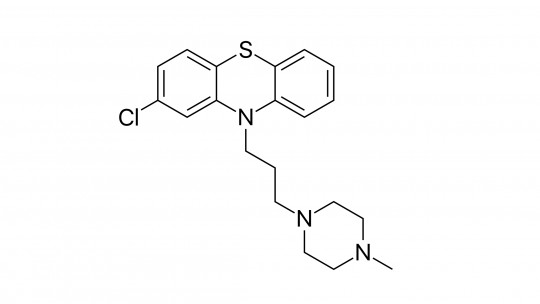
This is what happens with Prochlorperazine, a classic antipsychotic drug, which also has antiemetic effects and antivertigo activity This is a type of piperazine phenothiazine, a group of antipsychotics. In this article we will learn about its characteristics, mechanism of action, uses, indications and side effects.
Prochlorperazine: characteristics
Prochlorperazine is a first-generation antipsychotic drug (also called typical or classic antipsychotic), which can be used to treat schizophrenia (although, as we will see later, it is not its most frequent use).
Its mechanism of action is to antagonize the dopamine D₂ receptor, which leads to a decrease in the concentration of this substance. The trade name of Prochlorperazine is: Stemethyl.
On the other hand, it is known that dopamine is found in high concentrations in people who suffer from schizophrenia. This is why Prochlorperazine is a medication that can be used in this disorder, because it helps reduce these dopamine concentrations.
How many of these have you been "meaning to read" for months?
- 1
 S&S/Simon ElementProtocolsAn Operating Manual for the Human BodyListen Free On Audible
 - 2
 Undercover Publishing HouseStop Letting Everything Affect YouHow to break free from overthinking, emotional chaos, and self-sabotage.Listen Free On Audible
 - 3
 Grand Central PublishingIn the Shadow of EightSurviving the Reality of My ChildhoodListen Free On Audible
Phenothiazines
At a chemical level, Prochlorperazine is derived from piperazinphenothiazine (or Piperazine Phenothiazines), a type of tricyclic neuroleptics (antipsychotics). Phenothiazines are a group of antipsychotics; specifically, the first used in the treatment of psychotic disorders, and the first to obtain positive results in relieving their symptoms.
It can be said that phenothiazines ushered in the era of psychopharmacology They are currently used to relieve psychotic symptoms, but also to prevent nausea and vomiting (they are antiemetics), reduce hypertension (antihypertensives) and relieve allergic symptoms (antihistamines). In addition, they are used for other therapeutic uses.
Piperazine phenothiazines
Piperazine phenothiazines, for their part, are a subtype of phenothiazines, from which Prochlorperazine is derived. That is, Prochlorperazine is a phenothiazine with a piperazine structure. At a chemical and molecular level, piperazine phenothiazines have a piperazine or piperazinyl group in their side chain.
This subtype of phenothiazines, the piperazine phenothiazines, is the most potent of the phenothiazines. They have characteristics that allow them to be used for long-term treatment (chronic treatment) in patients with schizophrenia.
At the level of side effects, piperazine phenothiazines present extrapyramidal disorders (related to movement). On the positive side, they are drugs that act quickly and have little sedative action.
On the other hand, another advantage of Prochlorperazine, and piperazine phenothiazines in general, is that they do not cause orthostatic hypotension (or if they do, it is to a very small degree). Orthostatic hypotension leads to a decrease in blood pressure; Specifically, it is the body’s inability to regulate blood pressure quickly.
Classic or typical antipsychotics
Antipsychotics, also called neuroleptics, can be of two types: classic (first generation or typical) and atypical (second generation). Those that were discovered first are the classic or typical ones. As we have seen, Prochlorperazine belongs to the first group.
The most important difference between these two groups of antipsychotics is that atypicals, in addition to acting on the positive symptoms of psychotic disorders (hallucinations, delusions, disorganized behavior…), have the advantage that they also act (although to a lesser extent) on negative symptoms (avolition, emotional flattening, apathy…). Another important difference is that atypicals do not cause extrapyramidal symptoms (symptoms that typical antipsychotics do cause).
However, in terms of effectiveness, both types of antipsychotics are equally effective. The important thing is to find the antipsychotic that best suits the patient’s characteristics and its pathology.
Mechanism of action
Thus, Prochlorperazine in particular is a typical antipsychotic. Therefore, it has the characteristics of this type of antipsychotics.
How does it act? Blocking dopamine D₂ receptors. This blockage affects four main brain pathways, where dopamine plays an essential role:
1. Blockage of the mesolimbic pathway
It is the most important blockade in relation to the therapeutic effects of Prochlorperazine (and classical antipsychotics in general), since it implies the reduction of the positive symptoms of schizophrenia. That is, the therapeutic effect of the drug occurs thanks to the blocking of the mesolimbic pathway in the brain.
2. Blockage of the nigrostriatal pathway
Thus, like all classic antipsychotics, Prochlorperazine also blocks the nigrostriatal pathway, which leads to alterations in movement (the so-called Extrapyramidal Syndrome (EPS)). These alterations appear due to the decrease in dopamine produced by Prochlorperazine.
3. Blockage of the mesocortical pathway
Blocking the third pathway, the mesocortical, does not produce any notable effect. On the other hand, when it comes to atypical antipsychotics, blocking this pathway improves the negative symptoms of schizophrenia.
4. Blockade of the tuberoinfundibular tract
Finally, the blockade produced by Prochlorperazine in the tuberoinfundibular pathway, another pathway with a large number of dopamine D₂ receptors, produces a series of effects: the most notable is the increase in the concentration of prolactin, which causes gynecomastia (increase in size). of the breast (“breasts grow” in both men and women)) and galactorrhea (increased milk production through the breasts). All this is due to the decrease in dopamine concentration.
Indications and other uses
Prochlorperazine, although indicated for the treatment of schizophrenia, is not used as frequently as an antipsychotic; however, yes it is especially used as an antiemetic drug to reduce and relieve nausea and vomiting (at lower doses than as an antipsychotic). On the other hand, Prochlorperazine is also frequently used to treat vertigo and so-called “severe labyrinthine disorders.”
Additionally, Prochlorperazine is used to treat acute headaches and migraines (although this is not an official or authorized indication; this concept is called “off label”).
Finally, it seems that Prochlorperazine also has a “calming” effect and reduces painful symptoms; Specifically, it has been seen that its effect is greater than that of hydromorphone (an analgesic drug derived from morphine) when applied intravenously, combined with diphenhydramine (a type of antihistamine).
Side effects
Prochlorperazine, like the rest of the classic antipsychotics (with their respective nuances), carries a series of side or adverse effects such as constipation, headache (migraines), dry mouth, blurred vision, dizziness, feeling unsteady and/or difficulty maintaining balance, nausea and nasal congestion.
Other symptoms it can cause are: increased appetite (which leads to weight gain), difficulty urinating, dilation or contraction of the pupils, agitation and/or nervousness, difficulty falling asleep or staying asleep (insomnia), drooling. , uncontrollable tremors, gynecomastia and galactorrhea (already explained), among others.
These are just some of the symptoms that may appear when taking Prochlorperazine, but there are many others; Furthermore, these vary from one patient to another. The dose of Prochlorperazine taken, as well as its frequency of intake, can vary the manifestations of side effects.
Use this citation format to reference the article clearly and help readers find the original source.
PsychologyFor. (2024). Prochlorperazine (antipsychotic): Uses, Indications and Side Effects. PsychologyFor. https://psychologyfor.com/prochlorperazine-antipsychotic-uses-indications-and-side-effects/