

Imagine sitting in a small lab room, a stranger’s voice crying out in pain from behind a wall, and a calm man in a lab coat telling you to keep going anyway. Most people insist they’d refuse immediately. Most people are wrong about that. When psychologist Stanley Milgram actually tested this scenario in the early 1960s, the results were disturbing enough that they’re still debated, replicated, and argued over more than sixty years later.
What makes this experiment so unsettling isn’t just the shock levels people were willing to administer. It’s the gap between what we believe about our own moral courage and what actually happens under real situational pressure. Milgram wasn’t trying to prove that people are cruel; he was trying to understand how ordinary, decent individuals could participate in atrocities simply by following orders from a perceived authority figure. That question felt urgent in the aftermath of World War II, and it still feels uncomfortably relevant today, whether we’re talking about corporate misconduct, institutional abuse, or everyday workplace compliance with instructions that quietly cross ethical lines.
So what exactly did Milgram find, and why does it still matter this much?
This article breaks down Stanley Milgram’s obedience to authority experiment, its methodology, results, and lasting influence on psychology.
What Was Stanley Milgram’s Obedience to Authority Experiment?
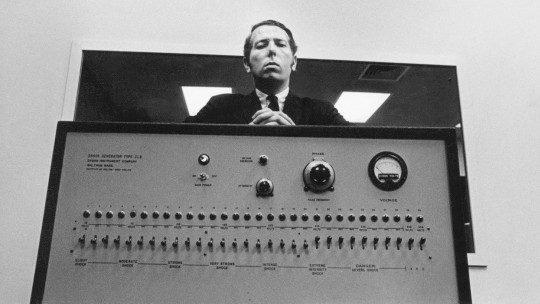
Stanley Milgram’s obedience to authority experiment, conducted at Yale University beginning in 1961, tested how far ordinary people would go in obeying an authority figure’s instructions, even when those instructions required inflicting apparent harm on another person. Participants believed they were administering real electric shocks to a stranger, when in reality no shocks were ever delivered.
Psychologist Stanley Milgram, whose research became one of the most cited and controversial studies in the history of social psychology, designed the experiment specifically to explore a question that had haunted him since childhood: how could large numbers of otherwise ordinary people participate in the atrocities of the Holocaust? He wanted empirical data, not speculation, about the psychological mechanisms behind mass obedience.
A few essential facts define the study’s core setup:
- Participants believed they were part of a study on learning and memory, not obedience specifically.
- An authority figure, the experimenter, instructed participants to deliver increasingly intense electric shocks to a “learner.”
- The “learner” was actually a confederate, an actor working with the research team, and no real shocks occurred.
The deception was essential to the study’s design, though it later became one of the most heavily criticized aspects of the entire research program.
Why Did Milgram Design This Experiment? Historical Context
Milgram’s motivation traces directly back to the Nuremberg trials and the broader question of how Nazi officials justified participation in genocide by claiming they were simply following orders. This wasn’t an abstract academic curiosity; it was a deeply personal question for Milgram, who was Jewish and had lost family members in the Holocaust.
Political theorist Hannah Arendt, whose influential coverage of the Eichmann trial introduced the concept of the “banality of evil,” argued that atrocities could be committed not by monstrous individuals but by ordinary bureaucrats simply doing their jobs within a system that demanded compliance. Milgram’s experiment can be read as an attempt to test this unsettling idea empirically, under controlled laboratory conditions rather than through historical analysis alone.
The historical backdrop shaping the study’s design included:
- The Nuremberg defense, in which numerous Nazi officials claimed they were merely following orders from superiors.
- Broader postwar psychological interest in understanding situational versus dispositional explanations for harmful behavior.
- Milgram’s own academic training under Solomon Asch, whose earlier conformity studies had already demonstrated the power of social pressure on individual judgment.
Understanding this context matters. The experiment wasn’t designed to prove people are inherently bad. It was designed to test whether situational authority could override individual moral judgment, a considerably more unsettling and, as it turned out, more accurate hypothesis.

How the Milgram Experiment Was Conducted Step by Step
The experiment followed a carefully structured protocol designed to create genuine psychological tension between obedience and personal conscience. Understanding the actual mechanics clarifies why the results carried such weight.
- Participants were told they were assigned the role of “teacher,” while a confederate played the “learner” in an adjoining room.
- The teacher was instructed to administer electric shocks of increasing intensity each time the learner answered a memory question incorrectly.
- The shock generator displayed labeled voltage levels ranging from mild up to 450 volts, marked ominously as “danger, severe shock.”
- As shocks increased, the learner, following a scripted recording, expressed escalating distress, eventually falling silent entirely.
- If participants hesitated, the experimenter used a standardized series of verbal prods, insisting the study required them to continue.
The setup was deliberately engineered to escalate slowly, so that no single step felt like a dramatic leap from the last. That gradual escalation turned out to be central to why so many participants continued far longer than anyone predicted beforehand.
What Were the Results of the Obedience Experiment?
The results shocked even Milgram himself, and they remain genuinely startling on first encounter. A striking majority of participants continued administering shocks all the way to the maximum voltage level, despite clear auditory signs of the learner’s apparent distress.
In the original 1963 study, approximately 65 percent of participants continued to the full 450-volt level, even as the learner screamed, pleaded to stop, and eventually went silent. This far exceeded predictions made beforehand by both psychiatrists and laypeople, who had estimated that only a small minority of people would obey to that extreme degree.
A few key findings from the results stand out:
- Obedience rates were far higher than predicted by experts before the study was conducted.
- Many participants showed visible signs of genuine distress, sweating, trembling, and nervous laughter, while continuing to comply anyway.
- Few participants stopped early, and those who did often expressed considerable guilt or hesitation before ultimately refusing.
This wasn’t simple cruelty on display. Most participants clearly wanted to stop. What the experiment revealed was how difficult stopping actually became once obedience to a legitimate-seeming authority had already been established.

Key Variables That Influenced Obedience Levels
Milgram didn’t stop at the original setup; he ran numerous variations to identify exactly which situational factors increased or decreased obedience rates. This systematic variation is part of what makes the research program so scientifically rich.
| Variable | Effect on Obedience |
|---|---|
| Physical proximity to the learner | Obedience decreased when the teacher was in the same room |
| Authority figure’s physical presence | Obedience dropped sharply when instructions were given by phone rather than in person |
| Presence of defiant peers | Obedience decreased significantly when other “teachers” refused to continue |
| Institutional setting | Obedience was somewhat lower outside the prestigious Yale environment |
These variations mattered enormously for understanding the underlying mechanism. Obedience wasn’t a fixed, universal trait; it fluctuated considerably based on situational cues like physical distance, perceived legitimacy, and social modeling from peers. That flexibility is arguably more important than the headline statistic itself.
Ethical Controversies Surrounding the Milgram Experiment
The Milgram studies became a foundational case study in research ethics, largely because of the significant psychological distress participants experienced during and after the experiment. This wasn’t a minor procedural oversight; it fundamentally reshaped how psychological research gets approved and conducted today.
Participants were deceived about the true nature of the study, believed they might be causing real harm to another person, and experienced genuine emotional distress in the process, all without full informed consent about what they’d actually be asked to do. While Milgram conducted debriefings afterward, reassuring participants that no real shocks had occurred, critics argued this came too late to undo the psychological impact of believing they’d potentially harmed or killed someone.
Key ethical concerns raised by the study include:
Today's Top Picks
Updated Daily-
1
 Adams Media Self-Care Activities for Autistic People: 100 Step-by-Step Exercises to Help You Feel Grounded, Relaxed, and Happy (Self-Care for Autistic People)Check Today's Price
 -
2Deyl cavier Coping Skills Cards for Anxiety & Stress Relief – Mindfulness, Meditation & Self-Care Tools for Trauma, BPD, DID, PTSD | Mental Health Therapy Gift for Adults & TeensCheck Today's Price
-
3Fisher, Ellie Weaving as Art Therapy for Beginners: A Self-Care Workbook to Ease Anxiety, Stress, and Depression. Relax and Find Inner Peace Using Simple, Low-Cost Therapeutic Weaving ActivitiesCheck Today's Price


- The absence of full informed consent regarding the study’s true purpose and procedures.
- Significant psychological distress experienced by participants during the experiment itself.
- Questions about whether the resulting scientific knowledge justified the ethical costs involved.
These concerns directly contributed to the development of modern research ethics boards and informed consent standards, changes that make an exact replication of Milgram’s original design essentially impossible under current ethical guidelines.

Criticisms and Reexaminations of Milgram’s Methodology
Beyond ethical concerns, later researchers have raised legitimate questions about Milgram’s methodology and how faithfully his published results represented the full data. This scrutiny doesn’t erase the study’s significance, but it does add necessary nuance.
Author Gina Perry, whose investigative research into Milgram’s original archived recordings and notes uncovered inconsistencies between the standardized protocol as described and what actually happened across different experimental sessions, found that experimenters sometimes deviated from the scripted prods more than officially reported. This suggests the “clean,” standardized narrative often presented in textbooks oversimplifies what was, in practice, a somewhat messier and more variable set of experimental sessions.
Biographer Thomas Blass, who conducted extensive research synthesizing decades of obedience studies including Milgram’s original work, found that obedience rates remained fairly consistent across cultural replications, suggesting the core phenomenon wasn’t merely an artifact of 1960s American culture specifically.
Other notable criticisms include:
- Questions about whether participants fully believed the shocks were real throughout the entire procedure.
- Concerns about selective reporting of the most dramatic experimental variations in popular accounts.
- Debate over how well laboratory obedience actually predicts real-world atrocity participation.
Milgram vs Other Classic Obedience and Conformity Studies
Milgram’s work sits within a broader tradition of mid-twentieth-century social psychology examining how situational forces shape individual behavior. Comparing it to related studies clarifies what makes obedience research distinct from conformity research more broadly.
Psychologist Philip Zimbardo‘s Stanford Prison Experiment, conducted in 1971, examined a related but distinct question: how assigned social roles, rather than direct authority commands, could produce dramatic behavioral change, in that case, guards becoming abusive toward prisoners within a simulated prison environment. While Milgram focused on direct obedience to explicit instructions, Zimbardo’s study explored how role assignment alone could shift behavior even without direct command.
Psychologist Jerry Burger conducted a partial, ethically modified replication of Milgram’s study in 2009, finding obedience rates remarkably similar to the original results despite decades of social change and considerably tighter ethical safeguards built into the modern version. This replication suggests the underlying phenomenon Milgram identified wasn’t simply a product of its specific historical moment.

What the Experiment Reveals About Human Behavior Today
More than sixty years after the original study, Milgram’s findings continue to inform how psychologists understand obedience, institutional compliance, and the conditions under which ordinary people override their own moral judgment. The relevance hasn’t faded.
Modern applications of these insights span numerous fields, workplace whistleblowing research, understanding institutional abuse and cover-ups, and even analysis of how bureaucratic structures can enable harmful outcomes through diffused, incremental responsibility rather than any single dramatic decision. The experiment’s core insight, that situational authority can override individual conscience far more easily than most people expect, remains genuinely humbling.
Practical takeaways from this body of research include:
- Recognizing that situational pressure can influence behavior more powerfully than personal character alone.
- Understanding the value of visible dissent, since even one person refusing to comply can meaningfully reduce group obedience.
- Appreciating why gradual escalation makes ethical lines easier to cross without ever feeling like a dramatic single decision.
None of this excuses harmful compliance when it happens. It does offer something more useful than blame: a genuine understanding of the conditions that make resisting authority so difficult, and, hopefully, a bit more humility about assuming we’d always do better ourselves.
FAQs about Milgram’s Obedience Experiment
Did any real people get hurt during the Milgram experiment?
No, no actual electric shocks were ever administered to anyone during the study. The “learner” was a confederate working with Milgram’s research team, and the distressed sounds participants heard were pre-recorded reactions rather than genuine pain. That said, participants themselves experienced real psychological distress, believing they were causing genuine harm to another person, which is precisely why the study became such a significant case study in research ethics despite no physical injury actually occurring to anyone involved.
Could the Milgram experiment be conducted today exactly as originally designed?
No, not in its original form. Modern research ethics boards require informed consent and prohibit deception that could cause significant psychological distress without adequate safeguards, both of which the original study violated by contemporary standards. Researchers like Jerry Burger have conducted modified, ethically adjusted partial replications that stop the procedure at an earlier point and include enhanced screening and debriefing, allowing some continued study of the phenomenon without replicating the ethical problems of the original design.
Why did so many participants continue administering shocks despite clear distress signals?
Several factors contributed to this pattern, including the gradual escalation of shock intensity, which made each individual step feel like a small increment rather than a dramatic leap. The experimenter’s calm, authoritative presence and standardized verbal prods also created significant social pressure to continue, especially within the prestigious, seemingly legitimate context of a Yale University research study. Many participants experienced genuine internal conflict, showing visible distress while still complying, suggesting the behavior reflected situational pressure rather than simple indifference to the learner’s apparent suffering.
How did Milgram recruit participants for the study?
Milgram recruited ordinary adult men from the New Haven, Connecticut area through newspaper advertisements and direct mail, offering a small payment for participation in what was described as a study on learning and memory. Participants came from a range of occupations and educational backgrounds, deliberately avoiding a sample composed entirely of college students, which was common in psychological research at the time. This broader recruitment strategy helped support the argument that the findings reflected something about general human behavior rather than being specific to a narrow, unusual population.
Has the Milgram experiment been replicated in other countries?
Yes, variations of the obedience experiment have been conducted in multiple countries over subsequent decades, generally finding broadly similar patterns of high obedience rates across different cultural contexts. Thomas Blass’s extensive analysis synthesizing numerous replications found that obedience levels remained fairly consistent despite variations in country, time period, and specific experimental conditions. This cross-cultural consistency has been cited as evidence that the phenomenon reflects something fairly universal about human responses to perceived authority, rather than being a quirk specific to 1960s American culture.
What is the main criticism of using the Milgram experiment to explain real-world atrocities like the Holocaust?
Critics argue that a controlled laboratory setting, involving mild social pressure from a researcher, differs substantially from the sustained, systemic, ideologically reinforced conditions present in actual historical atrocities. Real-world situations often involve prolonged indoctrination, dehumanization of victims, and severe consequences for disobedience, factors not fully replicated in a single laboratory session lasting under an hour. While the experiment offers valuable insight into obedience mechanisms generally, most researchers caution against treating it as a complete or direct explanation for complex historical events involving far more extensive social and psychological forces.
Bibliography
- Milgram, S. (1963). Behavioral Study of Obedience. Journal of Abnormal and Social Psychology.
- Milgram, S. (1974). Obedience to Authority: An Experimental View. Harper & Row.
- Arendt, H. (1963). Eichmann in Jerusalem: A Report on the Banality of Evil. Viking Press.
- Blass, T. (2004). The Man Who Shocked the World: The Life and Legacy of Stanley Milgram. Basic Books.
- Perry, G. (2013). Behind the Shock Machine: The Untold Story of the Notorious Milgram Psychology Experiments. The New Press.
- Zimbardo, P. G. (2007). The Lucifer Effect: Understanding How Good People Turn Evil. Random House.
- Burger, J. M. (2009). Replicating Milgram: Would People Still Obey Today? American Psychologist.
- American Psychological Association. Ethical Principles of Psychologists and Code of Conduct.
Use this citation format to reference the article clearly and help readers find the original source.
PsychologyFor. (2026). Stanley Milgram’s Obedience to Authority Experiment. PsychologyFor. https://psychologyfor.com/stanley-milgrams-obedience-to-authority-experiment/