


See more of our articles in your search results.
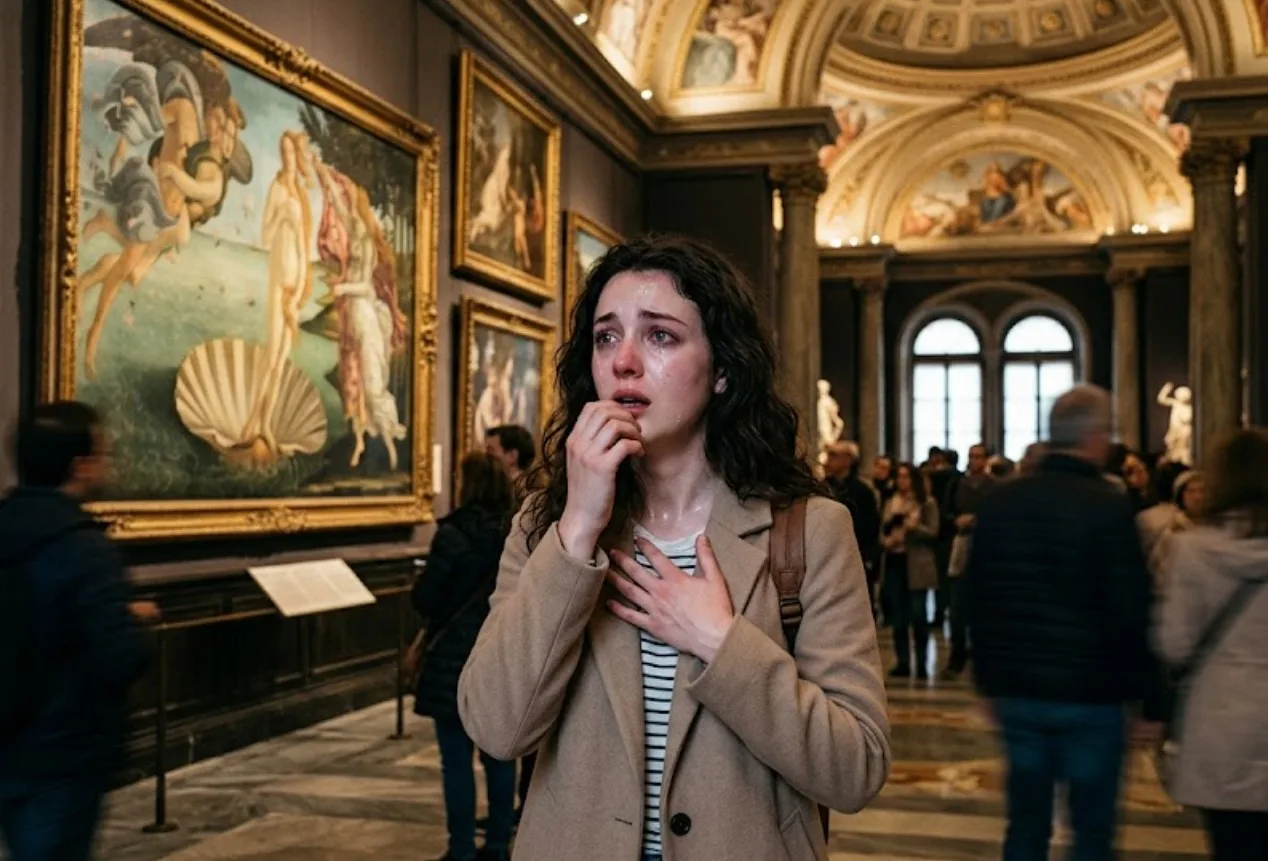
Imagine standing in front of Botticelli’s The Birth of Venus at the Uffizi Gallery in Florence. The light, the scale, the overwhelming accumulation of beauty — and suddenly the room begins to spin. Your heart races. Your chest tightens. Tears you did not expect stream down your face, and you feel a strange, disorienting sense of unreality, as though the boundary between you and the painting has dissolved. You have not had too much wine or too little sleep. What you are experiencing has a name: Stendhal Syndrome.
Named after the 19th-century French author Marie-Henri Beyle, who wrote under the pseudonym Stendhal, this phenomenon describes a psychosomatic response to intense exposure to great art, beauty, or culturally overwhelming environments. In his 1817 travel diary Naples and Florence: A Journey from Milan to Reggio, Stendhal described experiencing heart palpitations, dizziness, and a flood of vivid emotion while visiting the Basilica di Santa Croce in Florence — sensations so intense they nearly incapacitated him. What he described as a personal quirk of sensitivity turned out to be something far more widespread and psychologically significant.
Stendhal Syndrome sits at a fascinating crossroads of art, psychology, neuroscience, and culture. It challenges the assumption that beauty is always a passive, comfortable experience, and it raises profound questions about how the human brain processes overwhelming aesthetic stimulation. Is it a clinical disorder? A normal extreme of human sensitivity? A cultural phenomenon specific to certain contexts? The answers are more nuanced — and more interesting — than most popular accounts suggest.
This comprehensive guide explores the known causes, characteristic symptoms, neurological basis, and available approaches for managing Stendhal Syndrome, while placing it firmly in its proper psychological and cultural context.

How many of these have you been "meaning to read" for months?
- 1
 William MorrowThe StepsA MemoirListen Free On Audible
 - 2
 Thomas NelsonMaking Peace with What I Can’t ControlFind Relief from the Exhaustion of Overthinking, Trying to Fix Others, and Wanting to Figure It A...Listen Free On Audible
 - 3
 Harper InfluenceThe Angels Among UsHow God’s Messengers Play a Role in HealingListen Free On Audible
What Is Stendhal Syndrome? A Clinical and Cultural Definition
Stendhal Syndrome, also known as Florence Syndrome or hyperkulturemia, is a psychosomatic condition characterized by physical and psychological symptoms triggered by exposure to exceptionally beautiful or emotionally overwhelming art, landscapes, or cultural environments. Symptoms can include rapid heartbeat, dizziness, fainting, confusion, dissociation, and intense emotional disturbance — ranging from euphoria to panic.
The term was formally coined in 1979 by Italian psychiatrist Dr. Graziella Magherini, who worked at the Santa Maria Nuova hospital in Florence — the city most closely associated with the syndrome. Over the course of her clinical career, Magherini documented more than 100 cases of tourists who had been admitted to or treated at the hospital following acute psychological and physical episodes triggered by exposure to the city’s extraordinary concentration of Renaissance art. She published her findings in the 1989 book La Sindrome di Stendhal, bringing systematic clinical attention to a phenomenon that had until then been largely anecdotal.
Florence is not coincidental in this story. The city contains one of the densest accumulations of great art in the world — the Uffizi, the Accademia, the Bargello, the Medici Chapels — often encountered by visitors within the space of a few days. The cumulative aesthetic and emotional intensity of that experience, combined with the physical demands of travel, the disorientation of a foreign environment, and in many cases the emotional weight of the artistic subject matter (much Renaissance art depicts scenes of profound religious, erotic, or existential significance), creates conditions that appear to push some individuals beyond a threshold of psychological regulation.
It is important to note that Stendhal Syndrome does not appear in the DSM-5 or ICD-11 as a formal diagnostic category. It is better understood as a clinical phenomenon — a recognizable pattern of symptoms with identifiable triggers — than as a discrete disorder. Its relationship to existing diagnostic categories, including panic disorder, dissociative episodes, and acute stress reactions, remains an active area of discussion.
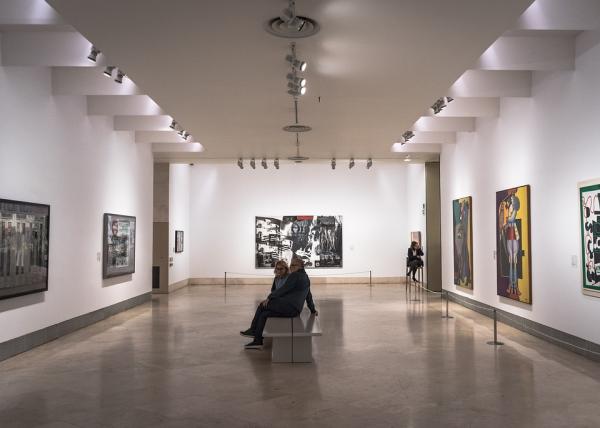
The History Behind the Name: Stendhal’s Own Account
The syndrome’s namesake, the French author Stendhal, provided the earliest detailed first-person description of aesthetic overwhelm so intense it produced physical symptoms. His account, written nearly two centuries ago, remains remarkably consistent with modern clinical descriptions — a continuity that suggests the phenomenon is not a cultural artifact of a particular era but a persistent feature of human aesthetic experience at its extremes.
In January 1817, Stendhal visited the Basilica di Santa Croce in Florence, where Michelangelo, Galileo, Machiavelli, and other towering figures of Western civilization are buried. The frescoes by Volterrano, which he viewed while lying on the floor of the Niccolini Chapel to take in the ceiling paintings, produced a reaction he described in vivid terms: a racing heart, a sense of life being absorbed from him, a profound dizziness that forced him to sit down outside and collect himself. He described reaching a point of aesthetic saturation where beauty had become physiologically destabilizing.
What makes Stendhal’s account clinically interesting is its specificity. He was not simply moved to tears — a common and unremarkable response to great art. He experienced what would today be recognizable as autonomic nervous system dysregulation: cardiovascular symptoms, spatial disorientation, and a temporary inability to function normally. He was, by any contemporary assessment, having a psychosomatic episode triggered by aesthetic overstimulation.
Stendhal was an exceptionally sensitive and emotionally articulate observer, and his capacity to notice and record these internal states with precision is part of why his description survived as a useful reference point. But the syndrome named after him is not limited to the highly educated or the particularly artistically sensitive — Magherini’s clinical cases included people from a wide range of backgrounds and levels of artistic knowledge.
Symptoms of Stendhal Syndrome: What It Looks and Feels Like
Stendhal Syndrome presents across a spectrum of severity, from mild emotional overwhelm to acute psychiatric episodes requiring immediate clinical attention. Recognizing the range of possible symptoms helps both individuals and those accompanying them understand what is happening and respond appropriately.
The most commonly reported physical symptoms include:
- Rapid or pounding heartbeat (tachycardia) — often the first physical symptom reported, sometimes described as feeling like the heart is “escaping the chest.”
- Dizziness and lightheadedness — a sense of the environment spinning or becoming unstable, sometimes leading to the need to sit or lie down.
- Fainting or near-fainting (presyncope) — in more severe cases, the vasovagal response triggered by overwhelming emotional stimulation can cause brief loss of consciousness.
- Shortness of breath — a tightening sensation in the chest and difficulty regulating breathing.
- Trembling or physical weakness — the body reflecting the internal emotional intensity through motor symptoms.
Psychological and perceptual symptoms are equally significant and often more disorienting:
- Dissociation — a sense of unreality, of watching oneself from outside, or of the environment losing its familiar, solid quality.
- Overwhelming emotional flooding — waves of emotion that feel disproportionate and uncontrollable, including euphoria, grief, terror, or a combination that defies easy categorization.
- Vivid hallucinations — in the most extreme documented cases, individuals have reported brief visual or auditory experiences that do not correspond to external reality.
- Paranoid ideation — in severe cases, a temporary sense that the art or environment is somehow directed at or threatening to the individual personally.
- Identity confusion — some individuals report a momentary dissolution of the sense of self, a feeling of merging with the art or of becoming someone or something other than themselves.
- Acute anxiety or panic — the physiological symptoms of autonomic arousal are easily interpreted by the cognitive mind as signs of danger, which can escalate into full panic.
It is critical to emphasize that most people who experience Stendhal Syndrome have mild to moderate symptoms that resolve naturally within hours, without clinical intervention, once the individual leaves the overstimulating environment and rests. Severe episodes involving sustained dissociation, hallucinations, or prolonged psychiatric disturbance are considerably rarer.
What Causes Stendhal Syndrome? The Psychology and Neuroscience
The causes of Stendhal Syndrome are not fully established, but current understanding points to a convergence of neurological, psychological, and situational factors that, in susceptible individuals, produce a response that overwhelms the brain’s normal capacity for aesthetic processing and emotional regulation.
Several contributing mechanisms are worth examining in depth:
Aesthetic Overstimulation and the Brain’s Reward System
Neuroscience has established that exposure to beauty — art, music, natural landscapes — activates the brain’s reward circuitry, including dopaminergic pathways in the nucleus accumbens and the orbitofrontal cortex. These are the same systems activated by food, social connection, and other fundamental rewards. When aesthetic stimulation is sufficiently intense, the reward response can be overwhelming rather than pleasurable — a neurological “flooding” of the system with more input than it can smoothly process.
In Florence, the sheer concentration of masterworks in a confined space means that a visitor may be continuously activating these reward circuits across hours and days, without the normal recovery time between aesthetic experiences. The cumulative effect can push some individuals past a threshold of comfortable processing into acute dysregulation.
The Role of Personal Psychological Vulnerability
Magherini’s clinical observations suggested that individuals who experience Stendhal Syndrome often have particular psychological characteristics: high emotional sensitivity, a strong capacity for aesthetic engagement, a rich inner life, and in some cases histories of emotional instability or unresolved psychological conflicts. The art appears to act as a trigger that activates deeper psychological material — the overwhelming beauty becoming a catalyst for emotions that were already present but suppressed.
This is consistent with the broader psychology of peak experiences, described by Abraham Maslow as moments of intense transcendence, connection, and self-dissolution that some individuals are far more prone to than others. For highly sensitive people, the aesthetic environment of a place like Florence may produce peak experiences at an intensity that tips over into acute distress.
The Displacement of Travel and Cultural Disorientation
Most documented cases of Stendhal Syndrome occur in tourists encountering a foreign cultural environment, and this is not coincidental. Travel involves significant cognitive and emotional load: unfamiliar language and customs, disrupted routines, physical tiredness, altered sleep, and the continuous low-level stress of navigating an unknown environment. These factors deplete the brain’s executive resources and reduce its capacity for emotional regulation — the very resources needed to process intense aesthetic experiences without becoming overwhelmed.
A person encountering the same artworks in their home city, in small doses, over a lifetime, would be far less likely to experience acute symptoms. The syndrome is partly a product of the concentrated, displaced, high-intensity encounter that characterizes tourist experience in culturally saturated cities.
The Emotional Content of the Art Itself
Much of the art that triggers Stendhal Syndrome is not merely aesthetically beautiful — it is emotionally profound. Renaissance religious painting depicts scenes of suffering, sacrifice, transcendence, and divine love at an almost unbearable emotional pitch. Michelangelo’s sculptures physically embody human struggle and aspiration in marble. These works carry enormous emotional freight, and for individuals who are already emotionally porous or carrying their own unresolved material, the impact can be galvanizing in ways that are not always comfortable.
Who Is Most at Risk of Experiencing Stendhal Syndrome?
Stendhal Syndrome does not affect everyone who visits Florence or encounters great art — and understanding who is most susceptible helps explain why it occurs in some individuals and not others.
Based on clinical observations and the available research literature, the following factors appear to increase susceptibility:
- High emotional sensitivity and aesthetic responsiveness. People who are naturally more emotionally reactive to beauty, music, and art appear more vulnerable to crossing the threshold from appreciation into overwhelm.
- First-time visitors to Florence or comparable cities. The novelty and unexpectedness of encountering art at this scale and density for the first time appears to amplify the psychological impact.
- Travel fatigue and physical depletion. Tiredness, dehydration, jet lag, and poor nutrition all reduce the brain’s capacity for emotional regulation, lowering the threshold for overwhelm.
- Pre-existing psychological vulnerability. Individuals with histories of anxiety, depression, dissociative tendencies, or unresolved emotional conflicts appear at higher risk of severe episodes.
- Traveling alone. Magherini noted that solo travelers — particularly those in a somewhat isolated emotional state — appeared in her case reports more frequently than group travelers, possibly because social connection provides an important regulatory anchor.
- Strong personal or spiritual identification with the art. People who arrive in Florence with deeply personal emotional expectations — those for whom this trip represents a lifelong dream, or who have a strong religious or philosophical connection to the art — may be particularly vulnerable to being overwhelmed.

Stendhal Syndrome vs. Jerusalem Syndrome vs. Paris Syndrome: Key Differences
Stendhal Syndrome belongs to a small group of recognized location-specific psychosomatic phenomena, each associated with a particular city and a distinct psychological dynamic. Understanding their differences clarifies the specific mechanism behind each.
| Syndrome | Trigger and Core Dynamic |
|---|---|
| Stendhal Syndrome (Florence) | Triggered by aesthetic and cultural overwhelm from intense exposure to great art and beauty. Primarily affects emotionally sensitive, artistically engaged visitors. |
| Jerusalem Syndrome | Triggered by spiritual and religious overwhelm in a location of intense sacred significance. Can produce messianic delusions or an acute religious episode in vulnerable individuals, particularly those with pre-existing religious preoccupations. |
| Paris Syndrome | Triggered by the collision between idealized expectations of Paris and the reality of the city. Most documented in Japanese tourists, it involves acute disappointment, anxiety, and in severe cases psychotic episodes — a culture-shock-based response rather than a beauty-based one. |
What all three share is the role of powerful expectation, displacement, and psychological vulnerability in producing acute symptoms in an otherwise normal population. None is a formally recognized psychiatric diagnosis, but all represent genuine clinical phenomena that have been observed consistently enough to merit documentation and study.
Treatment and Management of Stendhal Syndrome
In most cases, Stendhal Syndrome is self-limiting: symptoms resolve naturally once the individual leaves the overstimulating environment, rests, eats, and allows their nervous system to return to baseline. No specific pharmacological treatment exists or is typically required for mild to moderate episodes.
Practical immediate management strategies include:
- Leave the overstimulating environment. Exit the museum, gallery, or site and move to a quieter, less visually demanding space. Fresh air, natural light, and reduced sensory input allow the nervous system to begin self-regulating.
- Sit or lie down. If dizziness, presyncope, or physical weakness are present, reducing postural demands prevents falls and allows blood pressure to stabilize.
- Hydrate and eat. Physical depletion compounds psychological vulnerability. Drinking water and eating something simple — particularly if the individual has been walking and sightseeing for several hours — addresses a contributing factor directly.
- Seek social connection. Being with a trusted companion who can provide calm reassurance and grounding helps regulate the nervous system through what Stephen Porges’ Polyvagal Theory describes as the social engagement system — the most powerful and rapid route to nervous system co-regulation.
- Allow emotional processing. Suppressing or dismissing the emotional response often prolongs it. Allowing the feelings — acknowledging that the experience was genuinely powerful and that the response is not a sign of pathology — tends to support faster resolution.
- Seek medical attention if symptoms persist or are severe. If physical symptoms such as chest pain, fainting, or severe dissociation persist beyond a few hours, or if there is any possibility of an underlying cardiac or neurological cause, medical evaluation is appropriate and important.
For individuals with known psychological vulnerability, particularly those with anxiety disorders, dissociative tendencies, or histories of acute stress responses, preventive strategies before visiting culturally overwhelming sites may be valuable: pacing the cultural itinerary over more days, limiting daily museum time, ensuring adequate rest and nutrition, and traveling with a companion rather than alone.
In rare cases where the episode is prolonged or involves severe psychiatric symptoms such as sustained hallucinations or paranoid ideation, short-term psychiatric support — including possible brief hospitalization and anxiolytic medication — may be indicated. The Santa Maria Nuova hospital in Florence has documented experience with precisely these situations and represents the kind of institution that understands the phenomenon in its local clinical context.

Is Stendhal Syndrome a Real Disorder or a Cultural Myth?
This is the question most frequently asked about Stendhal Syndrome, and it deserves a careful answer: the phenomenon is real, the symptoms are genuine, but its status as a distinct clinical disorder remains debated.
Skeptics argue that the documented cases can be fully explained by existing diagnoses — panic attacks, dissociative episodes, acute stress reactions, or the exacerbation of pre-existing conditions by the conditions of travel — without requiring a new syndrome category. From this perspective, “Stendhal Syndrome” is a culturally resonant label rather than a clinical innovation.
Supporters of the concept argue that the consistency of the trigger (aesthetic overwhelm specifically, rather than generic stress), the specific location clustering (Florence above all others), and the distinctive phenomenological quality of the experience — the sense that beauty itself is the agent, not generalized anxiety — justify treating it as a coherent phenomenon, even if it is not yet a formal DSM category.
What is beyond reasonable dispute is that something genuinely happens to some people in certain aesthetic environments — something more than ordinary emotional response and something that has real psychological and physiological dimensions. The label “Stendhal Syndrome” is perhaps most useful not as a diagnostic category but as a culturally and phenomenologically meaningful description of an experience that would otherwise be difficult to name or share.
There is also something deeply important in taking the phenomenon seriously rather than dismissing it. The idea that beauty can be powerful enough to temporarily destabilize a person speaks to the depth of human aesthetic capacity. It is, in a strange way, a testament to what art at its greatest can do.
FAQs about Stendhal Syndrome
What is Stendhal Syndrome, simply explained?
Stendhal Syndrome is a psychosomatic phenomenon in which intense exposure to great art, extraordinary beauty, or culturally overwhelming environments triggers physical and psychological symptoms — including rapid heartbeat, dizziness, fainting, emotional flooding, dissociation, and in severe cases brief hallucinations or paranoid thoughts. It is most commonly reported in Florence, Italy, which contains an exceptionally dense concentration of Renaissance masterworks. The syndrome is named after the French author Stendhal, who described a similar experience in 1817. It was formally studied and documented by Italian psychiatrist Dr. Graziella Magherini in the 1980s. It does not appear as a formal diagnostic category in the DSM-5 or ICD-11 but is recognized as a genuine clinical phenomenon.
Is Stendhal Syndrome dangerous?
In most cases, Stendhal Syndrome is not dangerous. The majority of episodes are mild to moderate — involving emotional overwhelm, dizziness, and temporary disorientation — and resolve naturally within hours once the individual leaves the triggering environment and rests. However, more severe episodes can involve sustained dissociation, hallucinations, or acute panic that require medical attention. Physical symptoms such as chest pain, fainting, or palpitations should always be evaluated medically to rule out cardiac or other physical causes, which may coincidentally present in the same context. People with known anxiety disorders, dissociative tendencies, or a history of acute stress responses should be particularly attentive to managing their exposure to culturally overwhelming environments.
Why does Stendhal Syndrome happen most often in Florence?
Florence is uniquely positioned to trigger this phenomenon for several converging reasons. The city contains one of the highest concentrations of Renaissance masterworks in the world — the Uffizi, the Accademia, the Bargello, the Medici Chapels, and countless churches — all within a compact geographic area. A visitor can encounter Botticelli, Michelangelo, Raphael, and Leonardo within the space of a single afternoon. This density of aesthetic stimulation, combined with the conditions of travel (fatigue, disorientation, disrupted routines, heightened emotional expectations), creates conditions that are particularly likely to overwhelm the psychological and physiological regulatory systems of susceptible individuals. Other cities with high cultural and artistic concentrations — Rome, Paris, Athens — have also produced documented episodes, but Florence remains the most clinically prominent location.
How is Stendhal Syndrome different from simply being moved by art?
Being moved by art — feeling tears, a sense of awe, profound emotion, or even temporary speechlessness — is a common, healthy, and valuable human experience. Stendhal Syndrome represents a quantitative escalation of that experience beyond the threshold of comfortable processing, into a range where physiological symptoms (palpitations, fainting, dizziness) and significant psychological disruption (dissociation, confusion, hallucinations) occur. The key distinguishing feature is the functional impairment: a person moved by a painting can still walk, talk, and navigate their environment. A person in a Stendhal episode may be unable to do any of those things. The transition from profound aesthetic response to syndrome appears to involve a combination of neurological overstimulation, individual psychological vulnerability, and situational factors including fatigue and displacement.
Can Stendhal Syndrome be prevented?
For most people, the risk of experiencing Stendhal Syndrome is low, and no specific prevention is necessary. For individuals who know they have high emotional sensitivity, anxiety tendencies, or dissociative vulnerability, several practical strategies can reduce risk during culturally intense travel. These include limiting daily museum and gallery time rather than attempting to see everything at once; ensuring adequate sleep, hydration, and nutrition; traveling with a companion rather than alone; pacing the cultural itinerary over more days; and allowing deliberate recovery time between intense aesthetic experiences. Being aware that the phenomenon exists — and recognizing early symptoms without catastrophizing about them — is itself protective, as panic about the symptoms tends to amplify them.
Is Stendhal Syndrome related to any other recognized psychological conditions?
Stendhal Syndrome overlaps symptomatically with several recognized clinical phenomena. Its physical symptoms (tachycardia, dizziness, presyncope, shortness of breath) resemble those of a panic attack or vasovagal syncope. Its psychological symptoms (dissociation, identity confusion, hallucinations) resemble features of dissociative episodes or acute stress reactions. Some researchers have proposed that it represents the expression of underlying anxiety or dissociative vulnerability triggered by a specific environmental stressor. It also shares conceptual territory with Maslow’s concept of peak experiences and Csikszentmihalyi’s flow state — though those are typically positive experiences, whereas Stendhal Syndrome can produce significant distress. The phenomenon’s relationship to highly sensitive person (HSP) traits, identified by psychologist Elaine Aron, has also been informally noted in the clinical literature.
Bibliography
- Magherini, G. (1989). La Sindrome di Stendhal. Ponte alle Grazie.
- Stendhal (Marie-Henri Beyle). (1817). Rome, Naples et Florence. Delaunay.
- Bamforth, I. (2010). Stendhal’s syndrome. British Journal of General Practice, 60(581), 945–946.
- Porges, S. W. (2011). The Polyvagal Theory: Neurophysiological Foundations of Emotions, Attachment, Communication, and Self-Regulation. W.W. Norton & Company.
- Maslow, A. H. (1964). Religions, Values, and Peak Experiences. Ohio State University Press.
- Aron, E. N. (1996). The Highly Sensitive Person: How to Thrive When the World Overwhelms You. Broadway Books.
- Csikszentmihalyi, M. (1990). Flow: The Psychology of Optimal Experience. Harper & Row.
- Nicholson, T. R. J., Pariante, C., & McLoughlin, D. (2009). Stendhal syndrome: A case of cultural overload. BMJ Case Reports.
- American Psychiatric Association. (2013). Diagnostic and Statistical Manual of Mental Disorders, Fifth Edition (DSM-5). American Psychiatric Publishing.
Use this citation format to reference the article clearly and help readers find the original source.
PsychologyFor. (2026). Stendhal Syndrome: Causes, Symptoms and Treatment. PsychologyFor. https://psychologyfor.com/stendhal-syndrome-causes-symptoms-and-treatment/