


See more of our articles in your search results.
You open the dense, baroque pages of an unconventional Spanish literary masterwork, immediately engulfed by an intoxicating vortex of esoteric mysticism, historical provocation, and relentless autobiographical confession. That sudden intellectual vertigo is unmistakable. In an era dominated by homogenous commercial fiction, ideological orthodoxy, and sanitized digital discourse, encountering an author who lived entirely outside modern consensus feels profoundly destabilizing. It is not an ordinary reading experience. Rather, it exposes the electrifying, boundary-pushing vitality of uncompromising literary and philosophical individuation.
Fernando Sánchez Dragó (1936–2023) was one of the most prolific, controversial, and fiercely independent figures in contemporary Spanish literature. A tireless globetrotter, spiritual seeker, classical polymath, and television provocateur, Dragó spent six decades crafting a monumental bibliography that bridged Eastern metaphysics, Jungian archetypes, Spanish heterodoxy, and existential travel. Yet mainstream discussions often reduce his legacy to media polemics, obscuring the profound psychological depth, historical erudition, and spiritual yearning embedded within his greatest writings. Discovering his essential oeuvre equips you with unique narrative lenses to examine the shadow of national identity, the sacred archetypes of history, and the transformative psychology of spiritual pilgrimage.
How can exploring Dragó’s heterodox philosophy and mystical travel narratives expand your intellectual independence and cultivate profound psychological self-examination?
This comprehensive guide details the 8 best books by Fernando Sánchez Dragó, reviewing his essential masterpieces across mythohistory, spiritual travelogues, award-winning esoteric novels, investigative memoirs, and philosophical reflections on life, death, and human transcendence.
8 Best Books by Fernando Sánchez Dragó
Verified Top Picks- 1
 Fernando Sánchez Dragó Gárgoris y Habidis: Una historia mágica de España Premio Nacional de Ensayo 1979; monumental tratado sobre la España mágica, celta y heterodoxaCHECK TODAY'S PRICE
- 2
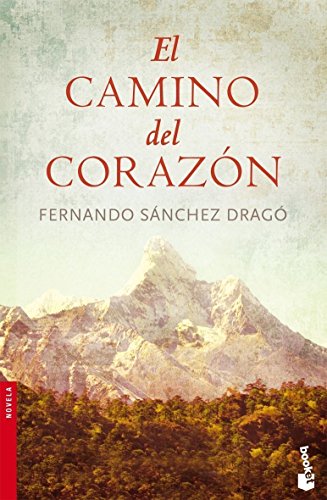 Fernando Sánchez Dragó El camino del corazón Finalista del Premio Planeta 1990; un épico viaje iniciático y espiritual por Oriente en 1969CHECK TODAY'S PRICE
- 3
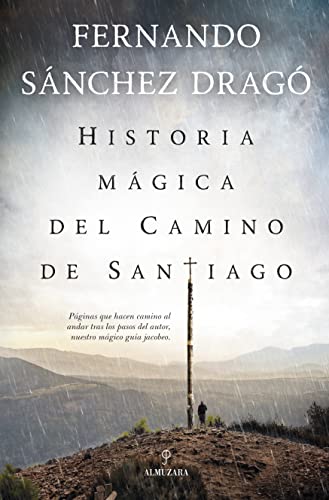 Fernando Sánchez Dragó Historia mágica del Camino de Santiago Descifrando los orígenes paganos, templarios y astronómicos de la ruta sagrada hacia FinisterreCHECK TODAY'S PRICE
- 4
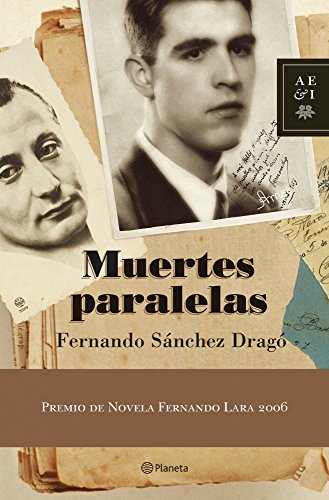 Fernando Sánchez Dragó Muertes paralelas Premio Fernando Lara 2006; valiente investigación sobre el asesinato de su padre en la Guerra CivilCHECK TODAY'S PRICE
- 5
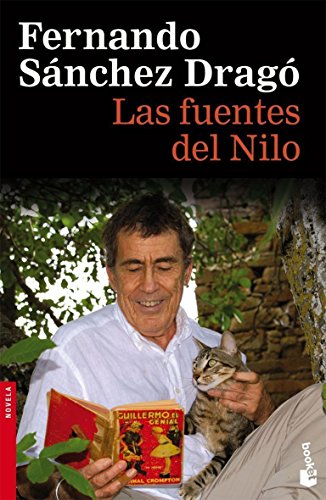 Fernando Sánchez Dragó Las fuentes del Nilo: Protocolos del camino de Damasco Retrato picaresco de la bohemia, el despertar intelectual y la rebeldía clandestina en el Madrid de los 50CHECK TODAY'S PRICE
- 6
 Fernando Sánchez Dragó El sendero de la mano izquierda: Un código de conducta Premio Espiritualidad Martínez Roca 2002; 181 aforismos de vitalismo tántrico y soberanía individualCHECK TODAY'S PRICE
- 7
 Fernando Sánchez Dragó Carta de Jesús al Papa Un atrevido ensayo epistolar que rescata el misticismo gnóstico y esenio frente al dogma institucionalCHECK TODAY'S PRICE
- 8
 Fernando Sánchez Dragó Soseki: Inmortal y tigre Una conmovedora fábula animista sobre el amor interespecie, el duelo y la espiritualidad orientalCHECK TODAY'S PRICE
Who Was Fernando Sánchez Dragó? The Psychology of the Literary Nomad
Fernando Sánchez Dragó embodied the timeless archetype of the wandering philosopher-adventurer. Imprisoned and exiled during the Franco regime for his political dissent, Dragó transformed forced displacement into a lifelong spiritual quest, traversing more than seventy countries across Asia, Africa, and the Americas.
From a psychological perspective, Dragó’s work reflects an extraordinary integration of Carl Gustav Jung’s analytical psychology, specifically the concept of the collective unconscious and archetypal individuation. Rather than viewing history as a linear succession of socio-political events, Dragó interpreted culture as a living reservoir of mythic symbols, ancient rituals, and suppressed spiritual truths. His literary persona—a deliberate fusion of pagan vitalism, Taoist philosophy, and Dionysian rebellion—challenged both secular rationalism and religious dogma, forging an unapologetically authentic personal mythos.
Existential psychiatrist Viktor E. Frankl emphasized that human beings achieve resilience and psychological maturity by discovering intentional personal meaning rather than conforming to societal expectations. Dragó’s life and literature represent a radical embodiment of this existential principle, demonstrating how active geographical pilgrimage, intellectual disobedience, and creative passion can transform existential disorientation into enduring spiritual vitality.
- Dragó synthesized Eastern mysticism, Taoism, and Hindu philosophy with classical Mediterranean paganism.
- His work applies Jungian analytical psychology to unearth the suppressed archetypal collective unconscious.
- Exile and physical travel served as deliberate psychological crucibles for lifelong individual self-actualization.
- Dragó’s literary style championed baroque linguistic richness against modern cultural and stylistic homogenization.
The 8 Best Books by Fernando Sánchez Dragó (Essential Masterpieces)
The following curated selection represents the eight definitive literary and philosophical works by Fernando Sánchez Dragó, spanning monumental historical treatises, spiritual travelogues, award-winning novels, and deeply personal autobiographical memoirs.
| Book Title | Literary Genre / Core Focus | Major Recognition & Theme |
|---|---|---|
| Gárgoris y Habidis | Mythohistory & Esoteric Cultural Essay | National Essay Prize (Premio Nacional de Ensayo 1979) |
| El camino del corazón | Spiritual Travelogue & Philosophical Novel | Finalist for the Premio Planeta (1990) |
| La prueba del laberinto | Esoteric Mystery & Theological Novel | Winner of the Premio Planeta (1992) |
| Muertes paralelas | Historical Autobiography & Investigative Memoir | Winner of the Premio Fernando Lara de Novela (2006) |
| Las fuentes del Nilo | Coming-of-Age Picaresque & Political Memoir | Postwar Madrid, sexual awakening, and political rebellion |
| La Dragontea: Diario de un guerrero | Autobiographical Travel Diaries & Philosophy | Vitalist philosophy, nomadic living, and cultural criticism |
| Carta de Jesús al Papa | Theological Critique & Religious Essay | Esoteric Gnosticism vs. institutional religious dogma |
| Soseki: Inmortal y tigre | Philosophical Fable & Animist Reflection | Interspecies love, grief, and Eastern spiritual philosophy |
1. Gárgoris y Habidis: Una historia mágica de España
Gárgoris y Habidis: Una historia mágica de España represents Dragó’s undisputed monumental mythohistorical masterpiece, a four-volume, thousand-page treatise that won Spain’s prestigious National Essay Prize (Premio Nacional de Ensayo) in 1979. Written during his years of political exile, Dragó deconstructs conventional academic historiography to resurrect the hidden, esoteric soul of the Iberian Peninsula, stretching from prehistoric cave art and the lost kingdom of Tartessos to Celtic folklore, Islamic Sufism, and the Knights Templar.
Dragó argues that the true identity of Spain resides not in its centralized political institutions or ecclesiastical orthodoxies, but in its ancient pagan roots, mystical heretics, and archetypal legends. He explores how the Iberian psyche was forged through the mythic figures of King Gárgoris and his miraculous son Habidis, who introduced agriculture, law, and social order. Written in a hypnotic, baroque style characterized by immense classical erudition, this magnum opus remains an irreplaceable foundation of Spanish esoteric counter-history.
For readers seeking to understand the psychological shadow of Spanish culture, Gárgoris y Habidis provides a profound intellectual journey. It challenges the sterile rationalism of modern historiography by proving that a nation’s deepest truths are preserved in its mythological collective memory.
- Winner of the Spanish National Essay Prize (Premio Nacional de Ensayo) in 1979.
- Resurrects the suppressed Celtic, Tartessian, and pagan archetypes of the Iberian collective unconscious.
- Synthesizes Jungian archetypal psychology, comparative mythology, and heterodox cultural history.
2. El camino del corazón
El camino del corazón, a celebrated finalist for the Premio Planeta in 1990, stands as Dragó’s most accessible and emotionally resonant spiritual travelogue novel. Set in the pivotal countercultural year of 1969, the protagonist, Dionisio (Dragó’s literary alter ego), abandons the suffocating political atmosphere and moral stagnation of Francoist Spain to embark on an epic overland pilgrimage across Turkey, Iran, Pakistan, India, Nepal, and Southeast Asia.
Dionisio’s physical journey across the historic “hippie trail” serves as a narrative canvas for an agonizing inward quest for spiritual liberation. Along the way, he immerses himself in Tibetan Buddhist monasteries, Hindu ashrams, Sufi shrines, and sacred cremation grounds on the banks of the Ganges, wrestling with ego dissolution, sensual temptation, and existential despair. Dragó captures the intoxicating beauty and profound cultural shock of the East, transforming physical travel into an alchemical spiritual initiation.
The novel provides a timeless psychological reflection on the limits of Western rationalism. It demonstrates that true spiritual wisdom cannot be acquired through abstract intellectual study alone; it must be forged through physical vulnerability, sensory immersion, and courageous personal surrender.
- Finalist for Spain’s prestigious Premio Planeta literary award in 1990.
- Chronicles an epic 1969 overland spiritual pilgrimage from Madrid to the sacred sanctuaries of the East.
- Explores the psychological clash between Western materialist rationalism and Eastern metaphysical wisdom.
3. Historia mágica del Camino de Santiago
Historia mágica del Camino de Santiago is one of the most intellectually luminous and revealing treatises by Fernando Sánchez Dragó, deconstructing the legendary pilgrimage route to Santiago de Compostela not as a conventional Catholic devotion, but as an ancient pagan initiatory pathway. Dragó traces the pre-Christian, Celtic, and hermetic origins of the sacred route that once led ancient pilgrims westward beneath the Milky Way toward Finis Terrae—the end of the known world.
Throughout the book, Dragó uncovers the esoteric symbolism embedded within the medieval Game of the Goose, the architectural fortresses of the Knights Templar, the heretical legacy of Priscillian, and the primordial solar cults that were later Christianized under the iconography of Saint James. He argues that walking this ancient trail acts as a profound catalyst for psychological individuation, where continuous physical exertion, sensory immersion, and material renunciation dismantle the ego and awaken the collective unconscious.
For pilgrims, spiritual seekers, and enthusiasts of European mythohistory, this essential volume serves as an extraordinary guide to navigating the sacred geography of the Iberian Peninsula. It challenges the modern traveler to transform a geographic journey into a profound inward spiritual transmutation.
- Decodes the pre-Christian, astronomical, and Templar roots of the Camino de Santiago pilgrimage.
- Analyzes the initiatory symbolism of the Game of the Goose and the solar path to Finisterre.
- Frames physical long-distance pilgrimage as a structured discipline for psychological growth and self-discovery.
4. Muertes paralelas
Muertes paralelas, winner of the Fernando Lara Novel Prize in 2006, represents Dragó’s most emotionally vulnerable, courageous, and deeply investigative historical memoir. In this monumental work, Dragó undertakes a painstaking detective investigation to uncover the true circumstances surrounding the murder of his biological father, Fernando Sánchez Monreal, a prominent Republican journalist who was executed by Nationalist forces at the outbreak of the Spanish Civil War when Dragó was still in his mother’s womb.
Dragó juxtaposes the tragic assassination of his father with the parallel murder of Republican journalist Luis Carreño by leftist militias, illustrating how totalitarian fanaticism on both ideological extremes systematically devoured independent thinkers. Written in an objective third-person narrative voice that heightens its emotional resonance, the book deconstructs the sanitized myths of the Spanish Civil War, exposing the fratricidal brutality that tore families apart. It is an unforgettable meditation on intergenerational trauma and reconciliation.
Through rigorous archival research and profound psychological honesty, Dragó achieves a deeply moving act of filial love and historical justice. The work stands as a timeless reminder of the psychological necessity of confronting historical shadow to achieve authentic personal peace.
- Winner of the prestigious Premio de Novela Fernando Lara in 2006.
- Investigates the tragic, unresolved assassination of the author’s father during the Spanish Civil War.
- Transpira ideological partisanship to expose the brutal psychological insanity of fratricidal civil conflict.
5. Las fuentes del Nilo: Protocolos del camino de Damasco
Las fuentes del Nilo (1986) is an exuberant, picaresque coming-of-age novel that captures the somber yet electrified atmosphere of postwar 1950s Madrid counterculture. The narrative chronicles the youthful adventures, intellectual formation, erotic awakening, and clandestine political rebellion of Dionisio as he navigates the rigid moral codes of Francoist society.
Dragó brings to life the smoky literary cafes, underground political cells, and bohemian taverns of Madrid, where university students gathered to read prohibited philosophy, distribute illegal pamphlets, and plot the overthrow of the authoritarian regime. The novel vividly portrays how intellectual passion and romantic rebellion served as essential survival mechanisms against the grey conformity of dictatorship. It is a triumphant, nostalgic exploration of youthful psychological individuation.
By blending classical Spanish picaresque traditions with modern autobiographical depth, Dragó illustrates how adolescent rebellion forges adult character. The novel remains an essential portrait of how an entire generation used literature as a weapon for political liberation.
- Portrays the intellectual and sexual awakening of university youth in postwar 1950s Madrid.
- Documents clandestine anti-Francoist student resistance and bohemian literary counterculture.
- Blends classical picaresque humor with profound insights into adolescent identity formation.
6. El sendero de la mano izquierda: Un código de conducta
El sendero de la mano izquierda: Un código de conducta (2002) stands as Fernando Sánchez Dragó’s first definitive vitalist and ethical testament, winning the prestigious Premio Espiritualidad Martínez Roca. In this concise, aphoristic treatise, Dragó synthesizes his personal life philosophy into 181 foundational precepts designed to liberate the reader from social conformity, moral guilt, political correctness, and the suffocating dogmas of modern institutional life.
Drawing deep inspiration from heterodox Eastern tantric traditions—specifically the Vamachara or “Left-Hand Path”—Dragó champions an uncompromising ethic of personal sovereignty, radical skepticism, Dionysian vitalism, and aristocratic self-rule. Far from advocating destructive nihilism, the book proposes a rigorous code of conduct rooted in individual accountability, the pursuit of direct mystical experience, and the cultivation of authentic inner spiritual freedom.
For readers seeking an intellectual antidote to collective mediocrity and bureaucratic herd behavior, this sharp philosophical manual delivers an empowering, practical roadmap. It challenges the individual to reclaim total authorship of their life through courageous psychological and spiritual defiance.
- Winner of the esteemed Premio Espiritualidad Martínez Roca literary award in 2002.
- Outlines 181 practical aphorisms grounded in Eastern tantric philosophy and uncompromising individual sovereignty.
- Champions intellectual non-conformity, vitalist self-mastery, and freedom from ideological dogmas.
7. Carta de Jesús al Papa
Carta de Jesús al Papa (2001) is a daring, intellectually fearless epistolary treatise written from the first-person perspective of Jesus of Nazareth addressing the Pope. Dragó utilizes this provocative literary device to deliver a devastating philosophical critique of how the Roman Catholic hierarchy institutionalized, dogmatized, and ultimately corrupted the original mystical teachings of Christ.
Drawing extensively upon Gnostic scriptures, Dead Sea Scrolls, and comparative Eastern metaphysics, Dragó presents Jesus not as a dogmatic religious deity, but as a revolutionary Essene mystic, wandering yogi, and spiritual liberator. The book passionately argues that true spirituality requires direct personal communion with the divine rather than blind obedience to ecclesiastical bureaucracy. It stands as an extraordinary work of theological and spiritual iconoclasm.
This provocative essay forces readers to distinguish between genuine spiritual awakening and institutional religious control. It remains an inspiring, heterodox manifesto for anyone seeking a purified, non-dogmatic spiritual path.
- Adopts the literary perspective of Jesus of Nazareth addressing the modern Vatican ecclesiastical hierarchy.
- Contrasts original Gnostic and Essene mysticism with rigid institutionalized religious dogma.
- Integrates Eastern metaphysical principles with the revolutionary spiritual ethics of early Christianity.
8. Soseki: Inmortal y tigre
Soseki: Inmortal y tigre (2009) is a tender, deeply moving philosophical fable recounting Dragó’s profound relationship with his beloved companion cat, Soseki, who shared his life in the highlands of Soria. Far from a conventional domestic pet memoir, Dragó elevates Soseki into a sacred animal totem, exploring interspecies communication, animism, and Eastern Shinto spirituality.
Following Soseki’s untimely death, the narrative transforms into an agonizing yet transcendent exploration of grief, mortality, and the profound love that bridges human and animal consciousness. Dragó reflects on how non-human companions often display greater presence, grace, and spiritual purity than humans, teaching us vital lessons about living fully in the present moment. It reveals the author’s most vulnerable, gentle, and compassionate spiritual nature.
For anyone who has navigated the profound pain of losing a companion animal, this short, poetic volume offers deep emotional solace. It demonstrates how love transcends physical mortality, leaving behind an enduring spiritual bond.
- Explores the sacred animist bond between humans and companion animals through Shinto and Buddhist philosophy.
- Provides a poignant, psychologically profound examination of grief, mourning, and mortality.
- Celebrates the quiet contemplative life in the rugged rural landscape of Castilian highlands.
Jungian Archetypes and Mythohistory in Dragó’s Philosophy
At the center of Fernando Sánchez Dragó’s intellectual framework lies his pioneering concept of “mythohistory” (mitohistoria)—the conviction that mythology, folklore, and sacred legends carry a deeper psychological and spiritual truth than empirical, document-based historiography. Dragó was deeply influenced by Swiss psychiatrist Carl Gustav Jung, applying Jung’s theory of archetypes to analyze the soul of nations and civilizations.
Dragó believed that modern humanity suffers from severe spiritual alienation because it has severed its connection to ancient archetypal wisdom. In his view, when a culture represses its mythological heritage, that suppressed energy manifests as collective neurosis, ideological extremism, and cultural decay. By resurrecting forgotten pagan rituals, sacred geography, and mystical traditions, Dragó sought to facilitate a process of collective psychological healing and cultural archetypal individuation.
| Historical / Mythic Archetype | Psychological Interpretation in Dragó’s Work |
|---|---|
| The Wandering Nomad (El Peregrino) | The soul’s active quest for individuation, transcending domestic cultural conditioning through physical travel. |
| The Spiritual Warrior (El Guerrero) | Uncompromising vitality, personal sovereignty, and the daily struggle against psychological cowardice. |
| The Sacred Bull (El Toro Ibérico) | Chthonic Mediterranean vital energy, primordial masculinity, and the sacrificial confrontation with death. |
| The Hermetic Heretic (El Heterodoxo) | Preservation of hidden esoteric wisdom against the suffocating dogmas of political and religious orthodoxy. |
| The Labyrinth (El Laberinto) | The disorienting psychological journey inward to confront the shadow and discover the true transcendent self. |
As outlined in the comparative table above, Dragó did not treat ancient myths as childish superstitions. Instead, he recognized them as sophisticated psychological maps designed to guide individuals through the essential stages of human spiritual maturation, establishing a profound bridge between comparative mythology and depth psychology.
The Therapeutic Dimensions of Travel Writing and Bibliotherapy
Engaging with rich, intellectually demanding travel literature and philosophical memoirs produces profound psychological benefits. When an individual immerses themselves in Dragó’s nomadic journeys through India or the sacred landscapes of ancient Spain, the brain experiences cognitive transportation, stimulating prefrontal imagination and spatial neural plasticity.
Clinical psychologists specializing in bibliotherapy demonstrate that reading about another person’s existential resilience and cross-cultural adaptability helps individuals reframe their own personal struggles. Cognitive psychologist Daniel Kahneman highlights how expanding mental schemas protects against cognitive rigidity; reading Dragó’s heterodox essays challenges readers to question automatic dogmas, fostering integrative complexity and cognitive flexibility. Experiencing the world through a radically different perspective restores a sense of existential proportion, providing vital relief from routine domestic anxiety.
Humanistic psychologist Carl R. Rogers emphasized that authentic personal growth requires integrating intellectual insight into lived, experiential habits. When reading Dragó, readers can operationalize his insights by cultivating an active “traveler’s mindset” within their daily lives—approaching ordinary routines with curious, observant, and non-judgmental awareness, transforming reading into a dynamic mindfulness and growth practice.
- Immersing in rich philosophical travelogues stimulates neuroplasticity and breaks rigid cognitive thought patterns.
- Bibliotherapy provides psychological scaffolding to reframe domestic distress through expansive cross-cultural perspectives.
- Encountering radical intellectual independence encourages readers to overcome fear of social conformity and embrace authentic selfhood.
- Adopting a nomadic philosophical mindset transforms everyday challenges into opportunities for deliberate personal growth.
When Intellectual Seeking and Existential Restlessness Signal Distress
While cultivating a passion for philosophy, spiritual seeking, and nomadic travel is deeply enriching, chronic existential restlessness can occasionally function as a maladaptive psychological defense. When an individual constantly feels an uncontrollable urge to flee their life, abandons personal responsibilities, or endlessly consumes esoteric ideas to avoid real-world relationships and unresolved trauma, intellectual seeking shifts into avoidant existential escapism.
Psychologists note that “geographic cures”—the belief that traveling to foreign countries or changing physical environments will permanently heal internal suffering—inevitably fail because an individual carries their unresolved emotional wounds and cognitive schemas wherever they go. If your spiritual questioning or wanderlust is accompanied by persistent feelings of emptiness, chronic panic attacks, depressive despair, or social isolation for more than two consecutive weeks, literature alone is insufficient. You should schedule an evaluation with a licensed clinical psychologist or psychiatrist.
Most urgently, if you or someone you know is experiencing acute suicidal despair, intrusive thoughts of self-harm, or an overwhelming emotional crisis where safety cannot be guaranteed, do not rely on literature. In the United States and Canada, immediately call or text 988 to connect with the Suicide & Crisis Lifeline, available twenty-four hours a day, seven days a week, free and completely confidential. In Spain and Europe, call emergency services (112) or the dedicated suicide prevention helpline (024). Seeking professional clinical support is the ultimate act of courageous personal self-advocacy.
- Chronic compulsive wanderlust can sometimes represent an avoidant defense against unresolved emotional trauma.
- Geographic relocation cannot substitute for structured psychological therapy in addressing deep-seated internal distress.
- Acute suicidal ideation and severe depressive paralysis demand immediate contact with dedicated crisis support services.
FAQs about Fernando Sánchez Dragó and His Books
What is the single best book to start reading Fernando Sánchez Dragó?
For a reader completely new to Fernando Sánchez Dragó, El camino del corazón is universally regarded as the ideal starting point. Unlike the massive four-volume historical complexity of Gárgoris y Habidis, this novel is an accessible, beautifully written spiritual travelogue that follows a young protagonist across Turkey, Iran, and India in 1969. It captures Dragó’s signature themes—Eastern metaphysics, countercultural rebellion, nomadic travel, and personal seeking—in a compelling, narrative-driven format that showcases his lyrical prose without overwhelming the reader.
Why is Gárgoris y Habidis considered such an important work in Spanish literature?
Gárgoris y Habidis is a landmark masterpiece because it boldly challenged the official, orthodox historiography of Spain during the transition to democracy, winning the National Essay Prize in 1979. Rather than focusing on kings, wars, and political treaties, Dragó used Jungian psychology, folklore, and mythology to unearth Spain’s suppressed magical, pagan, and Celtic heritage. The book revived interest in heterodox Spanish thinkers, Tartessian history, and medieval mysticism, completely redefining how Spaniards understand their cultural identity.
What literary awards did Fernando Sánchez Dragó win throughout his career?
Throughout his distinguished literary career, Fernando Sánchez Dragó won several of Spain’s most prestigious literary honors. His four-volume masterpiece Gárgoris y Habidis was awarded the Premio Nacional de Ensayo (National Essay Prize) in 1979. He was a finalist for the Premio Planeta in 1990 with El camino del corazón and won the Premio Planeta in 1992 for his metaphysical novel La prueba del laberinto. Later in 2006, he won the Premio de Novela Fernando Lara for his investigative autobiographical masterpiece Muertes paralelas.
How does Dragó’s writing style differ from other contemporary Spanish authors?
Dragó’s writing style is renowned for its lush, baroque complexity, rhythmic musicality, and vast classical vocabulary, which directly contrasts with the minimalist, journalistic prose common in contemporary literature. He seamlessly interweaves Latin idioms, Sanskrit philosophical terms, obscure Spanish archaisms, and poetic metaphors. Furthermore, his narrative voice deliberately blends rigorous historical scholarship with raw autobiographical confession, travel adventure, and mythological reflection, creating a unique genre of philosophical vitalism.
What is the difference between El camino del corazón and La prueba del laberinto?
While both novels explore spiritual and metaphysical themes, they do so through different genres and narrative structures. El camino del corazón is an autobiographical spiritual travelogue focused on an outward and inward journey from Francoist Spain to India in search of Eastern enlightenment. In contrast, La prueba del laberinto is an esoteric detective thriller set across the Mediterranean, following an investigator tasked with solving the historical mystery of Jesus of Nazareth’s disappearance after the crucifixion.
How can I learn more about Dragó’s philosophy without reading his full bibliography?
To understand Dragó’s core vitalist philosophy concisely, reading La Dragontea: Diario de un guerrero or his collection of essays in Carta de Jesús al Papa provides a fast, powerful overview of his worldview. Additionally, Dragó hosted legendary cultural television programs in Spain, including “Negro sobre blanco” and “Las noches blancas,” which featured in-depth interviews with the world’s leading literary figures, philosophers, and scientists, serving as an exceptional visual archive of his intellectual legacy.
Bibliography
- Frankl, V. E. (2006). Man’s Search for Meaning. Beacon Press.
- Jung, C. G. (1964). Man and His Symbols. Doubleday.
- Kahneman, D. (2011). Thinking, Fast and Slow. Farrar, Straus and Giroux.
- Rogers, C. R. (1961). On Becoming a Person: A Therapist’s View of Psychotherapy. Houghton Mifflin.
- Sánchez Dragó, F. (1978). Gárgoris y Habidis: Una historia mágica de España. Editorial Planeta.
- Sánchez Dragó, F. (1986). Las fuentes del Nilo: Protocolos del camino de Damasco. Editorial Planeta.
- Sánchez Dragó, F. (1990). El camino del corazón. Editorial Planeta.
- Sánchez Dragó, F. (1992). La prueba del laberinto. Editorial Planeta.
- Sánchez Dragó, F. (1992). La Dragontea: Diario de un guerrero. Editorial Planeta.
- Sánchez Dragó, F. (2001). Carta de Jesús al Papa. Editorial Planeta.
- Sánchez Dragó, F. (2006). Muertes paralelas. Editorial Planeta.
- Sánchez Dragó, F. (2009). Soseki: Inmortal y tigre. Editorial Planeta.
Use this citation format to reference the article clearly and help readers find the original source.
PsychologyFor. (2026). The 8 Best Books by Fernando Sánchez Dragó (Essential). PsychologyFor. https://psychologyfor.com/the-8-best-books-by-fernando-sanchez-drago-essential/