


I was walking to my car last week when I saw this guy struggling with a massive box, trying to get it into his trunk. Without thinking, I stopped and helped him lift it. Took maybe thirty seconds. He thanked me, I went on my way, and as I was driving home I caught myself wondering: why did I do that? I didn’t know him. He couldn’t do anything for me. I was actually in a hurry. So why did I stop?
That’s the puzzle of altruism right there. Why do humans—and some other animals—help others at cost to themselves with no expectation of reward? It seems to contradict everything we know about evolution and self-interest. Natural selection should favor selfish individuals who look out for themselves and their own survival. Yet here we are, donating to strangers, jumping into rivers to save drowning people, giving blood, volunteering time, helping random people with boxes in parking lots.
Psychologists, evolutionary biologists, and philosophers have been wrestling with this question for decades, and honestly? We still don’t have one definitive answer. Instead, we have multiple theories that each explain different aspects of altruistic behavior. Some focus on evolutionary advantages. Others emphasize emotions like empathy. Some argue that apparent altruism is actually disguised self-interest. And some suggest we’re capable of truly selfless acts motivated purely by concern for others.
The truth is probably that altruism is multifaceted—sometimes we help for one reason, sometimes for another, and often for a complex mix of motivations we’re not even consciously aware of. Understanding these different theories doesn’t diminish the beauty of altruism. If anything, it makes it more interesting. Because when you understand why you help, you can make more conscious choices about when and how to be altruistic in ways that are sustainable and meaningful.
So let’s dive into the eight major theories that attempt to explain why we do good things for others without expecting anything in return. Each one offers a different lens for understanding human generosity, and together they paint a complex picture of one of our most fascinating and paradoxical behaviors.
1. Kin Selection Theory: We Help Because We Share Genes
Let’s start with the evolutionary perspective, because this is where the altruism puzzle really begins. Kin selection theory, developed by evolutionary biologist W.D. Hamilton, argues that altruism evolved because helping relatives increases the survival of your shared genes. You might sacrifice yourself to save your child or your sibling because, genetically speaking, part of you survives through them.
Hamilton’s rule formalizes this: an altruistic behavior will be favored by natural selection when the cost to you (C) is less than the benefit to the recipient (B) multiplied by your genetic relatedness (r). So helping a sibling (who shares 50% of your genes) makes evolutionary sense if the benefit to them is more than twice the cost to you. Helping a cousin (12.5% shared genes) requires an even higher benefit-to-cost ratio.
This explains a lot of human behavior. Parents sacrifice enormously for children. Siblings help each other. Extended families support one another. We feel more compelled to help relatives than strangers, and closer relatives more than distant ones. This isn’t conscious calculation—it’s intuitive, emotional. We don’t think “I share 50% of genes with my sister so helping her has evolutionary payoff.” We just feel driven to help her because we love her, and that love is partly the emotional mechanism that evolution installed to promote gene survival.
But here’s the limitation: kin selection doesn’t explain helping non-relatives. It doesn’t explain why people donate to strangers, help people in other countries they’ll never meet, or risk their lives for unrelated individuals. For that, we need other theories.
Real-World Example
A mother runs into a burning building to save her child despite obvious danger to herself. A man donates a kidney to his brother. A woman uses her inheritance to support her nephew’s education. These are examples where kin selection provides a compelling evolutionary explanation—the behaviors promote the survival of shared genetic material even at personal cost.
2. Reciprocal Altruism: We Help Because We Expect Future Returns
Reciprocal altruism, proposed by Robert Trivers, extends evolutionary logic beyond kin. The idea is that altruism toward non-relatives evolved because it creates reciprocal relationships where both parties benefit over time. I help you today, you help me tomorrow. Or I help you, which establishes me as a helpful person, making others more likely to help me when I need it.
This isn’t the same as immediate exchange or tit-for-tat bargaining. It’s more subtle. It’s about building a reputation as someone who helps, creating social bonds, and establishing patterns of mutual support that benefit everyone involved over time. In our ancestral environments, small groups meant repeated interactions with the same people, making reciprocal altruism a viable strategy. If you helped your neighbor, they remembered and were likely to help you later.
Modern research on reciprocity shows we keep track of who helps and who doesn’t, often unconsciously. We feel grateful toward helpers and feel obligated to repay help received. We also feel moral indignation toward free-riders who take without giving. These emotions enforce reciprocal altruism by motivating us to help those who help us and punish those who exploit generosity.
The limitation here is that reciprocal altruism still involves self-interest, just long-term rather than immediate. It’s not truly selfless altruism—it’s enlightened self-interest. And it doesn’t fully explain helping in one-time interactions with strangers where no reciprocation is possible.
Real-World Example
You help your coworker finish a project even though it takes your evening, because you’ve worked together for years and you know that relationship involves mutual support. When you need help next month, they’ll be there. In tight-knit communities, people help neighbors with moves, childcare, repairs—not with explicit tit-for-tat accounting, but with an understanding that support flows in both directions over time.

3. Social Exchange Theory: We Help When Benefits Outweigh Costs
Social exchange theory takes a more immediate, calculated approach. It argues that all social behavior, including helping, involves cost-benefit analysis. We help when we perceive that the benefits—which might include social approval, enhanced reputation, feeling good about ourselves, or potential future reciprocation—outweigh the costs of time, effort, risk, or resources.
This theory views apparent altruism as ultimately self-serving. We’re not consciously thinking “what do I get out of this?” necessarily. But at some level, the decision to help involves weighing what we’ll gain against what we’ll lose. If helping costs very little and provides social approval, we do it. If it costs a lot and provides minimal benefit, we don’t.
Research supporting this theory shows that people are more likely to help when it’s easy, when others are watching (social approval), when they’re in a good mood (helping feels less costly), and when they believe reciprocation is likely. They’re less likely to help when it’s costly, when they’re in a hurry, when they’re in a bad mood, or when they think they won’t be credited for helping.
The criticism of this theory is that it’s reductionist and cynical. It reduces all helping to calculated self-interest, which doesn’t feel accurate when you’re genuinely moved by someone’s suffering and help without thinking about benefits. But defenders argue that unconscious calculation can still drive behavior even when we experience it as spontaneous compassion.
Real-World Example
You see someone struggling with directions on the street. Helping is low-cost (just a minute of your time) and provides social approval plus a positive self-image boost (“I’m a helpful person”). You help. But if you’re running late for an important interview, the cost increases and you’re more likely to walk past because the cost-benefit calculation tips toward not helping.
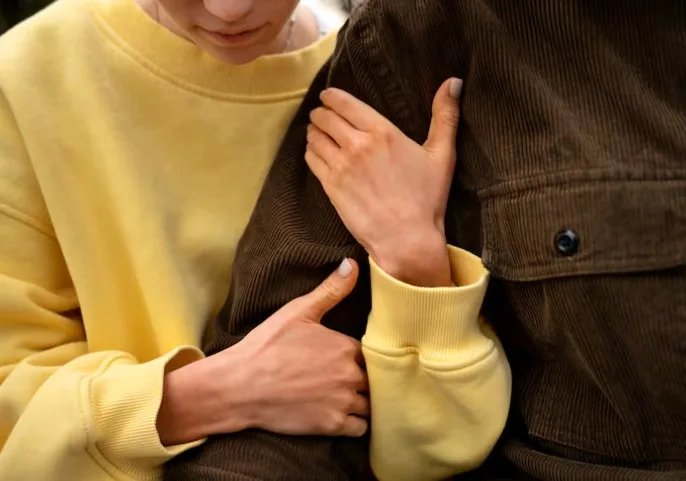
4. Empathy-Altruism Hypothesis: We Help Because We Feel Others’ Pain
Now we get to theories that propose genuine altruism is possible. Daniel Batson’s empathy-altruism hypothesis argues that empathic concern—feeling compassion and tenderness for someone in need—produces truly altruistic motivation to help that person. When you genuinely empathize with someone, you’re motivated to help them for their benefit, not yours.
This theory distinguishes between two responses to witnessing someone’s distress. First, personal distress—feeling anxious, upset, or disturbed yourself. This produces egoistic helping: you help to make yourself feel better. Second, empathic concern—feeling compassion, sympathy, and tenderness toward the person. This produces altruistic helping: you help because you genuinely care about reducing their suffering.
Batson conducted numerous studies testing this hypothesis using clever experimental designs. In one paradigm, participants who felt high empathy for someone in need helped even when they could easily escape the situation without helping. This suggests they weren’t just helping to relieve their own discomfort—if that were the case, escaping would have worked just as well. They helped because they cared about the other person.
Critics argue that even empathy-driven helping might ultimately be self-serving—helping relieves the discomfort of empathic distress, enhances self-image, or provides meaning. But Batson maintains that the goal matters: if your ultimate goal is the other person’s welfare, it’s altruism, even if you also feel good about it as a consequence.
Real-World Example
You hear a story about a child in your community who needs expensive medical treatment their family can’t afford. You feel genuine compassion—you imagine how terrified the parents must be, how unfair it is for the child to suffer. That empathic concern motivates you to donate money even though it’s anonymous, you’ll never meet the family, and nobody will know you helped. Your motivation is genuinely to help the child, not to gain anything for yourself.
5. Negative State Relief Model: We Help to Make Ourselves Feel Better
The negative state relief model, proposed by Robert Cialdini, takes a more egoistic view. It argues that people help others primarily to alleviate their own negative emotional states—guilt, sadness, distress at witnessing suffering. Helping is a mood management strategy.
When you see someone suffering, it creates negative feelings in you. You feel bad. Helping that person is one way to relieve those bad feelings. So you help not primarily for the other person’s sake but to manage your own emotional state. The theory predicts that people in negative moods are more likely to help because helping is a way to escape that negative mood.
Research shows this happens. People who are sad or guilty are more likely to help. People who are made to feel bad are more likely to help if helping is available as a mood-repair strategy. If you give them another way to feel better—like receiving a reward or compliment—the increased helping disappears, suggesting mood relief, not concern for others, was the real motivation.
This theory overlaps with the empathy-altruism hypothesis but offers a more cynical interpretation. What looks like empathy-driven altruism might actually be attempts to relieve empathic distress. Critics argue it can’t explain all helping, particularly helping that doesn’t improve mood or helping in positive moods. But it captures something real about human motivation—we often help partly because it makes us feel better about ourselves.
Real-World Example
You snap at your partner in the morning and feel guilty all day. On your way home, you see someone who needs help and you go out of your way to assist them. The helping behavior is partly motivated by reducing your guilt—doing something good makes you feel like less of a bad person. Or you feel sad and lonely, so you volunteer at a shelter, and helping others lifts your mood and makes you feel connected and purposeful.
6. Social Learning Theory: We Help Because We Learned To
Social learning theory, associated with Albert Bandura, emphasizes that altruistic behavior is learned through observation, imitation, and reinforcement. We help others because we observed our parents, teachers, or peers helping and were taught that helping is good, valued, and rewarded.
Children learn prosocial behavior by watching role models. If parents model generosity, kindness, and helping, children internalize those behaviors. If helping is praised and rewarded while selfishness is punished, children learn to help. If media portrays helping as heroic and admirable, that shapes behavior. Through this social learning process, helping becomes part of our behavioral repertoire and self-concept.
Cultural norms play a huge role here. Different cultures emphasize different types of helping—collectivist cultures emphasize helping family and in-group, individualist cultures emphasize helping broader humanity. These cultural values are transmitted through social learning. What we consider appropriate helping behavior is largely learned from our social environment.
The theory also explains why helping can be situational and inconsistent. We’ve learned to help in some contexts but not others. We’ve learned to help some categories of people but not others. Our helping behavior reflects our specific learning history rather than any universal altruistic impulse.
Real-World Example
A child grows up watching their parent regularly volunteer at a food bank. The parent talks positively about helping those in need, and the child receives praise when they share toys or help classmates. As an adult, that person continues volunteering and helping others, partly because these behaviors were modeled, taught, and reinforced throughout development. The motivation has become internalized—they now help because they genuinely value helping—but the origin is social learning.

7. Just-World Hypothesis: We Help to Maintain Belief in Fairness
The just-world hypothesis, proposed by Melvin Lerner, suggests that people need to believe the world is fundamentally fair and just—good things happen to good people, bad things happen to bad people. When we encounter undeserved suffering, it threatens this belief. Helping victims of unjust suffering is one way to restore our sense that justice exists.
When someone suffers through no fault of their own—a child with cancer, a victim of natural disaster, an innocent person harmed—it challenges our just-world belief. This creates psychological discomfort. We can resolve this discomfort in several ways: blame the victim (they must have done something to deserve it), deny their suffering (it’s not that bad), or help them (restore justice). Helping becomes a way to psychologically restore fairness to the world.
This theory predicts we’re more likely to help “innocent victims” than those we perceive as responsible for their plight. Research confirms this—people are more willing to help victims of natural disasters than victims of poor decisions. We’re more generous toward children (innocent) than toward adults experiencing homelessness (often blamed for their situation).
The theory also explains compassion fatigue and selective helping. When suffering is so widespread we can’t possibly restore justice through helping, we may instead restore psychological balance by distancing ourselves or blaming victims. It’s easier to blame victims than to accept the world is fundamentally unjust.
Real-World Example
News coverage of a child injured by a drunk driver motivates massive donations and support. The child is clearly an innocent victim, and their undeserved suffering violates our just-world belief. By helping—donating money, organizing support, advocating for stricter laws—we psychologically restore some sense of justice. We’re partly motivated by genuine compassion, but also by the need to maintain our belief that the world isn’t randomly cruel to innocents.
8. Arousal-Reduction Theory: We Help to Reduce Uncomfortable Arousal
Arousal-reduction theory, related to the negative state relief model, proposes that witnessing someone in distress creates physiological arousal—increased heart rate, tension, discomfort—and we help to reduce that arousal. The discomfort of witnessing suffering motivates helping as a way to turn off that unpleasant physiological state.
When you see someone in pain or need, your nervous system responds. You feel tension, anxiety, physical discomfort. This arousal is aversive—you want it to stop. There are two ways to stop it: escape the situation or help the person. If escape is difficult or costly, helping becomes the easier route to arousal reduction. If escape is easy, you might just leave to avoid the discomfort rather than helping.
Studies show that arousal levels correlate with helping behavior. People who experience more physiological arousal when witnessing distress are more likely to help, presumably to reduce that arousal. The theory explains why we help in some situations but not others—when arousal is low, motivation to help is weak; when it’s high, we’re driven to do something to reduce it.
Critics note this is another egoistic explanation—helping is ultimately about relieving your own discomfort rather than the other person’s. But defenders argue it doesn’t matter if the mechanism is egoistic as long as the outcome helps others. The person gets helped regardless of whether the helper’s underlying motivation is arousal reduction or pure altruism.
Real-World Example
You’re on a bus and see someone elderly struggling with heavy bags. Watching them struggle creates uncomfortable physiological arousal—you feel tense, anxious, bothered. You could look away or get off at the next stop (escape), but you’re going to be on the bus for another twenty minutes, so escape is difficult. Instead, you offer to help carry the bags. Your arousal immediately decreases—you feel relief, physical relaxation. The helping behavior was partly motivated by reducing your own uncomfortable arousal triggered by witnessing their struggle.

So Which Theory Is Right?
Here’s the thing: they’re probably all right, at least some of the time. Human motivation is complex, and different theories explain different instances of helping behavior. Sometimes you help relatives because of kin selection. Sometimes you help in expectation of reciprocity. Sometimes you help because empathy moves you. Sometimes you help to relieve guilt or discomfort. Sometimes multiple motivations operate simultaneously.
The debate between egoistic and altruistic theories continues. Are humans capable of truly selfless helping, or is all apparent altruism ultimately self-serving? My perspective as a psychologist is that this might be an unanswerable question because it requires knowing people’s ultimate goals, which they often don’t even know themselves. Motivations are often unconscious, mixed, and rationalized after the fact.
What matters practically isn’t whether your helping is “pure” altruism or contains some self-interest. What matters is whether you help, whether helping creates positive outcomes for others, and whether your pattern of helping is sustainable and aligned with your values. You can help for multiple reasons simultaneously—you can feel empathy AND expect reciprocity AND reduce your own discomfort AND enhance your self-image. That doesn’t make the helping less valuable.
What This Means for How You Help
Understanding these theories can actually make you more effective and intentional about altruism. Here’s how:
Recognize that helping benefits you too, and that’s okay. Don’t feel guilty that helping makes you feel good or enhances your reputation or provides meaning. Those benefits are fine. They’re actually what make sustained helping possible. If helping only cost you with no benefits, you’d burn out.
Cultivate empathy deliberately. If the empathy-altruism hypothesis is correct, increasing your capacity for empathic concern makes you more motivated to help genuinely. Practice perspective-taking, expose yourself to others’ stories, develop emotional awareness. These expand your circle of empathic concern.
Make helping easier. Social exchange theory reminds us that people help more when costs are low. So if you want to encourage helping in others or sustain your own helping, reduce barriers. Donate regularly through automatic withdrawals. Volunteer for causes where opportunities are convenient. Support organizations that make helping efficient.
Be aware of just-world thinking. The just-world hypothesis shows we selectively help based on perceived deservingness. Challenge yourself to help even when victims seem less “innocent” or when suffering seems deserved. Everyone struggling deserves compassion regardless of how they got there.
Model helping for others. Social learning theory tells us others learn by watching us. Your helping behavior influences those around you, especially children. Be visible in your generosity and talk about why helping matters to you.
FAQs About The 8 Theories of Altruism
Is true altruism even possible, or is all helping ultimately selfish?
This remains one of psychology’s most debated questions. Some theories argue all helping is ultimately egoistic—we help to feel better, gain reputation, ensure reciprocity, or relieve discomfort. Other theories, particularly Batson’s empathy-altruism hypothesis, argue that genuine altruism motivated purely by concern for others does exist. The truth is we may never definitively answer this because it requires knowing someone’s ultimate motivation, which is often unconscious even to the helper. From a practical standpoint, it may not matter—whether helping is “pure” altruism or contains self-interest, the outcome benefits others. What matters is that people help and that helping creates positive change.
Which theory best explains human altruism?
No single theory explains all altruistic behavior. Different theories apply in different contexts. Kin selection explains helping family members. Reciprocal altruism explains helping in ongoing relationships. Empathy-altruism explains helping driven by compassion. Negative state relief explains mood-motivated helping. The reality is that human motivation is complex and multifaceted—we often help for multiple reasons simultaneously. Most psychologists now take a pluralistic view, acknowledging that various mechanisms can produce helping behavior depending on the person, situation, and relationship. Rather than competing theories, they’re complementary explanations for different aspects of our prosocial behavior.
Why do some people help more than others?
Individual differences in helping behavior reflect multiple factors that these theories illuminate. Some people have stronger empathic capacity, making empathy-driven helping more likely. Some were raised in environments that modeled and reinforced helping, explaining differences through social learning. Some have personalities more focused on relationships and reciprocity. Some are better at mood regulation and don’t need helping as a mood management strategy. Some have stronger just-world beliefs motivating them to help restore perceived injustice. Genetic factors, early attachment experiences, cultural values, socioeconomic resources, and personal experiences with needing help all contribute. The most helpful people often combine strong empathy, prosocial learning history, and personal values emphasizing compassion.
Can altruism be increased through interventions?
Yes, and different theories suggest different intervention approaches. Based on empathy-altruism theory, increasing empathy through perspective-taking exercises, exposure to others’ experiences, and emotional literacy training can increase helping. Based on social learning theory, modeling helping behavior, reinforcing prosocial actions, and creating cultural norms around helping can increase it. Based on social exchange theory, reducing costs and increasing benefits of helping makes it more likely—making donation easy through automatic giving, publicizing helpers to provide social recognition, creating convenient volunteer opportunities. Research shows that empathy training, prosocial modeling, and reducing barriers to helping all effectively increase altruistic behavior. Schools, organizations, and communities can deliberately cultivate helping through these mechanisms.
Why do people help strangers they’ll never see again?
This is puzzling from purely evolutionary perspectives because there’s no kin relation or possibility of reciprocation. Several theories offer explanations. Empathy-altruism suggests we help strangers when we feel empathic concern for them—compassion doesn’t require relationship. Negative state relief suggests helping relieves the discomfort of witnessing their suffering. Arousal-reduction theory explains we help to reduce uncomfortable physiological arousal their distress creates. Social exchange theory points to reputational benefits and self-image enhancement even in anonymous helping. Just-world hypothesis suggests we help innocent strangers to maintain our belief in fairness. Additionally, reputation management operates in surprising ways—helping strangers might benefit your reputation indirectly if others know you’re the type of person who helps, and this reputation effect evolved in small ancestral groups where strangers were rare.
Do these theories apply across cultures?
The basic mechanisms—kin selection, reciprocity, empathy, learning—operate across cultures, but cultural values shape how they manifest. Collectivist cultures emphasize helping family and in-group members more than strangers, reflecting stronger kin selection and reciprocal altruism within defined groups. Individualist cultures emphasize helping broader humanity more equally, with stronger emphasis on empathy-driven helping regardless of relationship. Different cultures also teach different helping norms through social learning—what helping looks like, who deserves help, when helping is appropriate varies culturally. The physiological and psychological mechanisms are universal, but cultural values and norms shape when and toward whom these mechanisms direct helping behavior. Cross-cultural research shows both universality in basic altruistic capacities and significant cultural variation in expression.
What role does religion play in altruism?
Religion intersects with multiple theories of altruism. From a social learning perspective, religions teach and model helping behavior, with many religious texts and teachings emphasizing compassion and generosity. Religious communities reinforce helping through approval and shared values. From a just-world perspective, religion often provides frameworks for understanding suffering and justice that motivate helping—helping restores divine order or accumulates spiritual merit. From a reciprocal altruism perspective, some religious teaching emphasizes divine reciprocation—God rewards those who help others. Research shows religious people help more, but mainly help within their religious community, suggesting religion strengthens in-group reciprocity and learned prosocial norms more than universal empathy-driven altruism. However, some religious individuals show strong empathy-driven helping across group boundaries.
Why is there bystander apathy if humans are altruistic?
The bystander effect—where people are less likely to help when others are present—seems to contradict human altruism but actually reflects how these theories operate in groups. From a social exchange perspective, diffusion of responsibility means each individual perceives lower benefit (social approval is diffused among many potential helpers) and uncertainty about whether helping is appropriate (ambiguous situations). Arousal-reduction theory suggests that seeing others not helping reduces your own arousal—if nobody else seems distressed, maybe there’s no emergency. Pluralistic ignorance occurs where everyone looks to everyone else for cues about whether to help, and everyone appears calm, so nobody helps. These theories explain that altruistic motivation exists but can be suppressed by social dynamics in group contexts. Individual differences persist—some people help regardless of bystanders, often those with strong empathy or helping identities.
Can understanding these theories make someone less altruistic?
There’s a concern that learning altruism might be self-serving could reduce motivation to help—why bother if it’s not genuinely good? Research suggests this doesn’t typically happen. First, most people help for mixed motivations whether they’re aware of them or not, and becoming aware doesn’t eliminate the motivations. Second, understanding that helping benefits both the helper and recipient can actually increase helping by removing guilt about “selfish” benefits. Third, understanding mechanisms of altruism can make people more strategic and effective helpers. What sometimes decreases is naive altruism that leads to burnout or enabling—people become more discerning about when and how to help, which can make their helping more sustainable and effective. The theories provide insight that typically enhances rather than diminishes prosocial behavior when properly understood.
Use this citation format to reference the article clearly and help readers find the original source.
PsychologyFor. (2025). The 8 Theories of Altruism: Why Do We Help Others in Exchange for Nothing?. PsychologyFor. https://psychologyfor.com/the-8-theories-of-altruism-why-do-we-help-others-in-exchange-for-nothing/