


See more of our articles in your search results.
There is a particular kind of excitement that comes with reading your first truly great psychology book — the moment a concept clicks and suddenly explains something you’ve been living but never had words for. Maybe it’s why you keep making the same decisions despite knowing better, or why a certain relationship pattern keeps repeating itself, or how the mind can be so brilliantly capable and so reliably irrational at the same time. Psychology books for beginners open that door in a way that is accessible, engaging, and genuinely life-changing — no academic background required.
The challenge, of course, is knowing where to start. The field of psychology is vast. It stretches from neuroscience and cognitive behavior to social influence, personality theory, trauma, and the deep architecture of human motivation. Walk into any bookshop and the psychology shelf can feel overwhelming — dense textbooks standing shoulder to shoulder with pop-science paperbacks of wildly varying quality. Not all of them are worth your time, and not all of them are built for someone coming to the subject fresh.
This guide cuts through that noise. Whether you’re a student exploring a potential career path, someone curious about why people behave the way they do, or a person genuinely trying to understand yourself better, the books on this list were chosen with one goal in mind: to give you the most rewarding, most illuminating entry point into one of the richest fields of human inquiry. Each recommendation is paired with a description of what you’ll gain from it and who it’s best suited for, so you can start exactly where you need to.
Expect no dry recitations of academic syllabi here. These are books that people actually finish — books that stay with you long after you’ve turned the last page.
Top 7 Essential Psychology Books
Verified Top Picks- 1
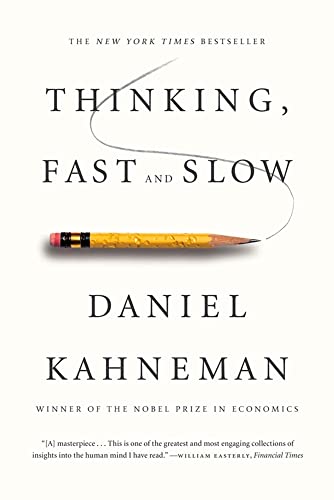 Daniel Kahneman Thinking, Fast and Slow Nobel-winning insight into how you decideCHECK TODAY'S PRICE
 - 2
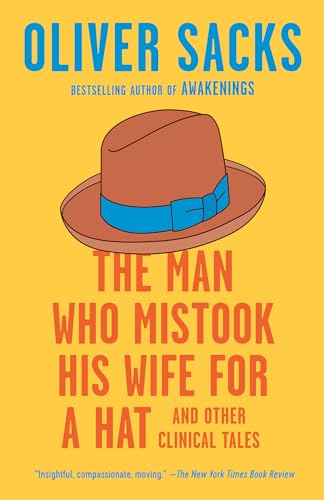 Oliver Sacks The Man Who Mistook His Wife for a Hat Clinical tales of neurological disorderCHECK TODAY'S PRICE
 - 3
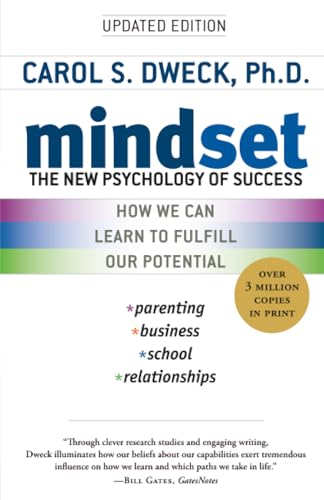 Carol S. Dweck Mindset: The New Psychology of Success How belief in growth shapes achievementCHECK TODAY'S PRICE
 - 4
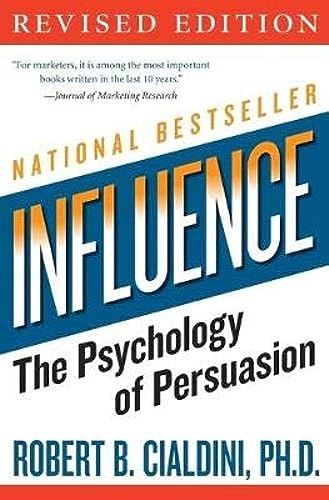 Robert Cialdini Influence: The Psychology of Persuasion The classic science of why people say yesCHECK TODAY'S PRICE
 - 5
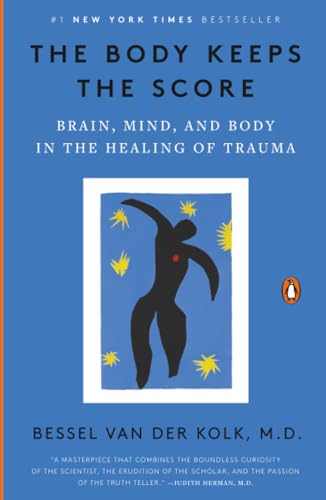 Bessel van der Kolk The Body Keeps the Score How trauma reshapes the body and brainCHECK TODAY'S PRICE
 - 6
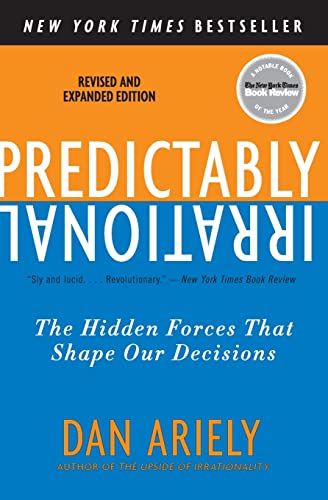 Dan Ariely Predictably Irrational The hidden forces that shape our decisionsCHECK TODAY'S PRICE
 - 7
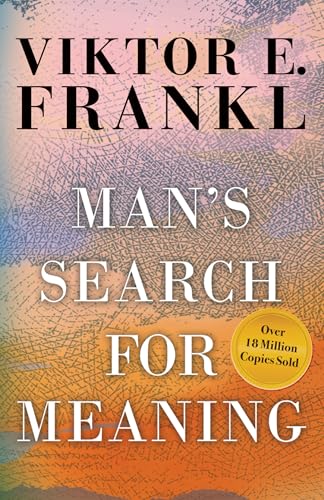 Viktor Frankl Man's Search for Meaning Finding meaning in unavoidable sufferingCHECK TODAY'S PRICE
Why Reading Psychology as a Beginner Is Different from Studying It
Reading psychology for personal enrichment is a fundamentally different experience from taking a university course. You’re not chasing grades or memorizing the DSM — you’re building a mental model of human experience, one insight at a time. This distinction matters because it should shape how you approach your reading list.
When you read psychology as a curious non-specialist, the best books are the ones that marry scientific rigor with narrative pull. They don’t talk down to you, but they don’t assume you know the history of behaviorism either. They use real cases, vivid examples, and careful storytelling to bring abstract concepts to life. The result is something closer to reading a compelling piece of nonfiction than slogging through a textbook.
This is also why the books recommended here span several subfields — cognitive psychology, behavioral economics, social psychology, neuroscience, and self-development. A well-rounded beginner’s reading list should give you a panoramic view of the discipline, not just one narrow corridor. Think of it as building a foundation: each book adds a new layer of understanding that makes the next one richer and more meaningful.
One practical note before diving in: there’s no single “right” order. Start with whatever topic feels most alive to you right now. Motivation is the most powerful reading aid there is.
Thinking, Fast and Slow — Daniel Kahneman

Thinking, Fast and Slow is arguably the most important psychology book a beginner can read. Nobel Prize-winning psychologist Daniel Kahneman introduces the concept of two cognitive systems: System 1, which is fast, intuitive, and emotional, and System 2, which is slow, deliberate, and logical. The central argument is that much of our thinking — and most of our errors — is driven by System 1, often without our awareness.
What makes this book extraordinary for beginners is how Kahneman grounds every concept in real-world scenarios. You will recognize yourself on nearly every page. The anchoring effect, the planning fallacy, loss aversion, availability heuristics — these are not abstract theoretical constructs but living patterns that shape your decisions about money, relationships, risk, and time every single day.
The book is long and occasionally dense, but it rewards patience generously. By the end, you’ll have a working vocabulary for cognitive bias that will change the way you listen to the news, negotiate at work, and evaluate your own judgment. Few books deliver this level of insight per page.
- Best for: Anyone curious about decision-making, behavioral economics, or why smart people make irrational choices
- Core concepts covered: Cognitive bias, heuristics, loss aversion, prospect theory, dual-process theory
- Difficulty level: Moderate — rich content but written for a general audience
The Man Who Mistook His Wife for a Hat — Oliver Sacks

If Kahneman shows you how the healthy mind misfires, Oliver Sacks shows you what happens when the brain is altered in extraordinary ways — and in doing so, reveals just how astonishing normal cognition actually is. The Man Who Mistook His Wife for a Hat is a collection of clinical case studies from Sacks’s career as a neurologist, each one reading more like a short story than a medical record.
The title case involves a patient with visual agnosia who cannot recognize faces or objects — including, on one memorable occasion, his own wife. Other cases explore people with profound memory loss, those who develop sudden artistic gifts after brain injury, and individuals who lose the sense of their own body in space. Each story is told with deep compassion and intellectual curiosity, never reducing the patient to their condition.
This book is a masterclass in neuropsychology for non-specialists. It makes you think about identity, consciousness, and the relationship between brain and self in ways that no textbook could. It’s also simply one of the most beautifully written books in the genre — Sacks had a gift for prose that matched his gift for medicine.
- Best for: Readers drawn to neuroscience, clinical psychology, and the philosophical questions behind mental experience
- Core concepts covered: Neuroplasticity, perception, memory, identity, consciousness
- Difficulty level: Easy to moderate — narrative-driven and highly accessible
Mindset: The New Psychology of Success — Carol Dweck
Few psychology books have had as direct an impact on education, parenting, and workplace culture as Carol Dweck’s Mindset. Based on decades of research at Stanford, Dweck articulates the difference between a fixed mindset — the belief that talents and abilities are innate and unchangeable — and a growth mindset — the belief that abilities can be developed through dedication and effort.
This might sound like motivational self-help, but Dweck’s framework is backed by substantial empirical research, and the book is careful to show both how mindsets form (often in childhood, through the specific praise or criticism we receive) and how they can be intentionally shifted. The implications are profound: how you think about your own potential determines not just how hard you try, but what you’re willing to risk, how you handle failure, and whether you find joy in learning itself.
For beginners, Mindset offers an immediately applicable psychological framework. You can start noticing fixed-mindset thoughts in yourself — “I’m just not a math person,” “I’ve never been good at confrontation” — and begin gently interrogating them. That kind of real-time application is what elevates a psychology book from interesting to genuinely transformative.
- Best for: Students, parents, educators, or anyone working on personal development
- Core concepts covered: Growth mindset, self-efficacy, intrinsic motivation, resilience, praise and feedback
- Difficulty level: Easy — engaging, conversational, and full of relatable examples
Influence: The Psychology of Persuasion — Robert Cialdini
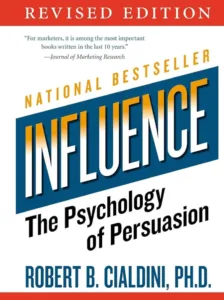
Robert Cialdini spent years going undercover — working in car dealerships, at fundraising organizations, in advertising agencies — to understand the mechanics of persuasion. The result is Influence, one of the most widely read and cited books in social psychology. It identifies six core principles that make people say yes: reciprocity, commitment and consistency, social proof, authority, liking, and scarcity.
What makes this essential reading for beginners is that it operates on two levels simultaneously. First, it explains the social psychology behind human compliance — why we are wired to respond automatically to certain triggers. Second, it functions as a practical guide to recognizing when these triggers are being used on you. Reading Influence has a way of making you feel both more aware and more skeptical — in the healthiest sense of the word.
Cialdini writes with clarity and wit, and the real-world examples range from advertising campaigns to cult recruitment to everyday social dynamics. Whether you’re in business, navigating relationships, or simply trying to make more autonomous decisions, this book gives you an invaluable psychological toolkit.
- Best for: Anyone interested in social behavior, marketing, communication, or self-protection from manipulation
- Core concepts covered: Social proof, reciprocity, cognitive dissonance, authority bias, persuasion psychology
- Difficulty level: Easy — practical, story-driven, and immediately applicable
The Body Keeps the Score — Bessel van der Kolk

The Body Keeps the Score has become one of the most important psychology books of the past two decades — not just in academic circles, but among the general public seeking to understand trauma. Psychiatrist Bessel van der Kolk argues, with compelling clinical evidence, that trauma is not merely a psychological wound stored in memory — it is a physiological reorganization of the body and brain.
Van der Kolk draws on neuroscience, attachment theory, and his own decades of clinical experience to show how traumatic experiences reshape the nervous system, alter threat perception, and disconnect people from their own bodies and emotions. Crucially, he also explores a wide range of therapeutic approaches — including EMDR, yoga, theater, and neurofeedback — that help trauma survivors reconnect with themselves.
This book is particularly important for readers who may have experienced adverse childhood experiences, chronic stress, or any form of trauma, as well as for those who work with or care for people who have. It is not a light read emotionally, but it is written with profound empathy and hope. Van der Kolk is careful to emphasize that recovery is genuinely possible — and to explain, in concrete terms, what that recovery can look like.
- Best for: Anyone touched by trauma — personally or professionally — and readers interested in trauma-informed psychology
- Core concepts covered: Trauma, PTSD, polyvagal theory, attachment, nervous system regulation, somatic therapy
- Difficulty level: Moderate — emotionally rich and occasionally technical, but written for non-clinicians
Predictably Irrational — Dan Ariely

Where Kahneman maps the architecture of cognitive bias, Dan Ariely takes you on a more playful, experiment-driven tour of human irrationality. Predictably Irrational reveals that our irrational behaviors aren’t random — they’re systematic and foreseeable, which means they can be studied, understood, and to some extent, anticipated.
Ariely covers a remarkable breadth of territory: why “free” is such a powerful word, how our expectations shape our experience of taste and pain, why we procrastinate even when we know better, and how social norms and market norms create entirely different psychological environments. Each chapter is structured around a specific experiment, making the science feel tangible and the conclusions feel earned rather than asserted.
This is one of the most genuinely fun psychology books on this list — the kind you find yourself reading passages aloud to people nearby. But the entertainment value doesn’t come at the cost of substance. Ariely’s insights into consumer behavior, self-control, and social dynamics are as relevant to personal life as they are to business and policy.
- Best for: Readers interested in behavioral economics, everyday decision-making, and the quirks of human motivation
- Core concepts covered: Behavioral economics, anchoring, the zero price effect, social norms, self-control
- Difficulty level: Easy — entertaining, fast-paced, and highly accessible
Man’s Search for Meaning — Viktor Frankl

Viktor Frankl’s Man’s Search for Meaning is one of the most profound books ever written — not just within psychology, but within human literature broadly. Frankl was an Austrian psychiatrist and Holocaust survivor who developed his theory of logotherapy — the idea that the primary human drive is not pleasure (as Freud argued) or power (as Adler argued), but the search for meaning — in part through his experiences in Nazi concentration camps.
The first half of the book is a first-person account of life in Auschwitz and other camps. It is harrowing, but Frankl writes with a kind of quiet dignity that makes it bearable — and deeply moving. The second half introduces logotherapy: the clinical framework he built from those experiences, which holds that even in the most extreme suffering, humans retain the freedom to choose their response and to find meaning in their circumstances.
For anyone grappling with existential questions — about purpose, suffering, identity, or the will to keep going — this slim volume carries more weight than books ten times its length. It is essential reading not just as a psychology book but as a guide to being human.
- Best for: Anyone exploring existential psychology, meaning, resilience, or humanistic approaches to mental health
- Core concepts covered: Logotherapy, existential psychology, meaning-making, resilience, freedom of will
- Difficulty level: Easy to read, but emotionally and philosophically demanding in the best way
How to Choose the Right Psychology Book for Where You Are Right Now
The best psychology book for a beginner is the one that meets you where you are. Not every book on this list will resonate equally — and that’s entirely fine. Your entry point into psychology should feel like a conversation that matters to you personally, not an obligation.
Use this table as a quick-reference guide to match your current interest with the right starting point:
| If you’re most curious about… | Start with this book |
|---|---|
| Why you make irrational decisions | Thinking, Fast and Slow — Daniel Kahneman |
| How the brain shapes identity and perception | The Man Who Mistook His Wife for a Hat — Oliver Sacks |
| Personal growth and reaching your potential | Mindset — Carol Dweck |
| Social influence and persuasion | Influence — Robert Cialdini |
| Trauma, the body, and healing | The Body Keeps the Score — Bessel van der Kolk |
| Everyday behavior and quirky human habits | Predictably Irrational — Dan Ariely |
| Meaning, purpose, and resilience | Man’s Search for Meaning — Viktor Frankl |
Once you’ve read two or three of these, you’ll start noticing natural bridges between them. Kahneman and Ariely speak to each other. Frankl and Dweck share a deep belief in human agency. Sacks and van der Kolk both illuminate the relationship between brain, body, and selfhood. That’s when reading psychology becomes less like a hobby and more like a living framework for understanding experience.
What to Expect as You Build Your Psychology Reading Habit
One of the most common things beginner readers report after starting their first psychology book is a kind of cognitive dissonance — a mix of “why didn’t anyone teach me this earlier?” and “how do I unsee this now?” Both reactions are healthy. Psychology has a way of making the familiar strange, and the strange suddenly recognizable.
You may find yourself noticing cognitive biases in real time, or recognizing attachment patterns in your relationships, or suddenly understanding why a particular conversation always ends the same way. This heightened awareness can feel uncomfortable at first — but it is also the beginning of genuine emotional intelligence.
A few habits that help beginners get more from their reading:
- Keep a reflection journal. After each chapter or major concept, write a few sentences connecting the idea to your own life. This deepens retention and makes abstract concepts personal.
- Don’t rush to apply everything at once. Let ideas settle. Some of the most valuable insights from psychology books surface weeks or months after reading, when a real-life situation suddenly calls them forward.
- Follow your curiosity, not a prescribed order. If a chapter mentions a concept you want to explore further — attachment theory, cognitive dissonance, neuroplasticity — look it up. Follow that thread. That’s how genuine interest becomes lasting knowledge.
- Read across subfields. A reading list drawn only from behavioral economics, or only from trauma psychology, gives you depth in one area but blind spots everywhere else. Variety builds richer understanding.
- Remember the limits of popular psychology. These books are educational and illuminating, but they are not a substitute for professional support. If something you read resonates deeply with a personal struggle, consider speaking with a licensed psychologist or therapist.
FAQs About the Best Psychology Books for Beginners
What is the single best psychology book to start with as a complete beginner?
If you’re choosing just one book to begin with, Thinking, Fast and Slow by Daniel Kahneman is the most widely recommended starting point for a reason. It introduces foundational concepts in cognitive psychology and behavioral science in a way that is rigorous without being impenetrable. The dual-process framework it introduces — System 1 vs. System 2 thinking — gives you a mental model that makes virtually every other psychology book you’ll read more understandable. That said, if you’re more drawn to human emotions and relationships than to decision-making and cognition, Man’s Search for Meaning by Viktor Frankl may be a more emotionally resonant entry point. The “best” first book is ultimately the one that sparks genuine curiosity and keeps you reading.
Are these psychology books suitable for someone with no academic background?
Yes — all the books on this list are written for a general audience, not for academic specialists. Authors like Cialdini, Ariely, Dweck, and Sacks are known specifically for their ability to translate complex psychological research into accessible, engaging prose. You don’t need any prior knowledge of psychology, neuroscience, or statistics to read and deeply benefit from any of these titles. Some books, like The Body Keeps the Score, occasionally use clinical terminology, but van der Kolk is careful to define concepts as they arise. The goal of each of these authors is to bring psychology out of the academic silo and into the hands of curious people — which is exactly what makes them ideal for beginners.
Can reading psychology books help with anxiety, depression, or emotional struggles?
Psychology books can be genuinely valuable companions for people navigating emotional difficulties — they help normalize experiences, build self-awareness, and introduce therapeutic frameworks like CBT, ACT, and attachment theory in accessible ways. However, it’s essential to understand that reading about psychology is not a replacement for professional mental health care. Books provide education and insight; they do not provide diagnosis, therapy, or clinical support. If you are experiencing significant anxiety, depression, trauma responses, or any other mental health challenges, a qualified mental health professional is the appropriate resource. Think of psychology books as tools for understanding — not as treatment. They can complement therapy beautifully, but they work alongside it, not instead of it.
How is popular psychology different from academic psychology?
Academic psychology is the formal scientific study of mind and behavior — conducted through peer-reviewed research, clinical trials, and experimental methodologies, and published in journals that are often inaccessible to the general public. Popular psychology translates findings from that research into readable, narrative-driven books designed for non-specialists. The best popular psychology books — like those by Kahneman, Sacks, and Dweck — are grounded in real research and cite empirical work. The risk with some popular psychology is oversimplification or overgeneralization, which is why it’s worth favoring authors with genuine academic or clinical credentials. When a book makes bold claims without referencing any research base, that’s worth approaching with healthy skepticism.
What psychology books are best for understanding other people’s behavior?
If your primary interest is in understanding social behavior, relationships, and the forces that drive how people act toward one another, the most relevant books on this list are Influence by Robert Cialdini and Predictably Irrational by Dan Ariely. Both explore the psychological mechanisms behind human behavior in social and relational contexts. For a deeper understanding of how early relationships shape adult behavior, attachment-focused reading would be a natural next step — books on attachment theory, such as those drawing on the work of John Bowlby and Mary Ainsworth, build naturally from these foundations. The Body Keeps the Score also offers profound insights into how relational experiences, particularly early trauma, shape the way people function in relationships throughout life.
Is there a good visual or reference psychology book for beginners?
Yes — The Psychology Book from DK’s Big Ideas series is widely recommended as a visual reference guide for beginners. It uses graphics, timelines, and illustrated summaries to break down the history of psychology and its key concepts in a format that is especially helpful if you’re a visual learner or want a broad map of the field before diving into more focused titles. It covers everything from Freudian psychoanalysis to cognitive behavioral therapy to positive psychology, making it an excellent companion piece to more narrative-driven books. Similarly, A Degree in a Book: Psychology is praised as a thorough yet beginner-friendly reference that covers the scope of the discipline without requiring any prior knowledge.
How many psychology books should a beginner read before moving to more advanced texts?
There’s no fixed number, but most people find that reading three to five accessible, well-chosen beginner books gives them enough foundational vocabulary and conceptual grounding to approach more specialized or academic texts with confidence. The key indicator is not quantity but comprehension: when you start reading a more advanced book and find that the terminology feels familiar, the frameworks make sense, and you’re able to critically engage with the ideas rather than just absorb them passively, you’ve crossed the threshold from beginner to intermediate reader. At that point, you might explore more specialized subfields — clinical psychology, developmental psychology, neuroscience, or psychotherapy models — depending on where your interests have led you.
Use this citation format to reference the article clearly and help readers find the original source.
PsychologyFor. (2026). The Best Psychology Books for Beginners. PsychologyFor. https://psychologyfor.com/the-best-psychology-books-for-beginners/