

See more of our articles in your search results.
You turn the pages of a bestselling mystery novel, expecting a conventional detective story, but find yourself completely immersed in the vivid, literal, and sensory-dense worldview of a fifteen-year-old mathematician trying to decipher human social interaction. That initial cognitive disorientation is unforgettable. Mark Haddon’s celebrated 2003 novel, The Curious Incident of the Dog in the Night-Time, achieved global literary acclaim precisely because it dared to place readers directly behind the eyes of a neurodivergent narrator. It is not an ordinary crime thriller. Rather, it represents an extraordinary milestone in literary autistic perspective-taking.
For millions of readers worldwide, meeting Christopher John Francis Boone provided their very first detailed, intimate glimpse into what an autistic mind experiences during moments of sensory overload, logical hyperfocus, and social confusion. Yet within contemporary autistic self-advocacy and neurodiversity communities, the novel occupies an intensely debated and nuanced position. While neurotypical readers celebrated the book as an accurate window into autism, autistic scholars and clinicians highlight that Christopher represents a specific, stylized literary portrait that captures certain sensory and logical processing traits while reinforcing other outdated stereotypes. Understanding the novel’s profound insights alongside its clinical limitations provides readers with a richer, evidence-based neurodiversity perspective.
How does Christopher Boone’s internal narrative illuminate the authentic reality of neurodivergent cognitive processing?
This comprehensive guide examines The Curious Incident of the Dog in the Night-Time as a book that shows us what the autistic mind is like, analyzing its depiction of sensory overload, literal communication, emotional vulnerability, family dynamics, and what modern autism psychology reveals about neurodiversity.
The Novel That Brought Neurodivergent Interiority to World Literature
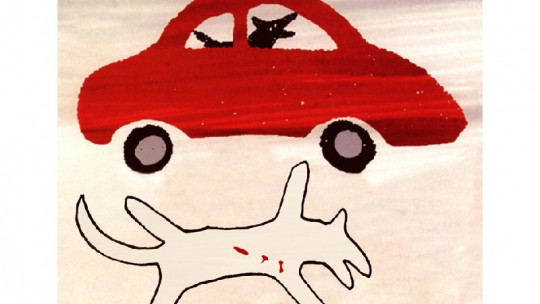
The Curious Incident of the Dog in the Night-Time begins with a sudden localized mystery: fifteen-year-old Christopher Boone discovers Wellington, his neighbor’s large black poodle, speared with a garden pitchfork on the lawn seven minutes past midnight. Determined to emulate his hero Sherlock Holmes, Christopher decides to investigate the crime and write a book detailing his findings.
How many of these have you been "meaning to read" for months?
- 1
 S&S/Simon ElementProtocolsAn Operating Manual for the Human BodyListen Free On Audible
 - 2
 Undercover Publishing HouseStop Letting Everything Affect YouHow to break free from overthinking, emotional chaos, and self-sabotage.Listen Free On Audible
 - 3
 Grand Central PublishingIn the Shadow of EightSurviving the Reality of My ChildhoodListen Free On Audible

What begins as a murder mystery quickly unfolds into a poignant, heartbreaking exploration of family fractures, parental deception, and deep sensory vulnerability. Christopher knows all the countries of the world and their capital cities, calculates prime numbers into the thousands in his head, and observes physical details that neurotypical people overlook entirely. However, he struggles profoundly to interpret facial expressions, detests being physically touched, and experiences overwhelming panic in chaotic public environments. Haddon constructs Christopher’s voice using clear, precise, unadorned prose that immerses the reader in literal autistic information processing.
Interestingly, author Mark Haddon famously omitted the word “autism” or “Asperger’s syndrome” from the text of the novel itself, describing the book as a study in radical human difference rather than a clinical case report. Nevertheless, the novel became a cultural touchstone that permanently shifted public awareness of neurodivergent cognitive differences.
- The narrative uses a Sherlockian detective investigation to frame a deeper exploration of neurodivergent identity.
- Christopher Boone’s first-person voice captures hyper-detailed pattern recognition and systematizing cognitive strengths.
- The plot contrasts Christopher’s unyielding honesty with the complex deceptions and emotional turbulence of adults.
- Haddon’s narrative structure demonstrates how neurodivergent individuals construct meaning through logical and mathematical consistency.
Sensory Overload and Monotropism: Seeing the World Through Christopher’s Eyes
Autistic sensory processing differences form the sensory core of Christopher Boone’s daily lived experience. For Christopher, the physical world does not arrive with a neurotypical sensory filter; every flickering fluorescent bulb, clattering train brake, and overlapping conversation demands immediate, unmediated neural processing.
Cognitive neuroscientist and autistic author Temple Grandin demonstrated that autistic minds frequently process information bottom-up, absorbing thousands of hyper-specific sensory details before constructing a general holistic concept. Haddon captures this exact cognitive phenomenon during Christopher’s harrowing solo journey to London. When entering a crowded underground train station, Christopher describes the auditory and visual chaos not as an ambient background hum, but as a violent avalanche of data that threatens to crash his cognitive operating system, forcing him to curl into a ball, cover his ears, and groan to shut out debilitating sensory stimulation.
Furthermore, psychological research into monotropism—a foundational theory of autism developed by Dinah Murray and Wenn Lawson—explains Christopher’s intense, singular attentional tunnel. When Christopher is engaged in mathematical calculations, prime numbers, or astronomical astrophysics, his attentional system is completely absorbed in a high-focus flow state. Forcing a sudden, unexpected transition out of that attentional tunnel triggers severe distress, illustrating the vital necessity of structured environmental predictability.
- Bottom-up sensory processing floods the nervous system with unvetted visual, auditory, and tactile environmental data.
- Monotropic attentional focus creates extraordinary hyperfocus on special interests while making unplanned cognitive transitions exhausting.
- Acoustic groaning, rhythmic rocking, and pacing function as adaptive self-regulatory tools to mitigate acute sensory overwhelm.
- Designing sensory-friendly environments allows autistic individuals to utilize their cognitive strengths without experiencing debilitating shutdowns.
The Double Empathy Problem: Re-evaluating Social Communication Deficits
For decades, traditional psychiatric literature claimed that autistic individuals suffered from a severe deficit in theory of mind—the cognitive ability to understand other people’s mental states, beliefs, and emotions. In The Curious Incident of the Dog in the Night-Time, Christopher explicitly explains that he struggles with human faces, requiring his teacher Siobhan to draw emotional diagram faces so he can decipher whether someone is happy, sad, or angry.
However, contemporary autistic sociologist Damian Milton formulated the “Double Empathy Problem,” proving that communication breakdowns between autistic and non-autistic people are bidirectional rather than a one-sided autistic defect. Non-autistic adults in Christopher’s life—particularly his father Ed, his mother Judy, and the investigating police officers—frequently fail to understand Christopher’s communication style just as profoundly as he struggles to interpret their emotional subtext. The breakdown is mutual. It is not an individual deficit. Rather, it represents a cross-cultural friction between differing neurodivergent neurotypes.
When Christopher’s father touches him, he intends an affectionate gesture of parental comfort; Christopher perceives that physical contact as an excruciating sensory intrusion, instinctively responding with a defensive strike. Understanding the Double Empathy Problem transforms how we view Christopher’s interactions, replacing pathologizing blame with empathetic cross-neurotype translation.
- The Double Empathy Problem demonstrates that communication friction between neurotypes is bidirectional and systemic.
- Non-autistic adults frequently misinterpret autistic distress, literal honesty, and somatic sensory boundaries.
- Autistic difficulties with social nuances like white lies, sarcasm, and figurative metaphors reflect linguistic processing differences.
- True neuro-affirming communication requires mutual accommodation rather than demanding one-sided autistic conformity.
The Interplay of Order and Chaos in Neurodivergent Psychology
A central psychological theme running throughout Christopher Boone’s journey is the protective psychological function of predictable routine and order in managing existential anxiety. In an unpredictable world populated by emotional, lying adults, Christopher constructs meticulous personal rules—such as numbering his book chapters exclusively with prime numbers, refusing to eat yellow or brown foods, and tracking passing cars to predict good or black days.
Clinical psychologist Barry M. Prizant emphasizes in his landmark work Uniquely Human that repetitive behaviors, rigid routines, and special interests are not random symptoms to be eradicated; they are active, intelligent self-regulation mechanisms. When Christopher organizes his world with mathematical precision, he creates an island of safety that stabilizes his autonomic nervous system against overwhelming chaos, cultivating internal psychological groundedness.
When Christopher discovers that his father lied about his mother’s death and murdered the neighbor’s dog, the orderly foundation of his reality collapses into terrifying unpredictability. His decision to navigate the complex train journey to London demonstrates that autistic individuals do not lack bravery; rather, when backed into chaos, they employ their logical frameworks to execute courageous personal self-advocacy.
| Behavioral Manifestation in Novel | Psychological & Sensory Function | Neuro-Affirming Clinical Translation |
|---|---|---|
| Prime number chapter sequencing | Imposing mathematical order on narrative structure | Cognitive structuring and pattern-recognition comfort |
| Refusal to eat yellow/brown foods | Managing intense gustatory and visual sensory aversion | Honoring sensory boundaries and food accommodations |
| Holding hands with splayed fingers (“fan touch”) | Connecting with parents without triggering tactile overload | Adaptive, personalized physical affection boundaries |
| Groaning and curling into a ball at train stations | Somatic defense against auditory and visual data overload | Protective self-regulation during acute sensory meltdown |
| Fixation on Sherlock Holmes & astronomy | Deep monotropic flow state providing emotional regulation | Leveraging special interests for executive learning and joy |
As illustrated in the comparative table above, every one of Christopher’s idiosyncratic behaviors serves a protective psychological function. Recognizing the adaptive wisdom behind these traits allows families, educators, and clinicians to support neurodivergent individuals with authentic compassionate validation.
Family Dynamics, Parental Burnout, and the Reality of Caregiving
Beyond its exploration of autistic interiority, The Curious Incident of the Dog in the Night-Time delivers one of literature’s most searing, realistic portraits of parental burnout and caregiver exhaustion. Christopher’s parents, Ed and Judy Boone, are not monstrous villains; they are deeply flawed, isolated, and overwhelmed human beings navigating high-intensity caregiving without adequate systemic support.
Judy’s decision to leave the marriage reflects the profound despair of parental burnout—a state where an overwhelmed mother feels completely unequipped to meet her child’s specialized needs while battling her own emotional dysregulation. Ed’s tragic combination of fierce devotion and explosive anger illustrates the agonizing emotional isolation fathers frequently experience when parenting neurodivergent children in an unaccommodating society. Their struggles remind readers that supporting neurodivergent youth requires building robust community safety nets for entire family caregiving systems.
Child psychiatrist Daniel J. Siegel highlighted that parental emotional regulation is the primary prerequisite for child relational security. When parents receive structured respite care, mental health counseling, and community acceptance, they can maintain the calm presence required to help neurodivergent children navigate emotional dysregulation, preventing the heartbreaking ruptures that fractured the Boone family.
- Parental burnout in neurodivergent families is fueled by systemic isolation and inadequate community respite support.
- Caregivers frequently experience chronic emotional dysregulation, marital strain, and profound parental guilt.
- Supporting autistic youth requires providing comprehensive psychological and financial resources for parents and siblings.
- Family healing depends on validating caregiver limits while building restorative relationship repair habits.
Critical Perspectives from the Autistic Community: Strengths and Limitations
While The Curious Incident of the Dog in the Night-Time received widespread commercial praise and won the Whitbread Book of the Year award in 2003, autistic self-advocates and neurodiversity scholars have offered vital critiques of fictional autistic representation.
Social psychologist Devon Price, author of Unmasking Autism, notes that popular media frequently portrays autism through the narrow archetype of the “white, male, savant genius” who lacks emotional empathy and operates like a calculating computer. While Christopher Boone’s traits accurately reflect some individuals on the spectrum, treating him as the universal definition of autism erases the vast diversity of the autistic community—particularly autistic women, non-binary individuals, people of color, and those with high masking profiles who do not possess extraordinary mathematical savant abilities. Christopher is a single, stylized literary character, not a monolithic diagnostic template.
Furthermore, early marketing of the book promoted the outdated myth that autistic people “have no empathy,” a harmful stereotype decisively refuted by contemporary psychology. Autistic individuals frequently experience intense, overwhelming hyper-empathy that causes them to withdraw socially to avoid emotional flooding. Reading Haddon’s novel alongside authentic autistic memoirs allows readers to celebrate Christopher’s compelling journey while maintaining comprehensive neurodiversity awareness.
- Recognize that Christopher represents one specific fictional character rather than a universal definition of autism.
- Acknowledge that many autistic individuals possess profound hyper-empathy rather than emotional detachment.
- Expand reading lists to include authentic memoirs by autistic women, people of color, and non-speaking self-advocates.
- Critique media representations that reduce neurodivergent identity to mathematical savant tropes.
How to Read the Novel for Empathy, Education, and Psychological Insight
Approaching The Curious Incident of the Dog in the Night-Time with active psychological curiosity transforms the reading experience from passive literary entertainment into a dynamic exercise in cognitive empathy. The novel provides an exceptional classroom and personal tool for challenging default neurotypical assumptions about communication, logic, and human relational connection.
Humanistic psychologist Carl R. Rogers emphasized that genuine perspective-taking requires stepping inside another person’s perceptual framework without judging or evaluating it against external standards. When reading Christopher’s narrative, readers should resist viewing his literal interpretations and sensory distress as behavioral deficiencies, choosing instead to admire his unyielding commitment to truth, his intellectual courage, and his extraordinary resilience. This deliberate practice cultivates authentic cross-neurotype empathy.
- Pay close attention to sensory descriptions, imagining the physical experience of unfiltered environmental noise.
- Reflect on how neurotypical communication relies on unwritten social codes, ambiguous metaphors, and insincere social conventions.
- Examine your own emotional reactions to Christopher’s choices, identifying where your expectations reflect unconscious neurotypical bias.
- Discuss the book in reading groups to explore diverse interpretations of neurodivergent family dynamics.
When Neurodivergent Burnout and Crisis Require Clinical Support
While autism is a natural neurological variation and not a psychiatric disease, living in an unaccommodating world that demands constant masking and sensory endurance places autistic youth and adults at severe risk for clinical depression, generalized anxiety, and acute autistic burnout. Recognizing when developmental friction transitions into clinical crisis is an essential mental health literacy competency.
If an autistic individual experiences prolonged regression in executive functioning, loss of speech or self-care capacities, chronic panic attacks, insomnia, or severe depressive paralysis lasting more than two consecutive weeks, books and informal accommodations are insufficient. You should schedule an evaluation with a licensed, neurodiversity-affirming clinical psychologist or psychiatrist. Modalities like Acceptance and Commitment Therapy (ACT) and somatic sensory therapies provide safe, affirming environments to recover from burnout without forcing harmful behavioral masking.
Most critically, if you or an autistic individual you know is experiencing acute suicidal despair, intrusive thoughts of self-harm, or an overwhelming crisis where safety cannot be guaranteed, immediate intervention is vital. In the United States and Canada, immediately call or text 988 to connect with the Suicide & Crisis Lifeline, available twenty-four hours a day, seven days a week, completely confidential. In the United Kingdom, call 111 or text SHOUT to 85258. Seeking professional mental health care is not a failure of neurodiversity; it is the ultimate act of courageous personal self-advocacy.
- Autistic burnout and severe sensory exhaustion warrant compassionate evaluation by a licensed mental health professional.
- Neuro-affirming psychotherapy helps individuals heal from trauma without forcing damaging social masking.
- Acute suicidal ideation and crisis demand immediate emergency contact with dedicated crisis support services.
FAQs about The Curious Incident of the Dog in the Night-Time
Is Christopher Boone canonically diagnosed with autism or Asperger’s in the novel?
In the text of the novel itself, author Mark Haddon never explicitly uses the words “autism” or “Asperger’s syndrome.” Haddon stated in interviews that he intended to write a story about a unique individual experiencing radical difference rather than a clinical case study of a specific psychiatric label. However, the book’s promotional blurbs and literary reviews frequently described Christopher as having Asperger’s syndrome, and his behavioral, sensory, and cognitive traits strongly align with the clinical profile of autism spectrum disorder.
Is The Curious Incident of the Dog in the Night-Time based on a true story?
No, the novel is an entirely fictional work of literature created by British author Mark Haddon. While Haddon previously worked with autistic individuals and people with physical disabilities as a young adult, Christopher Boone is a completely invented character. Haddon drew upon his own imagination, observations of human behavior, and interest in mathematics and astronomy to construct Christopher’s distinctive, highly memorable first-person narrative voice.
Why is the novel controversial within the autistic community?
The novel is debated within the autistic community because many self-advocates feel it popularized the narrow stereotype of the “white, male, emotionless mathematical savant.” While Christopher’s sensory challenges and literal thinking are accurately portrayed, treating him as the universal face of autism erases the vast diversity of the spectrum, particularly autistic women, non-speaking individuals, and people of color. Additionally, the book was written by a non-autistic author without direct consultation with the autistic self-advocacy movement, leading many to recommend reading authentic autistic own-voices literature alongside it.
What are Christopher Boone’s greatest strengths in the book?
Christopher possesses extraordinary cognitive and moral strengths throughout the novel. He has an exceptional memory for factual details, brilliant mathematical calculation skills, acute powers of visual observation, and an unyielding commitment to truthfulness and honesty. Furthermore, despite severe sensory overload and social anxiety, Christopher demonstrates astonishing bravery and resilience when he navigates a complex, terrifying solo journey to London to find his mother and take his A-level mathematics exam.
What is the meaning of Christopher’s special interest in prime numbers?
Christopher numbers the chapters of his book exclusively using prime numbers (2, 3, 5, 7, 11, 13…) because he loves their logical elegance, consistency, and unpredictability. In the novel, Christopher explains that prime numbers are like life: they are completely logical, but it is impossible to work out the rules governing their sequence no matter how hard you try. For Christopher, mathematics provides an intellectual sanctuary of certainty and beauty amidst the confusing emotional chaos of the adult world.
What can parents and educators learn from reading this novel?
Parents and educators can learn profound lessons about the importance of sensory accommodations, clear literal communication, and unconditional acceptance. The book demonstrates that challenging behaviors are often protective responses to sensory overload and fear rather than malicious defiance. It also highlights the devastating emotional toll of parental isolation and caregiver burnout, emphasizing that supporting neurodivergent children requires providing compassionate, ongoing resources, respite care, and understanding for the entire family unit.
Bibliography
- Grandin, T. (1995). Thinking in Pictures: And Other Reports from My Life with Autism. Doubleday.
- Haddon, M. (2003). The Curious Incident of the Dog in the Night-Time. Jonathan Cape.
- Milton, D. E. (2012). On the ontological status of autism: The ‘double empathy problem’. Disability & Society, 27(6), 883-887.
- Murray, D., Lesser, M., & Lawson, W. (2005). Attention, monotropism and the diagnostic criteria for autism. Autism, 9(2), 139-156.
- Price, D. (2022). Unmasking Autism: Discovering the New Faces of Neurodiversity. Harmony Books.
- Prizant, B. M. (2015). Uniquely Human: A Different Way of Seeing Autism. Simon & Schuster.
- Rogers, C. R. (1961). On Becoming a Person: A Therapist’s View of Psychotherapy. Houghton Mifflin.
- Siegel, D. J. (2013). Brainstorm: The Power and Purpose of the Teenage Brain. TarcherPerigee.
Use this citation format to reference the article clearly and help readers find the original source.
PsychologyFor. (2026). “The Curious Incident of the Dog in the Night-Time”, a Book That Shows Us What the Autistic Mind is Like. PsychologyFor. https://psychologyfor.com/the-curious-incident-of-the-dog-in-the-night-time-a-book-that-shows-us-what-the-autistic-mind-is-like/