


See more of our articles in your search results.
To my surprise, in recent times I have been finding in numerous media channels, television, radio and written press, quite a few allusions to a supposed “industry” based on the irrational and unconditional search for happiness.
Like any argument or current that is reduced to absurdity, it loses its foundation when we forget the true essence or reason for being of Positive Psychology, to establish derogatory analogies such as, for example, the fact of making certain publications on social networks like Mr. Wonderful or how to mock the “need” of having to go to a “Motivational Coach” to solve some kind of trivial issue.
After numerous episodes of this kind of “attack” on a sector of psychotherapy or mental care (because let us not forget that the etymological origin of the word therapy is related to the concept of attention), coming even from “colleague” sectors, who did not finish learning from the old paradigmatic battles between behaviorists and cognitivists or between nativists. against environmentalists, among others (paradoxically, both confrontations leading to the emergence of integrative paradigms).
Unfair criticism against Positive Psychology
I can understand that from ignorance or lack of knowledge, endless disqualifications and criticisms, more or less destructive. But what I cannot understand is that there are psychology professionals who cling to their old paradigms and methodological currents, like shipwrecked people to the wreckage, to defend their model or way of practicing the profession, as if this were the only one. possible.
On the other hand, they are not so reluctant to embrace concepts such as “Learned Helplessness”, which was developed by Professor Martin EP Seligman, to justify the development of depression or other psychological disorders, this being one of the standards of positive psychology.
How many of these have you been "meaning to read" for months?
- 1
 Oliver SacksThe Man Who Mistook His Wife for a HatUnforgettable clinical case studies on perception and identityListen Free On Audible
- 2
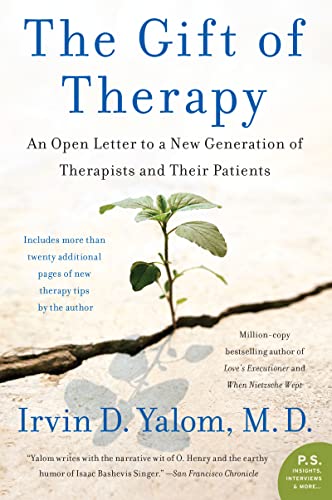 Irvin D. YalomThe Gift of Therapy85 practical, warm clinical insights from a master therapistListen Free On Audible
- 3
 Lori GottliebMaybe You Should Talk to SomeoneA bestselling memoir on the shared humanity of therapist and clientListen Free On Audible
I understand that The medical model of psychodiagnosis continues to exert a notable influence in the way of understanding psychology for some. But, dear colleagues and curious people of various kinds, the psychopathological clinical model does not explain the complete diversity of human behavior, and that is why without the need to intervene in the prevention or rehabilitation of psychiatric pathologies, there is a field of psychological action that does not obey her rules.
A person who feels bad or is dissatisfied with the life he or she leads She is obviously not sick. In fact, there are many people classified as sick or disordered who raise many doubts about the reliability of the diagnostic system. If they knew the damage that can cause a person to feel labeled for life, being part of a “bag” or group of pejorative connotations for their own health and subsequent social adaptation, they would be more careful when carrying out depending on what type of classifications.
The problem of overdiagnosis
Recently, I have had the opportunity to learn in greater detail the opinion of Doctor Javier Álvarez. This head of psychiatry at the León Hospital is a champion of a movement called “New Psychiatry”, which postulates the inconsistencies and suspicions of a medical model probably influenced by another type of industry, but in this case a real industry. The pharmaceutical. It’s curious the dizzying growth that the main psychiatric classification and diagnosis instrument has experienced (better known as DSM).
From its beginnings to date, the number of mental disorders has increased exponentially and its treatment has been entrusted as a priority to the use and administration of psychotropic drugs. Some psychotropic drugs whose mission is mainly to act on the brain neurotransmitters “involved” in the development of the disorder in question. The problem lies in the conviction and confidence they give off about the minimal knowledge that exists about the functioning of the aforementioned neurotransmitters as sufficient guarantee to experiment with these chemical drugs.
I do not want bad interpretations on my part, I am not anti psychotropic drugs, nor anti any other type of treatments, but I do consider that we have developed a remarkable trust in something that is still in its infancy and we have neglected and even ridiculed other ways of understanding the world. of psychology and psychiatry, without finding so many everyday examples of criticism of this. The smoke of the “charlatans” versus the “magic pills”. And it’s not about this, but it’s not about that either.
Each person is a world and in each world one type of intervention or another is required.
My problem is not bigger or smaller than yours.
Maybe it’s not even a problem.
But it’s mine and I decide how I want or need to approach it.
Use this citation format to reference the article clearly and help readers find the original source.
PsychologyFor. (2024). The Happiness Industry and Positive Psychology. PsychologyFor. https://psychologyfor.com/the-happiness-industry-and-positive-psychology/