

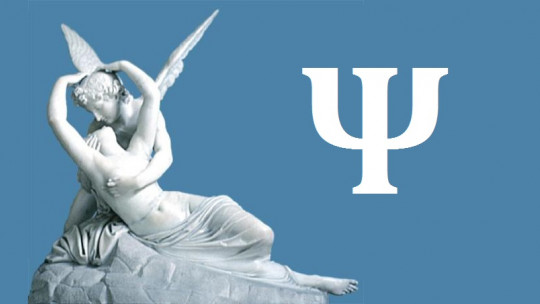
he symbol of psychology, Ψ (Psi), is one of the most recognizable emblems in the field. However, its origins and significance go beyond mere representation. From its roots in Greek mythology to its adoption by the scientific discipline of psychology, the Psi symbol carries deep historical and philosophical meaning.
In this article, we will explore the history, evolution, and interpretations of the psychology symbol, as well as its connection to the human mind and behavior.
Psi, a letter of the Greek alphabet
Psi (Ψ ψ) is a letter of the Greek alphabet. Specific, we are talking about the twenty-third (23rd) letter and as a result of this phoneme, words were built not only from Greek but also from Latin.
In the capital of the Roman Empire, several words contained the letter psi: for example psalmus either psyche (psalm and psyche). The meaning of the word Psyche It is explained by the association between the letter Psi and the word of Greek origin “Psyche”. The latter, although it had previously been used to designate the butterflies evolved over time and came to mean “breath”, “mood”, “breath of wind” and, later, “soul” and “mind”.

Psychology: a term formed by two roots
Thus, the origin of the term “Psychology” seems clear. The Psychologyetymologically “science of the soul” or “science of the mind”, is composed of the prefix Psycho- (psyche, mind) and the suffix -logy (science, study). By extension, the symbol “Ψ” also became popular as a way to designate the science of the mind.
Curiously, the Greeks had the ancient belief that when a person died and exhaled their last breath of air, their soul flew out of the body, like a butterfly. At that time, the butterfly was considered a symbol of life and hope. In fact, in Greek mythology the goddess Psyche is usually represented with the figure and appearance of a young woman with butterfly wings, and she is the youngest daughter of the king of Anatolia. Mythological writings often refer to Psyche as a goddess of great beauty, representing human goodness and soul.
The Greek Origins of the Psi Symbol (Ψ)
The letter Ψ is the 23rd letter of the Greek alphabet, traditionally pronounced as “Psi”. In ancient Greece, each letter of the alphabet had symbolic and philosophical meanings, and Psi was no exception.
Psi was often associated with:
- The soul or psyche (ψυχή), a concept central to Greek philosophy.
- Spiritual or metaphysical forces beyond the physical world.
- Balance between mind, body, and spirit, a key theme in classical thought.
The connection between Psi and the psyche played a crucial role in its later adoption as the symbol of psychology.
The Meaning of “Psyche” in Ancient Greece
The word “psyche” (ψυχή) in Greek translates to soul, breath, or life force. In Greek mythology, Psyche was also the name of a mortal woman who became the goddess of the soul after undergoing great trials, symbolizing transformation and self-discovery.
Plato and Aristotle, two of the most influential Greek philosophers, explored the nature of the psyche and its relation to human behavior:
- Plato believed that the psyche was eternal and the source of knowledge, emphasizing the importance of introspection.
- Aristotle described the psyche as the essence of being, closely linked to biological and cognitive processes.
These early philosophical ideas about the psyche directly influenced the emergence of modern psychology.
The Adoption of Psi (Ψ) as the Psychology Symbol
Psychology, as a formal discipline, emerged in the 19th century with the work of scholars such as Wilhelm Wundt, Sigmund Freud, and William James. As the field developed, the Greek letter Psi (Ψ) was chosen as its official symbol.
Why was Psi (Ψ) chosen?
- Reference to “Psyche” – Since psychology studies the human mind, soul, and behavior, Psi, derived from psyche, was a natural choice.
- Historical and philosophical significance – It connects psychology to ancient wisdom and the philosophical roots of mental study.
- Visual simplicity and recognition – The trident shape of Ψ became an easily recognizable and distinct symbol for the discipline.
The Symbolism of Psi (Ψ) in Modern Psychology
Today, the Psi symbol represents the scientific study of the mind and behavior, encompassing:
- Cognitive processes (thoughts, perception, and memory).
- Emotional and mental health (psychiatry, psychotherapy, and counseling).
- Behavioral studies (experimental psychology, neuroscience, and social psychology).
Variations of the Psychology Symbol
In academic and professional settings, the Psi symbol appears in different forms, including:
- University psychology department logos.
- Psychological association emblems (e.g., American Psychological Association).
- Books, journals, and scientific publications on psychology.
Psi has also been integrated into logos of therapy clinics and mental health initiatives, reinforcing its connection to the study of the human mind.
Other Symbols Associated with Psychology
While Ψ is the most widely recognized psychology symbol, other symbols also play a role in representing different aspects of the field:
The Greek God Hermes
Hermes, known as the messenger of the gods, was linked to communication and intelligence. The caduceus (a staff with two serpents intertwined) is sometimes mistakenly associated with psychology due to its use in medical contexts.
The Tree of Knowledge
Some psychological institutions use a tree as a symbol, representing:
- Growth and development of the mind.
- The connection between different areas of psychology.
- The branching of knowledge and disciplines.
The Brain Icon
Modern psychology is closely connected to neuroscience, leading to the use of brain-related imagery to symbolize mental processes, cognition, and intelligence.
Eros, Psyche and a forbidden love
The myth of Eros and Psyche recounted in the writings of Apuleius in his work Metamorphosis, Psyche was the youngest daughter of the king of Anatolia, as well as the most beautiful and envied young woman in the kingdom. In a fit of jealousy due to Psyche’s beauty, the goddess Aphrodite ordered her son Eros (Cupid) to make Psyche fall madly in love with the ugliest, most unpleasant and meanest man in the kingdom.
Although the mission was clear, Eros could not resist Psyche’s charms and fell madly in love with her, and threw the arrow into the sea. The moment she saw Psyche falling asleep, Eros hugged her and flew her to her castle.
Once he had arrived at the palace, and to ensure that his mother did not discover that Psyche lived in the palace, he kept the beautiful young woman in a bedroom. Night after night, Eros came to Psyche’s room and, in the dark, they made love. This ensured that Eros remained a mystery, since Psyche never saw his facial features or any other details of his physiognomy. Eros never revealed his true identity to the young woman, but the love affair was total. However, in one of her nighttime encounters, Psyche explained to her lover that she missed her sisters and that he wanted to return to her kingdom so he could see them. Eros agreed to Psyche’s request, but warned her that her sisters would want to separate her from him. During the next day, Psyche met again with her sisters, who, dying of envy, asked her who her lover was.
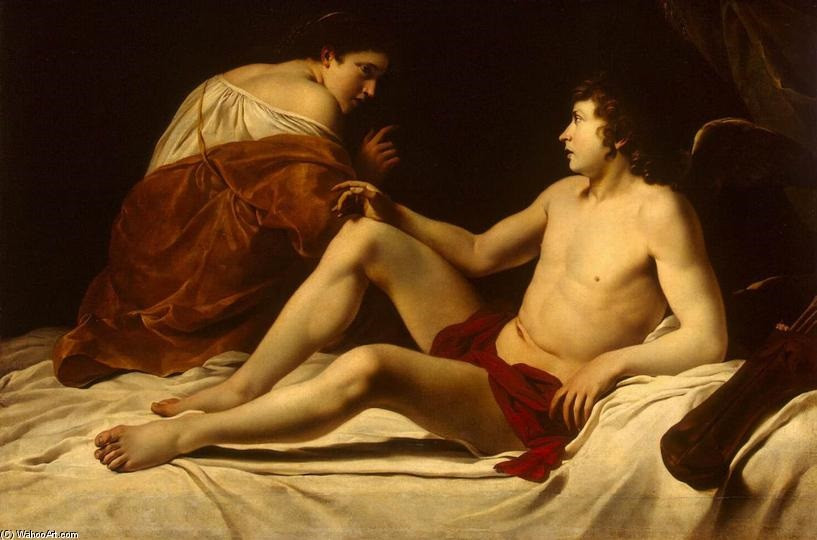
Said and done: back at the palace, in one of their subsequent meetings, Psyche took advantage of a moment when Eros was asleep next to her to light a lamp so she could see his face. A drop of incandescent oil from the lamp, by misfortune, fell on the body of Eros, who woke up and, very disappointed with Psyche, left the bedroom where they were both.
When Psyche realized the situation, she left the room in search of Aphrodite, to beg her to return Eros’ love to her. However, the vengeful goddess ordered her to carry out four tasks of extreme difficulty if she wanted to make Eros fall in love again. Psyche, among other tasks, had to go in search of Hades and claim from Persephone, the queen of the underworld, a part of her beauty, which Psyche would deposit in a box that the goddess Aphrodite had given her.
Psyche decided to climb to the top of a tower, since she was convinced that the shortest route to the underworld would be death. Just when he was about to jump into the void, a nervous voice stopped him. He psyche heard the words of the person who had come to his aid. According to his instructions, there was an easier way to enter the underworld and return alive. He showed her a precise route on a map to get it; a route not exempt from dangers and difficulties, such as the presence of the dog Cerberus or Charon, the ferryman of Hades.
Psyche knew how to appease Cerberus when he was in front of him, giving him a delicious cake. Later, having to deal with Charon, she knew how to gain her trust, based on a good financial tip for the boatman to take her to Hades. Once she was able to reach the underworld, Persephone had no impediment to help Aphrodite, and she gave up part of her beauty, depositing it in the box that Psyche brought with her.
Psyche left the underworld and decided to open the box and take a little of the beauty for herself, thinking that if she increased her beauty, Eros would surely love her. Eros, who had already forgiven her, flew to her, and implored Zeus and Aphrodite for her consent to marry Psyche. The gods finally approved of the union, and Zeus turned Psyche into an immortal being.
Aphrodite forgot her envy and celebrated the marriage of the young people. The daughter of Psyche and Eros was named Pleasure or, in Roman mythology, Voluptas. Thus ends this interesting mythological story that tells us about the origins of the symbol of Psychology.
The Ψ symbol is more than just a letter from the Greek alphabet—it is a powerful emblem that represents the historical, philosophical, and scientific evolution of psychology. From its roots in Greek mythology and philosophy to its role in modern psychology, Psi serves as a timeless symbol of the study of the human mind.
Whether in university seals, psychological associations, or clinical settings, Psi (Ψ) continues to be a universal mark of mental exploration and the pursuit of knowledge.
FAQs About the Psi Symbol in Psychology
What does the Psi (Ψ) symbol mean in psychology?
The Psi symbol (Ψ) represents psychology, derived from the Greek word psyche, meaning soul or mind. It signifies the study of human behavior, thoughts, and emotions.
Why was the Greek letter Psi chosen for psychology?
Psi was chosen because it is the first letter of ψυχή (psyche), which refers to the soul, spirit, or mind in ancient Greek philosophy.
Does the Psi symbol have any religious or mystical meanings?
Historically, the symbol was linked to spirituality and metaphysical concepts, but in modern times, it is strictly used to represent psychological science and mental health.
Where is the Psi symbol used today?
The Psi symbol is commonly found in academic institutions, psychological organizations, therapy centers, and scientific literature related to psychology.
Are there alternative symbols for psychology?
Yes, other symbols include the tree of knowledge, the brain icon, and the caduceus, though none are as universally recognized as Ψ.
Use this citation format to reference the article clearly and help readers find the original source.
PsychologyFor. (2025). The History of the Symbol of Psychology (Ψ). PsychologyFor. https://psychologyfor.com/the-history-of-the-symbol-of-psychology-%cf%88/