

See more of our articles in your search results.
Understanding the intricacies of human communication within the body is essential for grasping how our brain and body work together to regulate everything from mood to metabolism. Two key players in this internal communication are hormones and neurotransmitters. While they both act as chemical messengers, they operate in distinct ways that impact how our body functions, adapts, and responds to the environment.
In this article, we will explore the main differences between hormones and neurotransmitters, diving into their definitions, modes of action, pathways, effects, and examples. Whether you’re a student, psychology enthusiast, or simply curious about how your body orchestrates its complex systems, this comprehensive guide will provide clarity on these vital biological chemicals.
What Are Hormones?
Hormones are chemical messengers secreted by glands in the endocrine system. These glands include the pituitary, thyroid, adrenal glands, pancreas, and gonads, among others. Hormones travel through the bloodstream to target organs or tissues, where they influence various physiological processes.
Key features of hormones include:
- Long-distance signaling: Because they travel through the bloodstream, hormones can affect cells and organs far away from their origin.
- Slow and prolonged action: Hormonal effects often take seconds to hours to manifest but tend to last longer, sometimes days or weeks.
- Regulation of broad processes: Hormones influence growth, metabolism, reproduction, stress responses, mood regulation, and more.
- Secretion in pulses or steady flow: Some hormones are secreted steadily, while others release in bursts depending on the body’s needs.
Some common examples of hormones include insulin, cortisol, estrogen, testosterone, and thyroid hormones.
How many of these have you been "meaning to read" for months?
- 1
 TarcherThe Artist's Way30th Anniversary EditionListen Free On Audible
 - 2
 Atria BooksThe Courage to Be DislikedThe Japanese Phenomenon That Shows You How to Change Your Life and Achieve Real HappinessListen Free On Audible
 - 3
 Hay HouseBecoming SupernaturalHow Common People Are Doing the UncommonListen Free On Audible
What Are Neurotransmitters?
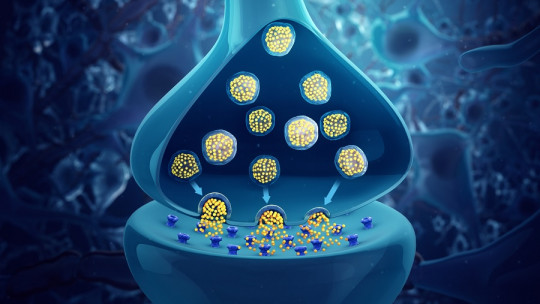
Neurotransmitters are chemical messengers used by the nervous system, specifically within neurons, to transmit signals across synapses, which are tiny gaps between nerve cells. Unlike hormones, neurotransmitters operate in a localized, rapid manner to communicate messages from one neuron to another or from neurons to muscles or glands.
Key features of neurotransmitters include:
- Short-distance signaling: Neurotransmitters act locally, crossing the synaptic gap to affect neighboring neurons or cells.
- Fast and brief action: They produce almost immediate effects, often within milliseconds, and their action is typically short-lived.
- Involvement in immediate responses: Neurotransmitters regulate muscle contraction, reflexes, mood, alertness, and sensory perception.
- Release upon electrical stimulation: Neurotransmitters are released in response to electrical signals (action potentials) in neurons.
Common examples of neurotransmitters include dopamine, serotonin, acetylcholine, norepinephrine, and gamma-aminobutyric acid (GABA).
How Hormones and Neurotransmitters Differ in Their Communication Pathways
The fundamental difference between hormones and neurotransmitters lies in how and where they deliver their messages.
Hormones are secreted into the bloodstream, making their way through the circulatory system to distant target cells. This allows the endocrine system to coordinate long-term bodily functions that require sustained changes, such as growth or reproductive cycles.
Neurotransmitters, in contrast, are released directly into the synaptic cleft, the microscopic space between neurons. This enables the nervous system to produce immediate, precise, and short-lived responses, such as moving your hand away from a hot surface or processing sensory information.
Differences in Speed and Duration of Action
Because hormones travel through the bloodstream and often affect distant organs, their actions are generally slower to begin but longer-lasting. For example, when you experience stress, your adrenal glands release cortisol, a hormone that helps your body maintain prolonged alertness and energy for hours or even days after the initial stressor.
Neurotransmitters, on the other hand, produce effects almost instantaneously. When you touch something sharp, neurotransmitters in your spinal cord and brainstem facilitate an immediate reflex, pulling your hand away within milliseconds. However, their action is brief, as neurotransmitters are quickly reabsorbed or broken down to allow the nervous system to reset and respond to new stimuli.
Target Specificity: Hormones vs. Neurotransmitters
Hormones tend to have broader target areas because of their journey through the bloodstream. For example, thyroid hormones affect almost every cell in the body by regulating metabolism. This widespread influence allows hormones to regulate complex, systemic processes.
Neurotransmitters have a more specific target: the postsynaptic receptors on the adjacent neuron or cell. This specificity supports the precise wiring of the nervous system, enabling finely tuned responses and complex cognitive processes like memory, attention, and emotion.
Differences in Chemical Nature and Synthesis
While both hormones and neurotransmitters can be peptides, amino acids, or derivatives of other molecules, they vary somewhat in their chemical composition and synthesis locations.
Hormones are synthesized and secreted primarily by specialized endocrine glands. For example, the pancreas produces insulin, and the adrenal glands secrete adrenaline.
Neurotransmitters are synthesized in the neurons themselves, often stored in synaptic vesicles near the synapse. Their synthesis depends on precursors taken up by neurons and specific enzymes.
Overlapping Roles: When Hormones Act Like Neurotransmitters and Vice Versa
Interestingly, the line between hormones and neurotransmitters can sometimes blur. Some chemicals act as both neurotransmitters and hormones depending on the context.
Example: Norepinephrine
- As a neurotransmitter, norepinephrine is released in the brain to regulate alertness and mood.
- As a hormone, it is secreted by the adrenal glands into the bloodstream during the “fight or flight” response, affecting heart rate and blood pressure.
Similarly, dopamine functions as a neurotransmitter in the brain but can also act as a precursor to hormones like norepinephrine.
This overlap illustrates the complex interplay between the nervous and endocrine systems, highlighting how they work in tandem to maintain bodily balance.
The Role of Hormones and Neurotransmitters in Mental Health
Both hormones and neurotransmitters are crucial in the regulation of mood, cognition, and behavior, making their balance essential for mental health.
Neurotransmitters such as serotonin, dopamine, and GABA play key roles in conditions like depression, anxiety, and schizophrenia. Many psychiatric medications target neurotransmitter systems to restore balance and improve symptoms.
Hormones like cortisol, thyroid hormones, and sex hormones (estrogen, testosterone) also influence mood and behavior. For example, chronic stress can lead to elevated cortisol levels, which may contribute to anxiety and depression. Similarly, hormonal changes during puberty, pregnancy, or menopause can affect mental health.
Understanding these chemical messengers’ distinct and overlapping roles helps psychologists and medical professionals develop targeted treatments for emotional and cognitive disorders.
How Scientists Study Hormones and Neurotransmitters
Research on hormones and neurotransmitters employs different methodologies because of their unique properties.
- Hormones are often measured in blood, saliva, or urine samples, providing insight into systemic levels.
- Neurotransmitters are studied using techniques like brain imaging (fMRI, PET scans), cerebrospinal fluid analysis, and electrophysiological recordings.
Both fields utilize animal models and cell cultures to understand how these chemicals affect behavior and physiology.
| Feature | Hormones | Neurotransmitters |
|---|---|---|
| Source | Endocrine glands | Neurons |
| Communication method | Bloodstream (long distance) | Synaptic cleft (short distance) |
| Speed of action | Slow (seconds to hours/days) | Fast (milliseconds) |
| Duration of effect | Long-lasting | Short-lived |
| Target specificity | Broad, systemic | Specific, localized |
| Examples | Insulin, cortisol, estrogen | Dopamine, serotonin, acetylcholine |
FAQs About The Main Differences Between Hormones and Neurotransmitters
What is the primary function of hormones compared to neurotransmitters?
Hormones primarily regulate long-term bodily processes like metabolism, growth, and reproduction by traveling through the bloodstream. Neurotransmitters facilitate immediate, localized communication between neurons or between neurons and muscles, regulating quick responses and behaviors.
Can a chemical act as both a hormone and a neurotransmitter?
Yes. Some chemicals, such as norepinephrine and dopamine, can function as both hormones and neurotransmitters depending on where and how they are released in the body.
How do hormones and neurotransmitters differ in their speed of action?
Hormones generally act more slowly because they travel through the bloodstream and affect distant organs, often taking seconds to hours to show effects. Neurotransmitters act rapidly within milliseconds because they cross the synaptic gap directly between neurons.
Are hormones and neurotransmitters involved in mental health?
Absolutely. Both play significant roles in regulating mood, stress responses, and cognitive function. Imbalances in neurotransmitters or hormones are linked to disorders such as depression, anxiety, and schizophrenia.
How do scientists measure hormones versus neurotransmitters?
Hormones are typically measured through blood, saliva, or urine tests, while neurotransmitters are studied using brain imaging, cerebrospinal fluid analysis, and electrophysiological methods.
Do hormones and neurotransmitters have different chemical structures?
They can vary, but are often related. Both can be peptides, amino acids, or derivatives of other molecules. The main difference lies in where they are synthesized and released rather than their chemical nature alone.
Use this citation format to reference the article clearly and help readers find the original source.
PsychologyFor. (2025). The Main Differences Between Hormone and Neurotransmitter. PsychologyFor. https://psychologyfor.com/the-main-differences-between-hormone-and-neurotransmitter/