

See more of our articles in your search results.
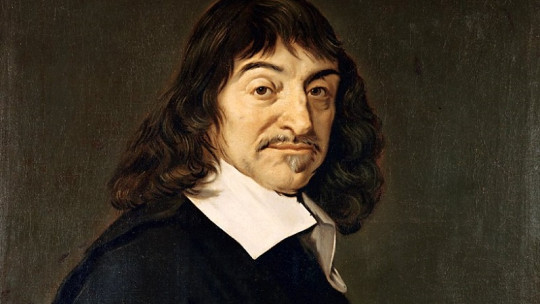
Rene Descartes He was a typical example of a Renaissance intellectual: soldier, scientist, philosopher and speculative psychologist.
He studied with the Jesuits, and his training was both metaphysical and humanistic. His influence has been decisive for his reformulation of the rationalism and its inclusion in a mechanistic system.
René Descartes, often referred to as the father of modern philosophy, made significant contributions that influenced not only philosophy but also psychology. His groundbreaking ideas and philosophical theories laid the foundation for many aspects of contemporary psychology, particularly in terms of understanding the mind, consciousness, and human behavior. Descartes’ approach to exploring the nature of reality, consciousness, and the relationship between the mind and the body shaped psychological thought for centuries to come.
Descartes’ Philosophical Background and Influence on Psychology
René Descartes (1596–1650) was a French mathematician, philosopher, and scientist who is best known for his declaration “Cogito, ergo sum” (“I think, therefore I am”). This assertion highlighted his belief in the certainty of individual thought as the cornerstone of knowledge. Descartes’ dualistic philosophy was a radical departure from medieval scholasticism, and it set the stage for a more scientific approach to understanding the human mind and its processes.
Descartes’ work is particularly valuable for psychology due to his focus on the mind-body relationship and his theory of human consciousness. He is often credited with helping to usher in the modern era of scientific inquiry by emphasizing reason and doubt as the starting points for understanding existence and human nature.
How many of these have you been "meaning to read" for months?
- 1
 Sounds TrueHow to Carry What Can't Be FixedA Journal for GriefListen Free On Audible
 - 2
 AzujosThe Zen Monkey and the Lotus Flower52 Stories to Relieve Stress, Stop Negative Thoughts, Find Happiness, and Live Your Best LifeListen Free On Audible
 - 3
 MajostaDon't Believe Everything You ThinkWhy Your Thinking Is The Beginning & End Of Suffering (Beyond Suffering)Listen Free On Audible
The Mind-Body Dualism: Descartes’ Most Notable Contribution
One of Descartes’ most important contributions to psychology was his theory of mind-body dualism, which asserts that the mind and the body are two separate substances that interact with each other. In his seminal work, Meditations on First Philosophy, Descartes posited that the mind (res cogitans) and the body (res extensa) are distinct but work together in human experience. This theory introduced a framework that many later psychological theories would build upon.
Mind-Body Dualism in Psychology
Descartes argued that the body is a machine that operates through the physical laws of nature, while the mind, which is non-material, is the source of thought, reasoning, and consciousness. This idea challenged the more religious or spiritual explanations of the soul’s influence on the body and behavior. In terms of psychology, Descartes’ dualism has had lasting effects in the areas of cognitive psychology and neuroscience, particularly in the study of how the mind and brain work together to produce behavior, emotions, and thoughts.
Mind-body dualism raised important questions about how mental states (like thoughts and feelings) are connected to physical states (like neural activity or bodily responses). These questions have been explored in modern psychology, particularly through fields such as cognitive psychology, neuropsychology, and behavioral neuroscience.
Descartes and the Concept of Consciousness
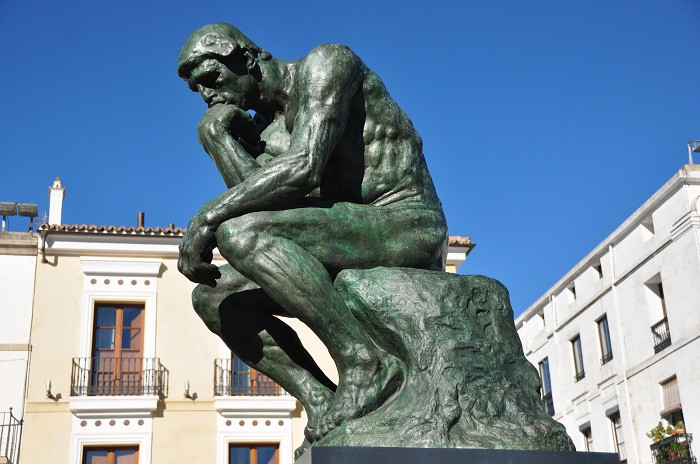
René Descartes’ work also had a profound influence on the study of consciousness—a central theme in psychology. Descartes is often credited with being one of the first thinkers to explore the nature of self-awareness, or the mind’s ability to reflect on itself. His famous phrase, “Cogito, ergo sum,” reflects his belief that the very act of doubting one’s own existence was proof of the reality of the thinking mind.
Descartes’ exploration of consciousness led him to distinguish between two types of knowledge:
- Intuitive knowledge: Immediate, self-evident truths (such as “I exist”).
- Deductive knowledge: Knowledge that is derived from reason and logic.
These concepts influenced later psychological theories, particularly in areas like cognitive psychology and metacognition (the ability to think about one’s own thinking). The idea of self-reflection and introspection became crucial in the development of theories around awareness and consciousness in both philosophy and psychology.
Descartes’ Influence on the Development of Experimental Psychology
While Descartes was not directly involved in the creation of experimental psychology as we know it today, his emphasis on rationality and empirical observation laid the groundwork for the later development of psychological science. Descartes advocated for a method of systematic doubt, questioning everything that could not be empirically verified. This approach resonated with later philosophers and psychologists who sought to use controlled, empirical methods to study human behavior.
For instance, the work of Wilhelm Wundt, who is often considered the father of modern experimental psychology, is closely aligned with Descartes’ views on the importance of introspection and the scientific study of mental processes. Wundt’s experiments aimed to measure consciousness, a key area of interest for Descartes centuries before. Descartes’ rational, evidence-based approach also influenced behaviorism, which sought to study observable behaviors rather than internal mental states, but still emphasized objective research methods.
Descartes and the Study of Emotions
Descartes also made significant contributions to the understanding of emotions. In his work The Passions of the Soul (1649), Descartes examined the nature of human emotions, considering them to be responses of the mind and body. He argued that emotions are complex reactions to external stimuli that affect both the physical and mental states of an individual. This work laid the foundation for later theories of emotion and their psychological and physiological aspects.
Descartes suggested that the body’s physical responses (such as an increased heart rate) are intimately connected to the mind’s emotional responses (such as fear or joy). His ideas prefigured modern discussions on the mind-body connection, which are central to fields such as psychophysiology and neuroscience. These ideas influenced the James-Lange Theory of Emotion, which argues that emotions result from the body’s physiological responses to stimuli.
Impact on Modern Psychology
Descartes’ contributions to psychology are still felt today. While his mind-body dualism was later challenged by monism (the belief that the mind and body are not distinct substances), his focus on consciousness, the relationship between physical and mental processes, and his scientific approach to understanding human behavior laid the groundwork for modern psychological theories. Many contemporary fields, such as cognitive psychology, neuroscience, and emotional psychology, are heavily influenced by Descartes’ theories.
The cognitive revolution, which occurred in the 1950s and 1960s, saw the development of theories that emphasized the importance of the mind and mental processes in understanding human behavior—an idea that Descartes anticipated. His ideas about self-awareness and consciousness continue to shape debates in both philosophy and psychology regarding the nature of the mind and personal identity.
Universal Mechanism
Descartes enriches the theory of Galileo with principles and notions of mechanics, a science that had achieved spectacular successes (watches, mechanical toys, fountains). But Descartes is also the first to consider mechanistic principles as universal, applicable to both inert matter and living matter, to microscopic particles and to celestial bodies.
The mechanistic conception of the body in Descartes is as follows: the characteristic of the body is that of being res extenso, material substance, as opposed to res cogitans or thinking substance.
These different substances interact through Pineal gland (the only part of the brain that is not hemispherically repeated), affecting each other mechanically.
The body has receptor organs and nerves or hollow tubes that internally communicate some parts with others. These tubes are covered by a kind of filaments that at one end join with the receptors, and at the other with some pores (like lids) of the ventricles of the brain that when opened allow the nerves to pass through the “ animal spirits”, which influence the muscles causing movement. He did not, therefore, distinguish sensory and motor nerves, but he had a rudimentary idea of the electrical phenomenon underlying nervous activity.
The legacy of René Descartes on other thinkers
Be Galvani, in 1790, who, based on the verification that the contact of two different metals produces contractions in the muscle of a frog, demonstrated that electricity is capable of causing an effect in the human body similar to that of the mysterious “animal spirits.” , from which it could easily be deduced that the nervous impulse was bioelectric in nature. Volta attributed this effect to electricity, and Galvani understood that it was generated by the contact of two metals; From the discussion between the two arose, in 1800, the discovery of the battery, which began the science of electric current.
Helmholtz, in 1850, thanks to the invention of the myograph, measured the muscle’s reaction time when stimulated from different lengths (26 meters per second). The sodium pump mechanism would not be discovered until 1940.
The importance of the pineal gland
In the pineal gland Descartes places the point of contact between the spirit (res cogitans thinking substance) and the body, exercising a double function: control over excessive movements (passions) and, above all, consciousness. Since Descartes does not distinguish between consciousness and consciousness, he deduced that animals, which did not possess souls, were like perfect machines without a psychological dimension, that is, without feelings or consciousness. Already, Gomez Pereira had denied the psychological quality of sensation in animals, leaving their movements reduced to complicated mechanical responses of the nerves actuated from the brain.
The result was that a part of the soul, traditionally associated with movement, became an intelligible part of nature and, therefore, of science. Psychological behaviorism, which defines psychological behavior as movement, is indebted to Descartes’ mechanism. The psyche was configured, on the other hand, only as thought, a position that would reappear later with cognitive psychology, if this is defined as a science of thought. For Descartes, however, thought was inseparable from consciousness.
A characteristic, however, common to these approaches, as is widely the case in the rest of the modern sciences, is the radical separation between the subject who knows and the object of knowledge. Both movement and thought will become automatic, proceeding according to predetermined causal chains in time.
René Descartes’ ideas helped shape the foundation of modern psychology. His work, particularly on the mind-body relationship, consciousness, and emotions, influenced both philosophical and scientific inquiries into the nature of human experience.
FAQs about René Descartes’ Contributions to Psychology
What is René Descartes most famous for in psychology?
René Descartes is most famous in psychology for his theory of mind-body dualism, which posits that the mind and body are separate entities that interact with each other. This theory had a lasting impact on how psychology views the connection between mental and physical processes.
Did René Descartes believe in the existence of emotions?
Yes, Descartes did believe in the existence of emotions. In his work The Passions of the Soul, he examined how emotions are connected to both the physical body and the mental state. He saw emotions as powerful responses to external stimuli that influence both physical and mental experiences.
How did René Descartes influence the study of consciousness in psychology?
Descartes is often credited with pioneering the study of consciousness. His famous phrase, “Cogito, ergo sum,” underscores the importance of self-awareness and thinking in understanding one’s own existence. His ideas set the stage for later theories on metacognition and the study of the conscious mind.
Did Descartes influence experimental psychology?
Yes, Descartes’ emphasis on reason, observation, and empirical verification laid the groundwork for experimental psychology. His rational approach to understanding the mind and behavior influenced later psychologists, such as Wilhelm Wundt, who used empirical methods to study consciousness and behavior.
How did Descartes’ theories impact modern psychological science?
Descartes’ contributions to the understanding of the mind-body relationship, consciousness, and emotions had a profound influence on modern psychology. His work influenced fields such as cognitive psychology, emotional psychology, and neuroscience, which all continue to explore how mental and physical processes interact.
Use this citation format to reference the article clearly and help readers find the original source.
PsychologyFor. (2025). The Valuable Contributions of René Descartes to Psychology. PsychologyFor. https://psychologyfor.com/the-valuable-contributions-of-rene-descartes-to-psychology/