

See more of our articles in your search results.
Something feels off, but you can’t quite pinpoint what. Your career is thriving, you’re making good money, yet you come home exhausted with no energy for the people you love. Or perhaps your relationships are wonderful, but you’ve neglected your health so much that climbing stairs leaves you winded. Maybe you’re physically fit and socially connected, but a nagging sense of purposelessness follows you everywhere. These aren’t signs of failure—they’re symptoms of imbalance, and they’re far more common than most people realize. The Wheel of Life emerged as a response to this exact problem: how do we assess whether we’re truly living well, not just succeeding in isolated areas while other dimensions of our existence wither from neglect?
Most assessment tools in psychology focus on pathology—what’s wrong, what needs fixing, what diagnosis applies. This tool takes a radically different approach. It operates from the premise that a fulfilling life requires balance across multiple domains, and that we often lack awareness of where that balance has broken down until we make it visual and explicit. Developed from ancient wisdom traditions and refined through decades of modern coaching practice, this circular assessment creates a snapshot of your life that’s both brutally honest and remarkably hopeful. It shows you not just where you’re struggling, but where you’re thriving and what a more balanced life might look like. As a psychologist who’s used this tool with hundreds of clients, I’ve watched it trigger profound realizations within minutes—the kind of insights that months of conversation sometimes fail to produce. The power lies in its simplicity: when you see your life represented as a lopsided wheel, you immediately understand why things feel so bumpy. This article will explore what this tool actually is, where it came from, how it works from a psychological perspective, what it reveals about human well-being, and most importantly, how you can use it to create meaningful change in your own life.
What is the Wheel of Life
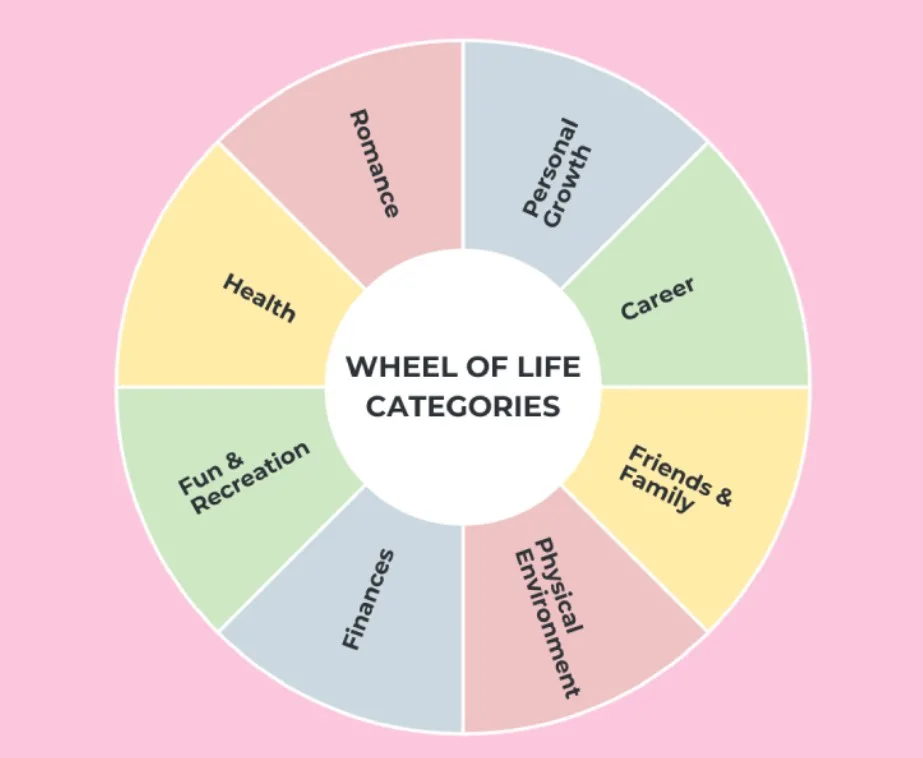
At its core, the tool is a visual assessment instrument that represents different life areas as segments of a circle. Imagine slicing a pie into eight equal pieces, with each slice representing a distinct domain of human experience. The typical domains include career, finances, health, relationships, family and friends, personal growth, recreation, and physical environment, though these can be customized based on individual priorities and values.
The assessment process is straightforward. You rate your current satisfaction level in each domain on a scale from zero at the center of the circle to ten at the outer edge. Zero represents complete dissatisfaction or neglect—this area is essentially absent from your life. Ten represents optimal satisfaction—this area is exactly where you want it to be. Most ratings fall somewhere in between, reflecting the messy reality of human existence where few things are either perfect or completely absent.
After rating each segment, you mark these scores on the circular diagram and connect the dots. What emerges is a shape that reveals your life balance at a glance. A perfectly balanced life would create a smooth circle with all areas rated similarly. In reality, almost everyone’s wheel looks more like a lumpy potato or a misshapen blob, with some areas extending far toward the outer edge while others remain close to the center. This visual immediately communicates what pages of written self-reflection might not: you can see exactly which areas are thriving and which are being neglected.
How many of these have you been "meaning to read" for months?
- 1
 THE LOST SKILLS ACADEMYThe Lost Skills of IndependenceBe Ready for Anything Life Throws at You - Hardcover-SpiralListen Free On Audible
 - 2
 A Navy SEALs Bug-In GuideA Navy SEAL's Bug-In GuideHow to Turn Your House into the Safest Place on EarthListen Free On Audible
 - 3
 Clarkson PotterHomemaking with BabsTips and Tricks for Making a House a HomeListen Free On Audible
The metaphor of a wheel is deliberate and powerful. A perfectly round wheel rolls smoothly. A wheel with flat spots or bulges creates a bumpy, uncomfortable ride. This perfectly captures how life imbalance feels—you’re moving forward, perhaps even making progress in some areas, but the journey feels jarring, exhausting, and unstable. The visual nature of this representation bypasses our tendency to rationalize or minimize imbalances. You can tell yourself that neglecting your health doesn’t matter because your career is going well, but when you see a wheel with one segment at 9 and another at 2, the dysfunction becomes undeniable.

Historical Origins and Development
The modern version of this assessment tool traces back to Paul J. Meyer, who founded the Success Motivation Institute in 1960. Meyer was a pioneer in what would eventually become the personal development and life coaching industries. He recognized that conventional measures of success—income, status, professional achievement—failed to capture whether people were actually living satisfying lives. Plenty of “successful” individuals felt empty, stressed, and disconnected from what mattered most to them.
However, the conceptual roots extend much deeper into history. The tool draws inspiration from Buddhist philosophy, particularly Tibetan Buddhism’s emphasis on balance and the interconnectedness of different life aspects. The Buddhist concept of the wheel appears throughout their teachings as a symbol of the cycle of existence and the various realms of experience. Meyer adapted this ancient wisdom into a practical tool for modern self-assessment and goal-setting frameworks.
Throughout the 1970s and 1980s, as the coaching industry developed, the assessment gained popularity among practitioners working with clients on life transitions, career changes, and personal development. Coaches found it uniquely effective at quickly identifying where clients needed support and creating a framework for setting priorities. Unlike abstract discussions about happiness or fulfillment, this tool provided concrete data that both coach and client could reference.
The rise of positive psychology in the 1990s and 2000s gave the tool additional theoretical grounding. Researchers like Martin Seligman were demonstrating empirically what Meyer had intuited decades earlier: well-being isn’t just the absence of pathology, and it isn’t determined by any single factor. Multiple domains of life contribute to overall satisfaction, and neglecting any dimension creates problems regardless of how well other areas are going. The assessment aligned perfectly with this multi-dimensional understanding of human flourishing.
The Eight Core Domains Explained
While the specific categories can be customized, most versions include eight fundamental life areas. Understanding what each domain encompasses helps ensure accurate assessment and meaningful reflection. The career and business domain addresses your professional life, work satisfaction, sense of purpose in your job, career development, and whether your work aligns with your values and skills. This isn’t just about whether you have a job, but whether that job contributes positively to your sense of identity and provides appropriate challenge and reward.
The financial domain focuses on money management, financial security, debt levels, savings, investment strategies, and your emotional relationship with money. Someone might earn substantial income but rate this area low due to poor money management, high debt, or constant anxiety about finances. Conversely, someone with modest income might rate it high if they live within their means and feel financially stable.
The health and wellness domain encompasses both physical and mental health—fitness levels, nutrition, sleep quality, energy levels, stress management, and emotional well-being. This area often gets sacrificed when other domains demand attention, which eventually creates problems that affect everything else. You can’t maintain high performance in career or relationships if you’re exhausted, unhealthy, or emotionally depleted.
The significant other or romantic relationship domain addresses intimate partnerships—the quality of communication, emotional connection, trust, physical intimacy, shared goals, and mutual support with a spouse or partner. People without current romantic relationships might rate this low or choose to interpret it as dating life quality and prospects for future partnership.
The family and friends domain covers relationships with relatives, friendships, social connections, and community ties. Some people split this into two separate categories because family relationships and friendships serve different functions and might be at very different satisfaction levels. The key is whether you have meaningful connections with people who know you well and provide support, companionship, and belonging.
The fun and recreation domain addresses leisure time, hobbies, entertainment, play, relaxation, and activities you do purely for enjoyment rather than obligation or achievement. Adults frequently neglect this area, considering it frivolous compared to work and responsibilities, but research consistently shows that play and recreation are essential for mental health, creativity, and life satisfaction.
The personal growth and development domain involves learning, self-improvement, acquiring new skills, pursuing interests, spiritual practices, therapy or counseling, reading, education, and anything that expands your capabilities or understanding. This area reflects whether you’re growing as a person or stagnating, whether life feels dynamic and interesting or repetitive and confining.
The physical environment domain addresses your home, living space, neighborhood, and surroundings. Does your environment support your well-being? Is your home comfortable, organized, and reflective of your values? Do you feel safe in your neighborhood? This area significantly impacts daily quality of life yet often goes unexamined until people realize how much their surroundings affect their mood and functioning.
The Psychology Behind the Assessment
Several psychological principles explain why this simple tool proves so effective. First, it leverages the power of visual representation. Human brains process visual information faster and more intuitively than verbal or numerical data. Reading a list of satisfaction scores in different life areas provides information, but seeing those scores as a misshapen wheel creates immediate, visceral understanding. The visual bypasses intellectual defenses and rationalizations, making imbalance impossible to ignore.
Second, the tool addresses cognitive blindness about life balance. Most people lack a systematic way to evaluate how they’re doing across multiple domains. We tend to focus on whatever is most demanding or problematic at the moment, while other areas silently deteriorate. The structured assessment forces attention to all domains, revealing neglect that’s been happening outside our awareness. Clients often express surprise: “I didn’t realize how long it’s been since I did anything just for fun” or “I knew my relationships were suffering, but I didn’t grasp how severely until I saw it visualized.”
Third, it exploits the goal gradient effect—the psychological principle that motivation increases as you get closer to a goal. When you see specific areas rated at 3 or 4, your brain immediately starts thinking about what would move them to 5 or 6. The numerical scale creates clear, measurable targets that feel achievable. Moving from 3 to 5 seems doable, whereas vague goals like “improve my health” often feel overwhelming and paralyzing.
Fourth, the assessment harnesses cognitive dissonance—the mental discomfort we experience when our behaviors don’t align with our values or self-concept. Most people believe they value health, relationships, and personal growth. Seeing concrete evidence that they’re neglecting these areas creates productive dissonance that motivates change. The discomfort of the mismatched wheel pushes people toward actions that would create more balance.
Fifth, it provides a holistic perspective that counteracts our tendency toward tunnel vision. When you’re consumed with career demands, it’s easy to tell yourself that everything else can wait. The wheel shows you the actual cost of that choice—other areas don’t just pause while you focus on career, they actively decline. This systemic view helps people make more informed choices about where to invest time and energy.
How to Complete the Assessment Effectively
While the process appears simple, doing it thoughtfully makes an enormous difference in the value you extract. Start by creating the physical structure—either draw a circle and divide it into eight equal segments, or use one of many free templates available online. Label each segment with the life domain it represents. You can use standard categories or customize them based on what matters most to you right now.
Before rating anything, spend a few minutes in reflective thought about each domain individually. What’s actually happening in this area of your life? How satisfied do you feel? Avoid comparing yourself to others or to idealized standards. The question isn’t whether your career is impressive by external measures, but whether you’re satisfied with it relative to your own values and aspirations. Rate based on your actual feelings, not what you think you should feel or what would sound good to others.
When assigning numerical ratings, be honest about what each number represents for you. Some people are harsh critics who rarely rate anything above 7. Others are optimistic and rate things high even when significant problems exist. Try to use the full scale meaningfully: 1-3 represents serious dissatisfaction or neglect requiring urgent attention, 4-6 represents adequate but with clear room for improvement, 7-8 represents good satisfaction with minor areas for enhancement, and 9-10 represents optimal functioning where you have no desire for significant change.
After rating all segments, mark the scores on your wheel and connect the dots. Take time to really look at the shape that emerges. What does it tell you? Where are the biggest gaps between your highest and lowest areas? Are there patterns—for example, are all your relationship domains low while achievement domains are high? Does the shape match how your life feels, or are you surprised by what you see?
Next comes the crucial step of analyzing the results. For your lowest-rated areas, ask yourself: Why is this area neglected? What would it take to improve it by one or two points? What specific actions would move this from 3 to 5? For your highest-rated areas, ask: What am I doing right here that I could apply elsewhere? Are these high scores sustainable, or am I overinvesting in these areas at the expense of others?
Consider the relationships between domains. Often, neglecting one area creates problems in others. Poor health undermines career performance and reduces energy for relationships. Financial stress damages intimate partnerships. Lack of recreation leads to burnout that affects everything else. Understanding these connections helps you see that improving one area might have positive ripple effects elsewhere.

What the Wheel Reveals About Well-Being
The patterns that emerge from thousands of completed assessments reveal important truths about human flourishing. First, almost nobody has a perfectly balanced wheel. Life involves trade-offs, and temporary imbalances are normal and sometimes necessary. Starting a business might require temporarily sacrificing recreation and relationship time. Having young children often means personal development and career ambitions take a backseat for a while. The issue isn’t achieving perfect balance at all times, but ensuring that temporary imbalances don’t become permanent neglect.
Second, chronic imbalance creates cumulative damage. The first months of neglecting an area might seem manageable—skipping the gym for a few weeks or letting friendships slide while you focus on work doesn’t immediately create crisis. But five years of health neglect leads to serious medical problems. Years of ignoring relationships result in divorce or profound loneliness. The wheel makes this progression visible before it reaches crisis point, allowing intervention while course correction is still relatively easy.
Third, people commonly overinvest in areas where they feel competent and successful while avoiding areas where they struggle. If you’re excellent at your career but awkward in social situations, you’ll pour time into work while minimizing social engagement. This creates a self-reinforcing cycle where strengths become stronger and weaknesses become weaker, leading to increasingly lopsided lives that feel successful in some ways but deeply unsatisfying overall.
Fourth, external markers of success don’t correlate neatly with life satisfaction as measured by this tool. I’ve worked with executives earning seven figures who rate their overall wheel satisfaction at 4 or 5 out of 10 because relationships, health, and personal fulfillment are devastated. Meanwhile, people with modest incomes but strong relationships, good health, and meaningful work often have wheels rated 7 or 8. This confirms what research on happiness consistently shows: beyond meeting basic needs, well-being depends more on balance across domains than on exceptional achievement in any single area.
Fifth, the areas people most frequently neglect are health, recreation, and personal growth. These domains don’t create immediate crises when ignored—you can skip exercise, give up hobbies, and stop learning new things without obvious consequences for months or years. But eventually, neglecting these areas creates problems that cascade into other domains. Preventive maintenance of these often-neglected areas proves far easier than repair after collapse.
Using the Wheel for Goal Setting
The assessment’s real value emerges when you translate insights into action. This is where many self-help tools fail—they create awareness but not change. The wheel provides a natural framework for prioritized goal-setting that prevents overwhelm while encouraging progress.
Start by identifying one to three areas you want to improve. Resist the temptation to work on everything simultaneously. Trying to improve eight life areas at once guarantees failure through diffused effort and overwhelm. Instead, ask: Which low-rated areas are creating the most problems in my daily life? Which improvements would have the biggest positive impact on my overall well-being? Which areas am I most motivated to address right now?
For each chosen area, define what moving up one or two points would actually mean in practical terms. If your health is currently rated at 3, what specific changes would make it a 5? Perhaps it means exercising three times weekly, sleeping seven hours nightly, and preparing healthy meals five days a week. Translate abstract satisfaction ratings into concrete behavioral targets that you can actually do.
Apply the SMART goal framework to these targets: Specific, Measurable, Achievable, Relevant, and Time-bound. “Improve my health” is too vague. “Exercise for 30 minutes three times per week for the next month” is specific and measurable. The measurability is crucial—you need to know definitively whether you did what you intended, which allows for adjustment and accountability.
Create implementation intentions for your goals using “if-then” planning. Research shows that specifying when, where, and how you’ll act dramatically increases follow-through. Instead of just intending to exercise, specify: “If it’s Monday, Wednesday, or Friday morning at 6:30 AM, then I will do a 30-minute home workout video.” This automaticity reduces decision fatigue and makes action more likely when the specified conditions occur.
Schedule regular reassessment. Complete the wheel again every three to six months to track progress and identify new priorities. You should see your chosen focus areas improving while other areas remain stable. If everything is declining, you’re overcommitted and need to reduce demands elsewhere. If nothing changes despite effort, you need to reevaluate whether your action plans are actually addressing the core issues affecting those domains.

Common Patterns and What They Mean
Certain patterns appear frequently enough to warrant specific attention. The “workaholic wheel” shows career and finances rated high while relationships, health, and recreation are severely depleted. This pattern is common among high achievers and often precedes burnout or health crises. The person feels successful by external metrics but increasingly empty, exhausted, and disconnected. Intervention requires recognizing that continued overinvestment in career will eventually undermine the career itself as health fails or relationships provide no support during inevitable setbacks.
The “people-pleaser wheel” shows relationships rated relatively high while personal development, recreation, and sometimes career are low. This person invests heavily in others at the expense of themselves. They’re there for everyone else but have no time for their own needs, growth, or enjoyment. While relationships might currently seem satisfied, this pattern isn’t sustainable—eventually resentment builds or the person becomes too depleted to maintain those relationships effectively. Correction requires learning that saying no to others sometimes means saying yes to yourself.
The “survivor wheel” shows nothing rated above 5 or 6, with most areas hovering around 3-4. This person isn’t thriving anywhere—they’re just getting by in all domains. Often this pattern follows major life disruptions like divorce, job loss, relocation, or grief. Everything suffers when navigating crisis or profound transition. This pattern signals the need for comprehensive support and likely professional help rather than trying to self-manage improvement across all areas simultaneously.
The “stuck wheel” shows little variation—most areas rated 5-6 with nothing notably high or low. This looks balanced but often represents stagnation rather than satisfaction. The person has achieved adequacy across domains but feels no excitement, no growth, and no particular satisfaction anywhere. Life feels flat and purposless despite nothing being obviously wrong. Addressing this requires introducing challenge, novelty, or deeper meaning rather than fixing problems.
Limitations and Criticisms
While powerful, the tool has legitimate limitations worth acknowledging. First, it relies entirely on subjective self-assessment. Two people with objectively similar lives might rate the same circumstances very differently based on personality, expectations, and comparison standards. Someone with high expectations might rate their excellent career at 6, while someone with lower standards rates a mediocre job at 8. The tool captures perception, not objective reality, and perceptions can be distorted by depression, anxiety, or unrealistic standards.
Second, the predetermined categories might not capture what matters most to certain individuals. The standard eight domains reflect common priorities but not universal ones. Someone deeply religious might need a separate spirituality category. An artist might need creative expression as its own domain distinct from personal development. The tool works better when customized to individual values, but many people use standard templates without considering whether the categories truly represent their priorities.
Third, the tool provides a snapshot without capturing trends or context. A wheel showing health at 3 doesn’t indicate whether that represents decline from previous 8 or improvement from previous 1. Without historical context or trend data, you might misinterpret the significance of current ratings. Someone in recovery or rebuilding might have a lopsided wheel but be making tremendous progress, while someone whose wheel looks similar might be in steady decline.
Fourth, equal weighting of all domains assumes they matter equally, which isn’t true for everyone. Career might be far more important to one person’s life satisfaction than recreation, or vice versa. The circular format implies that a score of 3 in any domain is equally problematic, but in reality, different people can tolerate different imbalances depending on their values and life stage.
Fifth, completing this assessment can create destructive awareness without providing skills to create change. Someone might realize their relationships are terrible but have no idea how to improve them. They might recognize financial crisis but lack money management skills. The tool diagnoses but doesn’t treat, and for some people, heightened awareness of problems they can’t solve creates more distress than benefit.
Integrating the Wheel into Therapeutic Practice
As a psychologist, I use this tool as both an assessment and therapeutic intervention. During intake, it quickly reveals where clients are struggling and what matters most to them, informing treatment planning. A client whose wheel shows everything else fine but career at 2 needs very different support than someone whose wheel shows relationships devastated while career thrives. The visual immediately clarifies priorities.
The wheel facilitates conversations about trade-offs and values clarification. When clients want to improve multiple areas simultaneously, we use the wheel to explore: “If you invest more time in health, what gives? Your career hours? Family time? Recreation?” This forces acknowledgment that time and energy are finite. We can’t add more to life without removing something else. Making these trade-offs explicit and intentional rather than letting them happen by default leads to better outcomes and less regret.
I use the wheel to challenge all-or-nothing thinking. Clients often feel they need to achieve 10 in every domain to be satisfied, which is impossible and paralyzing. Reframing improvement as moving from 3 to 5 rather than achieving perfection makes change feel achievable. We celebrate incremental progress rather than waiting for transformation that may never come.
The tool provides objective progress tracking that counteracts depression’s tendency to minimize improvements. A client might feel they’ve made no progress, but comparing wheels from three months ago shows concrete advancement in multiple areas. This evidence combats the cognitive distortions that maintain depression, proving through their own data that effort is producing results even when it doesn’t feel that way.
For couples therapy, having both partners complete independent wheels and then compare them creates revealing conversations. Often partners have completely different perceptions of which areas are problems. One might rate their relationship at 8 while the other rates it at 4. Exploring these perceptual gaps builds empathy and identifies where communication has broken down.
FAQs About The Wheel of Life
How often should you update your Wheel of Life assessment?
Most people benefit from reassessing every three to six months. This interval is long enough to see meaningful change from efforts to improve specific areas, but frequent enough to catch new problems before they become severe. Some people prefer quarterly reviews aligned with calendar seasons, which creates a natural rhythm. During major life transitions—job changes, relationship shifts, relocations, health events—more frequent assessment helps navigate change consciously rather than reactively. The key is consistency rather than specific frequency.
What if multiple areas are rated very low and everything needs attention?
When multiple domains are severely neglected, trying to fix everything simultaneously guarantees failure through overwhelm. Instead, identify which one to three areas create the most immediate problems or offer the greatest leverage—improvement in these areas will positively affect others. Often health deserves priority because energy and mental clarity gained from better health make addressing other areas easier. Consider whether professional support could accelerate progress. Sometimes a wheel showing universal low ratings indicates depression or other mental health conditions requiring clinical treatment rather than self-directed improvement efforts.
Can you have too much balance according to the Wheel of Life?
A perfectly balanced wheel with all areas rated 5 or 6 might indicate stagnation rather than optimal living. Sometimes extraordinary achievement in particular domains requires temporary imbalance elsewhere. Athletes training for competition, entrepreneurs building businesses, students pursuing demanding degrees, or parents caring for young children often have deliberately lopsided wheels during those intensive periods. The issue isn’t balance at every moment but ensuring temporary imbalances don’t become permanent and that you have intentionality about trade-offs rather than defaulting into neglect.
Should the eight life areas always stay the same or can they change?
The categories should reflect your actual priorities and values, which change across life stages and circumstances. A new parent might separate “children” from other family relationships. Someone pursuing spiritual growth might need that as a distinct domain. An artist might require creative expression separate from personal development. College students might replace career with academic performance. Retirees might eliminate or reframe work-related categories. The tool works best when customized to capture what genuinely matters to you right now, not forcing your life into generic categories that don’t fit.
What does it mean if everything is rated average with nothing high or low?
A flat wheel with everything rated 5-6 often indicates adequate functioning without real satisfaction—you’re getting by in all areas without thriving anywhere. This can signal several things: unrealistically modest self-assessment where you underrate actual achievements, genuine stagnation where life feels flat and purposeless despite nothing being obviously wrong, or protective settling where you’ve unconsciously limited aspirations to avoid disappointment. Consider whether you’re truly satisfied with adequacy or whether fear, lack of energy, or unclear values prevent you from pursuing deeper fulfillment in any domain.
Is a lopsided wheel always bad?
Not necessarily. Temporary imbalances during intensive periods serve important purposes—building a business, completing education, caring for a sick family member, training for athletic competition. The questions are: Is this imbalance intentional and time-limited? Do you have a plan for rebalancing once this intensive period ends? Are you monitoring for unsustainable damage to neglected areas? Intentional, temporary imbalance with awareness differs profoundly from unconscious drift into chronic neglect. Problems arise when temporary imbalances become permanent lifestyle patterns that erode well-being over years.
Can you use the Wheel of Life for areas other than personal life balance?
The framework adapts to many applications. Business leaders use it to assess organizational health across domains like team morale, innovation, customer satisfaction, financial performance, and operational efficiency. Parents use parenting wheels to evaluate different aspects of family management. Students create academic wheels covering study habits, different subjects, extracurricular involvement, and social life. Teams use project wheels to assess progress across different workstreams. The underlying principle—visualizing balance across multiple dimensions—works in any context requiring holistic assessment rather than single-metric evaluation.
What’s the relationship between the Wheel of Life and happiness?
Research on well-being supports the tool’s underlying premise: life satisfaction depends on adequate functioning across multiple domains rather than excellence in any single area. Studies consistently show that people with more balanced lives report higher overall happiness than those excelling in one area while neglecting others. However, the relationship isn’t perfectly linear—moving very low areas from 2 to 5 dramatically improves happiness, while moving already-high areas from 7 to 9 produces smaller gains. This suggests focusing improvement efforts on your most neglected domains yields the greatest return in terms of life satisfaction and overall well-being.
Use this citation format to reference the article clearly and help readers find the original source.
PsychologyFor. (2025). The Wheel of Life: What it is and What it is for. PsychologyFor. https://psychologyfor.com/the-wheel-of-life-what-it-is-and-what-it-is-for/