

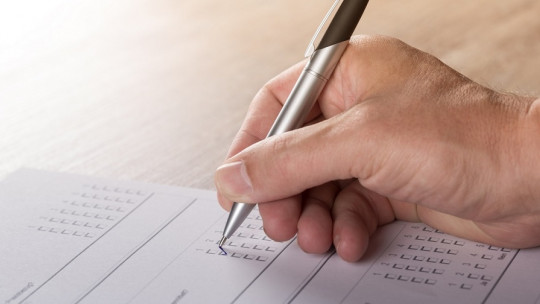
Psychological tests are essential tools used to assess an individual’s mental state, cognitive abilities, personality traits, emotional functioning, and behaviors. These tests provide valuable insights that help psychologists, clinicians, researchers, and educators understand the different aspects of an individual’s psychological makeup. In this article, we will explore the most common types of psychological tests, their functions, and the characteristics that make them useful for understanding human psychology.
What Are Psychological Tests?
Psychological tests are structured assessments that aim to measure specific psychological traits or behaviors. They are developed using rigorous scientific methods and statistical principles to ensure their reliability and validity. These tests can be used to measure a range of psychological attributes, such as intelligence, personality, emotional functioning, aptitude, and mental health status.
It is considered a psychological test any test, method or instrument used for the purpose of evaluating or measuring one or more of one of the different characteristics that are part of the individual’s psyche. Psychological tests are based on the observable behavior and the expression of the subjectivity of the patient in order to infer the characteristics and mental state of the subject, requiring a subsequent analysis in order to extract information with clinical significance.
Psychological tests try, as far as possible, that the information obtained through its implementation is valid and reliable trying to reflect what is intended to be measured (let us not forget that psychological characteristics are constructs that are not directly observable) and that they can be replicated by other professionals (that is, the information that a person obtains about a subject can be obtained by another professional if you make the same measurement).
Likewise, the scores obtained have to be transformed so that they have a meaning, generally being compared either with the average obtained by representative samples of the population, with one’s own previous performance or with a criterion established in advance.
Based on this concept, numerous types of psychological tests have been formulated, created following different criteria and with different objectives.
The Different Types of Psychological Tests
1. Intelligence Tests
Intelligence tests are designed to assess an individual’s intellectual abilities. They measure a variety of cognitive skills, including problem-solving, logical reasoning, memory, and verbal and mathematical abilities. These tests are commonly used in educational settings, clinical settings, and research.
Examples:
- Wechsler Adult Intelligence Scale (WAIS)
- Stanford-Binet Intelligence Scales
- Raven’s Progressive Matrices
Function: Intelligence tests are used to determine an individual’s cognitive abilities and intelligence quotient (IQ). They are often used in educational settings to identify gifted students or those who require special educational interventions.
Characteristics:
- Measures various cognitive abilities.
- Includes multiple subtests for a comprehensive assessment.
- Highly standardized to ensure consistent results across different test-takers.
2. Personality Tests
Personality tests are designed to assess an individual’s typical patterns of thoughts, feelings, and behaviors. These tests aim to measure traits like emotional stability, introversion vs. extraversion, agreeableness, conscientiousness, and openness to new experiences. Personality tests are frequently used in clinical settings, career counseling, and organizational settings.
Examples:
- Minnesota Multiphasic Personality Inventory (MMPI)
- Myers-Briggs Type Indicator (MBTI)
- Big Five Personality Test
Function: These tests are used to evaluate personality traits, which can help psychologists understand a person’s behavior, relationships, and coping mechanisms. Personality tests are commonly used for diagnostic purposes, personal development, and career counseling.
Characteristics:
- Can be self-reported or observer-rated.
- Often involves a series of questions about preferences, behaviors, and reactions to different situations.
- Can be long or short depending on the depth of assessment.
3. Aptitude Tests
Aptitude tests are designed to assess an individual’s potential to perform certain tasks or skills. These tests typically measure abilities in specific areas such as mathematics, language, and mechanical reasoning. Aptitude tests are often used for educational and vocational guidance to identify an individual’s strengths and areas for development.
Examples:
- Differential Aptitude Test (DAT)
- General Aptitude Test Battery (GATB)
- Cognitive Aptitude Test (CAT)
Function: Aptitude tests help assess the likelihood that an individual will succeed in specific tasks, academic subjects, or careers. These tests are useful in educational placements and job recruitment.
Characteristics:
- Measures potential rather than current ability.
- Focuses on problem-solving and learning capacity.
- Typically consists of multiple-choice or timed questions.
4. Neuropsychological Tests
Neuropsychological tests are used to assess cognitive functions related to brain activity. These tests measure various aspects of cognitive functioning, including memory, attention, problem-solving, language skills, and motor functions. Neuropsychological tests are often used in clinical settings to evaluate the impact of brain injuries, neurological disorders, or mental illnesses.
Examples:
- Halstead-Reitan Neuropsychological Battery
- Luria-Nebraska Neuropsychological Battery
- Wisconsin Card Sorting Test (WCST)
Function: Neuropsychological tests are used to evaluate brain functions and diagnose conditions such as brain injuries, dementia, and other neurological disorders. They also help assess the impact of certain medications or treatments on cognitive functioning.
Characteristics:
- Measures specific cognitive functions related to brain regions.
- Used to evaluate the effects of brain injuries, strokes, or degenerative diseases.
- Often involves tasks that test memory, attention, and problem-solving skills.
5. Projective Tests
Projective tests are based on the assumption that individuals will project their unconscious thoughts, feelings, and desires onto ambiguous stimuli. These tests often use pictures, words, or scenarios that allow individuals to express themselves in a non-verbal way. Projective tests are frequently used in clinical psychology for psychoanalysis and therapeutic purposes.
Examples:
- Rorschach Inkblot Test
- Thematic Apperception Test (TAT)
- Sentence Completion Test
Function: Projective tests are used to uncover hidden emotions, desires, and conflicts that may not be accessible through self-report measures. These tests are valuable for understanding unconscious processes and are typically used in psychoanalysis and therapy.
Characteristics:
- Involves ambiguous stimuli that require interpretation.
- Can be subjective, as responses are often open to interpretation.
- Provides insights into an individual’s inner world, including repressed feelings and unresolved conflicts.
6. Behavioral and Observational Tests
Behavioral tests involve observing a person’s behavior in specific situations or environments. These tests are used to measure behaviors like aggression, social interaction, and emotional responses. Behavioral assessments are often used with children and individuals with developmental disorders.
Examples:
- Behavioral Rating Scales
- Direct Observational Testing
- Self-monitoring Tools
Function: These tests are used to assess an individual’s behavioral patterns and responses to external stimuli. Behavioral and observational tests can help diagnose disorders such as ADHD, autism, and anxiety disorders.
Characteristics:
- Involves direct observation or self-reporting of behaviors.
- Useful for assessing real-time reactions and behavior patterns.
- Often used in conjunction with other psychological tests to provide a more complete assessment.
How Psychological Tests Are Used
Psychological tests have a wide range of applications across various fields. Some of the most common uses include:
1. Clinical Psychology
Psychologists use tests to assess and diagnose mental health disorders, understand personality traits, and create treatment plans for patients.
2. Educational Settings
Tests are used to measure cognitive abilities, learning disabilities, and academic aptitude, guiding decisions about educational support and placement.
3. Workplace and Career Counseling
Aptitude and personality tests are commonly used in hiring processes to help employers select candidates whose abilities and personality traits align with job requirements.
4. Research
Psychological tests play a crucial role in psychological research, helping scientists collect data on human behavior, cognition, and emotional functioning.
Pervin’s classification
Taking all of the above aspects into account, various authors throughout history have generated different classifications of the types of psychological tests. One of the most widespread and accepted classifications is Pervin’s which considers the existence of the following categories.
1. Psychometric tests
Psychometric tests are those used in the measurement of specific characteristics of the psyche, such as intelligence or aptitude tests. It is one of the types of psychological tests that considers that individuals will respond honestly, applying unmasked tests, in which the responses are voluntarily controlled by the subject.
They are highly structured and are frequently used both in clinical settings and in areas such as work and education.
2. Objective tests
Highly structured, this type of tests and tests are based on physiological correlates in order to measure a certain element. Due to this, the answers given are not voluntary nor can they be modified. However, the objective of the test is usually clear, so it would be considered unblinded. Different instruments and devices are used to record the individual’s responses, not depending on the evaluator for the recording per se. Typical examples of objective tests could be the polygraph or biofeedback.
Within the objective tests we can find:
3. Subjective tests
These are the most common type of psychological tests when measuring aspects of the subject’s personality and experiences based on self-verbalizations or self-descriptions provided by the subject himself according to a series of items. Voluntary response, the individual may try to falsify the information provided, although in order to detect such attempts different reliability scales are usually applied. They tend to be semi-structured and adapted to the objective or specific element that is sought to be measured.
4. Projective tests
Subjective tests are usually used to analyze the deeper aspects and personality traits of the individual. It is the least structured type of psychological test, not restricting in any sense the response issued by the analysed and all the subject’s responses having a valid meaning that must be analyzed and evaluated.
These answers are subjective, since represent the internal world of the subject in question. The individual in question does not know the meaning or meaning of their answers, being one of the types of masked psychological tests. Each response and aspect represented is important, but it only makes sense and can be given significance in relation to the whole.
The main problem with this type of test is found in the wide freedom of possible responses and the low level of standardization of these, and the same response can be interpreted from different points of view depending on the interpretation method used. He usually does not know the psychological meaning of his answers.
Within subjective tests we can find different typologies. Specifically, they stand out:
- Structural tests In them the patient must make sense and organize visual material. One of the most famous is the Rorschach Test.
- Thematic tests You are asked to narrate a story based on the material presented in sheets (the TAT or Thematic Apperception Test is usually the best known).
- Expressive tests The subject is asked to draw a specific element (one of the best known is the HTC, a test in which the subject is asked to draw a person, a house and a tree)
- Constructive tests The individual is asked to, with the pieces provided, build a specific element (the Imaginary Village Test is a good example of this)
- Associative tests In this type of projective psychological tests, the patient is asked to associate a word (either orally or in writing) with another word or stimulus that is provided. The Word Association test is one of the most used.
- Refractory tests It is based on the analysis of personality based on the products of the subject’s activity, such as his writing.
Psychological tests are powerful tools used to assess a wide variety of psychological traits, behaviors, and cognitive abilities. Whether used for diagnosis, treatment, or career guidance, these tests help provide a better understanding of an individual’s psychological functioning. By utilizing the appropriate test for each specific purpose, professionals can gain valuable insights that lead to more effective interventions and strategies for personal and professional development.
FAQs About Psychological Tests
What is the purpose of psychological testing?
Psychological testing is used to assess various aspects of an individual’s mental health, cognitive abilities, personality traits, and behaviors. It helps psychologists and other professionals understand a person’s strengths, challenges, and overall functioning.
How are psychological tests administered?
Psychological tests can be administered in different formats, including self-report questionnaires, interviews, observational assessments, and structured tasks. Some tests require face-to-face administration, while others may be completed online or in writing.
Are psychological tests accurate?
Psychological tests are designed to be reliable and valid, meaning they should consistently measure what they are intended to measure. However, their accuracy depends on proper administration, scoring, and interpretation by trained professionals.
What are the types of psychological tests used in mental health treatment?
In mental health treatment, intelligence tests, personality assessments, and neuropsychological evaluations are commonly used to help diagnose and understand mental health conditions. These tests assist in creating tailored treatment plans.
Can psychological tests be used for career counseling?
Yes, psychological tests such as aptitude tests and personality assessments are frequently used in career counseling to guide individuals in making informed decisions about their professional paths.
Are projective tests reliable?
Projective tests, such as the Rorschach Inkblot Test, are controversial and often criticized for their subjectivity and lack of consistency. While they can provide insights into unconscious thoughts, their reliability and validity have been questioned by some experts.
How long do psychological tests take to complete?
The length of a psychological test varies depending on the type and complexity. Some tests, like personality inventories, can take 30 minutes to an hour, while others, like intelligence tests, may take several hours to complete.
Use this citation format to reference the article clearly and help readers find the original source.
PsychologyFor. (2025). Types of Psychological Tests: Their Functions and Characteristics. PsychologyFor. https://psychologyfor.com/types-of-psychological-tests-their-functions-and-characteristics/