


See more of our articles in your search results.
When we end a relationship we need time to get used to the idea that That person for whom we had certain feelings will no longer be part of our life and, therefore, readjust our routine and future plans without their presence.
For all this, in this process in which we assume and face our new reality, it is normal to experience unpleasant and intense emotions that, sometimes, we feel that we cannot control. Grieving the loss of a partner is quite similar to other types of grief and overcoming this or the strategies that we can use to do so are also similar.
The stages of grief
To begin, we will see that the phases of grief for a romantic breakup are the same phases as those of any other grief. Below, we will briefly describe these phases that many of you may already know or have experienced. We must take into account that They do not have to occur in a linear way, each person will experience them in an order and we can go through each of them on more than one occasion. The phases are:
1.Shock
It is the initial contact with this new situation In this phase the person may not have reacted yet, it is like a surprise phase in which we have not yet thought about what is really happening.
2. Denial
“This can’t be happening to me” or “what I’m experiencing can’t be true” are typical thoughts that flood us when we are in this phase. At this point in the process we refuse to accept the reality that is occurring, we do not assume that our relationship has ended and we remain waiting for the relationship to mend itself again from one moment to the next and to continue as a couple. If this situation continues and the person continues to avoid what has happened without going through the rest of the stages of grief you will end up having complications doing so in the future and it will cause even more suffering in the long term.
How many of these have you been "meaning to read" for months?


3. Anger
In this phase the person has begun to assimilate that the relationship has ended and anger towards their ex-partner begins to come over them. We feel that we have been treated unfairly or that we have been betrayed. Sometimes we think that he has not appreciated what we have done for the couple, that he was immature or that he did not deserve us as a couple. This anger hides behind a deep suffering for what we are experiencing and it is possible that at this stage we also feel anxiety.
4. Negotiation
In this stage the person tries to negotiate possible changes to get the partner back, forcing agreements or trying to solve problems that we have seen that were part of our old relationship It is possible that romantic gestures appear that perhaps the ex-partner had demanded some time ago, that we look for excuses to have to see each other or force “casual” encounters or, sometimes, even blackmail or manipulation so that the couple wants to return to the relationship, for example, “I can’t live without you” or “if you don’t come back I won’t be able to get out of this situation.”
5. Depression/Sadness
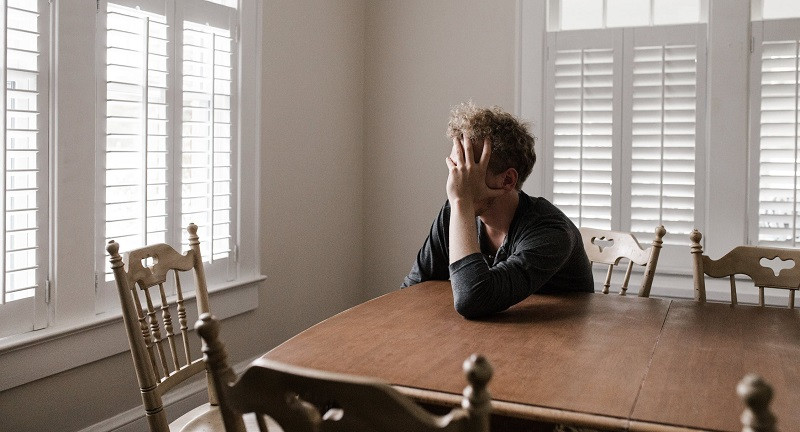
At this stage we begin to assimilate that the breakup is something real and that it has no solution, so it is common for us to experience deep sadness over the loss. We begin to have thoughts and behaviors that can be harmful to ourselves. We tend to think that we will not find anyone to share our life with, that we will not experience love this intense again or that we will never connect with anyone like that person again.
These thoughts are completely irrational and will feed on fears and beliefs of each of us so each person will experience their own. In terms of behavior, it is common that at this stage we are a little destructive with ourselves and generate habits or attitudes that if we maintained them in the long term would be harmful.
6. Acceptance
This is the final stage of grief, in which the person has already accepted that the ex-partner will not return and that they are capable of living a full and happy life on their own. Once we are in this phase we can say that we have overcome the duel And when the time comes we can begin a new healthy relationship with new learning.
Tips for the end of a romantic relationship
To help you with this grief, I leave you here some tips that will make it easier for the grief not to become entrenched and so that you can learn about the entire process you are experiencing:
1. Get to know yourself
Sometimes after years of relationship we have formed an identity as a couple and once the breakup occurs I feel lost and I don’t know who I am. Take advantage of this moment to experiment and bring to light your own identity, what hobbies you would like to have, new tastes in music, theater, cinema, etc. and new approach to my life, how I would like to live it.
2. Work on your self-esteem
Self-esteem will be the basis for a good grieving process; accept me as I am with my strong points and with the less strong ones and loving myself for all of it.
3. Time alone
Take advantage of this new stage to enjoy doing things with yourself, learn to listen to yourself, to give yourself what you You need to dedicate yourself some moments of peace and care that you can add to your routine
4. Practice compassion
With you, understanding that you are giving your best in every situation and learning from the occasions that have not turned out as you expected without punishing yourself and judging yourself. But also with the ex-partner, since understanding that he is just another person trying to do the best possible with the tools he has will facilitate the passage through grief (mainly in the anger/anger phase) and will allow us once we have passed Grief remembering the relationship with its beautiful moments and its learning.
The time it takes for each person to grieve varies can be influenced by various factors, including the possibility that there was some type of dependency in the relationship that makes separation difficult, ideas and beliefs about relationships and about myself, and even my own fears.
For all this, it is important that we follow our own pace, listen to ourselves and take into account our needs and if we feel that we remain stuck, we seek help from a professional to prevent grief from becoming pathological and so that we can move forward. in our process.
Use this citation format to reference the article clearly and help readers find the original source.
PsychologyFor. (2024). What Happens When a Love Relationship Comes to an End?. PsychologyFor. https://psychologyfor.com/what-happens-when-a-love-relationship-comes-to-an-end/