Constructivism in psychology is a theoretical framework asserting that people actively construct their own understanding of the world rather than passively absorbing information from their environment. Instead of viewing the mind as a blank slate waiting to be written upon, constructivism positions each person as an architect of their own reality—integrating new experiences with existing knowledge, beliefs, and emotions to create personally meaningful interpretations of life. This perspective has revolutionized how psychologists understand learning, development, and therapeutic change, shifting the focus from external instruction to internal meaning-making processes.
At its heart, constructivism challenges a long-held assumption in psychology: that knowledge is simply discovered or transmitted from one person to another. Think about the last time someone gave you advice. Did you accept it wholesale, or did you filter it through your own experiences, values, and circumstances? That filtering process—that’s constructivism in action. The theory proposes that reality itself isn’t a fixed, objective entity waiting to be perceived accurately, but rather a dynamic interpretation that each individual continuously builds and rebuilds. This radical idea has profound implications not just for how we understand cognition and learning, but for how therapists help clients navigate psychological distress, how educators design learning experiences, and how we think about personal growth and change.
What makes constructivism particularly compelling in contemporary psychology is its emphasis on agency and participation. Rather than positioning people as passive recipients of environmental influences or biological programming, constructivism recognizes the active, creative role each person plays in shaping their psychological reality. This perspective doesn’t deny external reality or biological factors—it simply highlights that our experience of that reality is always filtered through our unique meaning-making systems. A setback that devastates one person might invigorate another, not because the event itself differs, but because each person constructs its meaning differently based on their personal history, beliefs, and interpretive frameworks.
The influence of constructivist thinking extends across multiple domains of psychology, from developmental theories explaining how children progressively build more sophisticated understandings of their world, to therapeutic approaches that help people reconstruct problematic narratives about themselves and their lives. In education, constructivism has transformed teaching practices to emphasize active learning, problem-solving, and the integration of new concepts with prior knowledge. Understanding constructivism isn’t just an academic exercise—it’s a window into how human minds actually work, how change happens, and how people can become more intentional participants in their own psychological development.
Constructivism rests on several foundational principles that distinguish it from other psychological approaches. The first and most central principle is active knowledge construction—the idea that learning and understanding are not passive processes of receiving information, but active processes of building mental models. When you encounter new information, your mind doesn’t simply record it like a camera. Instead, it asks questions: How does this fit with what I already know? What does this mean for me? How can I reconcile this with my existing beliefs?
Meaning-making lies at the core of constructivist thought. Every experience, every piece of information, every interaction gets interpreted through the lens of your existing worldview. This isn’t a bug in human cognition; it’s a feature. It allows you to organize the overwhelming complexity of sensory input into coherent patterns that make sense within your personal framework. Two people can witness the same event and construct entirely different meanings from it based on their prior experiences, cultural backgrounds, and current concerns.
Another essential principle involves self-referential processing—the idea that psychological organization fundamentally revolves around the self. You are the reference point through which all experience is filtered and organized. This doesn’t mean people are inherently selfish or egocentric; rather, it recognizes that consciousness itself is structured around a sense of selfhood. When you learn something new, you don’t just acquire abstract knowledge; you integrate it into your sense of who you are, what you value, and how you relate to the world.
Constructivism also emphasizes process over static structure. Your understanding isn’t fixed—it’s continuously evolving. Think of it like a river. The river has continuity and stability; you can recognize it as the same river over time. Yet the water is always flowing, always changing. Psychological stability exists within ongoing processes of construction and reconstruction. The self you were yesterday informs but doesn’t rigidly determine the self you are today. This dynamic quality makes change possible while maintaining enough continuity for coherent identity.
Historical Foundations and Key Figures
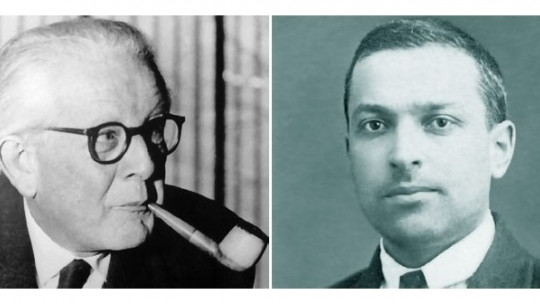
Jean Piaget stands as perhaps the most influential figure in constructivist psychology. The Swiss developmental psychologist spent decades observing how children construct increasingly sophisticated understandings of their world. His theory of cognitive development illustrated that children aren’t simply miniature adults with less information—they actively construct qualitatively different ways of understanding reality at different developmental stages. A young child who believes the moon follows them when they walk isn’t being irrational; they’re constructing meaning based on their current cognitive structures.
Piaget introduced crucial concepts like schemas (organized patterns of thought), assimilation (integrating new information into existing schemas), and accommodation (modifying schemas when new information doesn’t fit). These ideas revolutionized developmental psychology by showing that learning involves an active interchange between individuals and their environment, not passive absorption. Children don’t just mimic what they see; they interpret, experiment, and construct their own understanding through hands-on interaction with the world.
George Kelly brought constructivism into clinical psychology with his Personal Construct Theory in the 1950s. Kelly proposed that people are essentially scientists, constantly forming and testing hypotheses about how the world works. Each person develops a unique system of personal constructs—bipolar dimensions of meaning like “safe versus dangerous” or “trustworthy versus unreliable”—through which they interpret experiences. When these construct systems become too rigid or dysfunctional, psychological distress results. Kelly developed fixed-role therapy, an innovative approach where clients temporarily adopt fictional personas to experiment with new ways of constructing their reality.
Lev Vygotsky contributed the social dimension to constructivist thinking. While Piaget emphasized individual construction of knowledge, Vygotsky highlighted how learning happens through social interaction and cultural tools like language. His concept of the “zone of proximal development” illustrated how people construct new understanding most effectively when working slightly beyond their current capacity with support from more knowledgeable others. This social constructivist perspective recognizes that while meaning-making is personal, it occurs within rich social and cultural contexts that shape what meanings are possible.
Types of Constructivism in Psychology
Constructivism isn’t a monolithic theory but rather a family of related approaches that share core assumptions while differing in emphasis. Understanding these distinctions helps clarify how constructivist thinking applies across different contexts.
Cognitive constructivism, most closely associated with Piaget, focuses on how individuals construct knowledge through interaction with their environment. This approach emphasizes internal mental processes—how people organize information, form concepts, and develop increasingly complex cognitive structures over time. The individual learner takes center stage, actively making sense of experiences through personal exploration and discovery. When a child figures out through experimentation that objects don’t cease to exist when hidden (object permanence), that’s cognitive constructivism at work.
Social constructivism, influenced heavily by Vygotsky, emphasizes the collaborative nature of knowledge construction. This perspective argues that learning is fundamentally a social activity embedded in cultural contexts. Language, symbols, and social interactions don’t just facilitate learning—they shape what and how we can know. Meaning emerges through dialogue, negotiation, and shared activity. A student who develops understanding through class discussion, peer collaboration, and teacher guidance exemplifies social constructivist learning. This approach recognizes that the meanings available to us are constrained and enabled by our cultural and linguistic communities.
Radical constructivism, associated with Ernst von Glasersfeld, takes the most extreme epistemological position. It argues that we cannot know objective reality at all—we can only know our constructions of reality. Knowledge doesn’t correspond to an external world; it simply needs to be viable (workable) within our experience. This perspective has been controversial because it seems to reject objective truth entirely. However, radical constructivists aren’t denying that reality exists; they’re arguing that our access to reality is always mediated through our constructive processes, making claims about objective knowledge philosophically problematic.
Type
Key Focus
Cognitive Constructivism
Individual mental processes and how people personally construct understanding through interaction with their environment
Social Constructivism
Collaborative learning and how knowledge emerges through social interaction, language, and cultural tools
Radical Constructivism
Epistemological position that knowledge is entirely constructed without access to objective external reality
Constructivism in Therapeutic Practice
Constructivist principles have profoundly influenced psychotherapy, giving rise to approaches that position clients as active agents in constructing new meanings and possibilities. Constructivist therapy operates from the assumption that psychological problems often stem from problematic constructions of reality—rigid, limiting, or painful ways of making sense of oneself and one’s experiences—rather than from deficits or diseases to be fixed.
Narrative therapy, developed by Michael White and David Epston, exemplifies constructivist therapeutic practice. This approach views people’s identities and problems as narratives they’ve constructed about themselves. When someone says “I’m a failure” or “I’m unlovable,” they’re not stating objective facts—they’re telling a story. Narrative therapy helps clients externalize problems (separating the problem from the person), identify exceptions to problem-saturated stories, and construct alternative narratives that open new possibilities. A person isn’t their depression; rather, they’re someone who’s been dealing with depression, and that subtle shift in construction can be transformative.
George Kelly’s fixed-role therapy took a more experimental approach. Kelly would work with clients to create a fictional character embodying different ways of construing situations—different personal constructs than the client habitually used. The client would then “perform” this role for a fixed period (typically two weeks), acting as if they were this person. The goal wasn’t to become the fictional character but to loosen rigid construct systems and experience how different constructions lead to different outcomes. If you constantly construe social situations as threatening, what happens when you temporarily adopt constructs that frame them as opportunities for connection?
Cognitive-behavioral therapy (CBT), while having distinct theoretical roots, shares constructivist elements. CBT recognizes that emotional distress often stems from how people construct meaning from events rather than from events themselves. The same rejection might lead one person to think “They’re not right for me” and another to think “I’m fundamentally unlovable”—same event, different constructions, vastly different emotional consequences. By identifying and restructuring maladaptive thought patterns, CBT helps clients construct more balanced, realistic, and helpful interpretations of their experiences.
What unites these diverse therapeutic approaches is their emphasis on clients as active participants in their own change process. The therapist isn’t an expert who diagnoses and fixes; rather, they’re a collaborator who helps clients examine their current constructions, explore alternatives, and develop more viable, flexible, and life-enhancing ways of making meaning. This perspective fundamentally respects client agency and recognizes that lasting change comes from within, from new ways of constructing reality that the client genuinely makes their own.
How Constructivism Shapes Learning and Development
In educational psychology, constructivism has transformed how we understand effective learning. Traditional instructional models treated students as empty vessels to be filled with knowledge. Constructivism reveals why that approach so often fails: you cannot simply transfer understanding from one mind to another like copying a file between computers. Each learner must actively construct their own understanding by integrating new information with their existing knowledge structures.
This insight has profound implications for teaching. Effective education isn’t about delivering information clearly (though clarity helps); it’s about creating conditions that support active knowledge construction. This means engaging students’ prior knowledge, presenting problems that create cognitive dissonance (challenging existing schemas), providing opportunities for hands-on exploration, encouraging reflection, and facilitating discussion where learners articulate and refine their emerging understandings.
Scaffolding represents a key constructivist educational strategy. Like physical scaffolding that supports construction work, instructional scaffolding provides temporary support structures that help learners construct understanding they couldn’t achieve independently. As competence grows, scaffolding gradually withdraws. A teacher might initially provide detailed guidance, then offer hints, then simply ask probing questions, finally stepping back entirely as the student constructs genuine mastery. This approach respects that learning is ultimately self-constructed while recognizing that appropriate support enhances the construction process.
Piaget’s developmental stages illustrate constructivism in action across childhood. Infants construct understanding through sensory and motor exploration—everything goes in the mouth because that’s how they’re building schemas for objects. Toddlers construct symbolic thought, realizing that words and mental images can represent things. School-age children construct logical operations, developing the ability to mentally manipulate information. Adolescents construct abstract reasoning, becoming capable of hypothetical thinking and metacognition. Each stage involves qualitative shifts in how reality is constructed, not just accumulation of more facts.
Importantly, constructivism doesn’t mean “anything goes” or that all constructions are equally valid. Some constructions are more viable—more consistent with experience, more useful for navigating the world, more conducive to wellbeing—than others. The goal isn’t to construct any random understanding but to develop increasingly sophisticated, flexible, and adaptive ways of making sense of experience. A child who constructs the understanding that all furry four-legged animals are “doggies” has achieved something important, but they’ll need to accommodate when they encounter cats and horses, constructing more differentiated categories.
Practical Applications in Daily Life
Understanding constructivism isn’t just theoretically interesting—it offers practical insights for navigating everyday challenges and enhancing personal growth. Recognizing that you actively construct your reality empowers you to examine and potentially reconstruct problematic patterns.
Start by noticing your interpretations. When something happens, pause and ask yourself: What meaning am I making of this? What story am I telling myself about what this means? That coworker who didn’t say hello—are you constructing that as a personal slight, evidence they dislike you, or simply that they were preoccupied? None of these interpretations is objectively “the truth”—they’re constructions. Becoming aware of your meaning-making processes is the first step toward more intentional construction.
Question rigid constructs that limit you. If you consistently construct yourself as “not a math person” or “bad at relationships” or “too anxious to try new things,” examine those constructions. Where did they come from? What evidence supports and contradicts them? Are they serving you, or are they rigid schemas that need accommodation? You don’t have to immediately adopt opposite constructions, but loosening overly rigid self-concepts creates space for growth and change.
Here are some actionable strategies for applying constructivist principles:
– Reframe challenges as learning opportunities rather than threats or evidence of inadequacy—consciously construct setbacks as information for growth – Seek out experiences that challenge your existing schemas, creating the cognitive dissonance that drives accommodation and development – Practice perspective-taking by deliberately constructing situations from others’ viewpoints, recognizing that alternative constructions are possible and valid – Use journaling to explore your constructions, writing about how you’re interpreting experiences and what alternative meanings might be available – Engage in dialogue with others who construct reality differently, using social interaction to expand your meaning-making possibilities – Notice patterns in your emotional responses—they often reveal underlying constructions about yourself, others, or situations
Apply constructivist principles to learning new skills. Rather than passively consuming information, actively engage with material by relating it to what you already know, generating examples, teaching concepts to others, and applying knowledge to practical problems. Construction requires active participation, not passive reception. When you struggle to understand something, that’s often because you’re trying to assimilate it into existing schemas that don’t quite fit—you need to accommodate, building new mental structures.
In relationships, recognize that conflicts often arise from different constructions of the same situation. You’re not arguing about objective reality; you’re navigating different interpretive frameworks. Instead of insisting your construction is correct, practice curiosity about how the other person is making meaning. What are they seeing that you’re not? How might their personal history and constructs lead them to interpret things differently? This doesn’t mean abandoning your perspective, but recognizing that multiple constructions can coexist.
Perhaps most importantly, constructivism reminds us that change is always possible because constructions can always be reconstructed. You’re not a fixed entity determined by past experiences or present circumstances. You’re an ongoing process of construction and reconstruction, continuously making and remaking meaning. That’s both liberating and empowering—your current constructions of yourself and your life aren’t final verdicts but working hypotheses that can evolve as you gather new experiences and experiment with new ways of making sense of them.
FAQs about What is Constructivism in Psychology
What is the main idea of constructivism in psychology?
The main idea of constructivism is that people actively construct their own understanding and knowledge of the world through experiences rather than passively receiving information. Instead of viewing the mind as a blank slate that simply records external reality, constructivism positions each person as an active architect of meaning who interprets new experiences through the lens of existing knowledge, beliefs, and personal frameworks. This perspective emphasizes that learning and psychological development involve ongoing processes of integrating new information with prior understanding, creating personally meaningful interpretations that guide behavior and emotion.
How does constructivism differ from other learning theories?
Constructivism differs from behaviorist and traditional instructionist approaches by emphasizing active meaning-making rather than passive absorption or stimulus-response conditioning. While behaviorism focuses on external behaviors shaped by environmental consequences, constructivism focuses on internal mental processes of interpretation and knowledge construction. Unlike transmission models that view learning as transferring information from teacher to student, constructivism recognizes that understanding cannot be directly transmitted—each learner must personally construct meaning by connecting new information with their existing cognitive structures. This positions learners as active participants rather than passive recipients in the learning process.
Who are the key theorists associated with constructivism?
Jean Piaget is perhaps the most influential constructivist theorist, known for his developmental theory showing how children actively construct increasingly sophisticated understandings through stages of cognitive development. George Kelly brought constructivism to clinical psychology with Personal Construct Theory and developed fixed-role therapy. Lev Vygotsky contributed social constructivism, emphasizing how learning occurs through social interaction and cultural tools like language. Ernst von Glasersfeld developed radical constructivism, taking the epistemological position that knowledge is entirely constructed without direct access to objective reality. These theorists share core assumptions about active knowledge construction while differing in their specific emphases.
What are the different types of constructivism?
The three main types are cognitive constructivism, social constructivism, and radical constructivism. Cognitive constructivism, associated with Piaget, focuses on how individuals personally construct understanding through mental processes and environmental interaction. Social constructivism, influenced by Vygotsky, emphasizes collaborative knowledge construction through social interaction, dialogue, and cultural tools, arguing that meaning emerges within social and linguistic communities. Radical constructivism takes the most extreme epistemological stance, arguing that we cannot access objective reality at all—only our constructions of it—and that knowledge simply needs to be viable within our experience rather than corresponding to external truth.
How is constructivism applied in therapy?
Constructivist therapy approaches view psychological problems as stemming from problematic or limiting constructions of reality rather than from diseases or deficits to be fixed. Narrative therapy helps clients identify and reconstruct the stories they tell about themselves and their lives, externalizing problems and developing alternative narratives. Fixed-role therapy has clients temporarily adopt fictional personas to experiment with different ways of constructing experience, loosening rigid construct systems. Cognitive-behavioral therapy incorporates constructivist elements by helping clients identify and restructure maladaptive thought patterns that create emotional distress. All these approaches position clients as active participants in constructing more viable, flexible, and life-enhancing ways of making meaning.
What does it mean to “construct knowledge”?
To construct knowledge means to actively build understanding by integrating new information with existing mental frameworks rather than passively recording information like a camera. When you encounter new experiences or ideas, your mind doesn’t simply store them—it interprets them through the lens of what you already know, believe, and value. You ask how this fits with prior knowledge, what it means for you personally, and how to reconcile it with existing beliefs. This active process involves forming connections, identifying patterns, testing hypotheses, and sometimes restructuring your understanding when new information doesn’t fit existing schemas. Construction is ongoing and dynamic, continuously building and rebuilding your understanding of yourself and the world.
Can constructivism be used in education?
Yes, constructivism has profoundly influenced educational practices by shifting focus from teacher-centered instruction to student-centered learning. Constructivist education emphasizes creating conditions that support active knowledge construction—engaging prior knowledge, presenting meaningful problems, providing hands-on exploration opportunities, encouraging reflection and discussion, and using scaffolding to support learners as they build understanding. Rather than viewing teaching as transmitting information to empty vessels, constructivist approaches recognize that each student must personally construct understanding by connecting new concepts with their existing knowledge. This leads to teaching strategies like project-based learning, collaborative work, inquiry-based instruction, and authentic problem-solving that position students as active participants in their own learning.
Is constructivism the same as constructionism?
No, constructivism and constructionism are related but distinct concepts. Constructivism is a psychological and learning theory about how individuals construct knowledge internally through mental processes and experience. Constructionism, developed by Seymour Papert, is an educational approach emphasizing that learning happens most effectively when people are actively engaged in constructing tangible external artifacts—building things, creating projects, or making products that can be shared with others. While constructivism focuses on internal cognitive construction, constructionism adds the element of external construction, arguing that making things in the world enhances the internal knowledge construction process. Constructionism builds on constructivist foundations while adding emphasis on learning through making.
What are the limitations or criticisms of constructivism?
Critics argue that radical constructivism’s rejection of objective knowledge is philosophically problematic and could lead to relativism where all interpretations are considered equally valid. Some educators worry that constructivist approaches can be inefficient, time-consuming, or may leave learners constructing inaccurate understandings without sufficient guidance. There are concerns that emphasizing individual construction may underestimate the importance of direct instruction for foundational knowledge. In therapy, some question whether focusing on meaning construction adequately addresses biological factors in mental health conditions. Additionally, implementing constructivist approaches requires significant skill and resources, making them challenging in some educational or clinical contexts. Despite these criticisms, constructivism remains influential by highlighting the active role people play in making meaning.
How does constructivism view the role of the therapist or teacher?
In constructivist frameworks, therapists and teachers are not authoritative experts who transmit truth or fix problems but rather facilitators, collaborators, and guides who support others’ meaning-making processes. Teachers create learning environments that encourage active construction—posing problems, providing resources, offering scaffolding, and facilitating reflection and discussion—rather than simply delivering information. They guide rather than direct, asking questions that prompt deeper thinking instead of providing all answers. Similarly, constructivist therapists collaborate with clients to examine current constructions, explore alternatives, and develop new meanings, respecting client agency and recognizing that lasting change comes from within. This facilitative role requires deep understanding of how people construct meaning and skill in supporting that process without imposing predetermined outcomes.
By citing this article, you acknowledge the original source and allow readers to access the full content.
This article has been reviewed by our editorial team at PsychologyFor to ensure accuracy, clarity, and adherence to evidence-based research. The content is for educational purposes only and is not a substitute for professional mental health advice.