


See more of our articles in your search results.
You’re sitting in a room full of people laughing at the same joke, nodding along to the same references, moving through the conversation like it’s second nature to everyone but you. Feeling different from others doesn’t always announce itself loudly. Sometimes it’s just a quiet half-second delay before you laugh, a sense that everyone else got a manual you never received. You smile anyway. Inside, though, there’s this persistent hum: something about how you think, feel, or exist doesn’t quite match the room.
This kind of difference is exhausting to carry precisely because humans are wired to crave belonging, not just want it casually. When that fundamental need goes unmet, it doesn’t just feel uncomfortable; it can feel like evidence that something is fundamentally wrong with you, rather than simply different. You might replay conversations afterward, scanning for the exact moment you gave yourself away. You might avoid group settings altogether, or perform a version of yourself specifically designed to blend in rather than stand out. None of this means you’re broken. It usually means your nervous system has learned that difference equals risk.
So what’s actually driving this persistent sense of not fitting in, and is it something to fix or something to understand?
This guide walks through five genuine reasons behind feeling different from others, and offers grounded, practical ways to work with that difference rather than constantly fighting it.

How many of these have you been "meaning to read" for months?
- 1
 THE LOST SKILLS ACADEMYThe Lost Skills of IndependenceBe Ready for Anything Life Throws at You - Hardcover-SpiralListen Free On Audible
 - 2
 A Navy SEALs Bug-In GuideA Navy SEAL's Bug-In GuideHow to Turn Your House into the Safest Place on EarthListen Free On Audible
 - 3
 Clarkson PotterHomemaking with BabsTips and Tricks for Making a House a HomeListen Free On Audible
What Does It Actually Mean to Feel Different from Others?
Feeling different describes a persistent sense that your inner experience, values, or way of processing the world doesn’t match the people around you, even when you can’t always name exactly why. It’s less about any single trait and more about a chronic, low-level sense of social mismatch.
This feeling can show up as a subjective experience even when nothing observable separates you from your peers. You might look entirely typical from the outside while feeling like an outsider on the inside, or you might have visible differences — in background, neurotype, or life circumstance — that others notice too. Psychologist Roy Baumeister, known for his research on the fundamental human need to belong, argued that humans experience social exclusion, or even the perceived threat of it, as something close to physical pain. That’s not an exaggeration. It’s measurable in how the brain responds.
Importantly, feeling different isn’t automatically a symptom of a disorder. Sometimes it reflects genuine personality variation. Sometimes it points toward something worth examining more closely, like unresolved social anxiety or an unaddressed neurodivergent trait. Context determines which applies, and that context is exactly what the rest of this guide unpacks.
| Neutral Difference | Distressing Difference |
| Accepted Individuality: Feeling unique without significant distress or shame attached. | Chronic Alienation: Feeling persistently excluded, ashamed, or fundamentally flawed. |
Why Does Feeling Different Trigger Such Deep Discomfort?
The discomfort runs deeper than simple social awkwardness because belonging sits near the base of human motivational needs. Psychologist Abraham Maslow placed love and belonging directly above basic safety in his hierarchy of needs, suggesting that a sense of social connection isn’t a luxury but a prerequisite for higher functioning like confidence and self-actualization.
When that need goes unmet, the mind doesn’t just register mild disappointment. It often escalates into shame, a distinct and more corrosive emotion than simple sadness. Shame researcher Brené Brown has drawn a sharp line between guilt, which says “I did something bad,” and shame, which says “I am something bad” — and feeling chronically different frequently gets processed through that second, more damaging lens.
There’s a social comparison dimension too. Psychologist Leon Festinger’s social comparison theory proposed that people constantly, often unconsciously, evaluate themselves against others to gauge their own standing and normalcy. When every comparison seems to confirm that you’re the outlier, that repeated confirmation compounds over time into a durable, painful belief. It rarely feels like a pattern from the inside, though. It just feels like the truth.

Reason 1: You’re a Highly Sensitive or Deeply Introverted Person
Some people process sensory and emotional information more intensely than average, and that alone can generate a persistent sense of social mismatch in a world built for louder, faster interaction. This isn’t a flaw. It’s a documented temperamental trait.
Psychologist Elaine Aron, who pioneered research on the highly sensitive person trait, found that roughly fifteen to twenty percent of people show heightened responsiveness to stimuli, emotional nuance, and subtle environmental shifts that others simply don’t register. If you’re one of them, crowded rooms, loud environments, or rapid-fire small talk can feel genuinely overwhelming in ways that confuse people who don’t share the trait. You leave gatherings depleted while everyone else seems energized. That gap alone can feel like proof you’re wired wrong.
Introversion compounds this further, though it’s a related but distinct trait. Introverts recharge through solitude and often prefer deep one-on-one conversation over group dynamics, which can look like aloofness or disinterest to extroverted peers who process the world differently. Neither trait requires fixing. They require environments and relationships that actually accommodate how you’re built, rather than constantly demanding you perform extroversion you don’t naturally have.
- High sensitivity produces genuine sensory overwhelm in environments that other people find perfectly manageable or even enjoyable.
- Introverted energy patterns create a mismatch with extrovert-oriented social norms, generating unwarranted social self-doubt.
- Neither trait is inherently a weakness, though unsupportive environments can make them feel that way through repeated social friction.
Reason 2: Neurodivergence Shapes How You Process the World
Neurodivergent brains, including autism, ADHD, and other cognitive variations, often process social cues, sensory input, and communication norms in ways that diverge meaningfully from neurotypical expectations. That divergence frequently produces a lifelong sense of not quite fitting the mold.
Many neurodivergent adults describe years of masking, consciously suppressing natural behaviors and mimicking neurotypical social scripts just to avoid standing out. It’s exhausting work, performed largely invisibly, and it often delays diagnosis for decades because the masking hides the very traits that would otherwise prompt evaluation. Missed social cues, sensory sensitivities, or a communication style that reads as blunt or overly literal can all reinforce the sense of being fundamentally different from peers, even among people who genuinely like you.
Late-diagnosed neurodivergent adults frequently describe a strange mix of relief and grief upon receiving a diagnosis: relief at finally having language for a lifelong experience, grief for the years spent believing something was simply wrong with their character. Understanding your neurotype, whether through formal diagnosis or informed self-recognition, often transforms decades of self-blame into something considerably more workable.
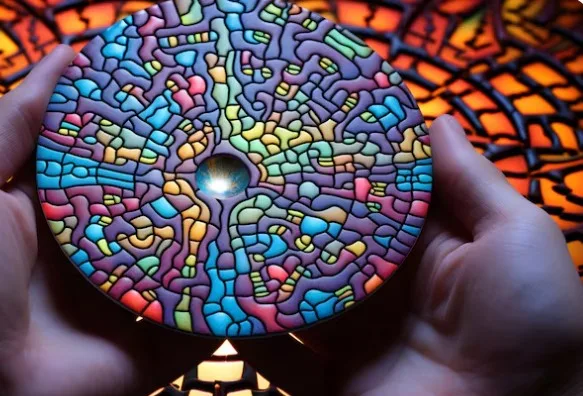
Reason 3: Early Family or Cultural Experiences Set You Apart
Feeling different often has roots that predate any personal choice at all, shaped by family dynamics or cultural context during childhood. If your household, background, or community differed noticeably from your peer group, that gap gets internalized early and tends to stick.
Growing up in a family with different values, a different socioeconomic reality, or a different cultural or religious background than the dominant local culture creates a documented pattern researchers call bicultural stress, the ongoing effort of navigating two sets of expectations that don’t always align. Children raised this way often become skilled observers of social codes precisely because they had to learn multiple ones simultaneously. That skill is valuable. It also comes with a persistent undercurrent of not fully belonging to either world.
Developmental psychologist Erik Erikson’s stage theory identified identity formation as a central adolescent task, one that becomes considerably more complicated when a young person is simultaneously reconciling family identity with the identity demanded by a dominant peer culture. Family scapegoating or being cast in a fixed role — the difficult one, the sensitive one, the weird one — during childhood can also calcify a sense of otherness that follows someone well into adulthood, long after the original family dynamic has changed.
Reason 4: Social Comparison Distorts Your Sense of Belonging
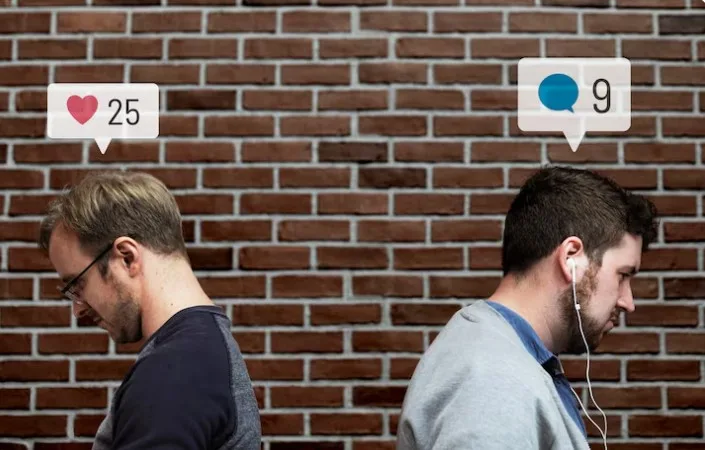
Modern life runs on constant comparison, and that comparison rarely happens on equal footing. Social media in particular presents curated highlight reels as though they were representative baselines, making ordinary human variation look like personal failure.
Scrolling through feeds full of seemingly effortless social lives, achievements, and relationships can quietly convince you that everyone else has figured something out that you haven’t, fueling a distorted comparison trap. This isn’t really accurate comparison; it’s comparing your unfiltered internal experience against someone else’s carefully edited external presentation. The math was never fair to begin with. Yet the emotional impact lands just as hard as if it were.
This comparison trap compounds particularly hard for people already prone to self-doubt, since every scroll session provides fresh, seemingly objective evidence supporting the belief that they’re the outlier. Breaking this cycle requires recognizing the structural unfairness of the comparison itself, not simply trying harder to measure up to a standard that was never real in the first place.
- Curated online content creates distorted comparison baselines that make normal struggles look like personal deficiency.
- Constant upward comparison reinforces the belief that everyone else has an easier, more natural social experience than you do.
- Recognizing comparison as structurally unfair, rather than personally revealing, helps dismantle its emotional grip over time.
Reason 5: Unresolved Trauma or Identity Struggles Play a Role
Sometimes feeling different traces back to something more specific and painful: an experience of rejection, bullying, or relational trauma that taught you, explicitly or implicitly, that you don’t belong. That lesson, once learned, tends to generalize far beyond the original situation.
Childhood bullying or social rejection can produce lasting hypervigilance around social acceptance, causing someone to scan every new interaction for signs of the same rejection resurfacing. Humanistic psychologist Carl Rogers emphasized that psychological health depends on congruence between your authentic self and the self you present publicly; when trauma forces someone to hide or distort core parts of their identity to stay safe, that incongruence produces exactly the chronic sense of alienation described throughout this guide.
Identity struggles unrelated to trauma can produce similar effects too. Questioning your sexuality, gender identity, career path, or core values while surrounded by people who seem settled in theirs creates an acute, situational version of feeling different, one that often resolves as identity clarity develops over time. Not all difference is permanent. Some of it is simply a phase of active internal work that hasn’t finished yet.
How Different Populations Experience This Feeling Uniquely
Feeling different isn’t a uniform experience; it shows up distinctly depending on someone’s specific life circumstances, identity, and developmental stage. Recognizing these variations helps normalize what might otherwise feel like an isolated, unprecedented struggle.
Adolescents often experience an especially acute version of this feeling, tied closely to identity formation, since the teenage years happen almost entirely in a social context saturated with peer comparison. A teenager who differs from dominant social norms, whether in interests, appearance, sexuality, or family background, frequently experiences that difference as a crisis rather than a manageable variation, partly because adolescent brains are still developing the capacity for long-term perspective. First-generation immigrants and children of immigrants often report a related but distinct experience, describing a persistent sense of existing between two cultures without fully belonging to either one.
Adults navigating major life transitions, such as divorce, career changes, or becoming a parent later or earlier than their peer group, frequently rediscover this feeling even after years of relative social comfort. The underlying mechanism stays consistent across all these groups, even though the specific triggers vary considerably: a mismatch between internal experience and the visible norms of one’s immediate social environment.
- Adolescents often experience feeling different as particularly intense due to ongoing identity formation during a highly comparison-driven developmental stage.
- People navigating cultural or bicultural identity frequently describe a persistent sense of dual belonging rather than full membership in either group.
- Major life transitions can reactivate old feelings of difference even in adults who previously felt securely integrated into their social world.
Is Feeling Different Always Something Negative?
No, and this distinction matters enormously for how you relate to your own lived experience going forward. Difference itself is neutral; it’s the meaning attached to it, and the surrounding social response, that determines whether it feels like a burden or simply a fact.
Many people who felt profoundly different as children or young adults later recognize that difference as the very source of their creativity, empathy, or unusual insight. Artists, scientists, and innovators across history have frequently described a formative sense of not fitting the standard mold, one that eventually became the foundation of genuinely original work rather than a permanent liability. Difference and dysfunction aren’t the same thing, even though they can feel identical from the inside during difficult periods.
The real distinction lies in distress and functioning. If your sense of difference coexists with genuine self-acceptance and a handful of relationships where you feel truly seen, it’s likely a neutral or even valuable trait rather than a problem requiring intervention. If it’s accompanied by chronic loneliness, shame, or an inability to form any close connection at all, that’s a signal worth taking seriously and addressing directly, ideally with professional support.
How to Cope With Feeling Different From Others
Coping starts with distinguishing between the parts of your difference that are simply core identity and the parts that are causing genuine, addressable distress. Conflating the two often leads people to try changing traits that were never actually the problem.
Self-compassion researcher Kristin Neff has shown that treating your own difference with the same warmth you’d offer a friend measurably reduces the shame response that typically accompanies chronic feelings of otherness. Rather than immediately trying to eliminate the feeling, practice naming it neutrally: “I feel different in this moment” rather than “something is wrong with me.” That reframing alone creates meaningful distance from the shame spiral.
Finding even one or two people who share your specific difference, whether through online communities, interest-based groups, or support groups tailored to a particular experience, tends to be transformative. Shared difference stops feeling like isolation and starts feeling like a genuine, if smaller, form of belonging.
- Identify which differences are core to you versus which reflect solvable social skills or situational mismatches worth addressing.
- Seek out niche communities where your specific traits or interests are the norm rather than the exception.
- Practice self-compassionate reframing when shame arises, replacing self-criticism with curious, non-judgmental observation.
- Consult a therapist if the difference is tied to trauma, masking, or chronic isolation that hasn’t improved with self-directed effort.
None of this requires forcing yourself into a mold that was never built for you. It just requires finding, or sometimes building, the specific spaces where your particular way of being is already the norm rather than the exception.
FAQs about Feeling Different from Others
Is it normal to feel different from everyone else sometimes?
Yes, this is an extremely common experience, and most people report feeling like an outsider at some point in their lives, even those who appear socially confident from the outside. Occasional feelings of not fitting in are a normal part of navigating diverse social environments, especially during transitions like starting a new job, moving to a new city, or entering a new life stage. What matters more than the presence of this feeling is its intensity and duration. If it’s occasional and doesn’t significantly disrupt your relationships or daily functioning, it’s likely just a normal part of being a complex individual moving through varied social contexts.
How can I tell if my sense of being different is a personality trait or a sign of something else?
Consider whether the difference causes you significant distress or interferes with your ability to function and form relationships. A personality trait like introversion or high sensitivity typically coexists with genuine self-acceptance, even if it requires some environmental adjustments. If your sense of difference is accompanied by chronic anxiety, persistent masking that leaves you exhausted, an inability to form close relationships, or a pervasive sense of shame about who you are, that combination suggests something worth exploring further with a mental health professional, who can help clarify whether an underlying condition like social anxiety or an undiagnosed neurodivergent trait is contributing to the distress.
Can therapy actually help with chronic feelings of not belonging?
Yes, therapy is often quite effective for this specific struggle, particularly approaches that address both the underlying beliefs and the practical skills involved. A therapist can help identify whether your sense of difference stems from trauma, masking, social anxiety, or genuine temperamental variation, since the most helpful approach differs depending on the root cause. Cognitive-behavioral techniques help challenge distorted beliefs about being fundamentally unacceptable, while acceptance-based approaches help build genuine self-compassion around traits that aren’t going to change. Many people find that therapy shifts the goal from eliminating the feeling of difference entirely to developing a healthier, less shame-based relationship with it.
Why do I feel different even around people I’ve known for years?
This often points toward a difference in temperament, values, or processing style that doesn’t disappear simply because you’ve spent significant time together. Familiarity builds comfort and trust, but it doesn’t necessarily erase an underlying sense that your inner experience diverges from the people around you. This can be especially pronounced for highly sensitive people, neurodivergent individuals, or those whose core values differ meaningfully from their social circle’s, even a long-standing one. It’s worth reflecting on whether these relationships genuinely see and accept your authentic self, or whether you’ve been maintaining a performed version of yourself for so long that even old friends only know that version.
Can feeling different actually be a strength rather than a problem?
Absolutely, and many people eventually come to see their difference this way once the initial distress settles. Traits that create a sense of being an outsider during childhood or adolescence, like heightened sensitivity, unconventional thinking, or strong independent values, frequently become genuine assets in adulthood, contributing to creativity, empathy, or original problem-solving that more conventionally minded peers might not access as easily. The shift usually happens once someone finds environments or communities that actually value those traits, rather than environments that were simply mismatched with who they are from the start.
What should I do if feeling different is causing me to isolate myself completely?
Complete isolation driven by a persistent sense of not belonging is worth addressing directly, ideally with professional support, since prolonged isolation tends to worsen rather than resolve the underlying feeling over time. Start small if reaching out feels overwhelming: a single low-stakes interaction, an online community centered on a specific shared interest, or a support group focused on a particular experience can all provide a gentler entry point than broader social situations. If the isolation has been ongoing for months and is affecting your mood, sleep, or basic functioning, speaking with a therapist can help you understand what’s driving the withdrawal and develop a realistic, gradual plan for reconnecting.
Does feeling different get better with age, or does it usually stay the same?
For most people, it tends to improve, though rarely in a perfectly linear way. As people move through different life stages, they typically gain more freedom to choose their social environments deliberately, seeking out communities and relationships that genuinely match their values and temperament rather than being stuck with whatever peer group circumstance assigned them in childhood or adolescence. Self-acceptance also tends to deepen with age and life experience, which softens the emotional intensity of the feeling even when the underlying trait or difference itself doesn’t change at all. That said, major life transitions can temporarily reactivate the feeling even in people who had previously made real peace with it.
Is there a difference between feeling different and having social anxiety?
Yes, though the two frequently overlap and can be difficult to separate without professional input. Feeling different is primarily about a perceived mismatch between yourself and the people around you, while social anxiety centers more specifically on fear of judgment, embarrassment, or negative evaluation during social interactions themselves. Someone can feel genuinely different from their peers without experiencing significant anxiety about it, and someone else can have severe social anxiety while feeling quite similar to those around them in terms of values and interests. When the two co-occur, which happens often, addressing the anxiety component through therapy can make the underlying sense of difference feel considerably more manageable to live with day to day.
Bibliography
- Baumeister, R. F., & Leary, M. R. (1995). The need to belong: Desire for interpersonal attachments as a fundamental human motivation. Psychological Bulletin, 117(3), 497-529.
- Maslow, A. H. (1943). A theory of human motivation. Psychological Review, 50(4), 370-396.
- Brown, B. (2012). Daring Greatly: How the Courage to Be Vulnerable Transforms the Way We Live, Love, Parent, and Lead. Gotham Books.
- Festinger, L. (1954). A theory of social comparison processes. Human Relations, 7(2), 117-140.
- Aron, E. N. (1996). The Highly Sensitive Person: How to Thrive When the World Overwhelms You. Broadway Books.
- Erikson, E. H. (1950). Childhood and Society. W. W. Norton & Company.
- Rogers, C. R. (1961). On Becoming a Person: A Therapist’s View of Psychotherapy. Houghton Mifflin.
- Neff, K. (2011). Self-Compassion: The Proven Power of Being Kind to Yourself. William Morrow.
Use this citation format to reference the article clearly and help readers find the original source.
PsychologyFor. (2026). Why Do I Feel Different from Others? 5 Reasons and How to Deal with it. PsychologyFor. https://psychologyfor.com/why-do-i-feel-different-from-others-5-reasons-and-how-to-deal-with-it/