

See more of our articles in your search results.
History picks strange heroes. We build statues for generals who conquered territories, name streets after politicians who signed treaties, celebrate inventors who created machines. But the person who did something arguably more revolutionary—who proved that the human mind itself could be measured, dissected, and understood through rigorous scientific methods—remains largely unknown outside academic circles.
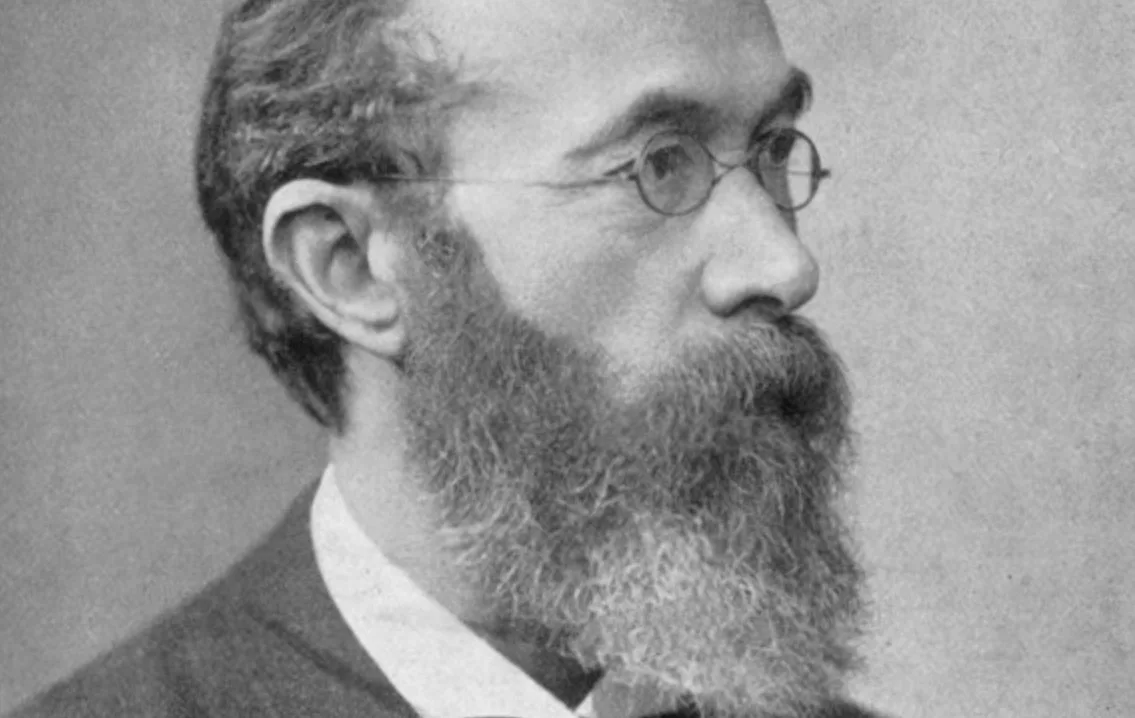
Wilhelm Wundt never led armies. He didn’t discover penicillin or split the atom. What he did was arguably more audacious: he claimed that consciousness—that ephemeral, subjective, intensely personal experience of being aware—could be studied with the same scientific rigor that chemists applied to compounds or physicists applied to motion. In 1879, at the University of Leipzig, he opened the world’s first laboratory dedicated exclusively to psychological research. That single act transformed psychology from philosophical speculation into experimental science.
Before Wundt, psychology didn’t really exist as we understand it today. Questions about the mind belonged to philosophy, theology, or medicine. Plato pondered the nature of knowledge. Descartes theorized about mind-body dualism. Physicians treated mental illness without understanding its mechanisms. But nobody was systematically testing hypotheses about mental processes, collecting data, running controlled experiments. The mind was considered too subjective, too variable, too fundamentally unmeasurable to study scientifically.
Wundt disagreed. Profoundly. And his disagreement changed everything.
What makes Wundt fascinating to me—beyond his obvious historical importance—is the contradiction at his core. Here was a man who established psychology as a rigorous experimental science through introspection, a method that essentially asked people to report their own subjective experiences. Think about that tension. He wanted objectivity but relied on subjectivity. He demanded scientific control while investigating something fundamentally private and variable. His critics pounced on this apparent contradiction, yet Wundt’s approach worked well enough to launch an entire discipline.
How many of these have you been "meaning to read" for months?


Born in 1832 in a small German town, Wundt lived through extraordinary historical upheaval—German unification, the Franco-Prussian War, World War I, the collapse of empires. He died in 1920 having witnessed the modern world emerge from the 19th century. Throughout this tumultuous period, he quietly revolutionized how we understand ourselves. He trained 186 graduate students who spread his methods globally. He published prolifically—his collected works run to tens of thousands of pages. He established not just a laboratory but an intellectual tradition that continues shaping psychology today.
Yet most people have never heard of him. Freud gets the fame. Jung has name recognition. Even Pavlov’s dogs are culturally iconic. But Wundt, the actual founder of scientific psychology? Obscure. Maybe that’s fitting for someone who believed the mind’s deepest truths revealed themselves not through grand theatrical gestures but through careful, patient, systematic observation of the smallest mental phenomena.
Early Life and Medical Training
Wilhelm Maximilian Wundt was born on August 16, 1832, in Neckarau, a small village near Mannheim in Baden, Germany. His father was a Lutheran pastor, which meant the family had intellectual standing but limited financial resources. Fourth child, somewhat sickly, initially not particularly distinguished academically—nothing in young Wilhelm’s early years screamed “future revolutionary scientist.”
His childhood was lonely, actually. His siblings were significantly older. His father was often distant, absorbed in pastoral duties. Wundt formed his closest bond with a young vicar who tutored him, and when that vicar moved to another town, Wilhelm’s parents let him go along. He spent formative years essentially living with his tutor rather than his family. That kind of unusual childhood arrangement—intellectual mentorship replacing traditional family bonds—might have contributed to his later comfort with rigorous, somewhat isolated scholarly work.
Academically, he struggled initially. At gymnasium (the German secondary school), he was actually held back a year. But something shifted. Maybe adolescent brain development kicked in, maybe the right teacher inspired him, maybe he simply matured. By the time he graduated, he’d decided to study medicine at the University of Heidelberg, one of Germany’s most prestigious institutions.
The medical training was brutal by modern standards. This was the mid-19th century—anesthesia was brand new, germ theory hadn’t been established, medical practice combined genuine knowledge with considerable guesswork. But Wundt excelled. He earned his medical degree in 1856, then faced the question all young doctors face: what next?
He could have practiced medicine. The safe, conventional path. But Wundt had developed a fascination with physiology—not just treating bodies but understanding how they functioned at a fundamental level. So instead of opening a practice, he pursued an academic career studying the body’s basic mechanisms.
Working with Helmholtz and the Birth of Experimental Psychology
The pivotal moment came when Wundt became assistant to Hermann von Helmholtz at Heidelberg in 1858. Helmholtz was a giant—a physicist, physician, and physiologist who made groundbreaking contributions to understanding nerve impulses, sensory perception, and the physics of sound and light. Working with Helmholtz exposed Wundt to cutting-edge experimental methods and rigorous scientific thinking.
But it also revealed something crucial: physiological explanations alone couldn’t account for all mental phenomena. When Wundt studied sensory perception—how we see, hear, feel—he kept encountering psychological questions that pure physiology couldn’t answer. Why do we perceive patterns? How does attention work? What determines which sensory information reaches consciousness and which gets filtered out?
During this period, in 1862, Wundt taught the first course ever offered in scientific psychology. Think about the audacity. Psychology as a formal discipline didn’t exist yet, but here was Wundt lecturing on it as if it did. He was essentially willing an entire field into existence through sheer intellectual conviction. His lectures were published as “Lectures on the Mind of Humans and Animals” in 1863.
The content was revolutionary. Unlike philosophical treatises on the mind, Wundt’s approach emphasized experimental methods drawn from natural sciences. He argued that mental processes could be studied systematically, measured, manipulated in controlled conditions. Consciousness wasn’t some mystical, untouchable phenomenon. It was a natural process subject to natural laws, discoverable through careful investigation.
This put him on a collision course with established philosophical psychology, which relied on rational analysis and logical argument rather than empirical testing. The philosophers were unimpressed. The scientists were intrigued. And Wundt was just getting started.
The Leipzig Laboratory: Psychology Becomes a Science
In 1875, Wundt accepted a professorship at the University of Leipzig. Four years later, in 1879, he established what most historians recognize as the first formal laboratory for psychological research. That date—1879—is often cited as the birth year of psychology as an independent scientific discipline.
The laboratory started modestly. A few rooms. Basic equipment. Wundt and a handful of students running experiments on reaction times, sensory thresholds, attention. But the implications were staggering. For the first time, the human mind was being studied with the same experimental rigor that physicists applied to motion or chemists applied to reactions.
What did they actually do in this laboratory? Lots of painstakingly boring work, honestly. Participants would be presented with stimuli—a light, a sound, a touch—and asked to respond as quickly as possible. Researchers measured reaction times down to fractions of seconds. They varied stimulus intensity, duration, complexity. They controlled for confounding variables. They replicated results.
Seems trivial now, but it was radical then. Before Wundt, nobody had systematically measured how long it took for sensory information to reach consciousness and trigger a response. Nobody had tested whether reaction times varied based on stimulus type or complexity. These basic questions about mental chronometry—the timing of mental processes—were unexplored territory.
Wundt also studied attention, perception, and emotion using experimental methods. How many objects can we simultaneously attend to? How do we organize sensory information into meaningful patterns? What physiological changes accompany different emotional states? All questions we now take for granted as psychological research, but Wundt was pioneering this entire approach.
The laboratory attracted students from around the world. Germany, America, Britain, Russia—scholars came to Leipzig to learn Wundt’s methods. He trained 186 graduate students during his career, many of whom returned to their home countries and established their own laboratories modeled on Wundt’s. This wasn’t just one man doing research. It was the creation of an international scientific community focused on experimental psychology.
Introspection as Scientific Method
Wundt’s signature methodological innovation was his version of introspection—but not the casual, undisciplined self-reflection that word usually implies. Wundtian introspection was rigorous, highly trained, systematically controlled.
Here’s how it worked. Researchers would train participants extensively—we’re talking months of practice—to observe and report their own conscious experiences with precision and objectivity. When presented with a stimulus, participants wouldn’t just say “I saw a light.” They’d describe the immediate, elemental sensations—brightness, color, duration, spatial location—while avoiding interpretation or inference.
The goal was reductionism: breaking consciousness down into its most basic elements, the way chemists broke compounds into elements. Wundt believed that complex conscious experiences resulted from combinations of simpler sensations, feelings, and images. If you could identify these basic building blocks and understand how they combined, you’d have a science of consciousness.
This approach came to be called structuralism—mapping the structure of conscious experience. Though actually, that term was coined by Wundt’s student Edward Titchener, who developed and promoted a somewhat simplified version of Wundt’s ideas after emigrating to America. Wundt himself preferred the term “voluntarism,” emphasizing the active, organizing nature of consciousness rather than just its structure.
The introspective method had obvious problems, which critics pounced on immediately and which remain valid today. How can you verify introspective reports? Two people might have identical stimuli but report different experiences. Are they actually experiencing things differently, or just describing the same experience differently? How do you know participants aren’t influenced by expectations or previous training? How can something purely subjective ever be truly scientific?
These are fair criticisms. Modern psychology largely abandoned introspection as a primary research method by the 1920s, replaced by behaviorism’s focus on observable behavior and later by cognitive psychology’s more sophisticated experimental paradigms. But here’s what the critics often miss: Wundt knew introspection had limitations. He was extraordinarily careful about controlling conditions, training observers, replicating results. And for studying certain phenomena—like the experience of pain, or visual perception, or attention—asking people about their conscious experience remains methodologically valid even today.
More importantly, Wundt’s real contribution wasn’t introspection per se—it was the demonstration that psychology could be studied experimentally at all. Before Wundt, the mind was philosophy’s territory. After Wundt, it became science’s. That shift mattered far more than the specific methods he used.
Principles of Physiological Psychology
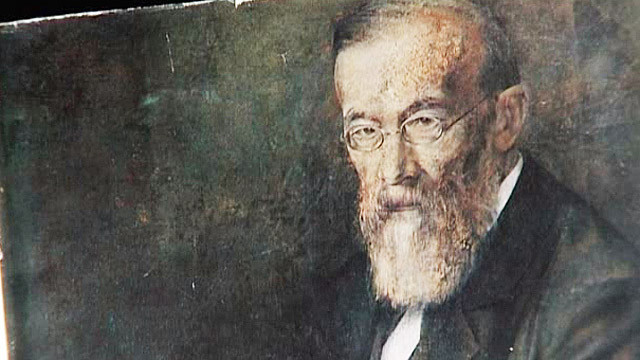
In 1873-1874, Wundt published what many consider the most important text in psychology’s history: “Grundzüge der physiologischen Psychologie” (Principles of Physiological Psychology). This wasn’t just another book. It was the founding document of a new discipline.
The Principles laid out a comprehensive system for studying consciousness scientifically. Wundt covered sensations, perception, attention, feeling, volition—essentially mapping the entire territory of conscious experience and proposing experimental methods for investigating each domain. He integrated findings from physiology with psychological theory, showing how bodily processes related to mental experiences without reducing psychology to mere physiology.
One key concept Wundt developed was apperception—the process by which the mind actively organizes and interprets sensory information. This wasn’t passive reception of stimuli. Consciousness actively selects, combines, and structures information based on attention, past experience, and current goals. This emphasis on the active, voluntary nature of mental processes distinguished Wundt from more mechanistic approaches.
The book went through multiple editions, expanding each time as Wundt incorporated new research and refined his theories. By the sixth edition (1908-1911), it had grown to three volumes. It was translated into multiple languages and became required reading for anyone seriously studying psychology.
What made the Principles revolutionary wasn’t just its content but its approach. Wundt wrote with the assumption that psychology was already a legitimate science with established methods and accumulated knowledge. He didn’t waste pages arguing that psychology could be scientific—he simply proceeded as if that were obvious, marshaling evidence, proposing theories, suggesting experiments. The confidence itself helped create the reality.
Cultural Psychology and Völkerpsychologie
Here’s something that surprised me when I first studied Wundt seriously: he didn’t believe experimental methods could investigate all psychological phenomena. That seems contradictory for the founder of experimental psychology, but Wundt was nothing if not intellectually honest about his methods’ limitations.
Wundt argued that higher mental processes—language, reasoning, cultural practices, religion, social norms—couldn’t be adequately studied in laboratory settings. These complex phenomena emerged from social interaction and cultural context. You couldn’t isolate them in controlled experiments without losing what made them meaningful.
So Wundt developed a parallel approach he called Völkerpsychologie (often translated as “folk psychology” or “cultural psychology”). Between 1900 and 1920, he published a massive ten-volume work exploring language, myth, custom, and other cultural phenomena from a psychological perspective. This wasn’t armchair speculation—Wundt drew on anthropological research, comparative linguistics, historical analysis, essentially creating what we’d now call cultural psychology or anthropological psychology.
The Völkerpsychologie volumes are largely forgotten today, overshadowed by Wundt’s experimental work. But they reveal a more nuanced thinker than the caricature of “father of experimental psychology” suggests. Wundt believed psychology needed both experimental and cultural approaches—controlled studies of basic processes plus interpretive analysis of complex cultural phenomena. He called this “dual psychology.”
Modern psychology has, in many ways, vindicated this perspective. We now recognize that culture profoundly shapes cognition, emotion, perception. Cross-cultural psychology is a thriving field. Wundt was ahead of his time in recognizing that a complete psychological science required both experimental rigor and cultural sensitivity.
The Journal and the Spread of Wundt’s Influence
In 1881, Wundt founded Philosophische Studien (Philosophical Studies), the first academic journal dedicated to psychological research. Later renamed Psychologische Studien in 1905, this journal provided a venue for publishing experimental findings and disseminating Wundt’s approach.
Having a dedicated journal was crucial for establishing psychology as a legitimate field. It created standards for what counted as acceptable psychological research. It allowed researchers to share findings and build on each other’s work. It made psychology visible as a distinct discipline rather than a subfield of philosophy or physiology.
Wundt’s students fanned out across the globe, establishing laboratories and psychology programs in their own countries. James McKeen Cattell brought Wundt’s methods to America. Charles Spearman applied experimental approaches to studying intelligence in Britain. Hugo Münsterberg pioneered applied psychology. The tree of modern psychology has countless branches, but most trace back to roots in Wundt’s Leipzig laboratory.
This is actually Wundt’s most enduring legacy—not any specific theory or finding, but the institutional and methodological foundation he created for psychology as a science. His specific theories have been modified, refined, or abandoned. His introspective method is rarely used. But the basic framework he established—that mental processes can and should be studied experimentally, with controlled methods and systematic observation—remains the foundation of scientific psychology.
Personal Life and Character
Wundt married Sophie Mau in 1872. They had three children and by all accounts enjoyed a stable, happy marriage. Sophie reportedly managed household affairs efficiently, freeing Wilhelm to focus on his prodigious scholarly output.
And prodigious it was. Wundt published an estimated 53,000 pages during his lifetime—books, articles, lectures, theoretical essays. That’s not a typo. Fifty-three thousand pages. He maintained a rigid daily schedule, writing in the mornings, conducting research in the afternoons, attending to correspondence in the evenings. He was disciplined to the point of compulsiveness.
Colleagues described him as serious, somewhat formal, not particularly warm or charismatic. He wasn’t a dynamic lecturer who inspired through personality. His power came from intellectual rigor, systematic thinking, and sheer scholarly productivity. Students respected him more than they loved him.
But Wundt also showed unexpected qualities. He engaged with critics thoughtfully rather than dismissively. He modified his theories when evidence warranted. He acknowledged his methods’ limitations. There was intellectual humility beneath the formal exterior—a recognition that psychology was an ongoing project, not a finished system.
Politically, Wundt was relatively liberal for his time and place. He opposed Prussian militarism, supported educational reform, argued for women’s access to university education (though he had few female students himself). During World War I, as nationalism swept Germany, Wundt maintained more internationalist views, though he wasn’t immune to patriotic sentiment either.
Later Years and Legacy
Wundt remained active until shortly before his death. He retired from Leipzig in 1917 at age 85 but continued writing. His final work was an autobiography titled “Erlebtes und Erkanntes” (Experiences and Insights), published in 1920, the year he died.
He passed away on August 31, 1920, in Grossbothen, Germany, having witnessed psychology transform from a philosophical speculation to an established science with laboratories, journals, professional associations, and thousands of practitioners worldwide. His funeral was attended by colleagues and former students from across Europe, testament to his profound influence on the field he created.
Assessing Wundt’s legacy is complicated by how differently he’s viewed in different psychological traditions. In America, Wundt is often remembered primarily through Titchener’s structuralism, which was actually a simplified version of Wundt’s more complex ideas. Behaviorists like John Watson positioned themselves against Wundtian introspection, sometimes caricaturing his methods to emphasize their own approach’s superiority.
In Germany, Wundt’s reputation suffered during the Nazi period when his ideas were attacked as too scientific and not sufficiently grounded in German romantic philosophy. After World War II, psychology in Germany took different directions, and Wundt’s influence waned.
But stepping back from these specific controversies, Wundt’s fundamental contributions remain undeniable. He established psychology as an independent discipline with its own methods, questions, and institutional structures. Every psychology laboratory, every psychology journal, every psychology degree program exists because Wundt demonstrated that systematic, scientific study of the mind was possible and valuable.
Modern psychology has moved far beyond Wundt’s specific theories. We no longer primarily use introspection. We’ve developed sophisticated experimental designs, statistical methods, and theoretical frameworks Wundt never imagined. Brain imaging lets us observe neural activity in ways he couldn’t have dreamed. Computational models simulate cognitive processes at a level of detail far exceeding his reductionist analysis.
But all of this builds on the foundation Wundt created—the fundamental assumption that mental processes can be studied scientifically, that we can formulate testable hypotheses about how the mind works, that systematic observation and controlled experimentation can reveal psychological truths. That’s his real legacy, more than any specific finding or theory.
Criticisms and Controversies
Wundt faced significant criticism during his lifetime and after. The introspection problem I mentioned earlier was the most persistent. How can you build a science on subjective reports that can’t be independently verified? Behaviorists like Watson and Skinner argued that psychology should study only observable behavior, not invisible mental processes. This critique dominated American psychology for decades.
Others criticized Wundt’s reductionism—the idea that you could understand consciousness by breaking it down into elementary sensations. Gestalt psychologists argued that the whole is greater than the sum of its parts, that breaking consciousness into elements destroyed the very thing you were trying to study. They famously said “the whole is other than the sum of the parts,” directly challenging Wundt’s analytical approach.
Functionalists, particularly American psychologists influenced by William James and John Dewey, criticized Wundt for focusing on mental structure rather than mental function. They argued that understanding what consciousness does—how it helps organisms adapt—matters more than mapping its structure.
Some critics attacked Wundt’s cultural psychology as unscientific speculation, lacking the rigor of his experimental work. Others argued the reverse—that his experimental psychology was too narrow and missed the richness of actual human experience.
There’s also a methodological critique: Wundt’s experiments often involved very small numbers of highly trained observers—sometimes just Wundt and a couple of assistants. Modern standards require much larger sample sizes and statistical analysis to establish reliable findings. By contemporary standards, many of Wundt’s “discoveries” wouldn’t meet publication criteria.
These criticisms have merit. Wundt wasn’t infallible. His methods had real limitations. Some of his specific theories were wrong. But judging 19th-century science by 21st-century standards misses the point. Wundt was pioneering an entirely new approach, feeling his way forward without established guidelines or precedents. Of course he made mistakes. The remarkable thing is how much he got right.
Wundt’s Influence on Modern Psychology
Trace almost any branch of modern psychology back far enough and you’ll find connections to Wundt. Cognitive psychology, with its focus on mental processes like attention, memory, and perception, directly descends from Wundt’s experimental approach, even though cognitive psychologists use very different methods.
Experimental design in psychology—the emphasis on controlled conditions, systematic manipulation of variables, replication—all originated with Wundt’s laboratory model. When you participate in a psychology experiment today, you’re experiencing a direct legacy of Wundt’s methodological innovations.
Psychophysics—the study of relationships between physical stimuli and psychological experiences—was central to Wundt’s research and remains an active field. How bright does a light need to be before we detect it? How much change in stimulus intensity is needed before we notice the difference? These questions that Wundt investigated are still studied today with more sophisticated methods.
Even areas that seem far from Wundt’s work carry his influence. Clinical psychology may not use introspection, but it relies on the fundamental assumption that mental processes can be systematically understood and modified—an assumption Wundt helped establish. Social psychology, while using different methods, builds on Wundt’s recognition (in his cultural psychology) that individual minds exist within social and cultural contexts.
Perhaps most importantly, Wundt established psychology’s scientific identity. Before Wundt, psychology was what philosophers did when they weren’t doing metaphysics or epistemology. After Wundt, psychology was what scientists did in laboratories with experimental methods. That identity shift—from humanities to science—shaped everything that followed.
FAQs About Wilhelm Wundt: Biography of the Father of Scientific Psychology
Why is Wilhelm Wundt called the father of psychology?
Wundt earned this title because he established the first formal laboratory dedicated to psychological research at the University of Leipzig in 1879, effectively founding psychology as an independent scientific discipline. Before Wundt, psychology was considered a branch of philosophy studied through rational analysis and speculation rather than empirical investigation. Wundt demonstrated that mental processes could be studied using the same experimental methods that natural scientists used to study physical phenomena. He also founded the first psychology journal, trained the first generation of experimental psychologists who spread his methods globally, and published the first comprehensive psychology textbook. While others before him had psychological ideas, Wundt created the institutional and methodological infrastructure that transformed psychology from philosophical speculation into scientific discipline.
What was Wilhelm Wundt’s introspection method?
Wundt’s introspection was not casual self-reflection but a highly structured, rigorously controlled experimental method. He trained observers extensively—sometimes for months—to report their immediate conscious experiences when presented with specific stimuli, without interpretation or inference. Participants would describe elementary sensations (brightness, color, intensity, duration) rather than making judgments or associations. The process required controlled laboratory conditions with standardized stimuli, precise timing, and systematic replication. Wundt believed consciousness could be broken down into basic elements (sensations, feelings, images) much like chemists analyze compounds into elements. While this method was later largely abandoned because of its subjective nature and inability to be independently verified, it represented a revolutionary attempt to study consciousness scientifically. Modern psychology rarely uses pure introspection, but the underlying goal—understanding conscious experience through systematic observation—remains central to many research areas.
What is the difference between Wundt’s voluntarism and Titchener’s structuralism?
This distinction is important but often overlooked. Wundt called his approach “voluntarism,” emphasizing the active, organizing nature of consciousness—particularly the role of will and attention in shaping experience. He believed consciousness wasn’t just a passive collection of sensations but an active process that selected, combined, and structured information through apperception. Edward Titchener, Wundt’s student who brought his ideas to America, developed a somewhat simplified version he called “structuralism,” which focused primarily on identifying the basic structural elements of consciousness through introspection. Titchener’s structuralism was more purely reductionist, treating consciousness as essentially the sum of elementary sensations. Wundt’s voluntarism recognized that consciousness involved creative synthesis—the combination of elements produced something new that couldn’t be reduced to just those elements. Many English-speaking students learned about “Wundt’s structuralism,” but this was actually Titchener’s interpretation rather than Wundt’s original theory.
Did Wundt believe all psychology should be experimental?
No, and this surprises many people. Wundt explicitly argued that experimental methods were appropriate for studying basic mental processes—sensation, perception, reaction time, attention—but inadequate for investigating higher mental functions like language, reasoning, social behavior, and cultural practices. For these complex phenomena, he developed what he called Völkerpsychologie (cultural psychology), which used comparative, historical, and interpretive methods rather than controlled experiments. Wundt believed psychology required both approaches—what he called “dual psychology.” He spent the last two decades of his life writing a ten-volume work on cultural psychology exploring language, myth, custom, and social practices. This aspect of Wundt’s work is often forgotten, overshadowed by his experimental contributions, but it demonstrates a more nuanced and sophisticated view of psychology’s methods than the simple “father of experimental psychology” label suggests.
What was Wundt’s contribution to understanding consciousness?
Wundt made several key contributions to understanding consciousness. First, he demonstrated that consciousness could be studied scientifically rather than just philosophically. Second, he developed the concept of apperception—the active process by which consciousness organizes and interprets sensory information based on attention and past experience, distinguishing this from passive perception. Third, he proposed that consciousness had both content (sensations, images, feelings) and process (the organizing activity of attention and will). Fourth, he measured the time course of mental processes, showing that consciousness operated with measurable speed and that different mental operations took different amounts of time. Fifth, he explored the relationship between physiological processes and conscious experience, developing psychophysical methods still used today. While many of his specific theories have been superseded, his fundamental insight—that consciousness is a natural phenomenon subject to systematic investigation—transformed psychology from speculation to science.
How did Wundt’s background in physiology influence his psychology?
Wundt’s medical training and work with Hermann von Helmholtz profoundly shaped his approach to psychology. From physiology, he brought rigorous experimental methods, careful measurement, controlled laboratory conditions, and systematic observation. His early psychological research focused on topics at the intersection of physiology and psychology—reaction times, sensory thresholds, attention—applying physiological methods to psychological questions. He understood neural processes and sensory systems, which informed his theories about how physical stimuli became conscious experiences. However, Wundt also recognized physiology’s limitations—he argued that purely physiological explanations couldn’t account for all mental phenomena, particularly the active, organizing aspects of consciousness. This led him to develop distinctly psychological theories and methods that went beyond physiological reduction. His background gave him scientific credibility and methodological rigor while his psychological insights showed that mental processes required their own level of analysis beyond physiology.
Why did introspection as a method eventually fail?
Introspection faced several fatal problems that led to its abandonment as psychology’s primary method. First, introspective reports couldn’t be independently verified—if two people reported different experiences from identical stimuli, there was no objective way to determine who was correct. Second, the method was fundamentally subjective—it relied on people accurately reporting internal states that others couldn’t observe or measure. Third, introspection potentially changed the very experience being studied—the act of observing your own mental processes might alter those processes. Fourth, different laboratories using introspection produced contradictory findings that couldn’t be resolved. Behaviorists like John Watson argued that a truly scientific psychology must study only observable behavior, not invisible mental states. Additionally, introspection couldn’t be used to study children, animals, or people with certain mental conditions, severely limiting psychology’s scope. While Wundt’s version was more rigorous than casual self-reflection, these fundamental problems ultimately convinced most psychologists that objective behavioral measures were necessary for scientific psychology.
Use this citation format to reference the article clearly and help readers find the original source.
PsychologyFor. (2025). Wilhelm Wundt: Biography of the Father of Scientific Psychology. PsychologyFor. https://psychologyfor.com/wilhelm-wundt-biography-of-the-father-of-scientific-psychology/