

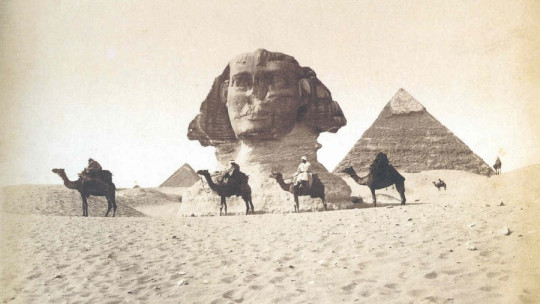
You sit in an airport terminal or on a crowded commuter train, listening to the mechanical hum of announcements while a persistent, restless ache pulls at your chest. That quiet hunger for departure is universal. For centuries, human beings have felt the irresistible urge to abandon familiar domestic routines, cross geographic thresholds, and test their physical and psychological resilience against the unknown. It is not mere escapism. Rather, it exposes a profound biological and spiritual instinct for transformative geographic exploration.
Yet in our hyper-connected modern world of curated travel itineraries, geotagged tourist landmarks, and instant translation apps, the authentic nature of travel has become severely commercialized. We consume highly polished travel content on digital screens yet rarely experience the disorienting, unpredictable encounters that challenge our internal assumptions or force us into genuine cross-cultural humility. True literary travel writing is not a commercial vacation guide; it is an intimate psychological record of how unfamiliar landscapes dismantle our internal defenses and reshape our core identity. Discovering the world’s most enduring travel masterworks equips you with the narrative lenses to understand why leaving home is ultimately an inward journey of self-discovery.
How can reading foundational travel literature expand your cultural empathy and deepen your understanding of human psychological adaptability?
This comprehensive guide details the 10 most famous travel books in literature, reviewing landmark historical chronicles, existential road memoirs, high-altitude survival narratives, and philosophical reflections on what it means to wander the earth.
10 Most Famous Travel Books in Literature
Verified Top Picks-
1
 Paul Theroux The Great Railway Bazaar A landmark 25,000-mile railway odyssey across Asia revitalizing the modern literary travelogueCHECK TODAY'S PRICE
 -
2
 Bruce Chatwin In Patagonia A crystalline mosaic of 97 vignettes exploring South American landscapes and human nomadismCHECK TODAY'S PRICE
 -
3Bill Bryson A Walk in the Woods A hilarious and insightful chronicle of hiking the Appalachian Trail paired with rich ecological historyCHECK TODAY'S PRICE
-
4Alain de Botton The Art of Travel A philosophical exploration of why we travel, the psychology of anticipation, and the pursuit of beautyCHECK TODAY'S PRICE
-
5Jack Kerouac On the Road The definitive Beat Generation anthem capturing countercultural rebellion and open-highway wanderlustCHECK TODAY'S PRICE
-
6Eric Weiner The Geography of Bliss A humorous, insightful journalistic quest exploring how physical place and culture shape happinessCHECK TODAY'S PRICE
-
7John Steinbeck Travels with Charley A Nobel laureate's 10,000-mile road trip across America reflecting on aging, society, and identityCHECK TODAY'S PRICE
-
8Jon Krakauer Into Thin Air The harrowing firsthand account of the 1996 Mount Everest disaster and extreme survival psychologyCHECK TODAY'S PRICE
-
9Ernesto Che Guevara The Motorcycle Diaries A young medical student's South American journey that transformed youthful adventure into political awakeningCHECK TODAY'S PRICE
-
10Heinrich Harrer Seven Years in Tibet An epic wartime Himalayan trek leading to an extraordinary mentorship with the young Dalai LamaCHECK TODAY'S PRICE
Why Does Geographic Travel Trigger Profound Psychological Transformation?
Physical geographic travel acts as a powerful catalyst for cognitive and emotional transformation by stripping away the habitual environmental cues that sustain our automatic behavioral routines. When an individual navigates unfamiliar cultural landscapes, foreign languages, and unpredictable logistics, the brain is forced out of complacent mental shortcuts into a state of heightened neuroplastic awareness.
Developmental and cognitive psychologists demonstrate that unfamiliar environments activate prefrontal orienting networks, forcing the mind to undergo cognitive accommodation—restructuring internal mental models to adapt to new cultural realities. Immersing oneself in foreign traditions challenges deeply ingrained ethnocentric biases, fostering what psychologists term integrative complexity: the capacity to recognize multiple valid perspectives and synthesize conflicting worldviews. Stepping outside cultural familiarity breaks the default mode network’s rigid narratives, cultivating enduring psychological flexibility.
Philosopher and essayist Alain de Botton observes that the therapeutic value of travel lies not in the physical geography itself, but in the shift in psychological perspective it facilitates. When travelers confront sublime landscapes or starkly different ways of living, their everyday anxieties shrink in proportion, restoring a sense of wonder and existential humility. Travel literature documents this exact internal metamorphosis, providing readers with timeless frameworks for existential perspective recalibration.
- Unfamiliar geographic environments disrupt automatic cognitive heuristics and activate heightened neuroplastic awareness.
- Cross-cultural immersion challenges ethnocentric assumptions, expanding cognitive complexity and interpersonal empathy capacity.
- Experiencing natural and cultural sublimity diminishes everyday rumination and restores existential psychological proportion.
- Literary travel chronicles serve as transformative mental blueprints for intrapersonal emotional growth.
10 Famous Travel Books That Defined World Literature
The following curated selection represents the premier canon of literary travel writing, spanning nineteenth- and twentieth-century geographical expeditions, countercultural road odysseys, extreme survival chronicles, and philosophical explorations of wanderlust.
1. The Great Railway Bazaar: By Train Through Asia — Paul Theroux
The Great Railway Bazaar by acclaimed travel writer and novelist Paul Theroux is the legendary 1975 masterwork that single-handedly revitalized modern travel literature. Theroux embarks on a four-month, twenty-five-thousand-mile rail odyssey from London across Europe, the Middle East, the Indian subcontinent, Southeast Asia, and Siberia aboard iconic trains like the Direct Orient Express, the Khyber Pass Local, and the Trans-Siberian Railway.
Theroux’s genius lies in his unflinching, sardonic, and deeply observant character portraits of fellow passengers and railway staff. Rather than presenting a sanitized tourist postcard, Theroux captures the claustrophobia, heat, boredom, and sudden transcendent beauty of slow travel, establishing the benchmark for narrative literary travelogue.
- Pioneers the modern character-driven travelogue across twenty-five thousand miles of Asian railway networks.
- Balances sharp social observation with vivid descriptions of rapidly changing mid-century geopolitical landscapes.
- Demonstrates how the rhythm and constraints of train travel foster deep psychological observation.
2. In Patagonia — Bruce Chatwin

In Patagonia by British author and nomad philosopher Bruce Chatwin completely revolutionized the aesthetic and structural possibilities of travel literature upon its publication in 1977. Inspired by a piece of “brontosaurus skin” (actually a prehistoric giant sloth) preserved in his grandmother’s cabinet, Chatwin travels to the southernmost tip of South America to explore its desolate, wind-swept wilderness.
Constructed as a mosaic of ninety-seven short, crystalline vignettes, the book weaves together local folklore, exiled Welsh settlers, Butch Cassidy’s hideouts, and indigenous myths. Chatwin’s spare, poetic prose transforms a remote geographic region into an unforgettable meditation on nomadic human restlessness.
- Introduces a revolutionary, fragmented vignette structure that redefined the travel writing genre.
- Explores the physical and mythical landscapes of Patagonia through historical and literary investigations.
- Examines human nomadic instincts as a fundamental biological antidote to domestic existential stagnation.
3. A Walk in the Woods: Rediscovering America on the Appalachian Trail — Bill Bryson

A Walk in the Woods by beloved non-fiction author Bill Bryson chronicles his hilarious, ill-prepared attempt to hike the 2,100-mile Appalachian Trail alongside his out-of-shape, recovering alcoholic friend Stephen Katz. Stretching from Georgia to Maine, the trail pushes the duo through brutal weather, bear anxieties, blistered feet, and endless wilderness monotony.
Bryson seamlessly blends laugh-out-loud travel misadventures with deeply researched interludes on forest ecology, botany, and the environmental destruction threatening America’s wilderness. This warm, endlessly entertaining volume demonstrates the restorative power of nature and the vital importance of humor in human resilience.
- Combines comedic wilderness misadventures with rigorous historical and ecological science reporting.
- Documents the psychological trials and physical demands of long-distance wilderness backpacking expeditions.
- Celebrates friendship, perseverance, and the restorative mental benefits of natural wilderness immersion.
4. The Art of Travel — Alain de Botton

The Art of Travel by philosopher and cultural essayist Alain de Botton is an exquisite, intellectually dazzling investigation into the psychology of why we travel and why our journeys so frequently disappoint our romantic expectations. De Botton pairs his own travel experiences with the insights of great historical thinkers and artists, including Charles Baudelaire, Edward Hopper, Gustave Flaubert, and William Wordsworth.
De Botton explores the subtle psychological friction between the anticipation of travel and the mundane reality of being ourselves in a new place. By teaching readers how to notice beauty in ordinary travel hubs, service stations, and cloud formations, this philosophical gem transforms how we practice mindful aesthetic perception.
- Deconstructs the psychological gap between idealized travel anticipation and lived reality.
- Pairs philosophical reflections with historical guides to explore themes of beauty, curiosity, and the sublime.
- Provides actionable frameworks for cultivating attentiveness and presence in everyday transit environments.
5. On the Road — Jack Kerouac

On the Road by Beat Generation icon Jack Kerouac is the quintessential twentieth-century American road novel, capturing the frantic, jazz-fueled wanderlust of Sal Paradise and Dean Moriarty as they crisscross North America. Typed on a continuous 120-foot scroll of teletype paper, Kerouac’s spontaneous, rhythmic prose captures a generation rejecting postwar suburban conformity.
The narrative pulses with roadside diners, open highways, hitchhikers, late-night philosophical conversations, and a desperate search for authentic spiritual transcendence. This electrifying classic remains the definitive literary anthem of restless youth, freedom, and the mythology of the open road.
- Captures the countercultural spirit and improvisational rhythm of the American Beat Generation.
- Explores the existential search for spiritual transcendence through raw, uninhibited cross-country travel.
- Critiques mid-century societal conformity by celebrating spontaneity, jazz, and transient human connections.
6. The Geography of Bliss: One Grump’s Search for the Happiest Places in the World — Eric Weiner
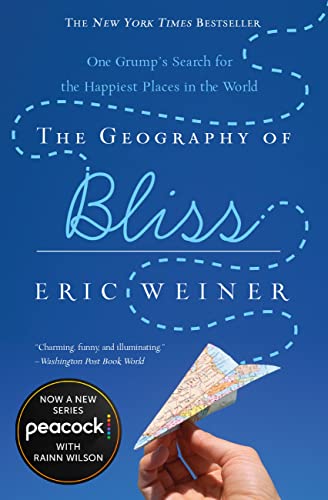
The Geography of Bliss by veteran foreign correspondent Eric Weiner combines humorous travel journalism with positive psychology and sociology, traveling to countries renowned for either extreme happiness or profound misery. Self-described as a “committed grump,” Weiner visits nations like Bhutan, Iceland, Switzerland, Qatar, and Moldova to investigate what makes a society genuinely thrive.
Weiner uncovers surprising cultural secrets: the Swiss find happiness through precision and discretion, the Icelanders through creative freedom and tolerance of failure, and the Bhutanese through an official government policy of Gross National Happiness. This witty, deeply insightful volume serves as a brilliant exploration of cultural subjective well-being.
- Investigates the intersection of geography, cultural values, and subjective life satisfaction.
- Examines diverse cultural models of happiness across Europe, Asia, and the Middle East.
- Translates sociological and positive psychology research into an engaging, comedic investigative travel narrative.
7. Travels with Charley in Search of America — John Steinbeck
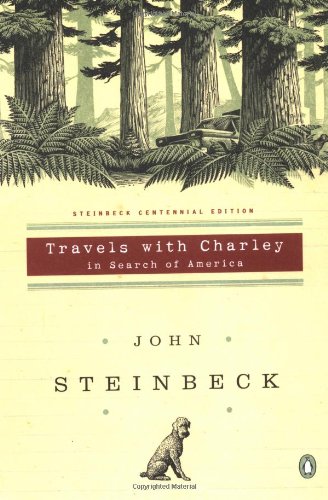
Travels with Charley in Search of America by Nobel Prize-winning author John Steinbeck recounts his 1960 ten-thousand-mile road trip across thirty-four American states in a custom camper truck named Rocinante, accompanied only by his distinguished French poodle, Charley. Approaching the end of his life, Steinbeck felt he had lost touch with the country he spent his career writing about.
Steinbeck’s reflections capture an America undergoing massive social upheaval, racial tension, suburban expansion, and environmental transformation. Written with poetic warmth, melancholy, and gentle humor, this classic volume provides an intimate, humane portrait of national identity, aging, and introspective literary travel.
- Documents a ten-thousand-mile exploration of American culture and regional character identities.
- Reflects on aging, mortality, and the profound companionship between humans and animals.
- Captures a pivotal historical moment of racial integration, industrialization, and shifting social values.
8. Into Thin Air: A Personal Account of the Mt. Everest Disaster — Jon Krakauer

Into Thin Air by mountaineer and investigative journalist Jon Krakauer is the harrowing, definitive firsthand account of the 1996 Mount Everest disaster, which claimed the lives of eight climbers in a single twenty-four-hour blizzard. Hired by Outside magazine to report on the commercialization of high-altitude mountaineering, Krakauer found himself in the middle of a catastrophic life-or-death struggle in the Death Zone.
Krakauer delivers an unflinching, emotionally agonizing analysis of how hypoxia, commercial hubris, cognitive errors, and brutal weather conditions led to disaster. Written with unbearable suspense and searing self-criticism, this volume remains one of the most powerful investigations of extreme human endurance and survival psychology.
- Delivers a gripping, minute-by-minute account of high-altitude survival during the 1996 Everest blizzard.
- Analyzes the dangerous cognitive errors caused by severe hypoxia and commercial client pressure.
- Examines the moral dilemmas and survivor guilt inherent in extreme wilderness disasters.
9. The Motorcycle Diaries: Notes on a Latin American Journey — Ernesto Che Guevara

The Motorcycle Diaries collects the personal travel journals of a twenty-three-year-old Argentine medical student, Ernesto Che Guevara, who in 1952 set off on a sputtering Norton 500 motorcycle named La Poderosa with his biochemist friend Alberto Granado to explore South America. The eight-thousand-mile journey begins as a lighthearted youth adventure across Argentina, Chile, Peru, and Colombia.
However, as Guevara encounters deep poverty, exploited indigenous miners in the Atacama Desert, and isolated leper colonies in the Amazon basin, the travelogue transforms into a profound sociopolitical awakening. It is an unforgettable historical document illustrating how real-world travel can shatter youthful innocence and forge a lifelong commitment to social justice.
- Chronicles an eight-thousand-mile motorcycle odyssey across the diverse landscapes of South America.
- Documents a young medical student’s emotional awakening to poverty, disease, and economic exploitation.
- Illustrates how immersive travel can fundamentally alter an individual’s ethical and political consciousness.
10. Seven Years in Tibet — Heinrich Harrer

Seven Years in Tibet by Austrian mountaineer and explorer Heinrich Harrer recounts his extraordinary escape from a British internment camp in India during World War II, followed by a perilous two-year trek across the freezing Himalayan passes into the forbidden city of Lhasa. Arriving as an impoverished, exhausted fugitive, Harrer gradually immersed himself in Tibetan language, culture, and Buddhist philosophy.
Harrer was eventually invited to become the tutor and close companion to the young fourteenth Dalai Lama, teaching him geography, science, and Western politics while learning profound spiritual lessons in return. This classic memoir offers an irreplaceable, haunting historical portrait of traditional Tibetan society immediately before the Chinese invasion, serving as a testament to cross-cultural friendship and adaptation.
- Recounts an epic wartime escape and perilous trek across the high-altitude Himalayan plateau.
- Provides a rare, detailed historical record of traditional Tibetan Buddhist culture in forbidden Lhasa.
- Chronicles the profound, lifelong cross-cultural mentorship between Harrer and the young Dalai Lama.
The Evolution of Travel Literature: From Colonial Expeditions to Interior Journeys
Travel literature has undergone a profound philosophical and stylistic evolution over the past three centuries. Early travel accounts were primarily utilitarian chronicles of geographical conquest, cartographic mapping, scientific naturalism, and colonial administration. In contrast, modern travel writing has evolved into an introspective, deeply self-aware genre where the physical landscape serves as a mirror for internal psychological exploration.
| Literary Era | Primary Narrative Motive | Core Thematic Characteristics |
|---|---|---|
| 18th – 19th Century Expeditions | Cartographic discovery, imperial expansion, botanical collection, and scientific naturalism | Objective field journals, taxonomic categorization, and detached colonial observation |
| Early 20th Century Modernism | Escaping industrial mechanization, artistic bohemianism, and cultural disillusionment | Subjective impressionism, literary experimentation, and critique of domestic bourgeois life |
| Mid-20th Century Counterculture | Existential rebellion, spiritual seeking, and raw experiential wanderlust | Spontaneous road memoirs, stream-of-consciousness prose, and rejection of social conformity |
| Contemporary Travel Writing | Cultural reflexivity, ecological awareness, psychological inquiry, and ethical deconstruction | Self-critical narratives, intersectional awareness, and internal philosophical self-reflection |
As illustrated in the comparison table above, modern authors like Bruce Chatwin and Alain de Botton abandoned the illusion of detached, objective reporting. Instead, they recognized that the traveler’s own cognitive biases, emotional vulnerabilities, and personal neuroses actively shape how a landscape is perceived. Modern travel literature is fundamentally a study in human perception, demonstrating that changing your physical surroundings means very little unless you are willing to cultivate an altered state of consciousness.
Why Travel Can Relieve Cognitive Burnout and Rumination
Chronic psychological burnout and depressive rumination cycles are sustained by repetitive neural activity within the brain’s default mode network (DMN). When individuals remain trapped in identical physical environments—staring at the same office monitors, following the same commute routes, and repeating the same domestic arguments—the DMN continuously replays self-referential narratives of stress, inadequacy, and regret.
Physical travel disrupts this neural loop by bombarding the senses with novel sensory inputs, complex navigation tasks, and unexpected social interactions. Neuroscientists confirm that exposure to novel environments suppresses hyperactive DMN rumination while recruiting the task-positive attention network. Navigating a foreign subway system or hiking a wilderness mountain trail forces the mind into the immediate sensory present, breaking chronic cycles of exhausting cognitive overthinking.
Furthermore, psychological studies on awe confirm that encountering vast, sublime natural phenomena—such as the Grand Canyon, Mount Everest, or the Patagonian ice fields—triggers a profound psychological shift known as the “small self” effect. Awe lowers cortisol levels, reduces inflammatory cytokines, and dramatically decreases self-absorbed anxiety, establishing an organic biological foundation for rapid nervous system restoration.
- Novel geographic environments suppress hyperactive default mode network activity, halting chronic depressive cognitive rumination.
- Navigating unfamiliar physical spaces forces prefrontal attentional networks into the immediate sensory experiential present.
- Experiencing sublime natural landscapes triggers the “small self” effect, reducing stress hormones and self-absorbed anxiety.
- Disrupting domestic environmental cues creates the neurobiological conditions necessary to reset baseline autonomic regulation.
The Paradox of the Tourist vs. The Authentic Traveler
A central, recurring tension throughout literary travel writing is the fundamental philosophical distinction between the superficial tourist and the authentic traveler. Tourists travel to confirm what they already know, seeking comfort, familiar amenities, and pre-packaged photo opportunities that insulate them from local reality. Authentic travelers, in contrast, travel to have their preconceptions dismantled, actively welcoming discomfort, ambiguity, and cultural disorientation.
Authors like Paul Theroux and Bruce Chatwin fiercely critique modern tourism because it converts sacred, living cultures into passive consumer commodities. When travelers demand Western luxury and English-speaking isolation in the Global South, they eliminate the exact friction that makes travel psychologically transformative. True travel requires vulnerability: getting lost on unpaved roads, eating unfamiliar foods, struggling with basic communication, and surrendering the illusion of flawless control.
Embracing the posture of the humble traveler transforms travel from an extractive act of consumerism into an ethical, deeply restorative practice of cross-cultural humility, establishing authentic intercultural human solidarity.
- Superficial tourism insulates the ego through pre-packaged commercial itineraries, preventing genuine cultural learning.
- Authentic travel embraces environmental friction, logistical disorientation, and vulnerable cross-cultural encounters.
- Surrendering consumerist control allows travelers to experience profound humility and authentic human connection.
- Approaching foreign cultures as humble learners dismantles entrenched stereotypes and fosters deep global empathy.
How to Read Travel Literature for Maximum Mental Well-Being
Engaging with great travel literature can produce profound psychological benefits even when you are unable to physically leave your home. Armchair travel is not a second-rate substitute for physical movement; when practiced with active imagination and cognitive presence, reading travel books stimulates the brain’s spatial and empathic neural networks, providing genuine mental and emotional renewal.
Clinical psychologist Carl R. Rogers consistently emphasized that authentic personal growth requires integrating intellectual insight into daily experiential living practices. When reading about Steinbeck’s road trip or Harrer’s Himalayan trek, readers should actively practice “traveler’s mind” in their own local neighborhoods—noticing ordinary architecture, observing local flora, and greeting strangers with the same curious, non-judgmental awareness they would bring to a foreign country. This deliberate practice transforms reading into an active mindfulness and curiosity exercise.
- Read travel chronicles slowly and attentively, visualizing the geography to stimulate spatial and sensory imagination.
- Apply “traveler’s mind” to your daily walking routes, observing familiar neighborhood sights with curious, beginner’s eyes.
- Keep a personal travel journal, recording subtle daily observations and reflections on internal emotional landscapes.
- Use the resilience of literary explorers to cultivate perspective and courage during ordinary domestic challenges.
When Travel Anxiety and Escapism Signal Underlying Distress
While travel and travel literature provide extraordinary tools for broadening perspective and relieving routine occupational stress, chronic compulsive wanderlust can sometimes function as a maladaptive avoidance strategy. Constantly planning trips or feeling an uncontrollable urge to flee your current life can indicate unaddressed clinical depression, unresolved trauma, or severe generalized anxiety rather than healthy curiosity.
Psychologists note that “geographic cures”—the belief that moving to a new city, country, or resort will permanently cure internal emotional suffering—predictably fail because an individual brings their internal cognitive schemas and unresolved emotional wounds wherever they go. If your desire to travel is driven by an intense, desperate need to escape persistent feelings of emptiness, panic attacks, or severe relational conflict, geographic relocation will not resolve the issue. In such cases, scheduling an evaluation with a licensed clinical psychologist or psychiatrist is essential.
Most urgently, if you or someone you know is experiencing acute suicidal despair, intrusive thoughts of self-harm, or overwhelming emotional crisis where safety cannot be guaranteed, do not rely on literature or geographic distraction. In the United States and Canada, immediately call or text 988 to connect with the Suicide & Crisis Lifeline, available twenty-four hours a day, seven days a week, free and completely confidential. Seeking professional mental health care is not a failure of adventure; it is the ultimate act of courageous personal self-advocacy.
- Chronic compulsive wanderlust can sometimes represent an avoidant defense against unresolved emotional trauma.
- “Geographic cures” fail because internal cognitive biases and emotional distress accompany the traveler everywhere.
- Acute suicidal ideation and severe depression demand immediate professional intervention and dedicated crisis support resources.
FAQs about Famous Travel Books in Literature
What is the single best travel book for someone who wants to start reading the genre?
For a beginner seeking an immensely entertaining, accessible, and beautifully written starting point, A Walk in the Woods by Bill Bryson is universally regarded as the ideal choice. Bryson combines laugh-out-loud humor, captivating storytelling, and fascinating natural history as he attempts to hike the Appalachian Trail. The book avoids dry academic terminology, making long-distance wilderness backpacking feel relatable, hilarious, and deeply human. It serves as the perfect entry point before tackling denser or more philosophical travel masterworks.
Can reading travel books genuinely reduce stress and improve mental health?
Yes, reading narrative travel literature can significantly reduce stress by engaging the brain’s spatial imagination and triggering cognitive transportation. When you immerse yourself in rich sensory descriptions of foreign mountains, railways, or coastal landscapes, your autonomic nervous system lowers cortisol production and shifts away from rumination. Furthermore, experiencing the awe and resilience of literary travelers expands your cognitive perspective, helping you reframe everyday domestic problems with greater emotional proportion and calm.
What is the core difference between a travel guide and a literary travel book?
A travel guide—such as Lonely Planet or Rick Steves—is a functional, informational directory focused on practical logistics, hotel recommendations, restaurant reviews, and sightseeing itineraries. In contrast, a literary travel book is an introspective, narrative work of creative non-fiction. Literary travel writers explore history, psychology, cultural philosophy, and personal transformation, using physical geography as a narrative canvas to investigate human nature, social justice, and the deeper meaning of exploration.
Why is On the Road by Jack Kerouac considered such an influential travel book?
On the Road is profoundly influential because it captured the spontaneous, jazz-inspired voice of the Beat Generation, permanently redefining how literature represents youth, rebellion, and American geography. Rather than focusing on historical monuments, Kerouac celebrated the open highway, roadside diners, jazz clubs, and transient encounters across North America. His stream-of-consciousness prose inspired generations of readers to view travel not as a luxury vacation, but as a raw, transformative spiritual quest for authenticity and freedom.
How do I know if my desire to travel is healthy curiosity or avoidant escapism?
Healthy curiosity is driven by an open, enthusiastic desire to learn, experience new cultures, and embrace environmental novelty, leaving you feeling enriched upon returning home. In contrast, avoidant escapism is characterized by a desperate urge to flee personal responsibilities, unresolved relationship conflicts, or persistent feelings of internal emptiness. If you notice that you feel anxious, depressed, and irritable the moment you are not planning an escape, your wanderlust may be functioning as an emotional avoidance mechanism that warrants deeper reflection or professional therapy.
What makes In Patagonia by Bruce Chatwin unique in travel writing?
In Patagonia is unique because Chatwin abandoned the traditional linear, chronological narrative format in favor of ninety-seven short, crystalline vignettes. He seamlessly blends personal travel encounters with obscure historical archives, local legends, paleontological mysteries, and literary detective work. Chatwin’s spare, evocative prose elevated travel writing into high modern literature, proving that a travelogue could function as an intricate, poetic mosaic exploring human nomadic philosophy.
Bibliography
- Becker, E. (1973). The Denial of Death. Free Press.
- Bryson, B. (1998). A Walk in the Woods: Rediscovering America on the Appalachian Trail. Broadway Books.
- Chatwin, B. (1977). In Patagonia. Jonathan Cape.
- de Botton, A. (2002). The Art of Travel. Pantheon Books.
- Guevara, E. C. (2003). The Motorcycle Diaries: Notes on a Latin American Journey. Ocean Press.
- Harrer, H. (1953). Seven Years in Tibet (R. Graves, Trans.). Rupert Hart-Davis.
- Kerouac, J. (1957). On the Road. Viking Press.
- Krakauer, J. (1997). Into Thin Air: A Personal Account of the Mt. Everest Disaster. Villard.
- Rogers, C. R. (1961). On Becoming a Person: A Therapist’s View of Psychotherapy. Houghton Mifflin.
- Steinbeck, J. (1962). Travels with Charley in Search of America. Viking Press.
- Theroux, P. (1975). The Great Railway Bazaar: By Train Through Asia. Houghton Mifflin.
- Weiner, E. (2008). The Geography of Bliss: One Grump’s Search for the Happiest Places in the World. Twelve.
Use this citation format to reference the article clearly and help readers find the original source.
PsychologyFor. (2026). 10 Most Famous Travel Books in Literature. PsychologyFor. https://psychologyfor.com/10-most-famous-travel-books-in-literature/