

Painting mandalas helps emotional balance and self-knowledge. Discover the benefits of painting these figures and start taking advantage of their advantages.
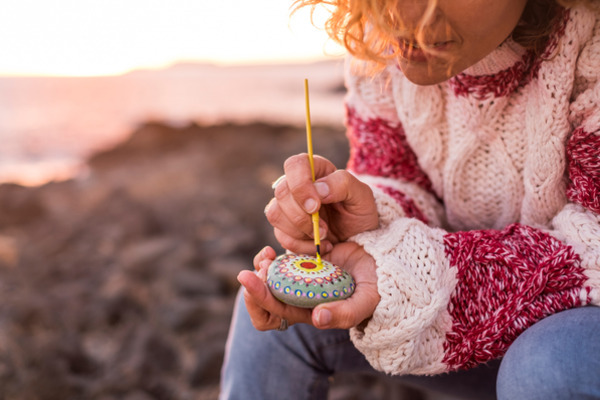
Paint mandalas is a method of relaxation and concentration that comes from the East. And besides, it’s fashionable. You see mandalas on building facades, on book covers, and people even tattoo them on their bodies. However, many people are unaware that creating mandalas and/or coloring mandalas is highly beneficial for our emotional balance, it helps us maintain a state of concentration that awakens our senses and illuminates our creativity. So much so that even looking at images of mandalas or photos of mandalas can induce us into a state of relaxation.
Mandalas have long been recognized as powerful tools for spiritual connection, meditation, and healing. These intricate geometric patterns, originating from ancient traditions such as Hinduism and Buddhism, are often used as a means to bring balance, peace, and harmony to the mind and body. In recent years, the practice of painting mandalas has gained popularity in the Western world, not only for its aesthetic appeal but also for its significant psychological benefits. Whether you are an experienced artist or someone just looking for a new form of creative expression, painting mandalas can provide numerous mental health benefits.
What is a mandala?
When we refer to a mandala we are pointing to a complex circular drawing with geometric shapes that help the practice of meditation in the Buddhist and Hindu world. The word comes from Sanskrit and its meaning is: “magic circle”. Its origin dates back to India and from that country it was adopted in other eastern countries until it reached us. There is evidence of images of a mandala from times very distant to our era, since in ancient times they already made use of many of its particularities.
Where does the popularity of mandalas come from?
The psychiatrist and founder of the school of analytical psychology Carl Gustav Jung in the mid-20th century called mandalas probable expressions of the collective unconscious. For Jung, the center of the mandala symbolizes the “self,” which the subject attempts to perfect in the process of individualization. It is now in the present when both the mandala in image. How to draw has become popular due to all the benefits that we can obtain thanks to this art.
Jung came to use the traditional lotus flower mandala to provide psychotherapy to his patients. Furthermore, even those who he suspected were suffering from a psychological illness, he had them create their own easy and simple mandalas to be able to visualize if there was a correlation between them and their emotional disorders.
In these sessions he reached interesting conclusions about the mandalas. So much so that even though none of the patients had ever visualized a circular mandala or any of the photos of flower mandalas or the lotus flower, most of them drew symbols very similar to the ones we are used to seeing today. in day. That is why Jung stated that mandalas were clearly a representation of what he called the collective unconscious.
Following the presentations of this well-known psychologist, according to his interpretations, the mandala images. They have a design that is closely related to antiquity and our culture. According to this, it was and is today a way to restore the harmony of our interior.
“It became increasingly clear to me that the mandala is the center. It is the exponent of all paths. It is the path to the center, to individuation. “
Carl Gustav Jung
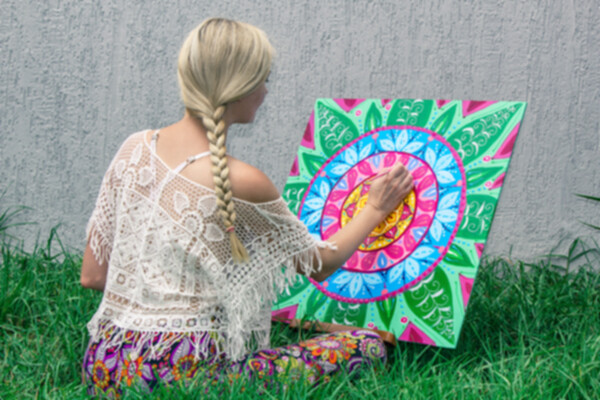
Why is it beneficial to paint mandalas?
Coloring mandalas it’s not just a matter of children’s games. Mandala therapy for children and adults has multiple benefits and is a form of art therapy. No matter how old we are, taking a notebook full of silhouettes and filling them with colors, or even creating our own mandala designs to paint immerses us in a state that gives us multiple advantages. Let’s look at some of them.
1. Promotes Mindfulness and Focus
One of the primary psychological benefits of painting mandalas is the enhancement of mindfulness. Mindfulness is the practice of being present in the moment, without judgment. When painting mandalas, individuals often enter a meditative state, focusing solely on the task at hand. The repetitive motions involved in filling intricate patterns with color help to quiet the mind and bring attention away from distracting thoughts, leading to a calm, centered mental state. The concentration required to color within the lines, select colors, and work on each section one at a time fosters a deep sense of focus and presence.
2. Reduces Stress and Anxiety
Painting mandalas is an excellent way to reduce stress and anxiety. The process encourages relaxation by triggering the body’s parasympathetic nervous system, which is responsible for rest and digestion. As you work on a mandala, your breathing becomes deeper and slower, helping to lower heart rate and blood pressure. This physical relaxation promotes mental calmness and emotional balance, making mandala painting an effective way to combat feelings of stress and anxiety. The repetitive nature of the task provides a calming rhythm, allowing individuals to let go of everyday worries and focus on their inner peace.
3. Encourages Emotional Expression and Release
Mandalas are a powerful tool for emotional expression. While the act of coloring or painting a mandala is often thought of as a simple activity, it can open the door to profound emotional healing. The free-form nature of the process allows for the exploration and expression of emotions that may be difficult to articulate through words. As individuals fill the circular shapes with colors and patterns, they may find themselves releasing pent-up emotions, such as frustration, sadness, or anger. This release can lead to emotional clarity, helping individuals process and understand their feelings in a non-threatening, safe environment.
4. Enhances Creativity
The process of painting mandalas can stimulate creativity and artistic expression. While mandalas are often symmetrical and structured, they offer the freedom to experiment with colors, shapes, and designs. By playing with different combinations and patterns, individuals tap into their creative potential, breaking free from traditional boundaries. This creative exploration helps individuals rediscover their artistic side and promotes a sense of accomplishment and self-expression. Over time, individuals may find that their creativity extends beyond mandala painting and begins to influence other aspects of their lives, such as problem-solving and innovation.
5. Promotes Self-Reflection and Inner Exploration
Mandalas are often used as tools for self-reflection and personal growth. The circular shape of the mandala symbolizes wholeness, unity, and the interconnectedness of all things, making it a fitting symbol for self-exploration. As individuals create or color their mandalas, they may be prompted to reflect on their inner state of mind, emotions, and life circumstances. This act of introspection can provide insight into personal challenges, desires, and goals. The mandala becomes a mirror of the self, allowing individuals to examine their thoughts, feelings, and behaviors from a new perspective. This process fosters self-awareness, which is essential for personal development and emotional healing.
6. Improves Emotional Regulation
Engaging in the art of painting mandalas can enhance emotional regulation, a skill essential for managing emotional responses and coping with stress. By focusing on a single task and using color and form to express oneself, individuals practice regulating their emotions in a constructive way. The act of creating something beautiful and meaningful can provide a sense of control during times of emotional turmoil. For people dealing with intense emotions, such as anger, sadness, or frustration, the soothing process of painting mandalas can offer a positive outlet for expression and release.
7. Encourages a Sense of Accomplishment
Completing a mandala painting provides a sense of accomplishment and satisfaction. The process allows individuals to focus on a goal, and the act of finishing a mandala brings a feeling of completion. Whether the mandala is a small, simple design or a more intricate, detailed work of art, the finished piece serves as a tangible representation of effort and creativity. This sense of achievement boosts self-esteem and confidence, making mandala painting an excellent activity for building self-worth and a positive sense of self.
8. Fosters a Sense of Balance and Harmony
The very nature of mandalas, with their symmetrical and balanced designs, promotes a sense of harmony and balance. As individuals paint or color their mandalas, they engage in a process that encourages order and structure. The symmetry and balance of the shapes mirror the desire for inner balance and equilibrium. This sense of balance can extend beyond the artwork itself and influence other areas of life, helping individuals feel more grounded and centered in their daily experiences. For those experiencing emotional or psychological turbulence, the practice of painting mandalas can offer a sense of calm and stability.
9. Boosts Cognitive Function and Concentration
Painting mandalas can also have positive effects on cognitive function, including enhanced concentration and memory. The process requires attention to detail and focus on the task at hand, which helps improve mental clarity and sharpen cognitive abilities. Additionally, the act of coloring within intricate patterns and designs enhances fine motor skills and hand-eye coordination. For individuals looking to strengthen their cognitive abilities, mandala painting serves as a form of mental exercise, improving both short-term and long-term memory retention.
10. Promotes a Sense of Spiritual Connection
For many people, painting mandalas is a deeply spiritual practice. The circle is a symbol of wholeness, unity, and the universe, and as such, mandalas are often seen as representations of the divine. The process of creating or coloring a mandala can provide individuals with a sense of connection to something greater than themselves, whether it is nature, the cosmos, or a higher power. For those who incorporate meditation or mindfulness into their mandala practice, the experience can be spiritually enriching, fostering feelings of peace, purpose, and transcendence.
11. Helps with Healing from Trauma and Emotional Pain
Mandalas have been used in various therapeutic settings as a tool for healing trauma and emotional pain. Art therapy, in particular, has been shown to have therapeutic effects for individuals dealing with past trauma or mental health conditions. Mandalas, with their calming and introspective nature, provide a safe space for individuals to confront difficult emotions, memories, and experiences. The process of creating or coloring a mandala can serve as a form of emotional release, allowing individuals to work through their pain and find healing. Over time, individuals may notice a reduction in emotional distress and a greater sense of emotional resilience.
Many times paint mandalas can reveal that we have an internal evil that we may not have detected. For this reason, if you practice this art therapy you can see problems that you didn’t know were there. In these cases, complementing this activity with psychological therapy can bring you many emotional benefits.
How to paint mandalas?
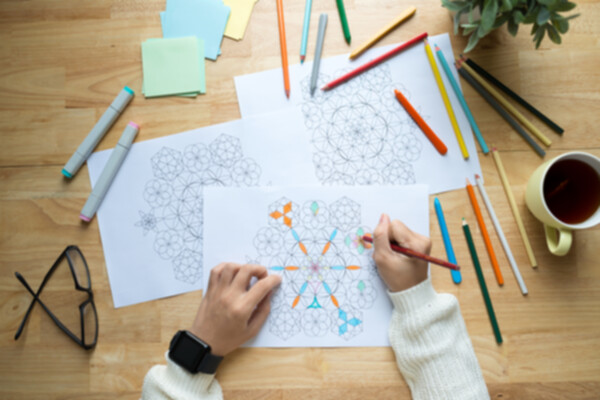
To get started, you can find mandalas for all tastes, from large drawings to smaller ones that require more detail. There are also pages on the internet where they offer us some photos to draw mandalas or where we can even color mandalas for free. And you will find them in the form of drawing notebooks with blank templates and you can even download mandalas to paint from any website on this topic. Before starting you should keep some things in mind:
- Can coloring mandalas with colored pencils, markers, watercolors or any other material you can think of.
- The mandala drawings. The larger ones are perfect for getting started and the smaller ones are perfect for enhancing concentration and improving stress.
- Don’t think about the colors you choose or where you apply them, just let yourself be carried away by what you feel like doing at that moment.
However you do it, it will be well done, because it is simply a reflection of yourself at that moment. In any case, there are books or websites about paint mandalas that propose possible interpretations of your creations based on the colors and shapes you have used. I consider that oneself is the one who can best interpret what he does. For someone, the color grass green can be a symbol of nature and purity and for another it can be a color associated with unpleasant moments in their personal life. So better interpret what you have done based on your criteria and not a table.
Only when you have finished your creation is it okay to analyze it. Evaluate what you see and interpret your own emotions. Think about why you have chosen to color a more circular mandala or with different shapes, with great complexity or simple, if you use many colors or few, if the colors are well distributed or chaotic, etc. Now you know, take advantage of the benefits of painting mandalas since if it is an ancient technique it is not by chance, it is because it works.
The psychological benefits of painting mandalas are profound and diverse, offering a range of mental, emotional, and spiritual advantages. Whether used for stress reduction, emotional release, or self-reflection, mandalas provide a therapeutic and creative outlet for individuals seeking to improve their psychological well-being. The process of creating a mandala can foster mindfulness, reduce anxiety, enhance creativity, and promote inner balance, making it a valuable tool for anyone looking to improve their mental health. As you explore the practice of painting mandalas, you may discover that this simple yet powerful activity can bring lasting benefits to your emotional and psychological life.
By citing this article, you acknowledge the original source and allow readers to access the full content.
PsychologyFor. (2025). 11 Psychological Benefits of Painting Mandalas. https://psychologyfor.com/11-psychological-benefits-of-painting-mandalas/