

See more of our articles in your search results.
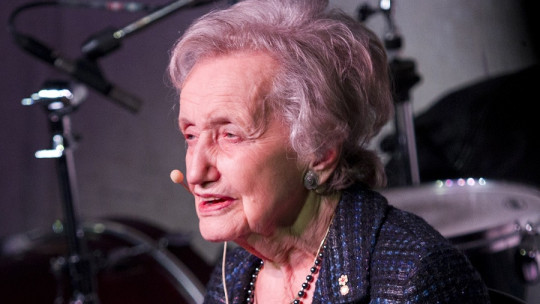
Who is Brenda Milner? Why has this woman been so important for the development of psychology, and even more so, neuropsychology? How has her life been? What have been her most relevant contributions?
Brenda Milner is a name synonymous with the birth and development of modern neuropsychology. Her groundbreaking work transformed how scientists understand memory, brain function, and cognition. In a field once dominated by theory and speculation, Milner brought rigorous scientific investigation, making the brain’s mysterious workings accessible to empirical study. This biography explores the life of Brenda Milner—her early years, academic journey, key research milestones, and lasting impact on psychology and neuroscience.
In this article we answer all these questions; We will do a brief review of the life of this researcher through this Brenda Milner biography, pioneer in scientific research.
Who is Brenda Milner?
Brenda Milner was born in 1918 in Manchester, England, into a family that valued education and the arts. From a young age, she displayed a curious mind and a deep interest in how people think and learn. Although her family’s background was musical and literary, Brenda was drawn more to science and mathematics. This early blend of creative and analytical influences helped shape her unique approach to understanding the brain and behavior.
She pursued higher education at Cambridge University, initially studying mathematics. However, it was during these formative years that Brenda realized her passion lay more in understanding the mind than abstract numbers. She shifted her focus to psychology, a discipline then still evolving. At Cambridge, she absorbed foundational knowledge that would later fuel her innovative ideas.
How many of these have you been "meaning to read" for months?
- 1
 TarcherThe Artist's Way30th Anniversary EditionListen Free On Audible
 - 2
 New Harbinger PublicationsThe Dialectical Behavior Therapy Skills WorkbookPractical DBT Exercises for Learning Mindfulness, Interpersonal Effectiveness, Emotion Regulation...Listen Free On Audible
 - 3
 New Harbinger PublicationsAdult Children of Emotionally Immature ParentsHow to Heal from Distant, Rejecting, or Self-Involved ParentsListen Free On Audible
Milner has become a key figure in the field of psychology, especially for his contributions to scientific research, where he has carried out various studies focused on clinical neuropsychology. One of his notable investigations explored the interaction between the right and left hemispheres of the brain.
For many, Brenda Milner is considered the founder of neuropsychology. Let us remember that neuropsychology is the discipline that integrates the knowledge of neurology with that of psychology; It is thus concerned with studying the possible injuries or damages that our central nervous system receives, and how these affect psychological and cognitive processes (for example, attention, memory, behavior…).
On the other hand, neuropsychology also studies the different diseases that the nervous system can have, in addition to neurodevelopmental disorders.
Continuing with Brenda’s biography, beyond the research, this scientist has been passionate about teaching. She worked at McGil University in Montreal as a professor, specifically in the Department of Neurology and Neurosurgery. She also developed her work as a professor, in this case of psychology, at the Montreal Neurological Institute.
The Shift to Neuropsychology
The mid-20th century was a pivotal period for neuroscience and psychology. Researchers were beginning to connect physical brain structures with specific cognitive functions, but many mysteries remained. After World War II, Brenda Milner moved to Canada, where she took a teaching position and began her research career in earnest. This geographical and professional shift placed her at the center of a burgeoning scientific community dedicated to studying brain injuries and their effects on cognition.
Brenda’s academic training combined with her exposure to wartime research projects — such as aptitude testing for pilots — gave her unique insight into human cognition under stress. But it was her work at McGill University’s Montreal Neurological Institute that would truly define her career.
The Montreal Neurological Institute and Collaborations
At McGill, Brenda Milner collaborated closely with renowned neurosurgeon Wilder Penfield. Together, they studied patients undergoing brain surgery for epilepsy treatment. These patients presented a rare opportunity: by temporarily disrupting or removing specific brain regions, scientists could observe changes in behavior and cognition, linking brain anatomy with function.
Milner’s background in psychology and Penfield’s clinical expertise created a powerful synergy. Her meticulous experimental design and deep understanding of cognitive processes allowed her to extract meaningful data from complex cases. This collaboration laid the groundwork for her most famous discoveries.
The Groundbreaking Case of Patient H.M.
Perhaps Brenda Milner’s most famous contribution to science is her work with Henry Molaison, known in research literature simply as Patient H.M. In 1953, H.M. underwent surgery to alleviate severe epilepsy, during which parts of his medial temporal lobes, including the hippocampus, were removed.
Following the operation, H.M. exhibited profound anterograde amnesia — the inability to form new long-term memories. However, his short-term memory and intelligence remained intact. This paradox fascinated Milner. Through a series of innovative tests, she discovered that while H.M. could not consciously remember new experiences, he could still learn new motor skills, such as mirror drawing, without recalling the learning sessions themselves.
This observation was revolutionary because it demonstrated the existence of multiple memory systems: declarative memory (facts and events) versus procedural memory (skills and habits). Milner’s research on H.M. fundamentally changed neuroscience by proving that memory is not a unitary function localized in a single brain region but rather a complex set of processes distributed across different neural networks.
Expanding the Understanding of Memory and Brain Function
Brenda Milner’s work did not stop with H.M. She expanded her research to study lateralization — how cognitive functions are distributed between the left and right hemispheres of the brain. Her experiments involving language, problem-solving, and spatial abilities revealed important distinctions in hemispheric function.
Moreover, Milner explored the role of the frontal lobes in executive functions such as planning, decision-making, and behavioral regulation. Her neuropsychological testing methods became a standard for assessing brain injury effects, influencing clinical approaches worldwide.
Her research combined behavioral testing with emerging brain imaging technologies like PET and fMRI, linking neuroanatomy and function with increasing precision. Her work underscored the brain’s plasticity and the potential for recovery even after damage.
Contributions to Clinical Practice and Neuropsychological Assessment
Brenda Milner’s insights extended beyond research into practical clinical applications. By clarifying the relationship between brain lesions and cognitive deficits, she helped refine surgical techniques to minimize cognitive impairment. Her findings guided neurosurgeons in preserving critical brain areas during operations.
Additionally, Milner contributed to developing neuropsychological tests still in use today for diagnosing and monitoring memory disorders, brain injuries, and neurodegenerative diseases such as Alzheimer’s.
Academic Leadership and Mentorship
Milner’s career at McGill University and the Montreal Neurological Institute was marked not only by research but also by teaching and mentorship. She trained generations of neuropsychologists and neuroscientists, emphasizing rigorous experimental design, ethical considerations, and the importance of interdisciplinary collaboration.
Her role as a female scientist in a male-dominated field also paved the way for greater gender diversity in neuroscience. Her persistence and excellence challenged stereotypes and inspired countless women in science.
Honors and Recognitions
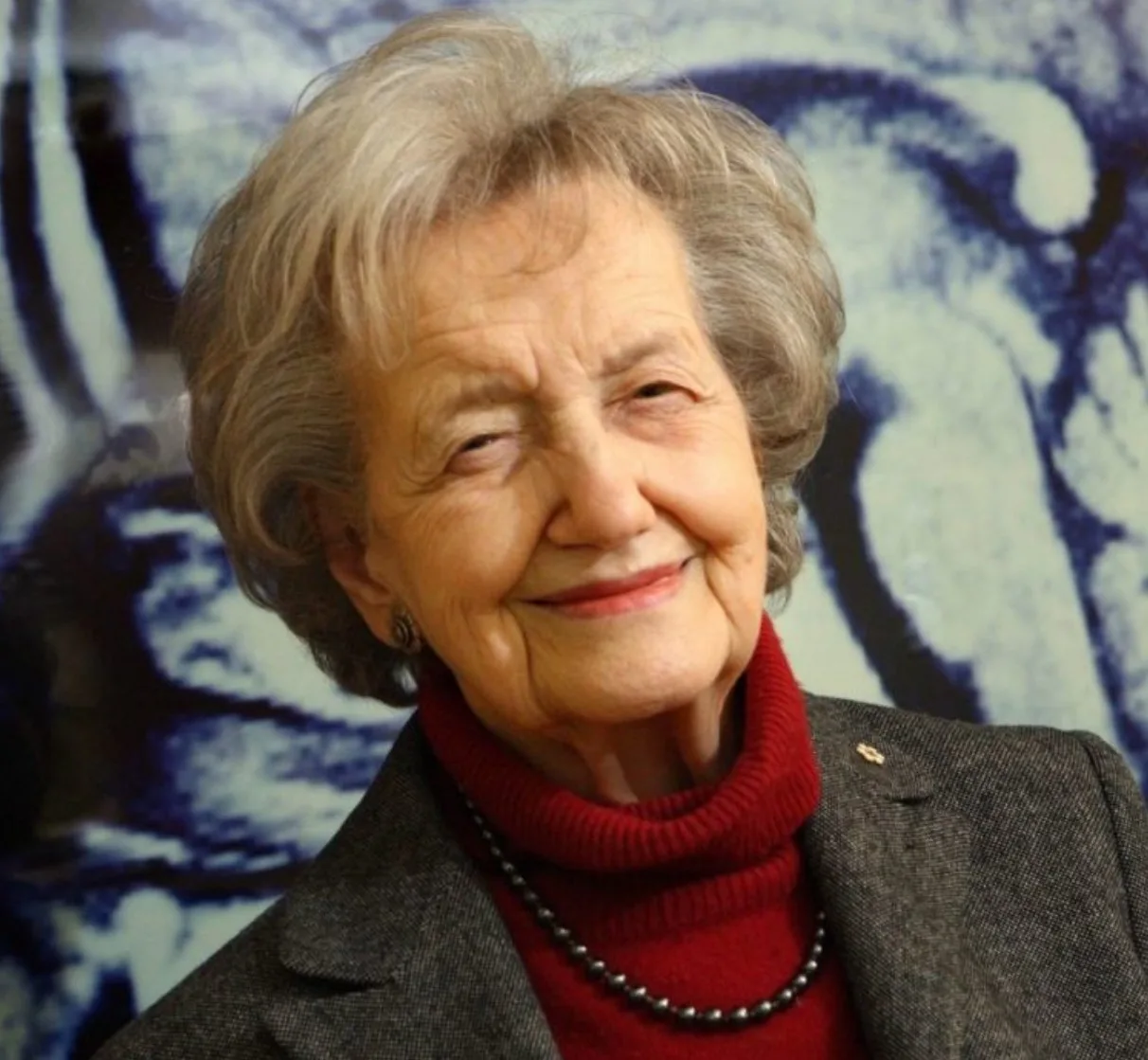
Brenda Milner’s pioneering work has earned her many prestigious awards, highlighting her impact on science and society. She has been recognized by organizations worldwide, including the Royal Society of Canada, the American Psychological Association, and the Gairdner Foundation.
In 2014, she received the Kavli Prize in Neuroscience, one of the highest honors in the field. Beyond awards, her lasting legacy is evident in the countless studies, clinical practices, and educational programs her research has influenced.
Personal Qualities and Lifelong Commitment
Milner’s scientific achievements are matched by her personal qualities: curiosity, perseverance, humility, and an insatiable drive to understand the human mind. Even after decades of research, she remained eager to explore new questions and techniques.
Her longevity in science—continuing active research well into her 90s and beyond—speaks to a remarkable dedication and passion. She exemplifies how scientific inquiry is a lifelong journey of discovery.
Legacy and Impact on Modern Neuroscience
Brenda Milner’s work laid the foundation for modern cognitive neuroscience. By bridging psychology and neurology, she helped transform abstract theories into testable hypotheses grounded in brain biology.
Her discoveries about memory systems, brain lateralization, and frontal lobe functions continue to guide contemporary research in neurology, psychiatry, and rehabilitation.
The story of Brenda Milner is not just about scientific milestones; it’s about a relentless pursuit of knowledge that deepened humanity’s understanding of itself.
FAQs about Brenda Milner: Biography of This Neuropsychologist
Who is Brenda Milner?
Brenda Milner is a pioneering neuropsychologist known for her groundbreaking work on memory, brain function, and cognitive neuroscience.
What are Brenda Milner’s most famous contributions?
Her most famous contributions include the discovery of multiple memory systems through her research with patient H.M., and studies on brain lateralization and frontal lobe functions.
Where did Brenda Milner conduct her research?
Most of her research was conducted at McGill University and the Montreal Neurological Institute in Canada.
How did Brenda Milner change our understanding of memory?
She demonstrated that memory is not a single entity but involves distinct systems in different brain regions, particularly highlighting the role of the hippocampus in forming new memories.
What is the significance of patient H.M.?
Patient H.M.’s case was crucial in showing that the hippocampus is essential for new long-term memory formation, while procedural memory can remain intact despite hippocampal damage.
Has Brenda Milner received awards for her work?
Yes, she has received numerous prestigious awards, including the Kavli Prize in Neuroscience and the Gairdner Foundation International Award.
Did Brenda Milner face challenges as a female scientist?
Yes, she navigated a male-dominated field with resilience and excellence, becoming a role model for women in neuroscience.
Is Brenda Milner still active in science?
She remained active in research late into her life, demonstrating lifelong commitment to neuroscience.
How did Milner’s work impact clinical practice?
Her research improved surgical approaches to epilepsy and brain injury, and her neuropsychological assessments are used worldwide.
What is Brenda Milner’s lasting legacy?
Her legacy is the establishment of cognitive neuroscience as a rigorous scientific discipline and profound insights into how the brain supports memory and cognition.
Use this citation format to reference the article clearly and help readers find the original source.
PsychologyFor. (2025). Brenda Milner: Biography of This Neuropsychologist. PsychologyFor. https://psychologyfor.com/brenda-milner-biography-of-this-neuropsychologist/