


See more of our articles in your search results.
You’re sitting in a parked car after a difficult phone call, hands still on the wheel, and something is sitting in your chest. Not a thought, exactly. Not quite a feeling with a name, either. It’s tight, a bit heavy, faintly sour, like the air before weather turns. If a friend asked, “How are you?”, you’d say “fine,” and that would be the truth and a lie at once. You don’t have words for it yet. But you notice, with some surprise, that if you stop arguing with yourself and simply keep it company for a minute, something in it shifts. A word floats up. Cornered. And the tightness loosens, just slightly, as if the word had fit.
That small event is the heart of Focusing, a method developed by the philosopher and psychologist Eugene Gendlin, and it sits in a long and sometimes controversial tradition of body psychotherapy that includes Wilhelm Reich and Alexander Lowen. The three men shared a conviction that the body knows things the talking mind doesn’t. They disagreed, sharply, about what to do with that knowledge. These ideas sound mystical until you’ve felt them: the hunch you can’t explain, the “something’s off” before you can say what. Clinicians have argued about how to work with that kind of knowing for the better part of a century.
It’s worth comparing them carefully.
This guide explains what Focusing is, how it works, what the research says, and how Gendlin’s gentle approach compares with the body psychotherapies of Reich and Lowen.

How many of these have you been "meaning to read" for months?
- 1
 William MorrowThe StepsA MemoirListen Free On Audible
 - 2
 Thomas NelsonMaking Peace with What I Can’t ControlFind Relief from the Exhaustion of Overthinking, Trying to Fix Others, and Wanting to Figure It A...Listen Free On Audible
 - 3
 Harper InfluenceThe Angels Among UsHow God’s Messengers Play a Role in HealingListen Free On Audible
What is Focusing, and what is a “felt sense”?
Focusing is a method of paying gentle, non-judgmental attention to a vague bodily sense of a situation, called a felt sense, until words, images or movements arise that fit it, bringing a small felt shift. Developed by Eugene Gendlin in the 1960s and 1970s, it’s both a self-help practice and the basis of focusing-oriented psychotherapy.
The term “felt sense” is the key. Gendlin described it as a bodily sensed knowing about a situation or problem that isn’t yet in words: not an emotion in the usual sense, not a plain physical sensation, but an unclear, holistic, whole-body sense of “all of that.” Ask yourself, “How is my life going right now?” and notice what happens in your body, perhaps a vague heaviness behind the sternum or a fluttery, restless buzz in the stomach. That’s a felt sense. It’s usually fuzzy at first and sharpens as you attend to it.
What makes Focusing distinctive is its stance. You don’t analyze the sense, argue with it or push it to change. You greet it, ask what it’s like, let a word or image arise from it, and check that word against the sense: does it fit? When it does, there’s often a subtle bodily release, like an exhale, which Gendlin called a felt shift. That shift is regarded as the signal that something has moved forward, even if the content seems small.
Gendlin’s book Focusing, published in 1978, offered a six-step teaching version, and it sold widely. The method has since spread into counseling, coaching, education, creative writing, spiritual practice and peer-support groups called “Focusing partnerships.” In a Focusing partnership, one person focuses aloud while the other listens quietly, reflecting back words, and the roles swap. No advice is given.
It helps to say what Focusing is not. It isn’t a catharsis technique. It doesn’t require you to relive trauma or discharge emotion. It isn’t relaxation, though it often relaxes. And it isn’t the same as mindfulness meditation, though there are overlaps: both involve non-judgmental attention to inner experience. The difference is that Focusing is directed to a particular problem or situation and aims at symbolizing the felt sense, finding words or images that carry it forward.
Think of it this way. Your body holds a kind of intricate, implicit knowledge about your life: what you want, what’s wrong, what’s ready to change. Focusing is a way of asking it questions and listening for answers in a language that isn’t verbal at first.
Which raises an obvious question: where did this idea come from, and why do so many therapists take it seriously?
Who was Eugene Gendlin, and where did Focusing come from?
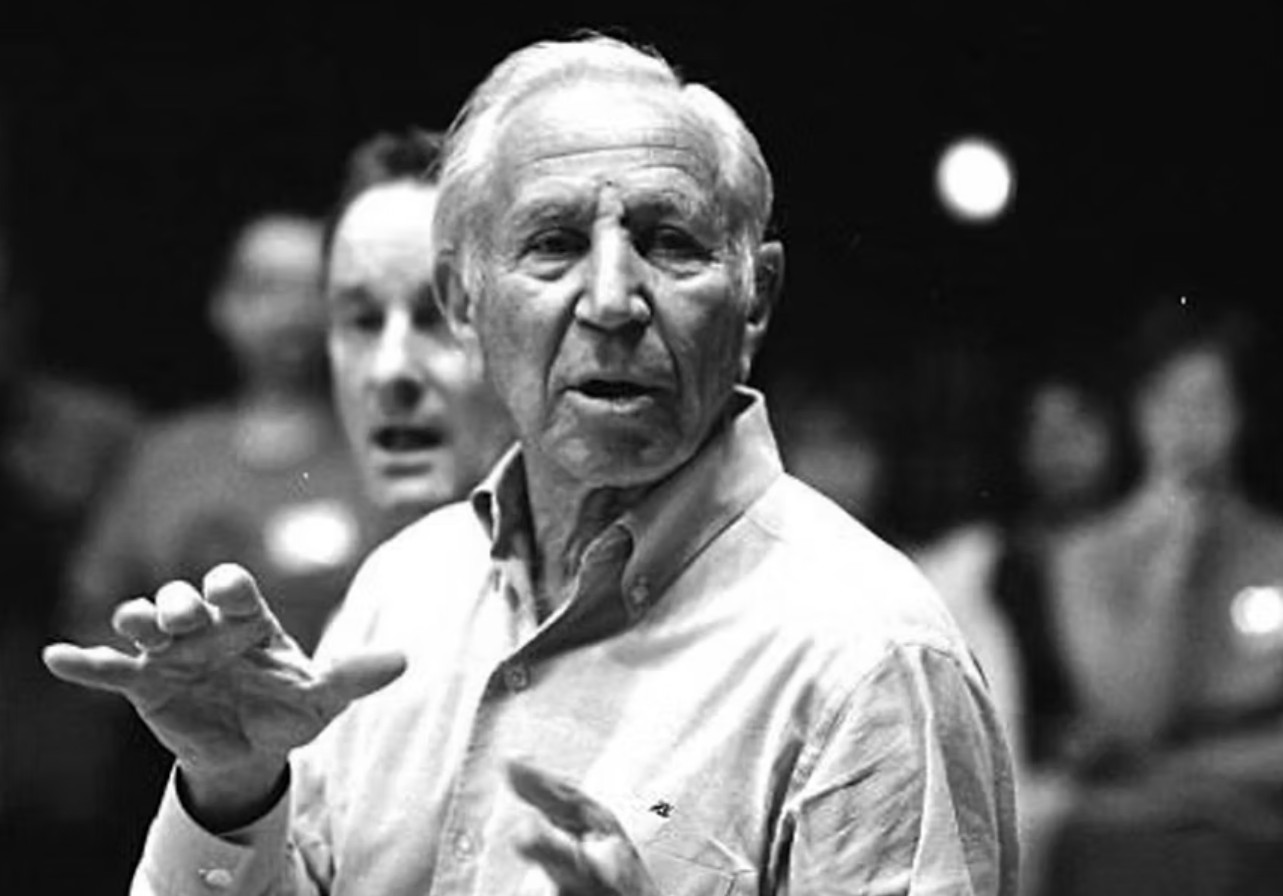
Gendlin (born in Vienna in 1926, died in 2017) was an Austrian-born American philosopher and psychologist who spent most of his career at the University of Chicago. Focusing grew out of his research with Carl Rogers on why some psychotherapy clients improve and others don’t.
The story starts in the 1950s and 60s. Rogers, the founder of person-centered therapy, had argued in 1957 that therapeutic change requires certain conditions, among them empathy, unconditional positive regard and congruence. Gendlin, a philosophy student turned therapist-researcher, worked with Rogers’s group, including on a large study of therapy with hospitalized patients with schizophrenia at the University of Wisconsin. He and colleagues listened to hundreds of recorded therapy sessions and noticed something that none of the standard variables explained: successful clients talked differently. They paused, searched for words, referred to something they were sensing inwardly, and said things like “It’s hard to say… it’s like a sort of…” Unsuccessful clients tended to talk about events in the abstract, to intellectualize, or to narrate externally.
Gendlin called this process experiencing, the ongoing flow of bodily felt meaning, and argued in his 1962 book Experiencing and the Creation of Meaning that it’s the basis of how we think and feel. The key insight was that therapy works when clients can turn toward this felt flow. Crucially, he realized that people could be taught to do it. That’s how Focusing was born: a way of teaching the inward act that successful clients did spontaneously.
Gendlin also developed a philosophical system, called the Philosophy of the Implicit, with a “process model” in which living bodies and situations carry implicit meanings that “carry forward” into further events. He argued that language and thought emerge from this bodily implicit intricacy, not the other way round. Many readers find the philosophy dense, but it gives Focusing its coherence: the body is not a machine or a mere container of emotion; it’s a participant in meaning-making.
In the mid-1980s, Gendlin and colleagues established an international institute to train Focusing teachers and trainers, and the method spread widely. His 1996 book, Focusing-Oriented Psychotherapy, set out how therapists in different traditions can integrate it, including with cognitive, psychodynamic, gestalt or trauma-informed approaches. He also developed “Thinking at the Edge,” a method for turning felt senses into precise, original theoretical language.
A word on his relationship to Rogers. Gendlin extended person-centered therapy but also challenged it. He thought the relationship conditions Rogers described were necessary but not sufficient: what clients do inwardly matters too. That’s why focusing-oriented therapy is classed as an experiential therapy, a family that includes person-centered, emotion-focused and gestalt therapies.
Not all of Gendlin’s philosophy is easy to test, and the research on Focusing itself, as we’ll see, is encouraging but not definitive.

What are the six steps of Focusing?
The classic six steps are clearing a space, forming a felt sense, finding a handle, resonating, asking, and receiving. Gendlin presented them in 1978 as a scaffold to use as long as it helps, then drop, not as a rigid recipe.
- Clearing a space. Sit comfortably and notice how you are. Ask, “What’s between me and feeling fine right now?” Let each concern arise, and place it at a little distance, as if setting packages on a shelf. Don’t go inside any of them. Stay with the process until you feel some room.
- Felt sense. Choose one concern. Don’t go into the details. Ask how the whole of it feels in your body, perhaps in the throat, chest, stomach or gut. Wait for a vague, holistic sense of “all of that.”
- Finding a handle. Let a word, phrase or image arise from the felt sense itself, a quality word such as tight, jumpy, heavy, stuck, or an image. Stay with the quality until something fits just right.
- Resonating. Go back and forth between the felt sense and the handle. Check: does the word fit? Is there a small bodily signal, like a release or a “yes”? If not, let the word change.
- Asking. Gently ask the felt sense a question, such as “What is the worst of this?”, “What does it need?” or “What would feel right?” Wait without answering from your head. Let the answer come from the sense.
- Receiving. Welcome whatever has come, whether or not it’s pleasant or complete, as a step. Treat it kindly. You can return to it later.
Notice what’s different from ordinary self-reflection. In regular thinking, you ask questions and answer with reasoning. In Focusing, you ask a question and wait in the felt sense for an answer to form. The pause is part of the method. It may feel odd at first, like listening for a faint sound. Many beginners worry they’re “not doing it right” because nothing dramatic happens; usually a small, quiet shift is exactly right.
Consider Maya, an illustrative composite, who has been avoiding an email to her manager. She sits down, clears space, and chooses “the email.” Her chest feels tight. The handle that arises is “braced.” She resonates with it: yes, braced. She asks, “What’s braced about this?” and gets, after a pause, a picture of her father’s disapproval. She receives it with a quiet “oh.” The tightness eases a little. She still has to write the email. But it no longer feels like a threat.
A few practical tips. Short sessions work: five to ten minutes is enough to start. Use a sentence-stem like “I notice a sense of…” to stay at a gentle distance. If a feeling becomes overwhelming, step back, orient to the room, feel your feet, or choose a different concern. And don’t force a shift. Gendlin often said the felt shift can’t be commanded; it comes when the conditions of friendly, patient attention are in place.
Some people prefer shorter versions, such as “Mini-Focusing,” in which you ask, “What’s the whole of this feel like?” and wait for a word, a few times a day.
How is a felt sense different from an emotion or a body sensation?
An emotion has a name (anger, fear, sadness); a body sensation is a plain physical feeling (a tight jaw, a fluttering stomach); a felt sense is the whole, murky, meaningful sense of a situation that includes both and goes beyond them. It’s usually unclear at first, and it reveals itself as you attend.
Here’s a quick contrast. Say you’ve just had an argument with a friend. The emotion might be “angry.” The sensation might be a hot face and clenched fists. The felt sense is something else: the freshly arisen, indescribable “all of that” about the argument, including your history with the friend, what you wanted and didn’t say, what feels unfinished. When you ask for it, it might feel like a knot with some pressure at its edges. When you stay with it, the words may surprise you: “I wanted her to see me, and she didn’t.”
Gendlin emphasized that a felt sense is not merely a pre-existing feeling being brought to light. It forms as you attend, and the words that arise don’t just describe it; they change it. That’s the idea of carrying forward: symbolizing the felt sense carries the implicit experience forward into new steps. Many people notice that when they find the right word, they feel a small physical easing, often a deeper breath. That bodily “yes” is part of how you know the word fits. If the word is slightly off, the body usually signals “not quite.”
It helps to know some common traps. One is staying in the head: analyzing, explaining, or telling the story instead of sensing. Another is merging with an emotion so completely that you’re flooded; Gendlin called the helpful stance “a friendly distance,” where you can be with the feeling without becoming it. A third is forcing meaning: demanding that a profound insight appear. And a fourth is critical self-talk: “This is stupid, I’m not feeling anything.” Gendlin suggested treating the critic as another felt sense to acknowledge, not a problem to defeat.
Imagine Dev, an illustrative composite, who says he “can’t feel anything in his body.” His therapist asks him to notice his hands on his lap, then his breathing, then the area around his stomach, and to ask, “What’s it like in there right now?” After a pause, Dev says, “Kind of flat… like a gray room.” The therapist invites him to stay with the gray room. A minute later, he says, “It’s like I put the lights out on purpose.” That’s a handle. It didn’t come from analysis; it came from waiting.
Not everyone finds this easy. People who’ve experienced trauma, who dissociate, or who are highly alexithymic (difficulty identifying feelings) may find inner sensing unfamiliar or uncomfortable. Practitioners often adapt by starting with the external environment, using grounding, or working with the felt sense of “the part that doesn’t feel anything.”
So the felt sense is not something you have to be gifted at. It’s an ordinary human capacity, and like most capacities, it grows with gentle practice.
What does the research say about Focusing?
The research is encouraging but mixed in quality. The best-supported finding is that clients who engage in deeper, more inwardly directed “experiencing” during therapy tend to have better outcomes, and focusing-oriented approaches have shown benefits in small trials, though the evidence for Focusing as a standalone treatment is still limited.
The research history begins with the Experiencing Scale, developed by Marjorie Klein and colleagues from the 1960s, with a major revision in 1986. It rates how a person speaks about their experience on a seven-stage continuum, from impersonal, external narrative at the bottom to a stage where the speaker is actively exploring and resolving felt meaning in the present. Raters code recorded therapy segments. Over decades, researchers used the scale to examine whether clients who reached higher levels did better.
Marion Hendricks, a psychologist who has worked closely with Gendlin’s circle, reviewed this literature in a 2002 chapter on focusing-oriented and experiential psychotherapy. She summarized close to ninety studies and found that, in most of those that tested the link, higher experiencing or better focusing ability was associated with more successful therapy outcomes, whatever the therapist’s approach. Later narrative reviews extended this to roughly a hundred studies, and a meta-analysis of around ten studies found that higher experiencing predicted better outcomes. That consistency across different types of therapy is notable: it suggests that the ability to engage with inner felt experience is a general ingredient of change.
There are caveats. Correlation isn’t causation: clients who were doing well may naturally speak at a deeper level, and the link might reflect general psychological functioning. Many of the studies were small, used varied methods, and some were published decades ago. And teaching Focusing, as distinct from measuring experiencing, has been tested in fewer, smaller trials, with promising results for outcomes such as anxiety, depression, stress and wellbeing, but with variable methods and often non-clinical samples. It would be an overstatement to say Focusing has the evidence base of, say, cognitive behavioral therapy for anxiety disorders.
Gendlin himself was a researcher who took the data seriously. In the Wisconsin project and related studies, he found that client process variables predicted outcome from early in therapy, a finding that shifted attention from what therapists do to what clients do. That’s a lasting contribution, regardless of how one evaluates the teaching method.
What can we reasonably say? There’s reasonable evidence that inward, experiential engagement is linked to better therapy results; that Focusing is a teachable way of developing it; that it’s generally gentle and low-risk when used appropriately; and that it appears to help with stress and wellbeing. What we can’t say yet is that it’s a first-line treatment for any specific disorder.
If you’re using it for a diagnosed mental health condition, treat it as a complement, not a replacement, for evidence-based care.
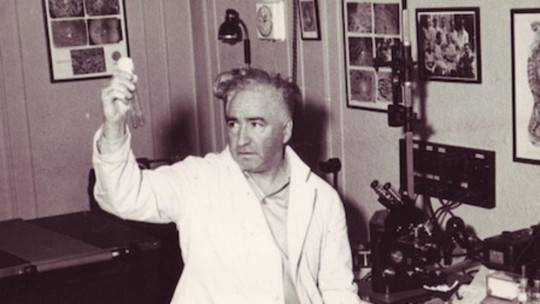
Who was Wilhelm Reich, and what did he contribute to body psychotherapy?
Reich (1897 to 1957) was an Austrian psychoanalyst who founded much of the tradition of treating the body in psychotherapy. His lasting contribution is the idea that psychological defenses are held in the body as chronic muscular tension, which he called character armor or muscular armor. His later “orgone” theories, by contrast, are widely regarded as pseudoscience.
A student and then critic of Freud, Wilhelm Reich published Character Analysis in 1933, arguing that a person’s habitual attitudes, such as defensiveness, charm, aggression or rigidity, form a kind of armor that protects against painful feeling. In his view, this psychological armor had a bodily counterpart: chronic muscle tension, particularly in the face, neck, chest, diaphragm and pelvis, that held back emotion and restricted breathing. He described segments of armor running through the body, from the eyes to the pelvis, and argued that dissolving the armor required working with both the character and the muscular tension.
His method, called vegetotherapy (referring to the autonomic or “vegetative” nervous system), involved observing a patient’s breathing and posture, encouraging deeper respiration, and sometimes using touch or pressure to release tension, along with expressive movements and sounds. The aim was to let blocked emotion and “vegetative” energy flow. This was a radical departure from classical analysis, in which the analyst sat behind the couch and the body was largely ignored. Reich is rightly credited as a pioneer in recognizing how emotion shows up in posture, breath and muscle tone.
But Reich’s story took a dark turn. He was expelled from the International Psychoanalytic Association in 1934, partly over his political and sexual views, and he later developed the concept of orgone energy, a supposed cosmic life force that he claimed to measure and capture in a device called the orgone accumulator. There’s no scientific evidence for orgone energy, and his claims, including that the boxes could treat illness, were investigated by the US Food and Drug Administration. A 1954 injunction barred interstate distribution of the devices and related materials. Reich was later jailed for violating it and died in federal prison in 1957. Mainstream psychology treats orgone theory as pseudoscience.
That legacy complicates the picture. Many contemporary body psychotherapists draw on Reich’s observations about armor and the body-character link while distancing themselves from orgonomy. Others, particularly those who built on his methods, did so with modifications, softening the forceful techniques and rejecting the cosmic claims.
So the fair summary: Reich’s insight that defenses live in the body has proved enormously influential and clinically useful as a hypothesis; his physical theories were wrong; and his hands-on, sometimes forceful style raises ethical questions that modern body therapists address with consent, boundaries and training.
It’s a good example of how a founder can be both visionary and mistaken, and how a tradition can keep the former and leave the latter.
What did Alexander Lowen add with bioenergetic analysis?
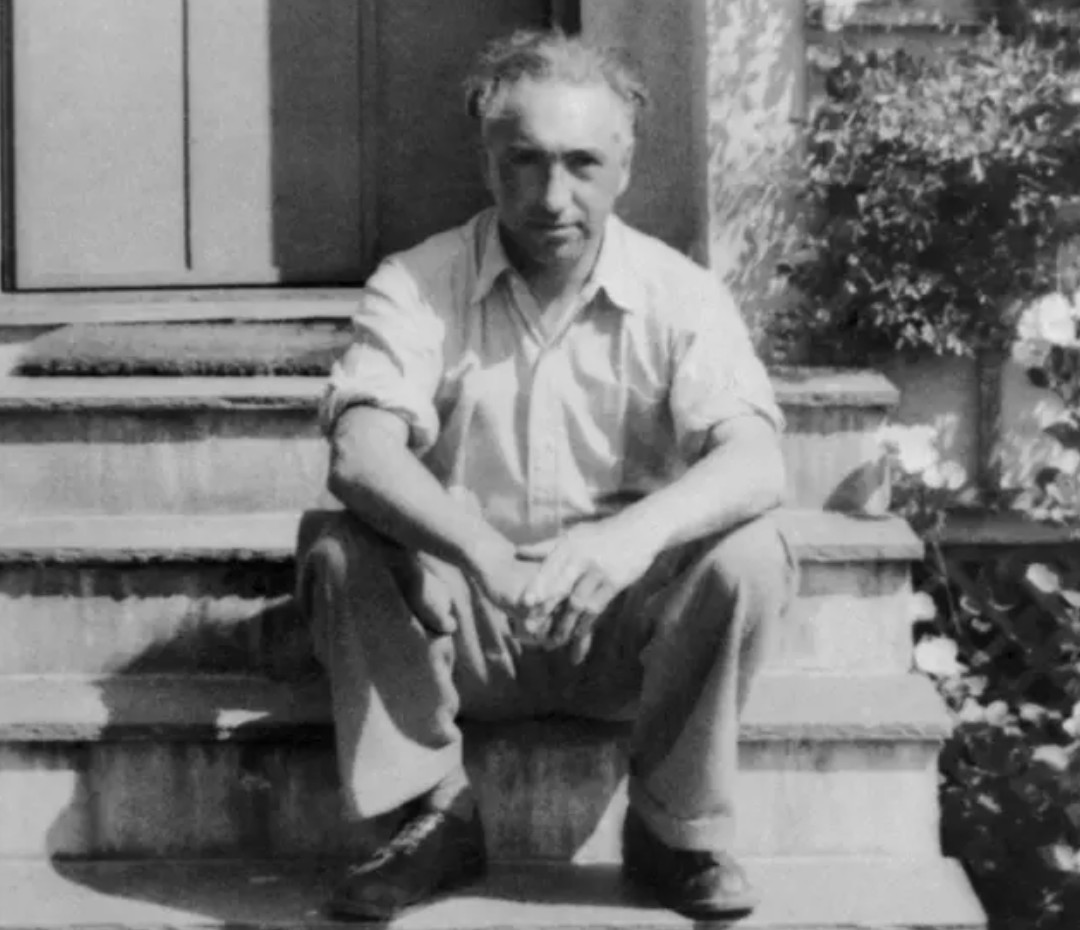
Lowen (1910 to 2008), an American physician and Reich’s student, developed bioenergetic analysis, a body psychotherapy that combines verbal work with exercises for breathing, posture, grounding and expression. He kept Reich’s idea of armor but dropped the cosmic orgone and focused on how emotional history shapes the body.
Alexander Lowen studied with Reich in New York during the 1940s and early 1950s, then, with his colleague John Pierrakos, developed his own approach and helped found an institute for bioenergetic analysis in the 1950s. His books, notably The Language of the Body (1958) and Bioenergetics (1975), brought the approach to a wide audience. Lowen argued that personality is mirrored in body structure and that people carry their history in chronic tensions, restricted breathing and characteristic postures.
Key ideas in bioenergetics include the following. Character structures: Lowen described patterns such as schizoid, oral, psychopathic, masochistic and rigid, each associated with typical body forms and defenses. These are clinical typologies and not scientifically validated diagnostic categories. Grounding: the sense of being in contact with the ground, through the legs and feet, which Lowen saw as a foundation of emotional stability and reality contact. Clients may be asked to stand with bent knees, feel their weight in their feet and breathe. Breathing and energy: Lowen emphasized deepening respiration to increase aliveness and release tension. Expressive release: techniques such as kicking, hitting a mattress or vocalizing, intended to discharge pent-up feeling. And stress positions: held postures that fatigue the muscles and provoke tremors, supposed to loosen chronic tension.
The picture of a bioenergetic session, then, is a mix of conversation and movement. A client might talk about a conflict with a parent, then be invited to stand in a grounding posture, feel where their body tightens, breathe deeply and, if ready, express the feeling through voice or movement. The therapist observes posture and breath and may use touch, with consent.
Take Leo, an illustrative composite, who describes himself as “always holding it together.” His therapist notices his shallow breathing and braced shoulders and invites him to feel his feet on the floor. As he breathes, his legs start to tremble, and he finds himself tearful. They stay with it, and he speaks about the pressure he felt as the eldest son. For Lowen’s approach, that bodily release is part of the work.
Bioenergetic analysis remains practiced worldwide, with training institutes and a professional society. Evidence is growing but modest: for example, a Swiss-German multi-site study of 342 participants across eight body psychotherapy schools, including bioenergetic analysis, found symptom reduction over two years, though the design limited firm conclusions about what caused the improvement. Concepts like grounding are widely used but lack validated measures.
The strengths of the approach are its attention to breath, posture and action. The cautions are that cathartic, forceful techniques may overwhelm some clients, especially those with trauma, and that the character typologies shouldn’t be taken as literal diagnoses.
How do the body psychotherapies of Reich, Lowen and Gendlin compare?
They share the premise that the body carries psychological meaning, but they differ on method and tone. Reich and Lowen emphasize releasing tension and discharging emotion through active techniques; Gendlin emphasizes listening to a felt sense and letting change emerge gently. Think “open up the armor” versus “ask the body what it knows.”
| Dimension | Reich | Lowen | Gendlin |
|---|---|---|---|
| Period and roots | 1930s to 1950s; psychoanalysis | 1950s onward; Reich’s student | 1950s to 2000s; Rogers’ person-centered and experiential work |
| Core idea | Psychological defenses are held as muscular armor | Personality and history are written in body structure, breath and grounding | Bodily felt sense carries implicit meaning; symbolizing it carries experience forward |
| Main methods | Vegetotherapy: breathing, observation, pressure and expression | Grounding, breathing, stress positions, expressive release, verbal work | Six steps, felt sense, handle, resonating, asking, receiving |
| Role of touch | Often used to release tension | Used selectively, with consent | Usually none; attention and listening |
| Stance on catharsis | Emotional discharge is central | Discharge and expression valued | Gentle, titrated; felt shift over catharsis |
| Pace | Active, therapist-led | Active, therapist-guided | Client-led, slow, permission-based |
| Evidence base | Orgone theory discredited; armor concept influential but untested | Growing, modest outcome research; core concepts unvalidated | Experiencing level linked to outcome; Focusing trials small and promising |
| Main cautions | Forceful methods; pseudoscientific later work | Cathartic techniques may overwhelm trauma survivors | Not a standalone treatment for serious disorders; adapt for dissociation |
The lineage matters. Lowen came directly from Reich, and the two share a vocabulary of armor, energy and character. Gendlin comes from a different tributary, the humanistic and experiential tradition associated with Carl Rogers, which stressed the client’s own process and distrusted therapist-imposed techniques. That’s why Focusing looks quiet next to bioenergetics. A Focusing session may involve little visible movement at all, while a bioenergetic session might involve breathing exercises, postures and vocal release.
Differences in the theory of change are significant. For Reich and Lowen, the bottleneck is chronic muscular and energetic blocking, and release is the remedy: dissolve the armor and feeling flows. For Gendlin, the issue is that implicit meaning hasn’t yet been symbolized, and the remedy is to attend and find words or images that fit, leading to a felt shift. Put another way, the first approach emphasizes discharge, the second emphasizes articulation.
They overlap in places. All three treat breathing and posture as meaningful. All three see words alone as insufficient in some cases. And modern body psychotherapists often blend them: a therapist might use Focusing to help a client find the felt sense of a tension, then bioenergetic grounding to stabilize, then talk therapy to integrate. Practitioners of focusing-oriented therapy also sometimes invite movement or touch of the client’s own body when it arises from the felt sense.
Which is “better”? That’s the wrong question, though a fair one. The evidence is uneven across the three. Gendlin’s approach has the most research connecting its central variable (experiencing) to therapy outcome, plus simple, teachable steps and a low risk of overwhelming people when practiced gently. Reich’s armor concept has been influential, but his original methods and orgone claims are not supported. Lowen’s bioenergetics has clinical following and some outcome data but lacks rigorous trials and validated measures for core concepts.
For a person choosing among approaches, a few practical considerations: do you prefer a quiet, reflective style or active, physical work? Do you have a history of trauma or dissociation that calls for slower pacing? Is the practitioner trained, licensed and clear about consent, touch and boundaries? Those questions matter more than lineage.
The deepest point of agreement is also the simplest: your body is not just where you keep your head. It’s part of how you know and feel.
What do we know about the effectiveness and risks of body psychotherapies?
There’s a small but growing evidence base suggesting benefits for some conditions, alongside real limits and some risks. Body-oriented therapies seem to help with certain symptoms, but studies are often small, varied in method and at risk of bias, so firm conclusions are premature.
One of the more rigorous examples comes from Frank Röhricht and Stefan Priebe, who ran a randomized controlled trial of body-oriented psychological therapy for people with chronic schizophrenia and negative symptoms, such as flat affect and withdrawal. In the 2006 study, about 45 outpatients received either a 12-session body-oriented therapy or supportive counseling, and the body therapy group showed greater reductions in negative symptoms. It was a small trial and the findings need replication, but it suggests that structured body work can reach people who find it hard to benefit from talking therapies alone. Röhricht and colleagues have also run exploratory trials of body psychotherapy for chronic depression with promising signals.
Broader reviews report a small to moderate overall effect of body psychotherapy on psychological distress, with the strongest support for somatic symptom conditions and schizophrenia and more mixed results for other problems. Research on the field is fragmented by school, which weakens the evidence: each branch tends to run its own small studies using different measures. And many concepts, such as character structures, energy, and even grounding, haven’t been rigorously operationalized.
Risks deserve honest discussion. Body-focused methods can bring up intense emotions or memories, and for people with trauma, dissociation or certain psychiatric conditions, unguided cathartic work may be destabilizing. Touch, if used, raises issues of consent, power and boundaries; ethical codes in most countries address it, and responsible practitioners explain it, ask permission and respect refusal. Forceful release techniques are no longer favored by many trauma specialists, who emphasize pacing and staying within a tolerable range of arousal, often described as the window of tolerance.
Because the field has historically included both rigorous clinicians and charismatic outliers, due diligence matters. Look for a licensed mental health professional with additional training in the specific approach, ideally through a recognized professional organization. Be wary of practitioners who promise to “release trauma” in a single session, discourage you from seeing other professionals, claim energetic or mystical powers without evidence, or push physical contact you’re not comfortable with.
Focusing, in contrast, is generally low-risk when done gently, since you control the pace and the content. Even so, people with significant trauma are often advised to practice with a trained guide, to use grounding, and to avoid pushing toward the most painful material.
The balanced view: body-oriented methods are a legitimate and promising part of the psychotherapy field, not a miracle and not a fraud. As with any therapy, results depend on the match between person, practitioner and problem.
How can you try Focusing safely, and when should you seek help?
Start with short, gentle sessions, choose a mildly troubling issue rather than your worst, and stop if you feel overwhelmed. If you have significant trauma, depression or other serious difficulties, work with a trained therapist, ideally one who knows focusing-oriented or experiential approaches.
A simple starting practice is five minutes a day:
- Settle: sit comfortably, feel your feet and your breath, and notice how you are, without trying to change it.
- Pick a gentle topic, something moderately bothersome, such as a pending decision or a small conflict, not a major trauma.
- Ask and wait: “How does all of this feel in my body?” Let a word or image come, check it, and receive whatever arises.
- Close kindly: tell the sense you’ll return to it, look around the room and take a few breaths before going back to your day.
A few ground rules. Keep a friendly distance, as if sitting beside the feeling, not inside it. If emotion rises sharply, orient to the room, name five things you can see, press your feet into the floor, or stop. Don’t push for insight. Expect that some sessions will feel like nothing, and that is normal. Many people find a Focusing partner, a friend or group who listens without advising, makes the practice easier and more reliable.
Signs that you’d benefit from professional help include persistent low mood or anxiety, flashbacks or nightmares, feeling numb or disconnected for long periods, trouble functioning at work or in relationships, or using alcohol or other substances to cope. Start with a primary care doctor (a GP in the UK, Ireland, Australia and New Zealand), a psychologist or a licensed counselor. If you’re interested in experiential or body-oriented methods, ask whether the therapist has formal training, how they handle pacing and touch, and what they’d do if you became overwhelmed.
If you’re having thoughts of suicide or self-harm, please reach out right now. In the US, call or text 988; in Canada, call or text 9-8-8; in the UK and Ireland, Samaritans is on 116 123, and in Ireland Pieta is on 1800 247 247; in Australia, Lifeline is 13 11 14; in New Zealand, call or text 1737. In an emergency, call 911 (US and Canada), 999 (UK), 112 or 999 (Ireland), 000 (Australia) or 111 (New Zealand).
A closing thought about attitude. Gendlin often said that the felt sense responds to friendliness. Not forcing, not fixing, just listening with some warmth. If you can bring that tone to your inner life, even for a few minutes a day, you’re already doing the heart of the practice.
And if the car is parked, the phone call is over and something is sitting in your chest, you know where to start.
FAQs about Focusing and Body Psychotherapy
What is Focusing in psychotherapy?
Focusing is a method developed by Eugene Gendlin in which a person attends gently to a vague bodily sense of a situation, called a felt sense, until words, images or movements arise that fit it, often bringing a subtle felt shift. It can be taught as a self-help practice in six steps, and it underlies focusing-oriented psychotherapy, in which therapists invite clients to turn toward inner felt experience. It is considered an experiential therapy, descended from Carl Rogers’ person-centered approach.
What is a felt sense?
A felt sense is a bodily sensed knowing about a situation that isn’t yet in words, more than an emotion and more than a simple physical sensation. It is usually vague at first, felt in the chest, throat or stomach, and it becomes clearer as you attend to it. Gendlin used the term to describe the holistic “all of that” about a problem. Finding a word or image that fits often brings a small bodily release.
Is Focusing the same as mindfulness?
They overlap but aren’t the same. Both involve non-judgmental attention to inner experience. Mindfulness typically aims to observe experience as it is, without trying to change it, while Focusing is directed at a specific issue and aims to symbolize the felt sense with words or images and to let a felt shift occur. Many practitioners use them together. Focusing also includes active inner questioning, whereas many mindfulness practices don’t.
Does Focusing have scientific evidence?
There is supportive evidence, though it is not as extensive as for some other therapies. Research using the Experiencing Scale, developed by Marjorie Klein and colleagues, has repeatedly found that clients who engage in deeper inward experiencing tend to have better therapy outcomes, as reviewed by Marion Hendricks. Studies of teaching Focusing show benefits for stress, wellbeing and some symptoms, but many are small. It’s best seen as a promising complement to treatment, not a proven standalone therapy for serious disorders.
How is Focusing different from Reichian therapy?
Wilhelm Reich believed that psychological defenses are held in the body as muscular armor and used breathing, observation and sometimes touch to release it, aiming at emotional discharge. Gendlin’s Focusing is gentler and client-led: you listen to a felt sense and let words and a felt shift emerge, without forceful release or touch. Reich’s later orgone theories are considered pseudoscience, whereas Focusing’s core ideas have been studied in psychotherapy research.
What is bioenergetic analysis?
Bioenergetic analysis is a body psychotherapy developed by Alexander Lowen, a student of Wilhelm Reich. It combines talking with exercises involving breathing, posture, grounding and expressive movement, based on the idea that emotional history is held in chronic muscular tension and body structure. Lowen described character structures such as schizoid and rigid, which are clinical concepts and not validated diagnoses. Outcome research is modest but growing, and practitioners should be trained and ethical about touch.
Is body psychotherapy safe?
It can be, when practiced by trained professionals who go at a tolerable pace, obtain consent and respect boundaries. Risks include overwhelming emotion, especially for people with trauma or dissociation, and problems around touch if it’s used carelessly. Forceful cathartic techniques are less favored now. Gentle approaches like Focusing are generally lower risk, but if you have significant trauma, it’s wise to work with a trained therapist who can adjust the pace.
Can I learn Focusing on my own?
Yes, many people start with Gendlin’s book or short guided exercises and practice for a few minutes a day. Practicing with a partner, who listens without giving advice, or in a group often helps. If strong emotions or memories arise, stop, ground yourself and consider working with a therapist. For people with trauma or serious mental health conditions, a trained guide is recommended.
Bibliography
- Gendlin, E. T. (1962). Experiencing and the creation of meaning: A philosophical and psychological approach to the subjective. Free Press of Glencoe.
- Gendlin, E. T. (1978). Focusing. Everest House.
- Gendlin, E. T. (1996). Focusing-oriented psychotherapy: A manual of the experiential method. Guilford Press.
- Hendricks, M. N. (2002). Focusing-oriented/experiential psychotherapy. In D. J. Cain & J. Seeman (Eds.), Humanistic psychotherapies: Handbook of research and practice (pp. 221-251). American Psychological Association.
- Klein, M. H., Mathieu-Coughlan, P., & Kiesler, D. J. (1986). The Experiencing Scales. In L. S. Greenberg & W. M. Pinsof (Eds.), The psychotherapeutic process: A research handbook (pp. 21-71). Guilford Press.
- Lowen, A. (1975). Bioenergetics. Coward, McCann & Geoghegan.
- Reich, W. (1949). Character analysis (3rd ed.). Orgone Institute Press.
- Rogers, C. R. (1957). The necessary and sufficient conditions of therapeutic personality change. Journal of Consulting Psychology, 21(2), 95-103.
- Röhricht, F., & Priebe, S. (2006). Effect of body-oriented psychological therapy on negative symptoms in schizophrenia: A randomized controlled trial. Psychological Medicine, 36(5), 669-678.
Use this citation format to reference the article clearly and help readers find the original source.
PsychologyFor. (2026). Focusing: the Body Psychotherapy of Eugene Gendlin. PsychologyFor. https://psychologyfor.com/focusing-the-body-psychotherapy-of-eugene-gendlin/