

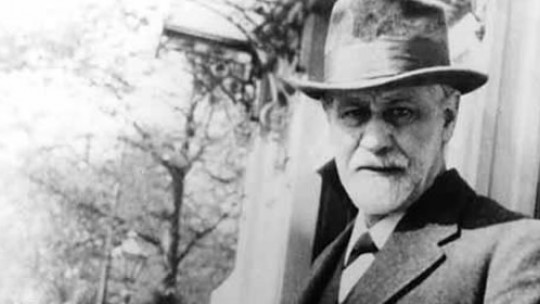
The current of psychoanalysis started by Sigmund Freud more than 100 years ago is one of the main influences on contemporary Western culture.
If his theories on the functioning of the unconscious have served as an influence in many areas of the humanities and art, it is no less true that a good part of his approaches have to do with human sexuality. Freud’s theory of psychosexual development, with its different stages, is the embodiment of this idea and that is why it has historically received a lot of attention.
In it, the father of psychoanalysis describes a series of phases of development of human beings that reflect the type of internal conflicts that we supposedly harbor within ourselves at each stage of life. Let’s see what it consists of, what are the phases of human development that he proposes, and why it has been criticized.
Sexuality according to Freud
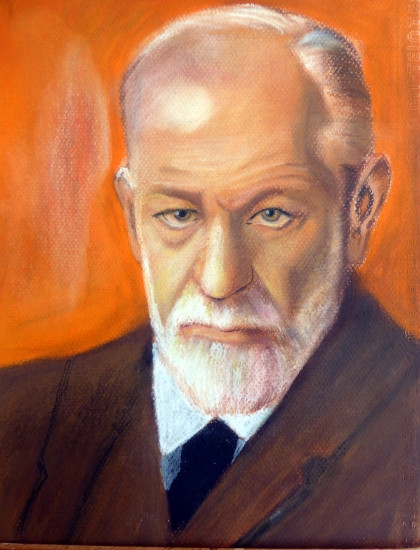
For Freud, Human sexuality is one of the main aspects of the vital energy that drives human behavior This energy, which was called libido, is the source of the impulses that, for the father of psychoanalysis, make us tend toward certain short-term goals and, at the same time, force other instances of our psyche to repress. these tendencies so as not to put ourselves in danger or come into conflict with the environment in which we live.
The vital energy that is expressed through sexuality, according to Freud, is present from the first weeks of our life, which means that our sexual aspect is not born in adolescence, as many researchers of his time maintained. Now, it must be taken into account that, in the context of Freud’s theory, this energy linked to sexuality goes far beyond the reproductive function and sexual arousal; It is conceptualized as something much more abstract and has to do with all the motivations that the individual tends to want to repress.
Sigmund Freud, the father of psychoanalysis, proposed the psychosexual theory of development, suggesting that early childhood experiences shape personality. According to Freud, human development occurs in five stages, each characterized by a focus on different erogenous zones and conflicts. If a stage is not successfully resolved, it can lead to fixation, influencing personality and behavior in adulthood.
This article explores Freud’s five stages of psychosexual development, their characteristics, and their potential long-term effects.
Freud’s 5 Stages of Psychosexual Development
1. Oral Stage (Birth to 1 Year)
- Erogenous Zone: Mouth
- Key Experience: Sucking and biting
- Psychological Theme: Dependency and trust
In this stage, an infant derives pleasure from oral activities such as sucking, chewing, and biting. This is why babies often put objects in their mouths. The way caregivers respond to an infant’s needs influences their sense of trust and security.
- Fixation Risks: If a child is overindulged (fed too often) or deprived (not fed adequately), they may develop an oral fixation, leading to behaviors such as nail-biting, smoking, overeating, or excessive talking in adulthood.
2. Anal Stage (1 to 3 Years)
- Erogenous Zone: Anus
- Key Experience: Toilet training
- Psychological Theme: Control and independence
This stage is centered around toilet training, where children learn to control their bowel and bladder movements. The child begins to understand the concept of control over their body and the expectations of society.
- Fixation Risks:
- Strict toilet training may lead to an anal-retentive personality, characterized by excessive orderliness, stubbornness, or perfectionism.
- Lenient training may result in an anal-expulsive personality, leading to messiness, disorganization, or rebelliousness.
3. Phallic Stage (3 to 6 Years)
- Erogenous Zone: Genitals
- Key Experience: Identifying with the same-sex parent
- Psychological Theme: Identity and sexual awareness
During this stage, children become aware of biological differences between genders and may develop strong attachments to the opposite-sex parent while competing with the same-sex parent. Freud called this the Oedipus Complex in boys and the Electra Complex in girls.
- Fixation Risks: If conflicts are unresolved, individuals may develop guilt, anxiety, or problems with authority and relationships later in life.
4. Latency Stage (6 to 12 Years)
- Erogenous Zone: None (sexual impulses are dormant)
- Key Experience: Developing social and intellectual skills
- Psychological Theme: Learning and interaction
At this stage, sexual impulses are repressed, and children focus on social interactions, friendships, education, and developing life skills. This is a period of relative stability in psychosexual development.
- Fixation Risks: While Freud believed fixations do not occur in this stage, a lack of socialization or excessive focus on work could lead to difficulty forming relationships later in life.
5. Genital Stage (12 Years and Beyond)
- Erogenous Zone: Genitals
- Key Experience: Establishing mature relationships
- Psychological Theme: Sexual maturity and emotional balance
This final stage marks the onset of puberty, where individuals develop romantic and sexual relationships with others. A person who has successfully navigated the earlier stages should reach this stage with a well-balanced personality.
- Fixation Risks: If conflicts from previous stages are unresolved, individuals may struggle with intimacy, relationships, or sexual dysfunction in adulthood.
Criticisms and Modern Perspectives
Freud’s theory remains influential but has faced criticism, including:
- Lack of scientific evidence: Many aspects of the theory are difficult to prove through research.
- Overemphasis on sexuality: Critics argue that Freud placed too much focus on sexual development.
- Gender bias: The theory does not fully consider female psychological development.
Modern psychology integrates Freud’s ideas with newer theories, recognizing emotional and cognitive development as multifaceted rather than solely based on psychosexual stages.
Freudian theory, in context
The theory of psychosexual development can lead to a certain alarmism if one thinks that poor management of the education of minors during these phases can leave them with trauma and all kinds of disorders if Freud’s ideas are not well understood. However, it must be taken into account that This theory was formulated and developed at a point when psychology had just been born
When Sigmund Freud developed his theories, he was based on specific cases of patients that he knew, that is, his way of research was based on a mixture of case studies and interpretation of the symbolic contents of people’s behavior. He barely established hypotheses that could be tested with reality, and when he did, he limited himself to observing, not conducting experiments. The theory of psychosexual development was no exception to this rule.
Nor does it make much sense to investigate the usefulness of the theory of psychosexual development using statistical analysis, because the formulation of these ideas was based on interpretation that was made about the patients’ actions and their past.
Partly for this and partly because Freudian psychoanalysis does not adhere to the epistemology used in current science, there is no reason to think that this theory serves to explain and predict the problems linked to sexuality and the socialization of people. This means that Freud’s psychosexual theory cannot be used to detect warning signs about whether children or adolescents are developing correctly or not, nor can it be used to ensure that mental disorders are due to these types of mechanisms.
Sigmund Freud’s theory of psychosexual development provides a framework for understanding the progression of childhood experiences and their influence on personality development. While Freud’s ideas have been subject to criticism and revision over the years, his contributions to psychology have had a profound impact on our understanding of human behavior and development.
The development of the unconscious
One of the essential ideas behind Freud’s theory of psychosexual development is that the way in which we manage the satisfaction of libido during childhood leaves traces in our unconscious that will be noticeable during adult life.
Thus, if factors external to a child mean that he cannot satisfy these tendencies as desired (for example, due to his parents’ reprimands), this anxiety translates into a fixation that has to do with ideas related to a specific erogenous zone (which does not have to be in the genital area). For Freud, therefore, both biology and upbringing intervene in psychosexual development
Other followers of the psychodynamic current ended up rejecting Freud’s deterministic vision, according to which the unconscious part of ourselves constantly manipulates us without us being able to do much about it. However, this way of thinking made Freud create the theory of psychosexual development, one of the most remembered in the history of psychology.
The stages of development and their fixations
Based on the different ways in which the stage of growth of minors conditions the appearance of one or another type of fixation, Sigmund Freud formulated the theory that would unite sexuality with the development of the Freudian unconscious
In it, it is proposed that in the first years of our lives we go through different stages of development linked to sexuality and different fixations, and that what happens during them will influence the way in which the unconscious conditions the person once they have arrived. to adulthood. That is, each of the stages of psychosexual development would mark the tempos that delimit what types of actions are necessary for express libido satisfactorily and which can create conflicts that remain entrenched in us unconsciously.
FAQs about Freud’s Stages of Psychosexual Development
What is the main idea behind Freud’s psychosexual theory?
Freud’s theory suggests that childhood experiences, particularly how conflicts are managed in different stages, shape adult personality.
What happens if someone is fixated at a certain stage?
Fixation can result in behaviors linked to that stage, such as excessive dependence (oral fixation) or obsession with cleanliness (anal-retentive fixation).
Are Freud’s psychosexual stages still accepted today?
While modern psychology has evolved beyond Freud’s ideas, his theory remains a foundation for understanding human development.
What is the Oedipus Complex in Freud’s theory?
The Oedipus Complex refers to a child’s unconscious desire for the opposite-sex parent and rivalry with the same-sex parent, typically occurring during the phallic stage.
How can Freud’s theory be applied in modern psychology?
Although not widely used in therapy, Freud’s emphasis on early childhood experiences remains relevant in psychoanalysis and developmental psychology.
Use this citation format to reference the article clearly and help readers find the original source.
PsychologyFor. (2025). Sigmund Freud’s 5 Stages of Psychosexual Development. PsychologyFor. https://psychologyfor.com/sigmund-freuds-5-stages-of-psychosexual-development/