

See more of our articles in your search results.
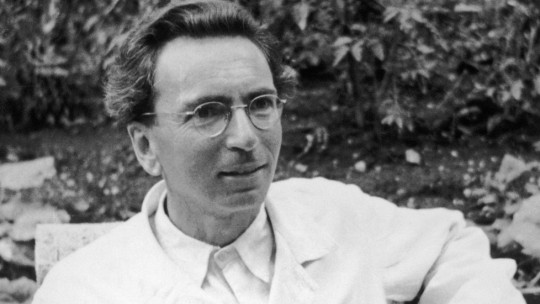
Viktor Frankl is one of the most notable figures in the history of psychology. As creator of the logotherapy Frankl approached the treatment of mental disorders from an existentialist perspective that decades later served to reinforce a current known as Humanistic Psychology, to which Carl Rogers and Abraham Maslow, among others, belonged.
Very focused on phenomenology and the subjective, Viktor Frankl’s logotherapy is hardly comparable with forms of psychotherapeutic intervention whose effectiveness has been demonstrated in independent studies, and currently Its scientific status is seriously questioned But, to properly understand the origins of Viktor Frankl’s work, we must take into account the historical context in which they occurred.
Viktor Frankl and the existential struggle
Pain and sadness are two of the most studied phenomena in psychology, for good reason. There are many paths in life that seem to lead towards them, and when we experience them everything we feel and do tends to revolve around the fact that we feel bad. In some cases, even restlessness can have so much power over us that it prevents us from enjoying life and can play an important role in suicide. That is why a branch of psychology has focused on the treatment of these problems, and numerous therapeutic proposals have been developed to alleviate suffering.
But not all of these therapies are based on philosophical assumptions that aim to cover all aspects of how we live our lives: some aim to be useful in some very specific contexts and not in others and use criteria for measuring results that may be too rigid. That is why among those in favor of using a psychology based more on philosophy than on natural sciences, there is great respect for Viktor Frankl a Viennese psychiatrist born at the beginning of the 20th century, built a therapeutic approach based on his experiences as a survivor in the concentration camps of the Nazi regime.
The beginnings of the young Viktor Frankl
Viktor Frankl was born into a Viennese Jewish family in 1905 when Sigmund Freud’s psychoanalysis began to gain popularity among European psychiatrists. That is why during his youth, when he began to be interested in psychology and mental health, his self-taught training on the subject included many texts on psychoanalysis.
How many of these have you been "meaning to read" for months?
- 1
 TarcherThe Artist's Way30th Anniversary EditionListen Free On Audible
 - 2
 New Harbinger PublicationsThe Dialectical Behavior Therapy Skills WorkbookPractical DBT Exercises for Learning Mindfulness, Interpersonal Effectiveness, Emotion Regulation...Listen Free On Audible
 - 3
 Simon & SchusterThe Green WitchYour Complete Guide to the Natural Magic of Herbs, Flowers, Essential Oils, and More (Green Witch...Listen Free On Audible
However, Also from a very young age he began to develop a notable interest in philosophy, a characteristic that would define his personality and his way of asking existential questions about the meaning of life. In fact, as a minor he began to give his first talks in which he shared some of his reflections.
The university and its specialization in psychiatry
When Viktor Frankl entered the University of Vienna to end up specializing in psychiatry in the mid-1920s, Freud’s work on mental health and the functioning of the psyche had gained so much notoriety that the young student had no problems moving like a fish. in water in a discipline that combined the study of the organic (the nervous system) with the use of a meta-psychology very close to the philosophy that interested Frankl so much.
Nevertheless, He ended up distancing himself from orthodox psychoanalysis, considering it too reductionist and began to form in the psychodynamic current of Alfred Adler This perspective was not marked by the pessimistic view that each person is tied to the unconscious forces that emerge from their mental structure, and therefore fit better with the way in which Viktor Frankl understood life.
The importance of philosophy in the search for happiness
Because the young Frankl knew that suffering and conflict exist, but he believed that through a combination of philosophy and knowledge in psychology it is possible to achieve an adjustment between what is experienced and the way in which one thinks about it so as not to fall into unhappiness. During his formative years among Adler’s followers, Viktor Frankl came into contact with Rudolf Allers, which would lead him to develop a type of existential psychology that we know today as logotherapy.
Thus, although Viktor Frankl ended his academic relationship with Adler years later, the idea that well-being and mental health have a lot to do with the way in which life is given meaning remained deeply rooted in his philosophy. psychiatrist. But what would lead him to reaffirm his convictions was a terrible and potentially traumatic experience: his time in the Nazi concentration camps.

Viktor Frankl as Holocaust survivor
During his years as a student, Viktor Frankl had many occasions to become familiar with pain. In fact, he wanted to specialize in the study and treatment of depression and suicide prevention, which led him to offer support services to students with excessive stress and, during the 1930s, he treated many patients at risk of committing suicide. Beginning in 1938, however, he became increasingly cornered by the rise of Nazism.
In 1942, after being forced to work in the only hospital in the area where Jews could work, Viktor was deported to a ghetto, and from there to a series of concentration camps, including Auschwitz Most of his family, including his wife, died in the extermination camp network, and Viktor Frankl had to work in slave-like conditions until the camp he was in was liberated in 1945.
Man’s Search for Meaning
After the end of the war, Viktor Frankl He discovered that many of the people he loved had died, but he found a way to cope with these losses According to him, the simple fact of discovering the meaning of suffering makes it experienced in a much more bearable way, making it become incorporated into the narrative of one’s own life story as one more element, something that does not prevent it from happening. page and can be moved forward.
This idea, which in fact largely coincides with the principles of the existentialist philosophy of Jean-Paul Sartre and other thinkers, was captured by Viktor Frankl in his best-known work: Man’s Search for Meaning, published in 1946, which also It is a book that serves as an introduction to logotherapy.

The theories of Viktor Frankl, today
Viktor Frankl’s work draws on influences that can be traced back to hundreds of years ago, when Eastern religious leaders talked about how to confront suffering by changing the way you think about it and when the ascetics of ancient Greece taught how to renounce suffering. preconceived ideas about what generates desire and what does not. In fact, his contributions to psychology are less important the more we stick to the idea that psychology should be a science based on measurement and experimentation.
However, the intellectual filter that Viktor Frankl provided did not have logotherapy as its only product: his first works on existential analysis can also be considered to have laid the foundations for humanistic psychology that was popularized by people like Carl Rogers or Abraham Maslow and who more recently has illuminated the positive psychology aimed at investigating topics such as self-realization, achieving life goals and happiness.
You can consult the books that Viktor Frankl wrote through this link.
Use this citation format to reference the article clearly and help readers find the original source.
PsychologyFor. (2024). Viktor Frankl: Biography of an Existential Psychologist. PsychologyFor. https://psychologyfor.com/viktor-frankl-biography-of-an-existential-psychologist/